GratiTuesday: The ripple effect of simple acts of kindness

In my last GratiTuesday post, I wrote about my first grade teacher and how a group of her former students had honored her at a luncheon. We all had fond memories of having her as our teacher and were grateful to have the opportunity to thank her in person so many years later.

There’s actually a little more to the story that I’d like to share. It is a detail that taught me – in two very important ways – how simple actions can still have a profound effect many years later.

Soon after my mother passed away in 2000—when I was still rocking from my grief and loss—I came home to find the message light blinking on my answering machine. The call had been from my first grade teacher, Miss Miller, who I hadn’t seen since elementary school. She said that she had read my mother’s obituary and wanted to let me know how sorry she was… then she shared a story.

Miss Miller told me about a letter my mother had written to her almost 40 years prior, just after I had completed the school year in her class. In the letter, my mother said what an inspiring teacher Miss Miller was and that the positive experience I had taught me that learning could be both fun and gratifying.

In Miss Miller’s message to me, she shared how much the letter meant to her. When she received it, she was new to teaching and my mother’s kind words gave her much-needed acknowledgement and encouragement.  She said the she had kept the letter and re-read it many times over the years. After saying good-bye, she hung up without leaving her contact information or any hint of how I could return her call.

If you’ve ever lost someone you’ve loved, you may know how much it can mean to hear stories about how they made a difference in someone’s life. More than all the well-meaning “I’m sorry for your loss” and “Please let me know if I can help in any way,” these personal stories help to ease the sorrow and keep the memory of your loved-one alive.

Since it was pre-Google when Miss Miller left her phone message, I was unable to locate her. The phone book didn’t have a listing for her and my former elementary school wasn’t any help. I wanted so badly to let her know how much her message meant to me but I was at an impasse in my search.

So, that is a big reason why—over 50 years after being her student and 15 years after her phone message—when I found out that not only was Miss Miller alive and well, but that a classmate was still in contact with her, I jumped at the chance to re-connect. I finally had the opportunity to tell her how much I appreciated her phone message and how grateful I was that she took the time to make the call. It was a thank you I thought I would never be able to deliver, and I admit there were a few tears when I did.

My gratitude to Miss Miller goes beyond her being a great first grade teacher, it extends to two important lessons she taught me years later by making one simple phone call:

  • Never miss an opportunity to write a letter of appreciation or encouragement. Your kind words will mean so much to the receiver and can lift them up well beyond the first reading. An email will do in a pinch, but nothing has the impact of a hand-written note.
  • When someone passes away, if you have a positive story or remembrance about them, share it with their loved-ones. Tell them how the person made a difference; share a funny story; express your admiration. Sharing how that person impacted your life—and the positive outcome it had—will help to buoy them in their grief.

Thank you Miss Miller. Lessons learned.
GratiTuesday: Happy National Teacher Day, Miss Miller!

Today is National Teacher Day, a day set aside to honor those who make special contributions to the education of our society every day. Although I have had many wonderful teachers over the years (including those who teach the adult learning classes I attend now), one of the most inspirational teachers I had was my first grade teacher, Miss Miller.

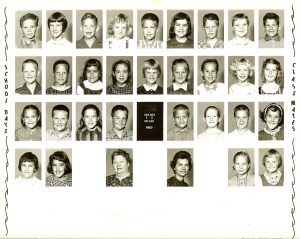
Miss Miller was the kind of teacher any kid would be lucky to have. She was energetic, creative, patient, challenging, loving, and so much fun. I can’t imagine what it must have been like to be faced with a classroom of 7- and 8-year-olds, most who hadn’t mastered the ability to sit still for any length of time, few who understood the concept of using their “inside voice,” and even fewer who had any idea what to expect and what was expected of them. Because our class had a combination of first and second graders, her job must have been even more challenging.

First Second 1963a

Although we entered her world with different childhood experiences and varying skill levels, on that first day we were all lumps of clay. Over the school year, Miss Miller skillfully worked her magic and slowly molded us into 30 young humans who, in addition to our academic lessons, learned to do our best, be nice to others, play fair, and to find joy in the process of acquiring knowledge.

I met some of my life-long friends in Miss Miller’s classroom. We made our way through grade school together and many of us went on to attend the same junior and senior high schools. Although our individual circumstances have changed over the years, the bond is still there.  One was my Maid of Honor, I was a guest in another’s home in Hawaii for 3 weeks, and I recently traveled to La Paz with still another.

From one of those friends, I was thrilled to learn that Miss Miller was still living in the area and was as healthy in mind and body as ever. I asked my friend if she could set up a lunch for the three of us so I could see my favorite teacher again and tell her how much she meant to me.

Out of that lunch came the germ of idea: we would gather together as many students from our first grade class as we could for a Thank You Miss Miller celebration. We figured that we couldn’t be the only two who remembered Miss Miller with a special fondness.

We reached out to as many of our classmates as we could and asked each one if they were in contact with any others. Pretty soon, we had about 20 email addresses. Out of those 20, we were able to get commitments from 10 – not bad from a class of 30 students who, over the 50+ years in between, certainly had moved on, both figuratively and literally. Happily, we discovered that we all still shared an appreciation for our teacher.

Group 2

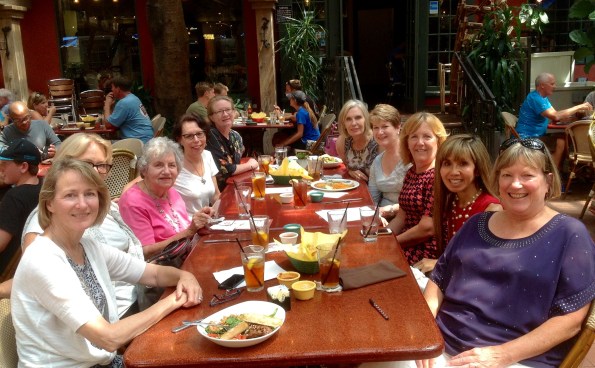
The luncheon was a splendid success. Miss Miller (who will always remain Miss Miller to us even though she tried to have us call her Cynthia) was thrilled and touched by our show of gratitude. Her students—most of us now in our early 60s—had a delightful time catching up and sharing memories. As a special memento, we presented her with a book that contained thank you notes from each of us and our pictures, from first grade and now.

I am so grateful not only that I had the privilege of having Miss Miller as my teacher, but that I was able to thank her in person so many years later. How many 60-year-olds get to hang out with their first grade teacher?

Happy Teacher Day to all the amazing and dedicated teachers out there. You have made a difference in our lives and we are forever grateful to you!

What happens in Las Vegas…

My husband and I recently spent six days in Las Vegas. Neither of us are gamblers or heavy drinkers so the ubiquitous slot machines, card tables, and bars weren’t the beneficiaries of any poor choices on our part. We were there to attend an event, but added a few extra days to look around since neither of us had been to Sin City for many years.

Viva10 Viva9 Viva3


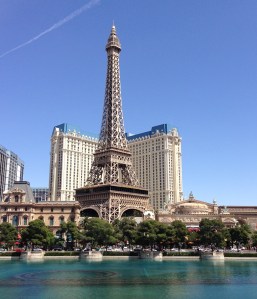
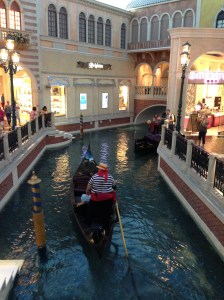
We spent one day walking up and down the Strip, enjoying the kitschy fantasy hotels created to emulate great cities of the world, such as Paris, New York, and Venice. I have to admit the designers did a pretty good job capturing their essence… if Paris, New York, and Venice were filled with bright and noisy slot machines and cigarette smoke (OK, maybe they nailed that part).

Viva4

Viva6

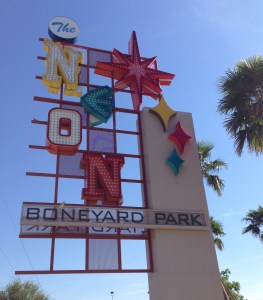
The next day we took a tour of the Neon Museum and Boneyard, which features discarded signs from old hotels and casinos. This two-acre outdoor museum is crammed full of vintage neon; some of signs still light up (they offer an after dark tour but it usually fills up quickly), but most are in various stages of decay and show the lovely patina of age. The hour-long walking tour was full of history and the photo ops were glorious.

Viva7

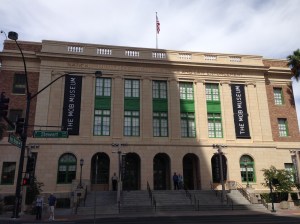
After our tour, we drove a few short blocks to the Mob Museum where we learned about the history of the Mafia, both in general and, more specifically, in Las Vegas. Although there are guided tours and audio tours available, we opted to take ourselves through the fascinating and well-organized museum. (Tours of both museums can be booked online, and there is a special price when you purchase the two together.)

As interesting as these museums were—and I do recommend them if you ever find yourself in Las Vegas—the main reason we were there was to attend Viva Las Vegas: a four-day extravaganza of music, cars, dancing, and a people-watcher’s paradise.

Viva Las Vegas is the largest Rockabilly festival in the world and attracts about 20,000 attendees from around the globe. The event features over 75 bands, North America’s biggest pre-1960s era car show, and hundreds of vendors selling vintage clothing and accessories. There are also fashion shows, tiki pool parties, and dancing, including demonstrations and contests.

Did I mention the people watching?

Viva2

Although my husband and I love to swing dance, I didn’t know very much about Rockabilly or the Rockabilly culture. Viva Las Vegas provided an extreme immersion course. Apparently, there is a whole subculture that embraces a style that combines 1940s/1950s dress with tattoos and hair colors not found in nature. I was fascinated by these Rockabilly aficionados and we’d often find a comfortable seat just to watch them stroll by. As members of the selfie and social media generation, most seemed completely comfortable in their (heavily tattooed) skin and were happy to pose for pictures.

Viva1

I couldn’t help but contrast myself at that age… trying so hard to fit in, but not stand out. If this was a “thing” when I was young, would I have gotten tattoos or dyed my hair a cartoon color? Probably not. I both admired them for their confidence, and worried for their future marketability in the job world. Hair color can be easily changed, tattoos… not so much.

We had such a great time that we already have our hotel reservations and tickets for next year. Although we won’t be getting tattooed in the interim, we do plan on picking up a few new dance steps and some vintage clothing before we return. It’s all part of the fun.

GratiTuesday: My book club

Apparently, I’m not very good at pre-scheduling posts… so this GratiTuesday is being posted on a Wednesday. I’ll be grateful if you can overlook my ineptness.

Finding a good book club was on my list of things to do once I retired. I had sampled various clubs over the years but none of them really resonated with me. Some had core groups that were so thick I didn’t think I could ever penetrate them and feel at ease. Some were much more about the social aspect than the literature so few members actually read the books, much less wanted to discuss them. One was so strict that missing even two meetings was grounds for being expelled.

IMG_4330I was looking for a club that had just the right mix of social interaction and intellectual stimulation. I wanted to feel like a welcomed member of the group and to be comfortable that most of the club’s reading selections would be books that I would enjoy. Being retired, I also needed it to be OK if I missed more than a meeting or two because of travel.
Then, out of the blue, a new friend mentioned that her book club wanted to expand its membership and asked if I’d be interested. She assured me that the club meetings were lively and fun but also the members were serious about the books. Since I knew her to be friendly, smart, funny, and interesting, I figured that her friends would the same.

Now, after six months, I am grateful to be able to say that I’ve found my book club. I have met a group of terrific women who made me feel welcome from the start. I have enjoyed books that I may have otherwise missed and discovered a couple of authors I liked so much that I have read more novels by them. Not all of the selected books have been great—we all have different tastes and interests—but the discussions have been lively and insightful. Each month, a different member chooses a book and hosts the meeting at her home. The atmosphere is always cozy and comfortable, and, because we enjoy breaking bread together, there is always good food and wine.

Just the right amount of serious and social.

Spanning seven urban bridges, 4 – 7

In my last Spanning seven urban bridges post, I wrote about a recent hike my husband and I took called the Seven Bridge Walk. The 5.5 mile hike traverses through several older neighborhoods in our city and crosses over a mix of historic and newer bridges. That post featured the first three bridges we crossed; the four remaining bridges are just ahead…

Quince Street

The Quince Street walking bridge is a wooden-trestle bridge that was built in 1905. It is 236 feet long and rises 60 feet over Maple Canyon. Although the cost for the original construction was less than $1,000, the cost to repair the bridge in 1988/1989 was closer to $250,000. Even though I knew the bridge was in good repair, it was a little unnerving to look over the sides and see what looked like a hodge-podge of wooden planks holding it up.

Spruce1

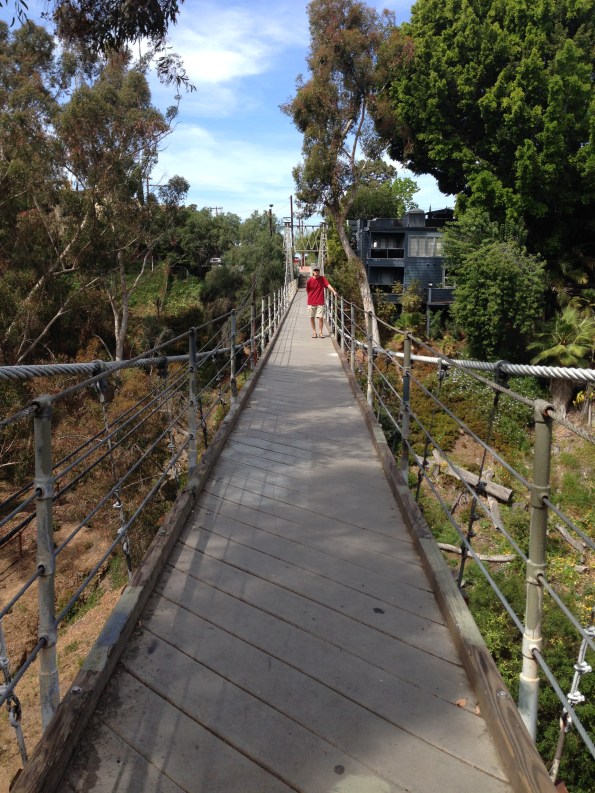
Probably my favorite bridge on our walk is the Spruce Street suspension bridge located in the Bankers Hill neighborhood. It was constructed in 1912 to serve as a passageway for early residents to get to the newly built trolley lines. The bridge stretches 375 feet across and rises 70 feet above Kate Sessions Canyon, named after a horticulturist responsible for many of the plantings found throughout the city. The bridge swayed a little as we walked along it, but it didn’t feel dangerous at all.

After stopping for lunch in the always interesting neighborhood of Hillcrest, we next reached the Vermont Street Bridge. This modern steel bridge was built in place of a deteriorated wooden trestle bridge that dated back to 1916. Rather than replace the beloved original bridge with a merely utilitarian passage, local residents fought for something more interesting and reflective of the two neighborhoods it connects. As we walked over the bridge, we read walking-themed quotes written by people like Martin Luther King, Jr., Kate Sessions, Pythagoras, and even long-time San Diego resident, Theodor Geisel, better known as Dr. Seuss. Can you figure out the word puzzle?

Craftsman

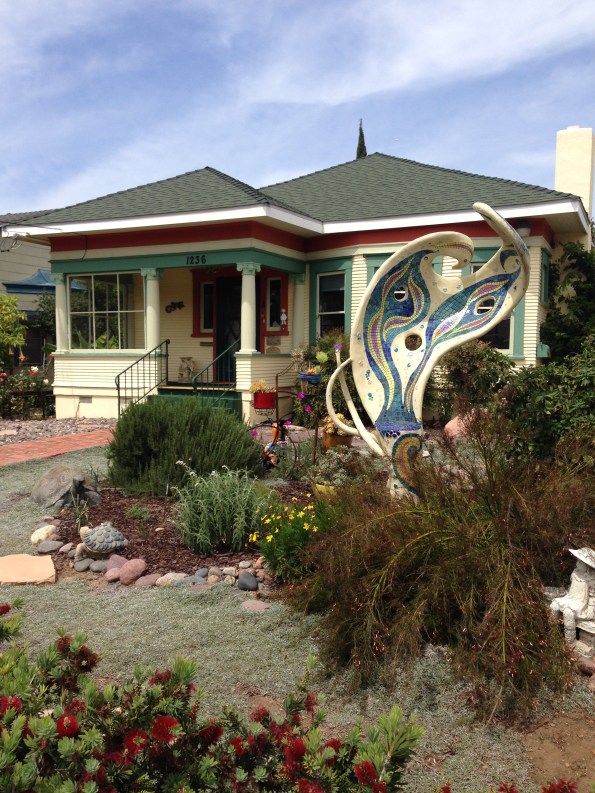
As we journeyed towards our next bridge, we passed through an older neighborhood dotted with beautiful craftsmen bungalows. I imagine an artist lives in this one.

Georgia1

Finally, we reached our seventh and last bridge: the historic but hazardous Georgia Street Bridge. A redwood bridge was originally built here in 1907, but it was replaced in 1914. The “new” concrete Georgia Street Bridge is listed on the National Register of Historic Places. I’ve heard that it is scheduled for an $11 million dollar overhaul, including seismic and structural retrofits… hopefully they will begin soon before the bridge crumbles apart.

After crossing our final bridge, we zig-zagged a bit more, then headed back along Park Boulevard towards Balboa Park and our car. At 5.5 fairly flat miles, the walk wasn’t too strenuous but it was a lot of fun and, when we were finished, we felt a little like we had also traveled through time.

GratiTuesday: Making travel plans in the digital age

My parents were great travelers and encourage us kids to follow in their footsteps. Although I’ve visited many of the places they traveled to—and several they didn’t—I feel as if I’ve just dipped my toe into the deep well of possibilities.

Because they traveled so much, my parents had a close, personal relationship with their travel agent. Helen knew my folks’ likes and dislikes, preferred way to travel, destinations of interest, and budget considerations. Although they seldom encountered any problems while traveling, they knew that they could call Helen if they needed help and she’d work things out.

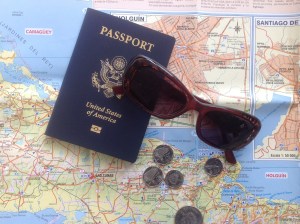
Despite all online resources, I still love paper maps.

I am currently firming up travel itineraries for two upcoming trips, and making some preliminary plans for a few more that are on our radar. Like most people in today’s digital age, I am not using a travel agent to help me plan and book our trips. The resources available to me online are vast, powerful, accessible, and, sometimes, a little scary.

I can research our destinations using multiple travel websites and helpful blogs. I have reached out to blogging buddies who live in the areas we are visiting for first-hand recommendations (and, hopefully some meet-ups). Using mapping apps, I am able to chart our route and look for points of interest along the way.

Once we know where we will stop on our journey, I can book our hotel rooms (after reading extensive reviews) online. For the first time, we are also going to try Airbnb, whose website is robust and pretty easy to navigate. Tickets for attractions can be purchased in advance and I can often load them to my smartphone so I don’t need to worry about misplacing pieces of paper.

And, of course, any airplane and rental car reservations are completed with a few keystrokes and a credit card.

There are pluses and minuses to planning travel this way, of course. Using a travel agent provided my parents with valuable peace-of-mind and allowed them to tap into Helen’s professional knowledge and years of experience. Since she did most of the work (and, as I remember, the service was provided for no, or very little, cost), my folks didn’t have to spend hours doing research. Helen’s agency was a one (or two)-stop-shop for planning, finalized itinerary, and tickets.

By making our travel plans online, I have a lot of control over our itinerary. I don’t need to rely on someone else’s preferences or affiliations. I can spend time looking at different options and search-out deals and off-the-beaten-path opportunities. Once on the road, we can take advantage of apps that will help us to find places to eat and points of interest to visit. I can read about the history of an area, check out the weather, and even avoid road construction and accidents up ahead.

Although we may not have someone like Helen to provide travel assistance and hand-holding, I am so grateful that the internet has given us the power to design our individual journeys and create our unique adventures.

Spanning seven urban bridges, 1 – 3

One of my very favorite things to do is to get out and walk. I enjoy walking for exercise either by myself or with a friend. I love to walk the hills of my neighborhood, or go down to the bay and walk along the shore, or up to the local mountains and hike the trails. I also enjoy walking as a way to discover hidden gems in unfamiliar places. Walking allows me to see the small details I would miss if I was in a car, or even on a bike. When I’m not trying to raise my heart rate, the less hurried pace allows me to observe my surroundings and to stop and take a closer look or snap a picture.

A while ago, I read about an urban hike in our city called the Seven Bridge Walk and was intrigued. The hike is about 5.5 miles long and meanders through several older neighborhoods and crosses over a mix of historic and newer bridges. The walk sounded like the perfect combination of exercise, sightseeing, and  a bit of history, so I filed it away as something to do in the spring.

Finally, last Tuesday, my husband and I decided it was the perfect day to put on our walking sandals and go.

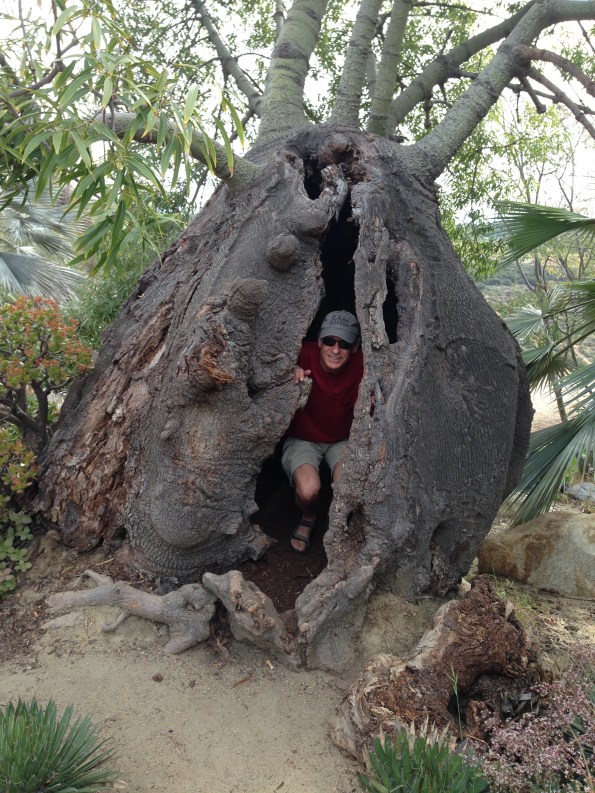
This was the trunk of a very strange tree.

The route begins on the east side of Balboa Park, near the succulent and cactus gardens. After spending some time playing in looking at the plants, we crossed the first – and shortest – of the seven bridges.

A55837D5-5F01-4B1A-BA75-1F86BB66AD02

This concrete walking bridge was built fairly recently to provide safe passage over a busy street. The bridge has a graceful design and it was a nice way to enter Balboa Park, San Diego’s jewel and the nation’s largest urban cultural park (which deserves—and will get—its own, separate post).

Cabrillo_Bridge

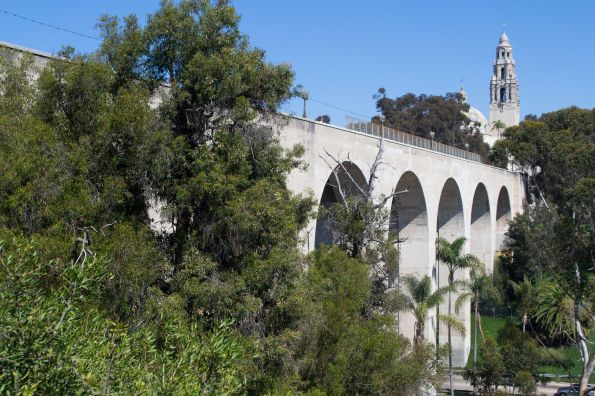
Continuing west along El Prado through the middle of the park, we reached the majestic Cabrillo Bridge. The bridge was constructed in 1914 and is the first multiple-arched cantilever bridge built in California. Although Cabrillo Bridge originally spanned a small lake, cars traveling on State Route 163 now pass underneath its arches.

You can see a downtown high rise, San Diego Bay, and the end of Point Loma off in the distance.

After a few zigs and zags and several stops to take pictures, we reached the third bridge on our walk. Built in 1931, the First Street Bridge is the only steel-arch bridge in the city. It was built in a fabrication plant in the Midwest, dismantled, and then shipped to San Diego to be assembled again.

Come along to see the remaining bridges on our walk in my Spanning seven urban bridges, 4 – 7 post next week.

Searching for balance in retirement

Sometimes it seems like it’s been much less than two years since I was wrapping up my final weeks of employment and looking forward to the day I retire. At other times, it’s as if I’ve been living this leisurely lifestyle for many years and I can hardly remember having full-time work obligations.

I had a lot of plans for my retirement: I wanted to take classes, travel, socialize with friends, complete household projects, and explore my creative side. I also wanted to allow enough leisure time in my non-existent schedule to relax, read books, and daydream.

Mission accomplished… sort of.

Is it possible to have too much leisure? Maybe so.

Since retiring, my husband and I have gone on some amazing trips (and more are planned), I’ve taken advantage of free—and nearly free—educational opportunities, I’ve joined a wonderful book club, we’ve completed multiple house projects (and have more in the works), and I’ve spent time writing and improving my photography skills. Life is good.

But, just recently, I’ve started to struggle with the feeling that I would like to do more, that I want to have more to show for my time. This doesn’t mean that I desire to go back to full-time work, or even that I want to find part-time employment. What I want is more balance in my life.

Besides receiving a regular paycheck and subsidized healthcare insurance, going to work every day provided a lot of intangible benefits. Daily interactions with colleagues wove a social network that helped to make work a pleasurable experience. Because I worked for a large company, my network web included people from a variety of backgrounds and with diverse interests and skills.

I miss that.

I also miss the feeling of working together towards a common goal. We took on projects and supported each other as we met our objectives. In addition, work gave me opportunities to challenge myself and to enjoy the feeling of satisfaction when I successfully expanded my comfort zone.

I’m not sure where this sense that something is missing will lead me. Exploring volunteer opportunities might be a good start. Perhaps I need to get involved with a cause that I believe in. Maybe some type of part-time employment will supply the diverse community I miss. Perhaps it’s a combination of all three possibilities, or maybe something else.

I fully realize how lucky I am that I actually have a choice about how I spend my time. If I make no changes at all, I have a pretty good life. But if I can find something that allows me to make a positive contribution, I think my retirement could be more purposeful and satisfying. It also might help me re-discover some or all of those missing elements: enjoying an expanded and more diverse social network, being inspired by a vision shared with others, and embracing the opportunity to help others and to challenge myself.

The key will be to find something that also allows me to travel when I want and to enjoy the retirement I envisioned when I said good-bye to full-time employment.

Fasting to lose weight and gain health

The job I had before I retired involved food. Lots of it. Not only did I work with restaurant owners, managers, and chefs to promote energy efficiency in commercial food service, my office was located in an educational facility that regularly provided catered food to those attending our workshops. If there wasn’t something fabulous cooking in the kitchen, there was probably something yummy being served in one of the seminar rooms. I tried to avoid temptation as much as possible, but I’m only human. A little bit here, a little bit there adds up to a lot of bits… and a few more pounds than I was comfortable carrying.

Like a lot of people, I have periodically put on – then tried to lose – five or ten pounds throughout my adult life. I’ve been on various fad diets, unhealthy extreme diets, and mainstream programs like Weight Watchers. They all worked for a while but none offered a long-term solution that I was able to maintain. What I wanted was a healthy way of eating that I could stick with and not feel too deprived.

Enter Public Television. I realize that it’s an unusual place to get diet advice, but it happened when my husband and I watched a three-part BBC series on how the body works and improving ones health. One episode was titled The Truth About Exercise, one was Guts (how our stomachs work), and the third one was Eat, Fast, and Live Longer. The first two were fascinating, but the third one really caught my attention.

In that episode, the series’ host, Dr. Michael Mosley, shared own health journey. He was overweight and had been recently diagnosed with diabetes and high cholesterol and was looking for a path back to health that didn’t involve drugs. His research led him to the concept of intermittent fasting (IF). After testing different forms of IF, he developed what he called the 5:2 diet, which required him to restrict his calories two days a week and eat normally the other five days.

What interested me about the premise of IF as a weight-loss/weight-management program was two-fold: I felt that it was a regime I could follow over a long period of time and there appeared to be some real health benefits beyond just the weight loss. Scientific trials have shown that intermittent fasting could reduce the risk of a range of diseases from diabetes to heart disease and cancer. Other studies indicate it might even protect against strokes, Alzheimer’s and Parkinson’s.

It’s now been three years since I began fasting weekly. At first I fasted two days a week and slowly lost the ten pounds that I had gained. Once I reached my desired weight, I settled into a one-day-a-week maintenance routine.

When I retired, I wondered if I could stay with the regime but it hasn’t been a problem at all. I typically fast on my busiest day each week so I have plenty of distractions and I never choose a day when an event or a party would make me feel deprived. If I’m traveling or have another reason I can’t fast one week, I don’t. But, out of the 52 weeks each year, there are probably only two or three in which I don’t fast. If I see my weight creeping up, I return to fasting two days a week until it comes off.

There is a lot of information – both pluses and minuses – regarding intermittent fasting and the 5:2 diet. A recent New York Times article, Fasting Diets Are Gaining Acceptance, outlined the history and science of IF and highlighted different ways it can be done. The three-part PBS/BBC series that started me going is fascinating and can be found online. Dr. Mosley has written several books based on his findings, including the best-selling FastDiet and a few about managing diabetes.

I realize that IF is not for everyone. I’m not the most disciplined person in the world, but it works for me. I think knowing it is just one day (or two, when I want to lose a few), and that I’ll go back to my normal eating the next day, makes the fasting day doable. I don’t have to eat weird food, I don’t have to keep track of points, and, best of all, I don’t have to say “no” every day… just the day that I choose to fast. The weight loss and easy maintenance is great, but the possible health benefits make this lifestyle choice a good one for me.

May I have this dance?

I remember the moment that I decided that I must learn how to dance. I was out to dinner with my boyfriend and, while waiting for a table, we were seated next to a large, nearly empty dance floor. I don’t remember the type of music being played, but my attention was grabbed by a lone couple gliding across the floor in seemingly perfect harmony with each other. After watching the dancers for a while, I turned to my boyfriend and said, “I need to be able to do that.”

The next day I researched local dance class options, and signed the two of us up for jitterbug and swing lessons. As I remember, my boyfriend was less than thrilled but he was nice enough to humor me.

From the beginning, I was hooked. I loved the music, the moves, the exercise, and the community. Even though it was a challenge to learn the steps, I had a clear vision of where I wanted to end up: I longed to be able to dance like that couple.

The boyfriend didn’t last, but my love of dancing did and, to this day, it is one of my favorite things to do.

I was reminded of my first dance epiphany when I read a recent post by Donna on her blog Retirement Reflections, in which she wrote about a retired friend who was learning how to dance. Because this friend enjoyed dancing at her high school reunion so much, she decided to sign up for lessons. Much like me, she discovered – then embraced – a hidden passion.

I was in my late twenties when I took my first dance lessons. At first it was just jitterbug and swing, but soon I was also learning to waltz, foxtrot, cha-cha, tango, and even to do the hustle (remember that??). I was never what anyone would call a gifted student, but I enjoyed the challenge and loved learning different dance styles.

Jitterbugging at a 50s party 26 years ago


Learning to dance has introduced a lot of positive aspects to my life and I often encourage others to give it a try. Many classes don’t require having a partner – in fact you will become a better dancer when you dance with a variety of partners. You can pick just one type of dance, or branch out as your skills and interest develop.

Here are some other reasons to consider learning to dance:

  • It’s a great way to get exercise while having fun
  • You’ll enjoy a sense of accomplishment as you master a new skill
  • It’s social – you can meet people you may not otherwise encounter and it is a great excuse to get out of the house and go
  • It’s challenging – crowded dance floors require timing, balance, and mental focus
  • Music is a language used all over the world; learn it and you have learned an almost universal language
  • You can take your dance skills with you on all your trips and it takes up zero space in your luggage
  • If you are looking, taking dance lessons can be a great way to meet someone special. I met my husband 26 years ago in a jitterbug class and dancing became our early connection.

Although my husband and I haven’t taken lessons for years and the opportunities to go dancing don’t present themselves as often as they used to, we still enjoy getting out on the dance floor when we can. Our moves are a little rusty and we sometimes struggle to get in rhythm with each other again, but soon, the muscle memory returns and we start to glide across the floor just like that couple did so many years ago.