Just about 90 miles south of Monterey and five miles north of Hearst Castle in San Simeon, is the Piedras Blancas elephant seal rookery. Along this 6-mile stretch of shoreline on California’s central coast, visitors can see these remarkable creatures in their natural habitat. From the viewing walkways above the sand, the elephant seals can be observed – depending on the time of year you visit – breeding, birthing, molting, fighting, and napping.
October – the month this picture was taken – marks the third population peak on the beach as the juvenile elephant seals arrive for the fall haul-out.
The Piedras Blancas Rookery is the only elephant seal rookery in the world that is easily accessible, free, and open to the public every day of the year. Whether you are driving north or south on Highway 1, the Rookery is a stop you’ll want to make. You will be rewarded with a lovely view of the coastline and the opportunity to see the elephant seals on the beach and in the water. And, if the breeze is blowing towards the shore just right… oh, the aroma.
Sunday Stills is a weekly photography link-up co-hosted by Terri Webster Schrandt on her blog Second Wind Leisure Perspectives. Each week there is a new word prompt to inspire a shared photo (or photos). Follow this link to learn more about it, see other submissions, and to share your own.
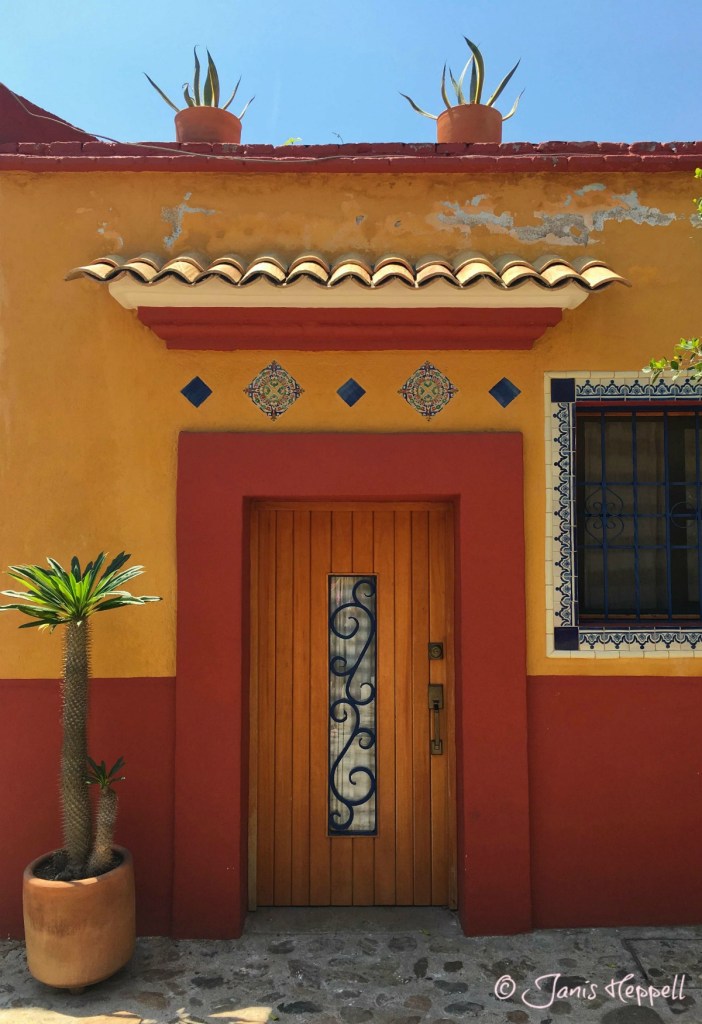
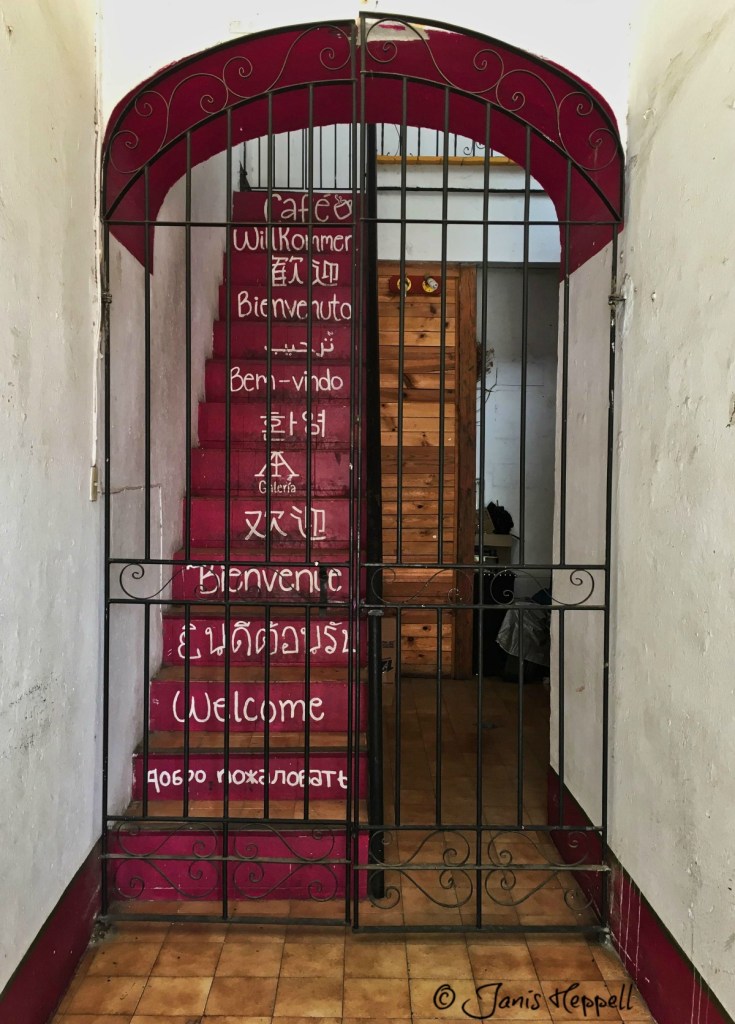
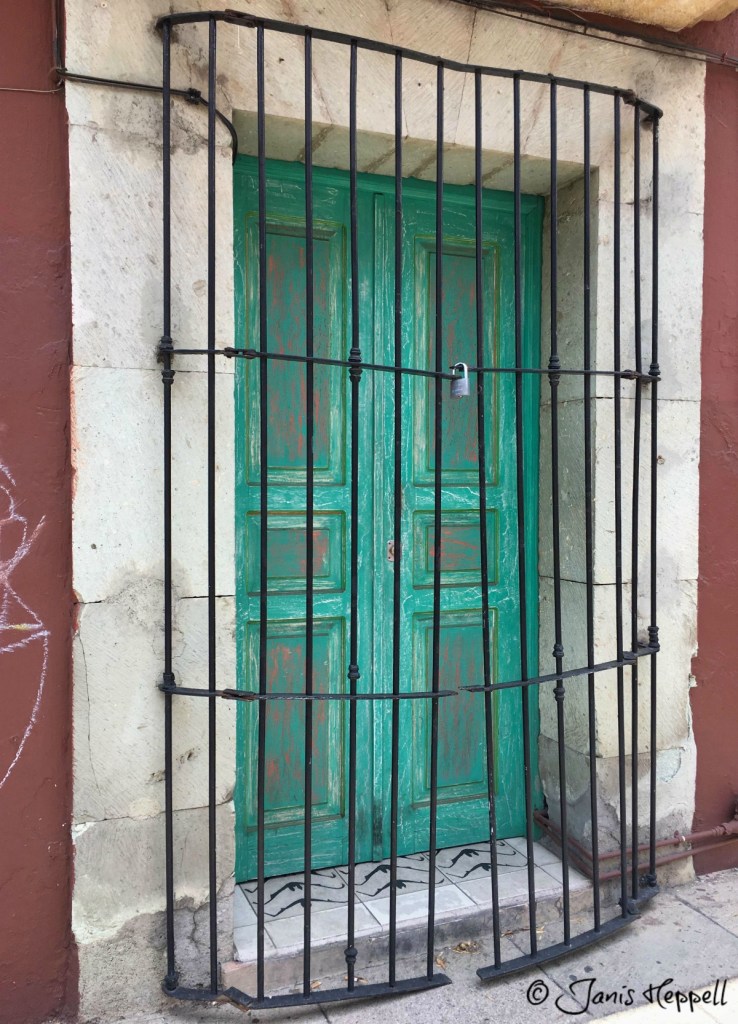
Again, as I did last Thursday, I am sharing a few of the doors we came across during our six-week slow travel trip we took to Oaxaca, Mexico a year ago.
Like the first group of doors, these are indicative of the joyful colors, expressive creativity, and welcoming spirit we experienced during our stay.
Yet another door that I’d love to open and see what’s inside.Welcome… but, unfortunately, the gate was locked.I loved the contrast of colors.A favorite shade of teal.Can I come inside?Although the door isn’t very interesting, what surrounds it is.
Thursday Doors is a link-up of fellow door aficionados generously hosted by Norm Frampton. Head over to his blog and click on the rana azul (blue frog) to view all the amazing doors he and others have posted.
The road down to Waipi’o Valley on the Big Island of Hawaii is steep. The 800 foot (243.84 m) vertical rise averages a 25% grade. At .6 miles (0.9 km) in length, it is the steepest road of its length in the United States. Because of the grade, only hikers and four-wheel drive vehicles are allowed on the road.
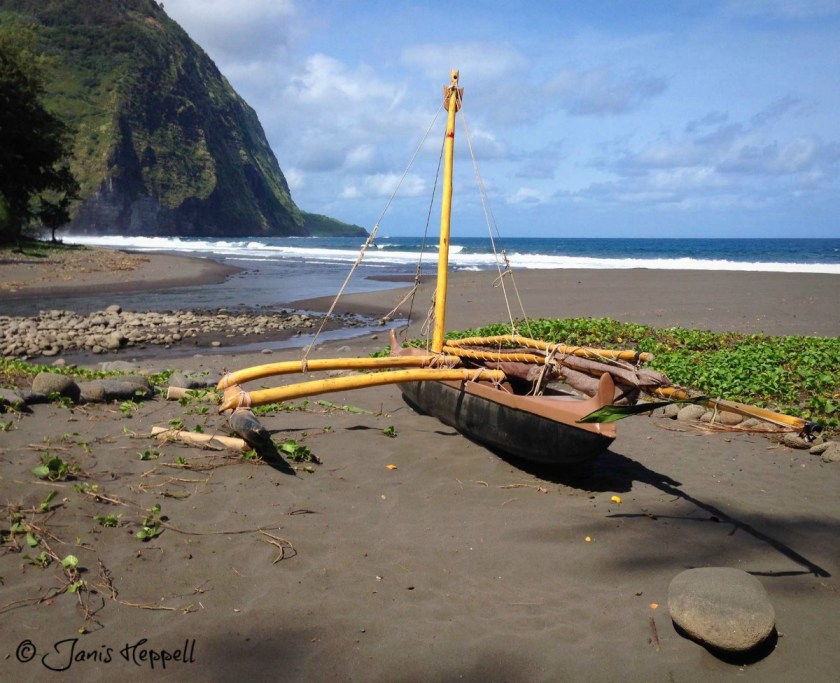
Although our shins ached after making the trek down to the bottom, we were rewarded with one of the most beautiful black sand beaches on the island. Waipi’o means curved water in Hawaiian and it’s easy to understand why the gently rounded coastline earned its name.
We found this beautiful outrigger canoe on the beach just waiting to be taken out for some recreational pleasure.
After exploring the shoreline and wandering a few trails that took us further into the valley, we began the slow, calve-challenging hike back up the hill to where we started. (This photo was taken several years ago. Waipi’o Valley is located on the northeast side of The Big Island. The current volcanic activity is located much further to the south.)
Sunday Stills is a weekly photography link-up co-hosted by my blogging friend Terri Webster Schrandt. Each week there is a new word prompt to inspire a shared photo (or photos). Follow this link to learn more about it, see other submissions, and to share your own.
One year ago this month, my husband and I began a six-week stay in Oaxaca, Mexico. Although I wrote about our trip when I returned (you can read about it here, here, and here), for some reason, I never got around to posting my pictures of the doors we encountered along the way. Recently, as I was going through the zillions of pictures I had in my files, I realized that I needed to remedy that. As you will see, Oaxaca has doors worth sharing, and it will take more than a single Thursday Doors to do that (which is why my title of this post is “uno”).
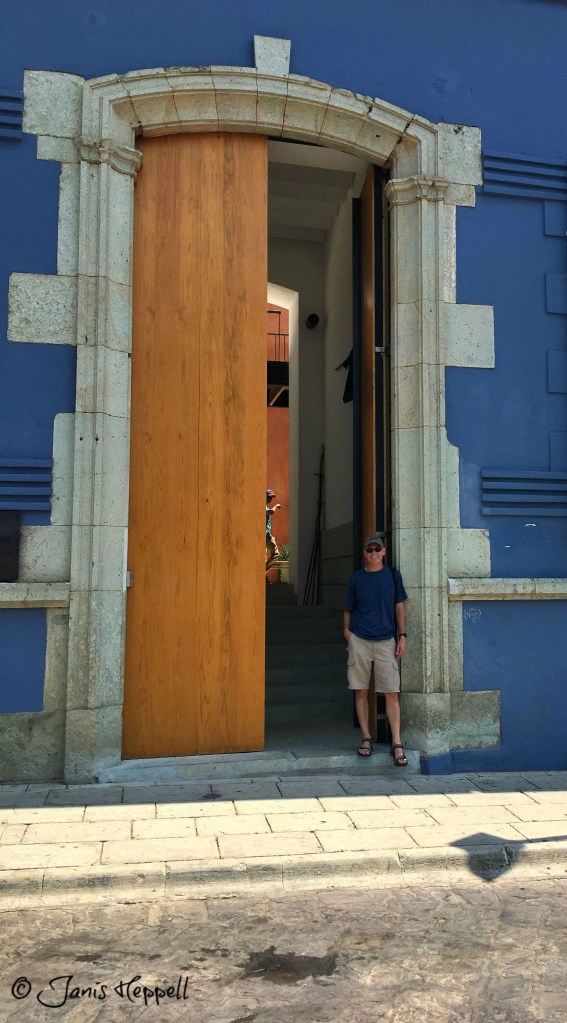
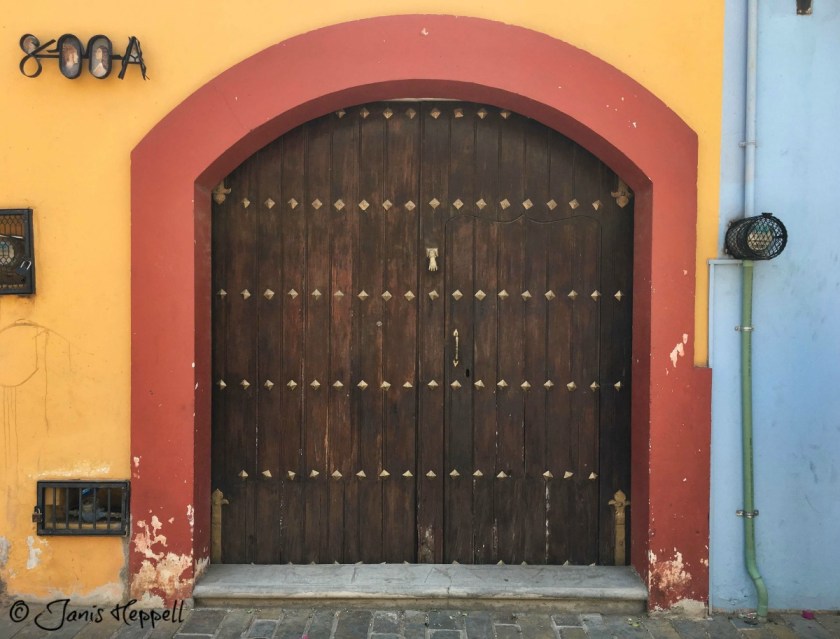
A door for giants.Notice the pictures inside the house numbers.This lovely door is the entrance to a home nestled into the arch of an aqueduct built in the mid-1700s.Free form metal gate allows the breeze to come in.Sometimes what surrounds the door is more interesting than the door itself.Really a window but it goes with the door below.I would have loved to see inside of this artist’s home.
Thursday Doors is a link-up of fellow door aficionados generously hosted by Norm Frampton. Head over to his blog and click on the rana azul (blue frog) to view all the amazing doors he and others have posted.
Anyone who has lived anywhere any length of time probably knows that feeling of sadness and loss when a beautiful but outdated structure is destroyed in the name of progress. The old building probably wasn’t up to modern codes and, often, the shiny new structure built in its place is bigger, taller, and capable of generating more tax dollars than the previous one.
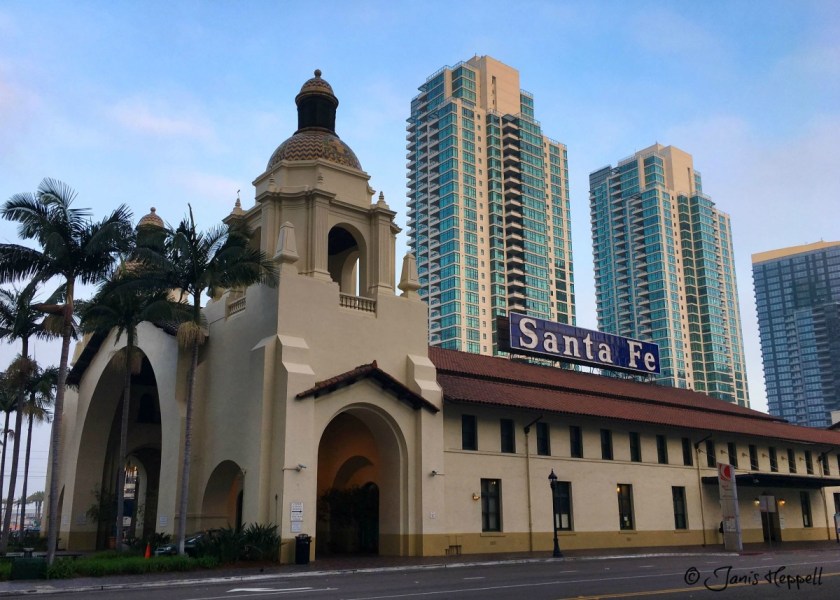
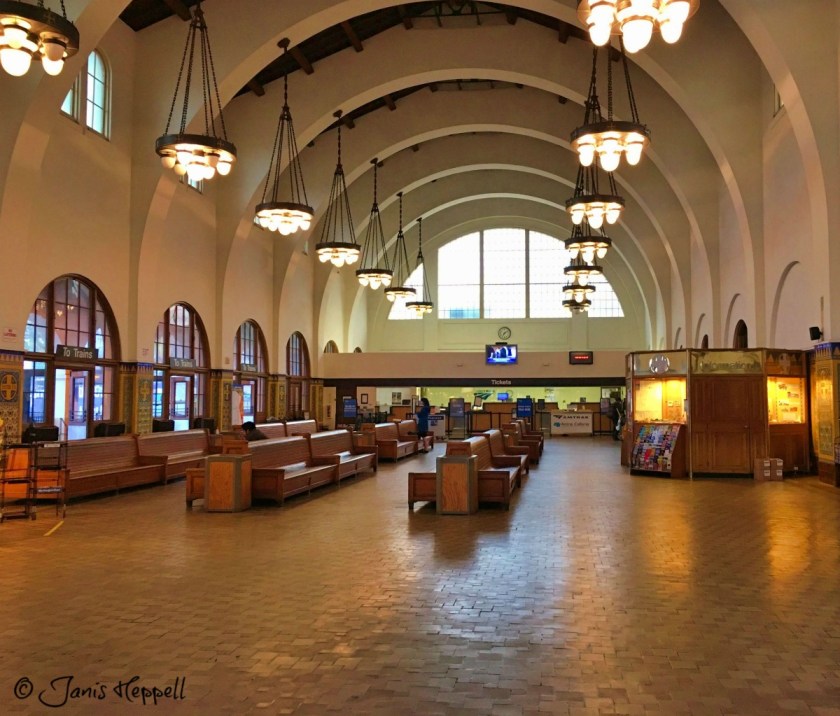
Fortunately, though, sometimes a building is just too beautiful, too beloved, and has too much local historical significance to be touched by a wrecking ball. The Santa Fe Train Depot in downtown San Diego is such a structure. It is a jewel of a building surrounded by glass and steel high rises.
The structure draws heavily from the architecturally distinctive Spanish, Moorish, and Mexican styles.The size and grandeur far surpassed anything the Santa Fe had ever built in the West.
The station was officially opened in 1915, to welcome visitors to the Panama-California Exposition. The Depot’s Spanish Colonial Revival architecture was the same style as was used for the buildings at the Exposition.
The massive arch of the front entrance is flanked by twin campaniles, each topped by a colorful tile-covered dome and displaying Santa Fe’s blue “cross” emblem on all four sides.From the outside in.From the inside out.The grand interior space of the depot features natural redwood beam ceilings, highlighted by walls covered with a brightly colored ceramic tile wainscot.All of the tiles were manufactured locally.Your train is waiting.Welcome to San Diego!Doors within doors within doors.
Although the city lost its early battle to become the West Coast terminus of the Santa Fe Railway system’s transcontinental railroad to much larger Los Angeles, in its heyday, the facility handled Santa Fe train traffic and that of the San Diego and Arizona Railways. The Depot is still an active transportation center, providing not only train service but also service to the trolley and bus systems.
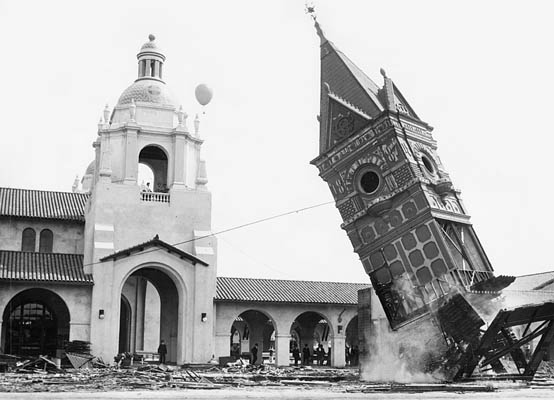
Out with the old, in with the new.
Oh, and speaking of structures being destroyed in the name of progress, the original train depot that had served San Diego for nearly three decades, was razed when the “modern” Santa Fe Depot opened for business. The old clock tower was pulled to the ground by a steel cable attached to two locomotives as part of the grand opening celebration on March 7, 1915.
Since the first National Train Day was held ten years ago today, on May 10, 2008, I thought it fitting to feature the Santa Fe Train Depot in my Thursday Doors post. To see other beautiful doors, choo-choo on over to Norm’s station and click on the ah-door-able blue frog.
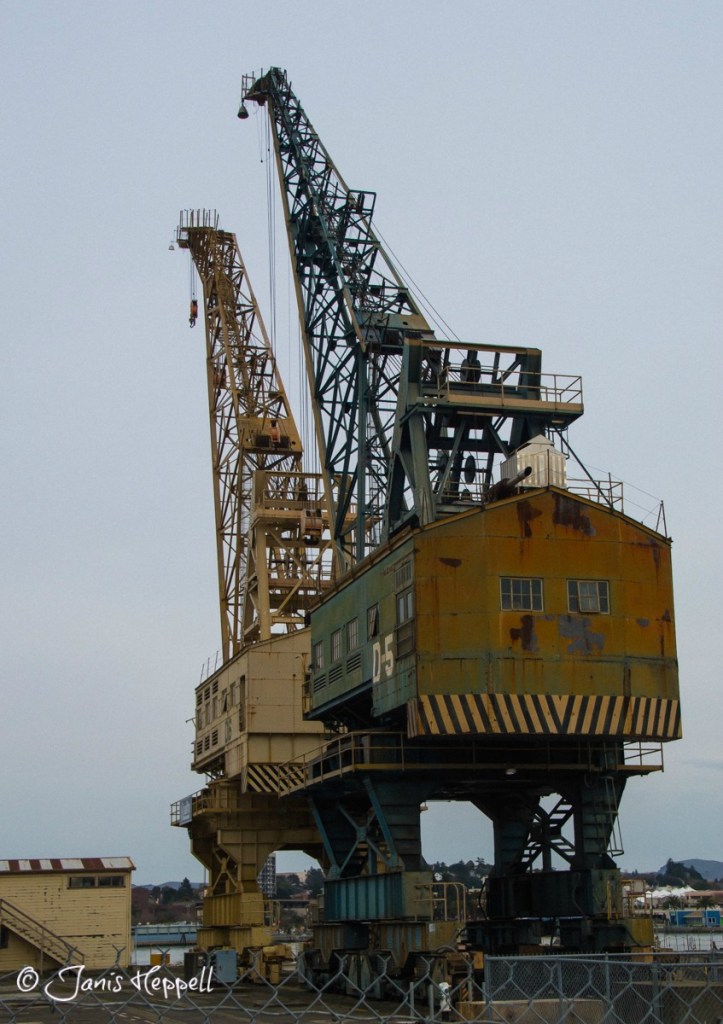
Located just over the bridge from the city of Vallejo, California, Mare Island was established in 1854 as the first naval shipyard on the West Coast. During World War II the base had a population of 46,000 and played a critical role in the military’s efforts.
It was at Mare Island on Dec. 7, 1941, that an urgent transmission came reporting the Japanese air raid on Pearl Harbor. And it was there that the guts of the atomic bombs that destroyed Nagasaki and Hiroshima were loaded aboard the cruiser Indianapolis.
The shipyard was closed in 1996 after producing 512 ships, including 17 nuclear submarines. After years of neglect, Mare Island is currently reinventing itself as a desirable place to visit, recreate, and live.
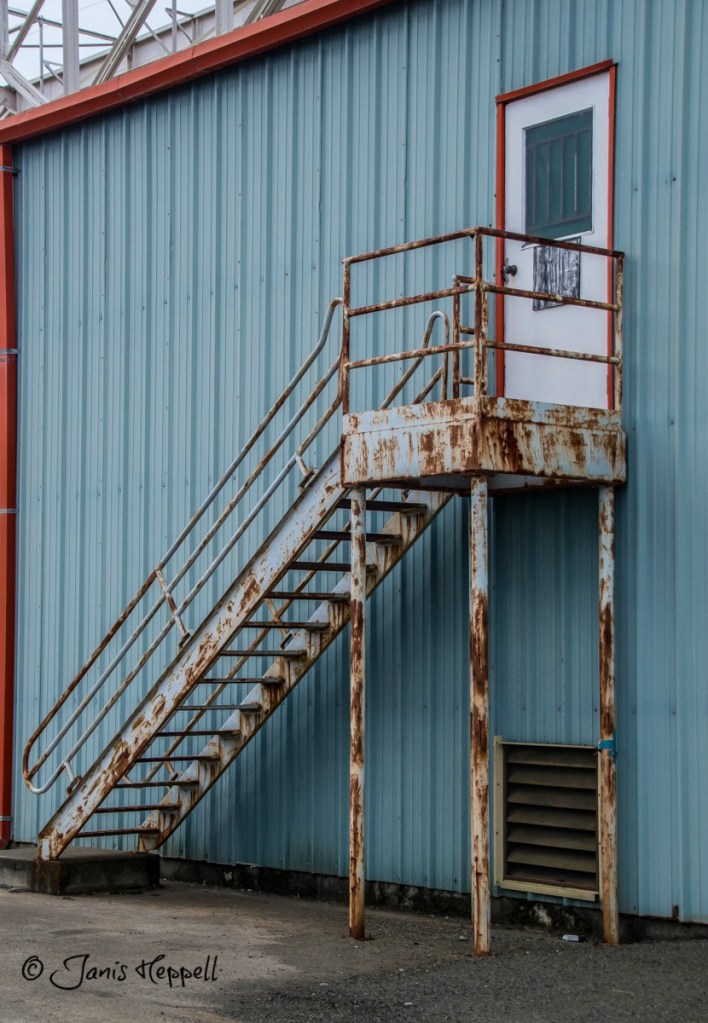
Lucky for me and others who lust-for-rust and pray-for-decay, much of the old shipyard and many of the buildings used by the military still stand. Although the brick warehouses are being renovated into breweries, brewpubs, distilleries, and office space, the beautiful old shells – and doors – remain… at least for now.
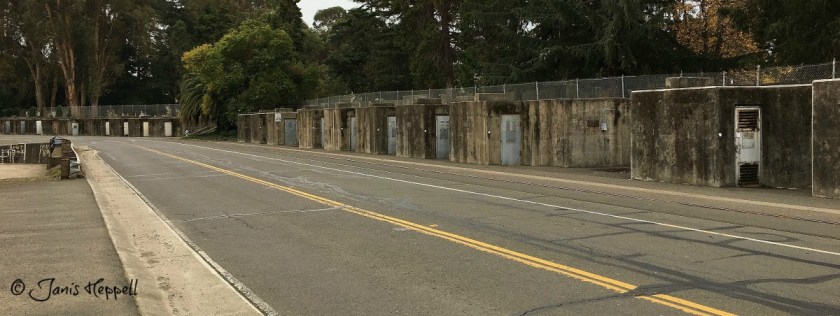
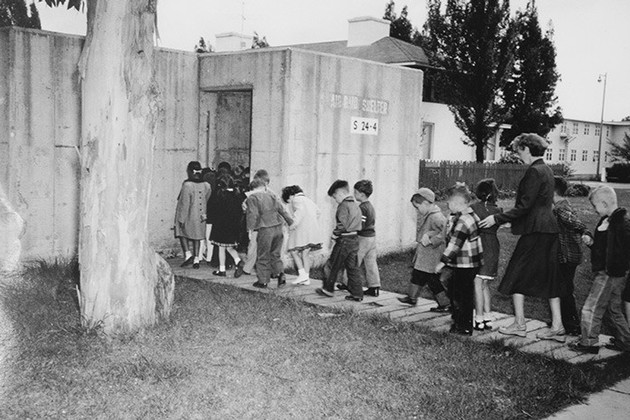
Decay makes me happy.Rust, broken windows, and doors… oh joy!Rusty stairs.What a great door for a brewpub!I think I can see a door… but this shot really is for Dan.Shelters built to protect shipyard workers from potential Japanese air raids.The shelters literally line some streets.Undated picture of children filing into the shelters.
Thursday Doors is a link-up of fellow door aficionados generously hosted by Norm Frampton. Head over to his blog to view all the amazing doors he and others have posted.
On each of the four Tuesdays in December, I am highlighting what I have been most grateful for in 2017.
2017 has been an adventurous year for us and I am grateful for the many opportunities we had to get out and about. Some of the highlights (with links to previous posts) include:
Doing Rockabilly right!
Viva Las Vegas is an annual Rockabilly celebration that we have attended for the last few years. Some people go for the music, Some for the dancing, some for the fashion, and some for the vintage collections, including cars. Most go for a little bit of everything. I am grateful to the young people for keeping this genre alive… and making it their own.
Street celebrations
Sampling Mezcal… not our thing
Oaxaca at dus
In the spring, we spent five weeks in Oaxaca, Mexico. By staying in a single setting the entire time, we were able to better immerse ourselves in the culture (although, in many ways, we felt that we just scratched the surface). I am grateful for all the friendly, interesting people we met and the incredible sights we visited, and we look forward to returning to this remarkable city.
John Muir quote welcomes hikers to Mount Rainier National Park
Mendenhall Glacier
Quite different from the slow travel we experienced in Oaxaca, our travels to the Pacific Northwest and Alaska were jam-packed with activity. We enjoyed scheduled events, explored national parks, visited friends and family, and experienced the grandeur of glaciers. I am grateful for the freedom that retirement has given us so we can expand our time away to fit in everything we want to see and do.
And now we have just returned from our latest adventure in Northern California. We had a wonderful time exploring San Francisco, visiting family, hiking, and sampling delicious wines and champagnes in Napa Valley. I am grateful for the hospitality we enjoyed and grateful for our dear friends who took such good care of our home while we were gone.
It will be hard to top the adventures we had in 2017, but I am grateful for the opportunity to try.
Although I enjoy a stroll through an old cemetery just about any time (OK, maybe not at midnight on a moonless night), during the celebrations of Halloween and Dia de los Muertos, cemeteries take on a special significance.
Because this particular Thursday Doors link-up occurs right before these celebrations, it seems like a frighteningly good time to share some photos of doors (and other… um… entrances) I discovered while visiting the San Miguel Cemetery in Oaxaca, Mexico this past spring (my Grave Discoveries post has more pictures and information about this amazing cemetery).
Thursdays Doors is a weekly cauldron of doors hosted by Norm Frampton. Spirit away to Norm’s blog where you’ll find a spooktacular selection of doors by clicking the blue (toe of) frog link at the end of his post.
I’ve written before about how much my husband and I enjoy visiting the local marketplaces when we are traveling. The colors, tastes, and smells provide a treat for the senses and the energy is exhilarating. I love to discover produce and prepared food items that I have never heard of. Even if I’m not always brave enough to indulge, it’s a fascinating window into another culture.
We are fortunate that, here at home, we can enjoy a similar experience by visiting the many ethnic markets that dot our various neighborhoods. Within easy driving distance from our house, we have at least one Mexican market, two Middle Eastern markets, and two Asian markets. Drive a little further and the choices expand considerably.
Sometimes I like to visit these markets just to look around because the inventory is so different from what is available at a plain vanilla supermarket. Where our Ralphs or Vons might have a few feet of shelf space devoted to spices, the ethnic markets will often have a whole aisle. And, not only do they offer spices that I recognize, they stock even more that I don’t. The jams and jellies are made of fruits I’ve never heard of and the meat departments often offer cuts not displayed in most “regular” grocery stores.
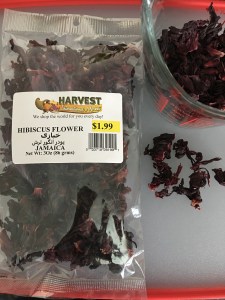
While visiting Oaxaca, Mexico this past spring, my husband and I became quite fond of an iced tea made with dried hibiscus flowers or jamaica (pronounced hah-MY-kah). When we returned, we missed the taste and wanted to be able to make it ourselves. After some searching, we were able to find small packages of the dried flowers at one of the local Middle Eastern markets (the Mexican market – which is much smaller – didn’t carry it). Just today, I discovered the other local Middle Eastern market carries the flowers in bulk. Yipee!
This package contains two cups of dried hibiscus flowers
If you are interested in trying jamaica tea, here’s the recipe. If you don’t have an ethnic market, you might be able to find the dried flowers online.
Jamaica Tea
1 cup of dried hibiscus flowers
0 – 1 cup sugar (depending on how sweet you like your tea)
4 cups of water
Add sugar and water to a pan and bring to a boil. Once boiling, add the flowers, turn off the heat and steep approximately one hour or until cool.
Strain the tea into a bowl with a lip. Press the blossoms to extract as much water into the bowl as possible, then toss (the tea should be a lovely, deep red).
Pour the tea into a pitcher and add 4 additional cups of water. Stir and refrigerate.
When my husband and I pour ourselves a glass of jamaica tea, we often cut it further with bubbly water from our SodaStream (about 3 parts tea to 1 part bubbly). That way, if we’ve used the full cup of sugar when making the tea, the final product is much less sweet.
The taste of Oaxaca in a pitcher
I am grateful for the interesting and diverse food shopping choices we have in our city. I’m also grateful that I can instantly transport myself back to Oaxaca just by sipping a tall glass of chilled, ruby-red, jamaica tea.
Port Townsend sits at the northeast tip of the Olympic Peninsula. Because of its prime location near the Strait of Juan de Fuca and the site of a safe harbor, it became an important shipping port in the late 1800s. The town grew rapidly on speculation as investors banked on Port Townsend becoming the largest port north of San Francisco. Although that dream never came to fruition, many beautiful Victorian homes and historical buildings still stand as a reminder of its heyday.
Boating and maritime life are still central elements, but now Port Townsend is also well-known as an artists’ community. The tree-lined streets of the waterfront downtown area features multiple galleries, artists’ collectives, unique shops, and tempting restaurants.
And doors. Port Townsend has so many beautiful doors, it was hard to capture them all… which I didn’t… which is why I’m sure that I will return.
Thursday Doors is usually run by Norm 2.0, but is guest-hosted by Joey this week. Please visit her blog to find links to more doors.
I would love to see what’s inside this jewel of a door
You can get your fortune told just inside this gypsy door


















 Retirementally Challenged