GratiTuesday: Getting High

As I was looking over pictures taken on our recent travels, I was struck by how many times we found ourselves way up high looking down. Hiking on trails that took us well above the forest floor, riding on a train through narrow mountain passes, biking along a path that traveled over old, abandoned train trestles, peering down from the lip of a dam that towers 550 feet above bedrock, and standing on a “see through” bridge that spanned a rocky river hundreds of feet below.

North Cascades National Park
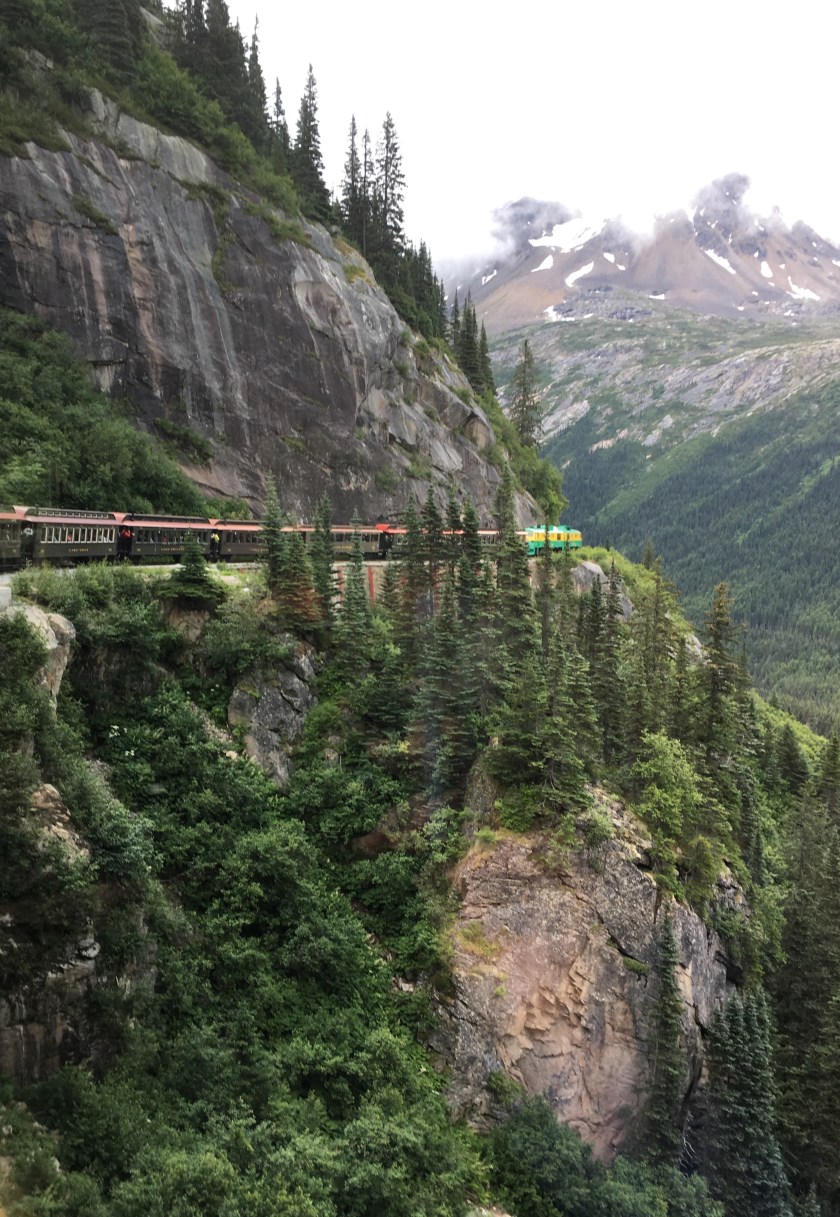
White Pass & Yukon Route Railroad
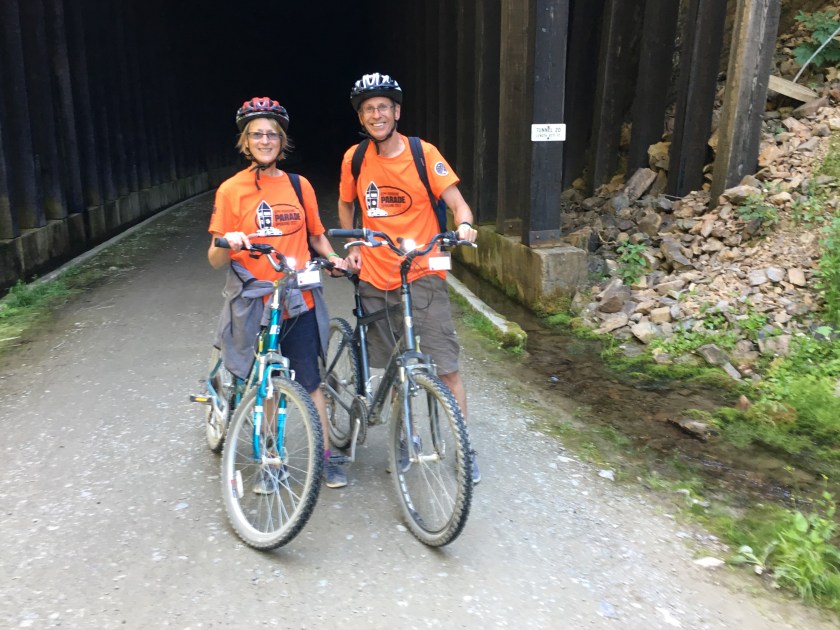
Hiawatha Bike Trail
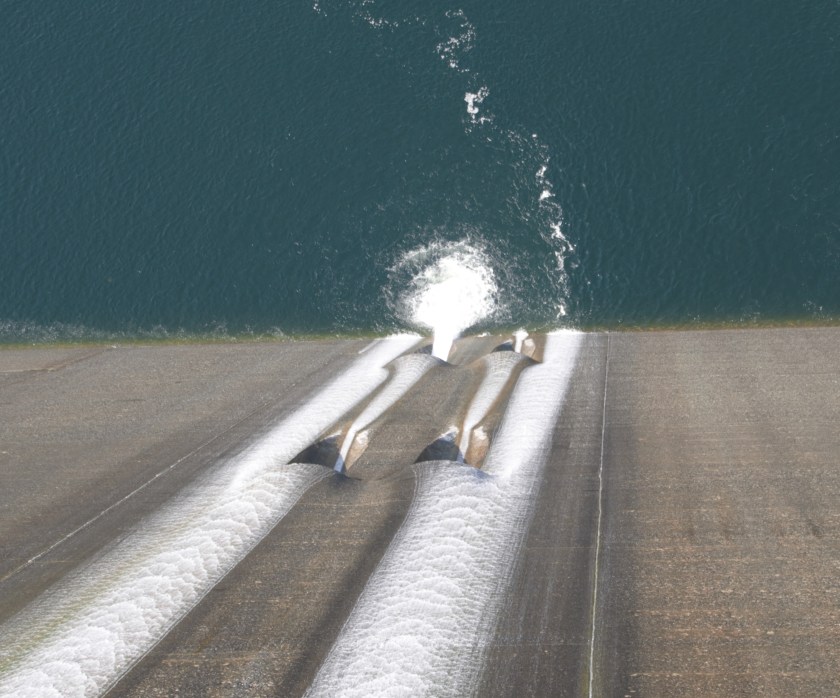
Grand Coulee Dam
Looking straight down the side of the dam 

I know a few people who wouldn’t find these views very enjoyable. Some would muster their courage and go anyway, although trying to avoid a direct line of sight to what was below. Others would probably deny themselves the experience altogether, unable to overcome their fear of heights.

I realize that I have no idea what these fears feel like. I do know that they are not ones that people can just “get over.” They are real and they can be terrifying. And they can be frustrating. And they can be limiting.

For me, getting high is part of the fun, and I am so grateful that I’m able to embrace these experiences and enjoy the incredible views.

Thursday Doors… a Hodgepodge

My last post, titled Hodgepodge Travel, outlined a recent trip my husband and I took to the Pacific Northwest. Continuing with the theme, this week’s pictures are a hodgepodge assortment of doors that caught my fancy along the way.


The Seattle Center Armory was built in 1939 to house the 146th Field Artillery. The building was incorporated into the footprint of the 1962 World’s Fair, when it was reconfigured into a food and shopping mall.


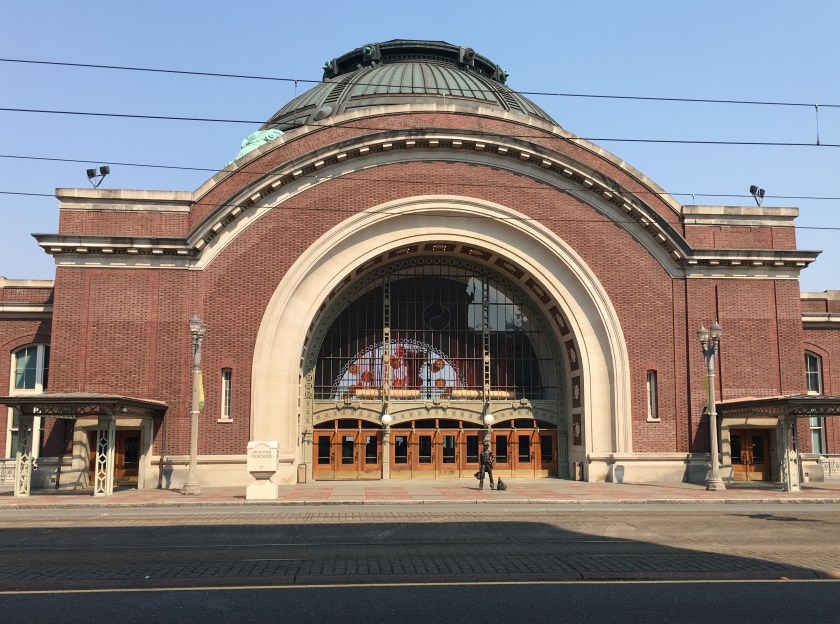
The U.S. Courthouse at Union Square in Tacoma, Washington began its life in the early 1900s as the city’s rail station. In the early 1990s, the abandoned Union Station was completely renovated and reconfigured into a federal courthouse. Its magnificent Beaux-Arts architecture was maintained and the light-filled rotunda houses a “stunning collection” of glass art by Tacoma native Dale Chihuly (I had to put the description in quotes since, unfortunately, we were there on a Sunday when the courthouse was closed).


I’m pretty sure this tunnel door is in Idaho. The Hiawatha Trail, a 13-mile bike path, was built along an old railroad route. The trail goes through eight tunnels – including one that is a dark 1.6 miles long – and travels over seven high trestles. The portion of the trail we rode begins in Montana and soon (somewhere in the middle of a tunnel) transitions into Idaho.


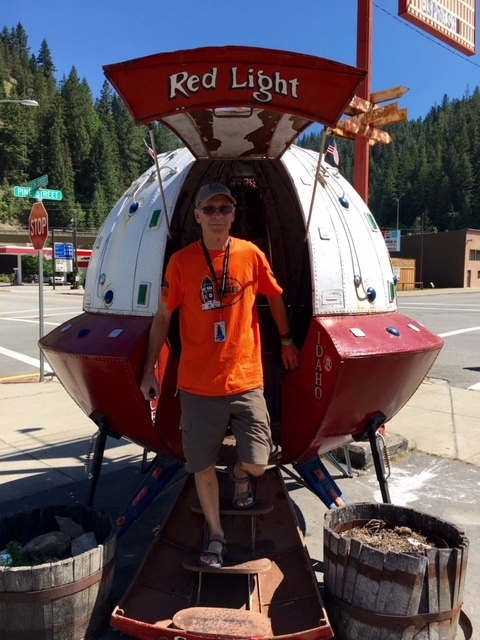
We found this spaceship docked in a parking lot in Wallace, Idaho. We could find no evidence of recent occupation by spacemen.


Maybe not technically a door, but certainly a gate qualifies? This historic headgate, located in Post Falls, Idaho, was part of a system that provided water power for the region’s first commercial lumber mill as well as irrigation water to the Spokane Valley. The headgate was raised and lowered to control the flow of water.


Not historically significant, but I just loved the teal patina of these doors found at the Barrister Winery in downtown Spokane.

The British Columbia Parliament Buildings, located in Victoria, B.C., overlook Victoria’s Inner Harbour. The impressive buildings, constructed in the late 1800s, were designed in the Baroque and Romanesque Revival styles. They are open to the public and offer free guided tours, but we arrive too late to take advantage of them. Fortunately, they left the lights on for us.

Thursday Doors is a link-up of fellow door addicts aficionados generously hosted by Norm Frampton. Head over to his blog to view all the amazing doors he and others have posted.

Hodgepodge Travel

Different destinations inspire different types of travel. Earlier this year, my husband and I spent an extended period of time in a single location. That particular destination, the city of Oaxaca in southern Mexico, invited us to linger, stroll the cobblestone streets, savor the food, and immerse ourselves in the culture. I wrote several posts about our experiences, including one titled Slow Travel.

In contrast, we recently returned from a less focused – or, maybe I should say multi-focused – trip to the Pacific Northwest and a few points beyond. Unlike our earlier trip, where we stayed in one place throughout, this one was definitely more of a hodgepodge that included multiple mini-trips during our time away.

We took many forms of transportation, including:

  • Airplanes
  • Automobiles (including two separate car rentals)
  • Shuttle buses
  • Public buses
  • A monorail
  • A motorboat
  • A ship
IMG_2988 (Edited)
White Pass & Yukon Route Railroad, Skagway, Alaska
  • A train

IMG_2784

  • Bicycles
  • A farm tractor
IMG_2735
Spokane, Washington
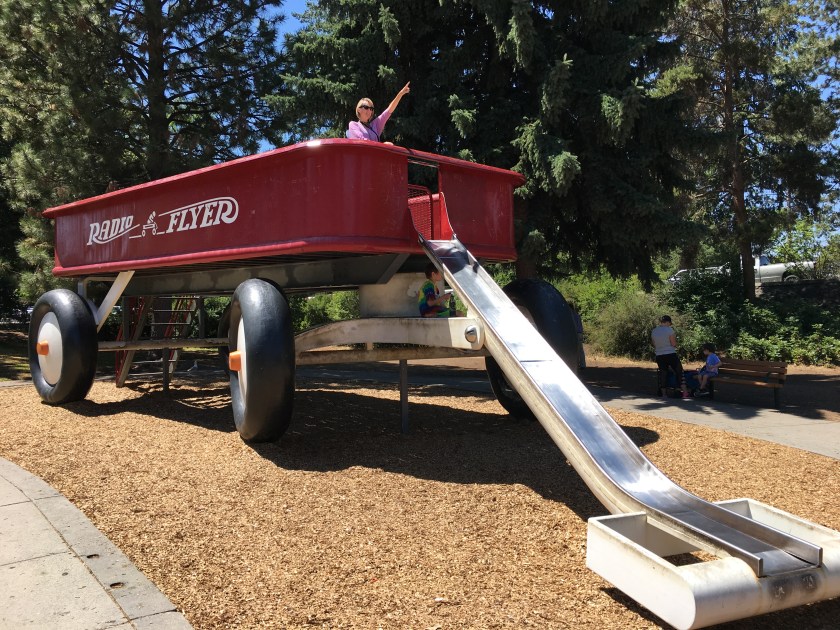
  • A giant Radio Flyer (ok, that one didn’t actually move)

We visited four states – three of which I had never visited before (four more to go to check off all fifty).

We visited one foreign country. It was brief, but it still counts, right?

IMG_3268
Mount Rainier National Park, Washington

We enjoyed multiple National Parks, National Monuments, National Forests, and National Historic Sites.

We stayed in one higher-end hotel, a few lower-end motels, and in the homes of friends and family.

IMG_2873_LI
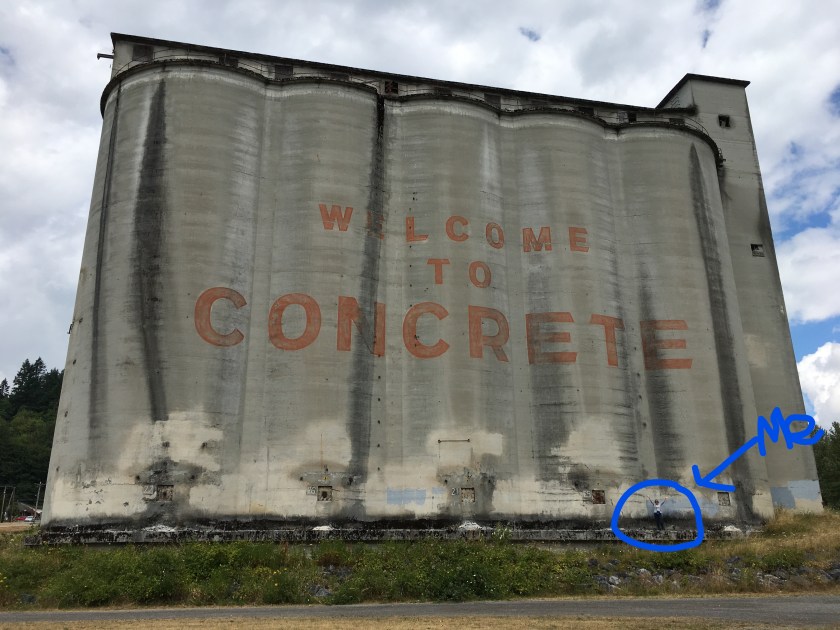
Concrete, Washington

We set our feet in Concrete, dined in Forks, found Opportunity, and got a charge out of Electric City (all located in the beautiful state of Washington).

IMG_2760
Wallace, Idaho

I discovered that I am, indeed, the Center of the Universe, as well as pretty insignificant when compared to the size, power, and magnificence of a glacier.

IMG_2933
Mendenhall Glacier, Juneau, Alaska

Since we’ve retired, my husband and I have enjoyed traveling slow, quick getaways, long road trips, prearranged tours, spontaneous adventures, and a hodgepodge mix of travel styles.  We have discovered that, whatever way we choose to travel, the important thing is to get up and go – and enjoy the journey as well as the destination.

GratiTuesday: Coming Home

I love to travel, and we’ve been doing quite a bit of it this year. We have just arrived home from our latest adventure and, I must admit, I am relieved. No matter how much fun we have, interesting places we explore, or new experiences we have, walking in our front door after a long trip feels like… well… coming home.

Even mundane tasks like doing laundry, running errands, and planning and preparing meals make me happy. Having all our familiar things just where we want them is comforting. Sleeping in our own beds – with our own pillows – is heaven. Pretty soon all of that will become more routine, but right now I’m enjoying the newness of our everyday lives.

As I finish unpacking and sorting through my photos, I know that I’ll grow nostalgic for our travels. I may even start to plan our next adventure. But, right now, I’m so grateful to be back in my home.

Spectacles, testi…

When I travel – especially when it involves airplanes – I try to pack as light as possible. Over the last couple of years, I have slowly put together a travel capsule wardrobe that makes packing easier and gives me a number of mix-and-match outfit choices. My capsule is primarily made up of three colors that work well together and integrate with my clothing at home (most of these clothes are part of my everyday wardrobe, not ones that I only wear when I travel). My chosen travel colors are navy, gray, and purple/raspberry. Others might choose black, white, and red (or some other accent color). Pinterest and certain fashion blogs are a great resource for more information.

One thing I don’t usually carry when I travel is a big purse. I much prefer a small cross-body bag for my cash, a small notebook, and (minimal) personal items. I also carry a smaller cross-body pouch for my iPhone (which I like to keep handy for picture-taking).

Because these “accoutrements” – the two smaller bags in place of one larger purse (plus, whatever else I might have, like a map or my DSLR) – are not what I’m used to carrying, I have to be careful not to misplace anything along the way. After eating a meal in a restaurant or attending an event, I try to be extra-deliberate about gathering everything up before I leave.

I call this mental sweeping process I go through to assure I have everything: “Spectacles, testicles, wallet and watch.

For those of you who may be unfamiliar with this saying, here’s the background (hopefully no one is offended):

A priest and a rabbi are on a plane, when the captain makes an announcement: “We are experiencing engine trouble and have to make an emergency landing. This could be rough.” As they are landing, the turbulence is terrible and the priest notices the rabbi making the sign of the cross.

Fortunately, the plane lands safely and, as they are disembarking, the priest says to the rabbi, “so, when the chips are down, you acknowledge Jesus?” The rabbi looks confused, so the priest says that he saw him making the sign of the cross. “Oh that,” says the rabbi, “I’m just checking my inventory: spectacles, testicles, wallet, and watch.”
Apparently, the line is also found in at least two movies: Nuns on the Run and an Austin Powers film.

Although not anatomically correct for me (nor do I carry a watch), this little ditty runs through my head as I check to make sure I don’t leave any of my items behind.

So far, it has worked every time and has helped to remind me more than once to grab my sunglasses before leaving.

Whatever works.
GratiTuesday: Making Connections

A couple of years ago, when my husband and I had a vague idea of traveling to Oaxaca one day, we happened to meet a charming couple at a charity luncheon who told us about…

… a friend of theirs who was an expat living in Oaxaca.  They offered to ask him if he’d be willing to be a contact for us and answer any questions we might have. Their friend, David, very generously said “yes,” and he and I emailed back and forth over the next year. He was a great resource and always promptly and patiently answered our many questions. He also got us connected to…


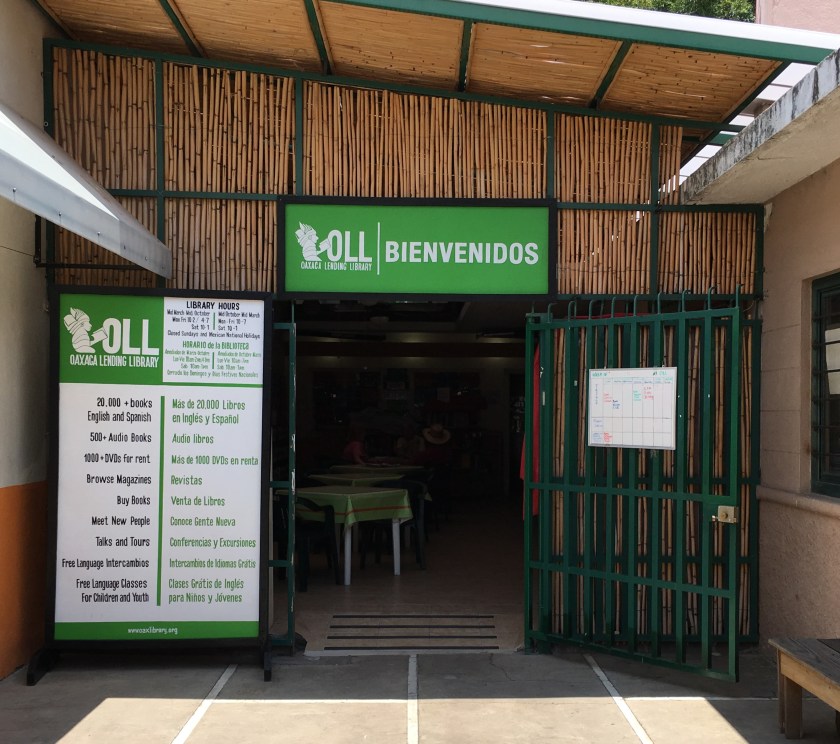
Oaxaca Lending Library… Bienvenidos!

…The Oaxaca Lending Library (OLL), which is the social hub for the expat community in Oaxaca. In addition to an extensive collection of books, they offer resources, programs, events, lectures, and other valuable services. English-speaking travelers visiting Oaxaca for any length of time should make OLL one of their first stops. My husband and I enjoyed meeting several members of this welcoming, interesting, and vibrant community, including…

Marga: 91 years old and full of energy

… Marga, a 91-year-old expat who is full of energy and enthusiasm. She has traveled around the world, but loves coming back to her home in Oaxaca.

When we asked David for a recommendation of a guide/driver to hire, he told us about…

The dashing duo… Jose and Robert

… Robert and Jose, who drove us to beautiful villages and spectacular archeological sites and made our experience very personal and special. Not only did we visit some fascinating locations but, after we were finished touring, they invited us into their home.

A big part of the joy of travel is the people we meet along the way. We have been fortunate to add many new friends to our contact lists, and we’ve received – and extended – plenty of, “if you’re ever in…” invitations over the years.

I am so grateful for the connections we make and the friendships we develop as we travel about. I am also very much looking forward to connecting with friends we have yet to meet.

Grave Discoveries

I’m not sure why I find old cemeteries so intriguing. I do know that I share this interest with many others, including more than a few bloggers. When I did a Google search on this particular fascination, I discovered that there is actually a name for those of us who consider a visit to an old – and the older the better – graveyard an essential stop on any trip: Tombstone Tourists (also, “cemetery enthusiasts,” “grave hunters,” “gravers,” or “taphophiles”).

Over the years, I have had the opportunity to visit many memorable cemeteries.  Some, like the Pere Lachaise Cemetery in Paris, are known for their famous inhabitants. Most, though, are populated by those known and loved only by a relatively small circle of family and friends. And, since the graveyards I love to visit are so old, probably that small circle of people is mostly gone too.

After visiting the Colon Cemetery in Havana, Cuba a couple of years ago, I thought it would be hard to match it for size, history, and architecture. So, you can imagine my excitement (OK, maybe if you don’t share this particular passion, it may be hard to imagine my excitement) when I discovered a city cemetery while looking at a map of Oaxaca. Even better, by the looks of the area indicated on the map with little crosses, it was a big one. Yippee!

This slideshow requires JavaScript.

Oaxaca’s San Miguel Cemetery was established in 1829 because of the city’s urgent need to bury large numbers of citizens killed by a smallpox epidemic. In 1833, it again was used to bury victims of cholera. Construction of a chapel in the middle of the cemetery was started in 1839, but was suspended due to, according to a plaque, “constant rebellions that were held in that time in the city.” Suspended, and never finished (an old crumbling building… yippee, again!).

This slideshow requires JavaScript.

The cemetery is surrounded by tall stone walls and an interior walkway that features 100 arches and over 2000 burial niches. The gravesites, tombstones, and alters tell a rich history of religious traditions, cultural heritage, and even geology, as many of the graves show the effects of the multiple earthquakes that have occurred over the years.

During the Oaxaca’s Day of the Dead celebrations, October 31st – November 2nd, San Miguel Cemetery is blanketed with flowers, candles and alters decorate the graves, and each of the burial niches are illuminated. It is supposed to be a spectacular sight; one that I hope we will experience for ourselves in the next few years.

Hearts and Crafts of Oaxaca

Oaxaca is known for the variety and beauty of its handicrafts. Exquisite pottery, woodcarving, weaving, basketry, embroidery, and many other crafts attract collectors from all over the world. Many of the small towns and villages surrounding Oaxaca City specialize in one particular type of craft. The skills have been passed down through the generations and often the whole family takes part in the various stages of producing the art, each adding their unique creative touch.

My husband and I visited several of the artists’ villages and, in some cases, even their private homes. We found that by hiring a private driver to take us around, we were able to tailor our experience to our interests and benefit from the guide’s personal knowledge. The “one-size-fits-all” packaged tours only visit the more touristy shops (never the private homes), often spend just a short time at each stop, and (we were told) steer purchases to locations that offered the tour operators a commission.

This slideshow requires JavaScript.

In addition to viewing the displays of finished products ready for sale, several of the studios we visited demonstrated how the items were made, including how dyes were created from natural sources. When we visited a shop in the village of Teotitlan del Valle, famous for their hand-woven rugs and tapestries, we were shown how a tiny insect gathered from the prickly pear cactus created the intense reds used to dye wool for weaving. Other dye sources include the indigo plant, wild marigold, pecan leaves and shells, pomegranates, and tree moss.

This slideshow requires JavaScript.

Another fascinating visit was to the village of San Martín Tilcajete, which is famous for the fantastical carved wooden animals called alebrijes (al-ah-bree-hays) created there. San Martin’s – and Oaxaca’s – most famous alebrijes artists are the husband and wife team, Jacobo and Maria Angeles. Not only do they produce bright and exquisitely detailed artwork themselves, they have converted their studio into a model of community development. They employ many talented artists from their village and offer tours and demonstrations. Although the alebrijes made by Jacobo and Marie were out of our price range, they also featured beautiful – and much more affordable – carvings made by their apprentices.

This slideshow requires JavaScript.

Making our tours to the outside villages even more special was having the opportunity to visit the private homes of a few of the artists. We met Conception Aguilar, whose family helps her create beautifully crafted and whimsically painted clay sculptures in their small home, and Jose Garcia Antonio, also known as “The Blind Potter,” whose large and wonderfully messy compound is a jumble of his primitive – but exquisite – ceramic art.

My husband and I aren’t big souvenir purchasers, but we did come home with a few items we fell in love with. Not only are they mementos of our travels, but we feel that buying pieces directly from those who make them is the best way to support the artisans and their families, and helps them to keep their heritage alive.

GratiTuesday: A Cuppa Gratitude

When I first saw this café along one of the pretty pedestrian walkways in Oaxaca, I, of course, had to stop for a cup of coffee and to take a few pictures.

Gratitud

Comida que hace bien

(Food that is made well)

Therapia y Cocina, con Alma y Corazon

(Therapy and Cooking, with Heart and Soul)


Not only was I grateful for the smile this café served me along with my coffee, I was doubly grateful that it included a side helping of a GratiTuesday post.

El secreto en Gratitud es hacer las cosas con amor

(The secret to gratitude is to do things with love)


Yes.

By the way, did you notice the menu board out front in the first picture? Least you think they were charging $20 US dollars for a Café Americano or a Café Expreso, or $30 US dollars for a Cappuccino, the current peso to US dollar conversion rate is about 18.9 to one. The price of those coffees is around $1.06 and $1.59… that is something to be grateful for!

Oaxacan Celebrations

Although the timing of our recent stay in Oaxaca didn’t coincide with any of the large festivals that city is famous for, there was no lack of celebratory events. And, lucky for us, many of these festivities took place in public so we could experience the magic, color, music, and joy of an Oaxacan celebration.

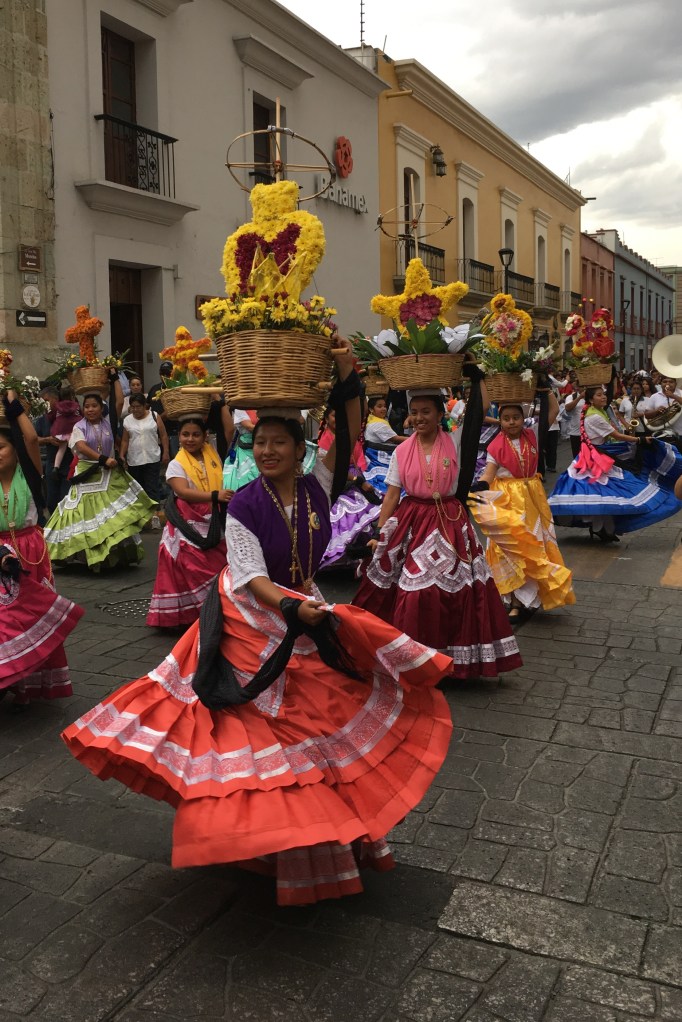
We had no idea what this parade was for, but we were happy to join in!

Whether it was a wedding, graduation, quinceanera, or a religious celebration of unknown (to us) origin, the cobblestone streets were often filled with revelry and processions. What I especially liked about these celebrations is that they weren’t arranged by the chamber of commerce or designed to entertain tourists. Instead, they were authentic and steeped in ritual. That we were there to witness the festivities was fine, but the celebration was for the invited guests, the citizens of Oaxaca, and for those who roots run deep in its culture and traditions.

Many of Oaxaca’s festivals trace their origin to indigenous rituals that were later combined with Catholicism, brought to the region by Spanish conquistadores. One such holiday, Dia de los Muertos (Day of the Dead), is celebrated on the same day as All Saints Day (November 1st) and All Souls Day (November 2nd). Unlike the solemn rituals surrounding these Catholic holidays, Dia de los Muertos is marked with festivals, parades, and celebrations. The holiday and its rituals recognize death as a natural part of the human experience. The departed are seen as part of the community and on these days, they are awakened from their eternal sleep to share celebrations with their loved ones.

During the Day of the Dead celebrations, this cemetery will be filled with people and flowers.

Other festivals that are tempting us for a return visit include the huge Fiesta Guelaguetza, held in July, and the many festivals surrounding the Christmas season including Noche de Rabanos (Night of the Radishes), which brings people from all over the valley into the city center to display their homegrown radishes that have been carved into imaginative sculptures .

Whether they are remembering their departed loved ones, marking a religious holiday, or observing part of their ancient culture, the people of Oaxaca are creative and artistic, exuberant and friendly. They know how to celebrate and, best of all, we are all welcome to join in.