It’s Good To Be Old

I find myself saying this out loud or to myself more and more lately. The aches and pains­­­—minor at this point, thank goodness—and occasional loss of the exact word I’m looking for aside, being older definitely has its advantages. I am happy that I’ve successfully aged past the years of being a responsible, fully employed adult, and into blissful, often irresponsible, and less-than-productive retirement.

In no particular order, here are just a few reasons I celebrate being old:

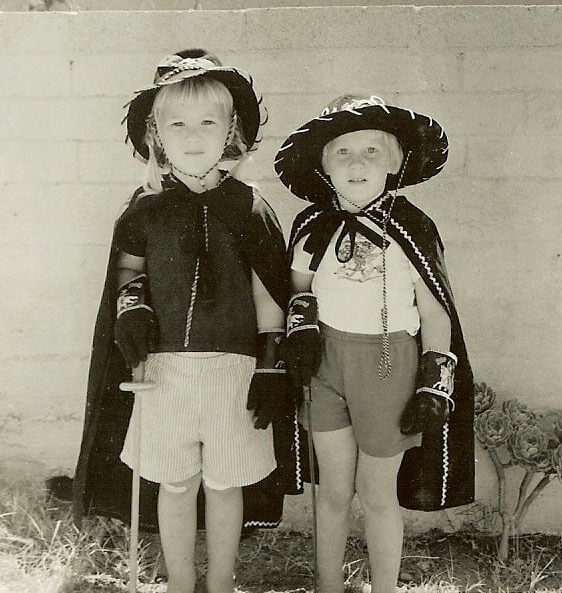
  • I am grateful that I grew up without the scourge of social media. I didn’t have to worry about getting likes, the latest social media trend, or that something dumb I did would be captured on video and go viral. 
Somehow we made it through high school without cell phones, social media, bots, or online influencers.
  • I’m not overly concerned about what others think of me. That doesn’t mean that I don’t consider others or don’t want to be liked; I just don’t lose sleep worrying about someone else’s opinion of me.
  • I am concerned about the state of my country and the world, including social justice and the impact of climate change. I do what I can to support the causes I believe in but, at my age, I’m somewhat insulated and will probably be gone before things get too bad. I hope the younger generations are smarter than we were.
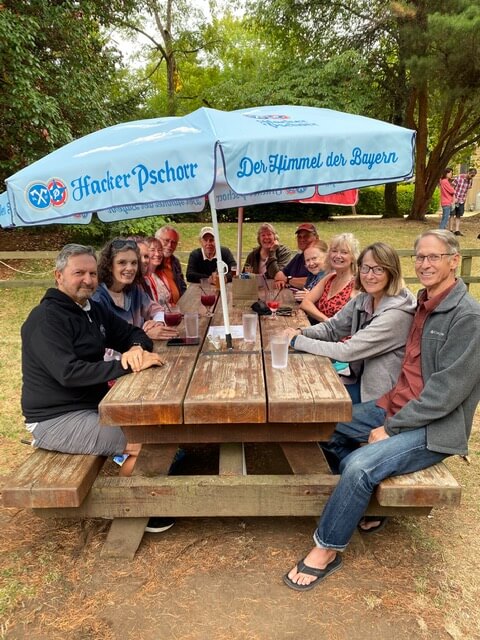
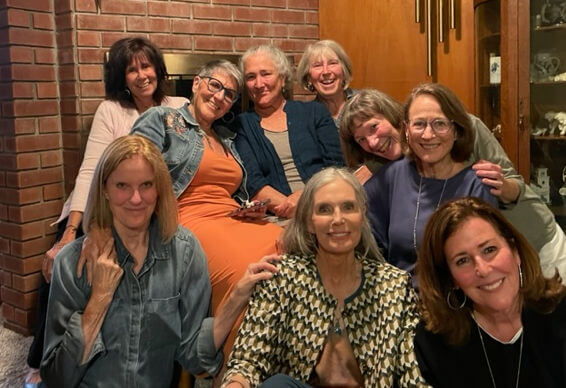
  • I’m happy with my tribe of peers. I find myself surrounded by thoughtful, intelligent, engaged, interesting friends. I’ve known some since I was very young, and others have been more recent additions. All are treasures.  
Friends since our diaper days.
Cherished blogging friends.
  • AI wasn’t a thing when I was young. While I was working, most jobs were performed by actual human beings. At no time during my career was I concerned about being replaced by a computer program. I don’t think anyone really knows where AI will lead us, but I know several younger workers who are worried.  
  • My husband and I recently got the latest COVID booster. Being over 65 means that we are “privileged” to be in the approved group. Also, because I grew up when I did, I received all the vaccines available as a child.  
  • The elementary, junior high, and high schools I attended weren’t surrounded by barricades. I didn’t have to worry that my life was an acceptable cost of protecting the right of others to arm themselves with AK-47s.
Fencing recently added to a local elementary school.
  • Of course, the best part of growing old is the privilege of being old. Not everyone is so lucky. That I successfully dodged the consequences of more than a few stupid decisions, survived a couple of serious health challenges, and managed to make it this far is a bit of a miracle.  

How about you? Are you happy to be the age you are, or would you like to time travel to a different age? If you are older like me, what benefits are you enjoying?

Copyright © 2025 RetirementallyChallenged.com – All rights reserved.

The Spanish Art of Relaxing

Since this would be the first time either of us had visited Spain, our itinerary included three of the largest cities: Barcelona, Madrid, and Seville. It was tempting to add other cities, towns, and villages but we didn’t want our trip to become a whirlwind of rushed travel. A week’s stay in each of the three cities seemed just about right.

Many guidebooks list the top attractions to see if you are in a location for a short amount of time (one, two, or three days, for example) and, frankly, that sounds exhausting. Because we had more time in each city, we could not only sightsee, but also relax, people watch, and enjoy a less frenzied pace.

Turns out, this less-packed itinerary was the perfect way to embrace Spain and its relaxed lifestyle. It was not unusual to see outdoor cafes full of groups of people in the afternoon, enjoying a glass of wine, sharing a few tapas, and actually talking to each other. If a table was full of people staring at their phones, it was an excellent chance they weren’t Spaniards.   

In the U.S., I would feel guilty sitting at a restaurant table for a long time and only ordering a glass of wine. I was a server long ago and turning tables quickly was not only what the management wanted, it helped to increase my tips. Besides, since the customers often were on their way somewhere else, they appreciated getting in and out.

Not so in Spain. They seemingly have perfected the art of chill. That doesn’t mean they don’t work hard too, it’s just that they have successfully compartmentalized the two.

Because we often had no particular place to be, my husband and I enthusiastically embraced this lifestyle. After an afternoon of sightseeing, we’d find an empty table in the shade, order a glass of (inexpensive and mostly very good) wine, and watch the world go by. We weren’t in a hurry, but, best of all, the servers didn’t seem to be in a hurry either. When we wanted our check, we’d have to catch their eye and request it, then wait a while longer for it to come. We never felt rushed to leave so they could seat another party.

When we travel, we seldom purchase souvenirs or other items we really don’t need. But Spain’s slower paced way of living was one keepsake we vowed to carry with us when we returned home.

I am submitting this post to Deb and Donna‘s What’s Been on Your Plate link-up. Check out their posts as well as the posts of other contributors.

Copyright © 2025 RetirementallyChallenged.com – All rights reserved.

So… did I miss anything?

After taking a 2+ month “spring break” from my blog, it’s time to jump back in again. The season seemed to fly by and now those of us in the northern hemisphere are about to welcome the official beginning of summer.  

I used some of my hiatus decluttering and organizing, but most of it was spent traveling (more on that soon, but suffice it to say that it involved planes, trains, and several time zones).

Something I wouldn’t see again for over two months.

Back in late March, not only did I stop posting but I turned off all the blogs in my feed so I wouldn’t get post notifications. The upside was that I enjoyed a less crowded email inbox and lots of freed up time every day. The downside, of course, was that I missed the connections… after all, that’s why most of us blog, right?

I hope to re-connect with everyone soon, but it may take a while. When I temporarily turned off the blogs in my feed, I thought I would be able to easily switch all the “unfollows” back to “follow.”

Well, best laid plans and all that…

Unfortunately, my blogroll has now disappeared from my dashboard and I will have to recreate it the best I can. Looking on the bright side, it will give me a chance to make a few adjustments. So many blogs I was following (60+… yikes!) had become inactive or had content no longer relevant to me.

So… hello again. I hope spring was as enjoyable for you as it was for me. I am looking forward to catching up.

Copyright © 2025 RetirementallyChallenged.com – All rights reserved.

Too Much of a Good Thing?

Prior to my retirement, I dreamed about all the things I could do with my freed-up time. In addition to travel, creative pursuits, and enjoying friends and family, I was looking forward to vast amounts of time that I could fill up with anything I wanted. Reading, writing, gardening… whatever.

After being retired for a while, I started to explore the many emeritus programs and lifelong learning opportunities offered in our city. I always enjoyed school and learning new things, so this seemed like a great way to keep my mind engaged without the stress of grades.

So many classes to take, so little time to do everything I want.

The Oasis organization offers interesting lectures on a range of subjects and a variety of courses and workshops, all for a very reasonable price.

Our local Community College district has an Emeritus program that offers courses on an array of subjects as diverse as art, effective communication, writing, law, and music.

We also have robust Osher Lifelong Learning Institute (OLLI) programs at two local universities. Joining Osher is more expensive than the other programs, but the quality of the offerings is top-notch. Not only are most of the lectures presented by college professors, but membership also includes the ability to audit many of the regular university courses.

In addition, smaller organizations, clubs, and businesses offer art classes, craft lessons, photography workshops, writing groups, and other learning opportunities for just about any interest.

Pre-Covid most of these classes and lectures were held in-person but the pandemic moved them online. Now, some remain 100% virtual, some are 100% in-person, and others offer hybrid, in-person and virtual attendance.

Not only are there a tremendous number of quality offerings, but the ability to attend many of the courses and lectures from the comfort of home makes it so convenient.

So, what’s the problem? I have found that it is too easy to overschedule myself.

I’m the type of retiree that gets twitchy when I have too many commitments on my calendar in one week (too many being more than one or two). I prefer to space out doctor appointments, get-togethers with friends, and anything else that requires me to be at a specific place at a specific time. I like my calendar to have lots of blank days. Now, with so many interesting classes and lectures, I’m suddenly scheduled just about every day, Monday – Friday. Granted, most of the classes only last 2 – 3 hours but they are usually in the middle of the day, making it difficult to do anything else, like going for leisurely walks or enjoying relaxed lunches with my husband. I have found that I am starting to look forward to weekends again.

On one hand, I want to sign up for everything that sounds the least bit interesting (which is a lot). On the other, I want more unscheduled time to do other things, or do nothing. I’m not sure what the right balance is, but I’m trying to find it.

Although I was never worried that I wouldn’t have enough to do in retirement, I know it’s a concern to some. My advice: don’t stress. After being retired for a little over eight years, boredom is the least of my worries.  

Copyright © 2025 RetirementallyChallenged.com – All rights reserved.

Part 4: Mapping Our Journey Home

The final installment of our 1300+ mile road trip in our electric car (Part 1 & Part 2 & Part 3 here).

When we first planned our road trip, we weren’t quite sure which route we’d take back home. Because of the possibility of excessive heat and unpredictable wildfires, we left that decision open until it was time to head south. The coastal route is interesting and cooler, but we drove up that way. There are a couple of north/south freeways that offer the shortest and quickest drive, but they are mind-numbingly boring. If we drove further east before heading south, we could visit Mono Lake, something that I’ve always wanted to see.    

When it was time to start home, the temperatures had dropped a bit and there weren’t any active fires, so we decided to head east, then south. This route required some additional planning because, unlike the state’s western corridor, the eastern areas aren’t as populated, and superchargers aren’t as available.

Fortunately, at this point in our trip, we had become comfortable with the apps that located the chargers and with our car’s ability to predict the level of charge we’d need at each one. As we headed east, we drove through mountain passes and pine forests – away from any population centers – but our car told us that we’d reach the next charging station with plenty of juice to spare. Although it can be anxiety-producing to watch the car’s range shrink when climbing hills, regenerative breaking adds most of that range back when driving downhill.

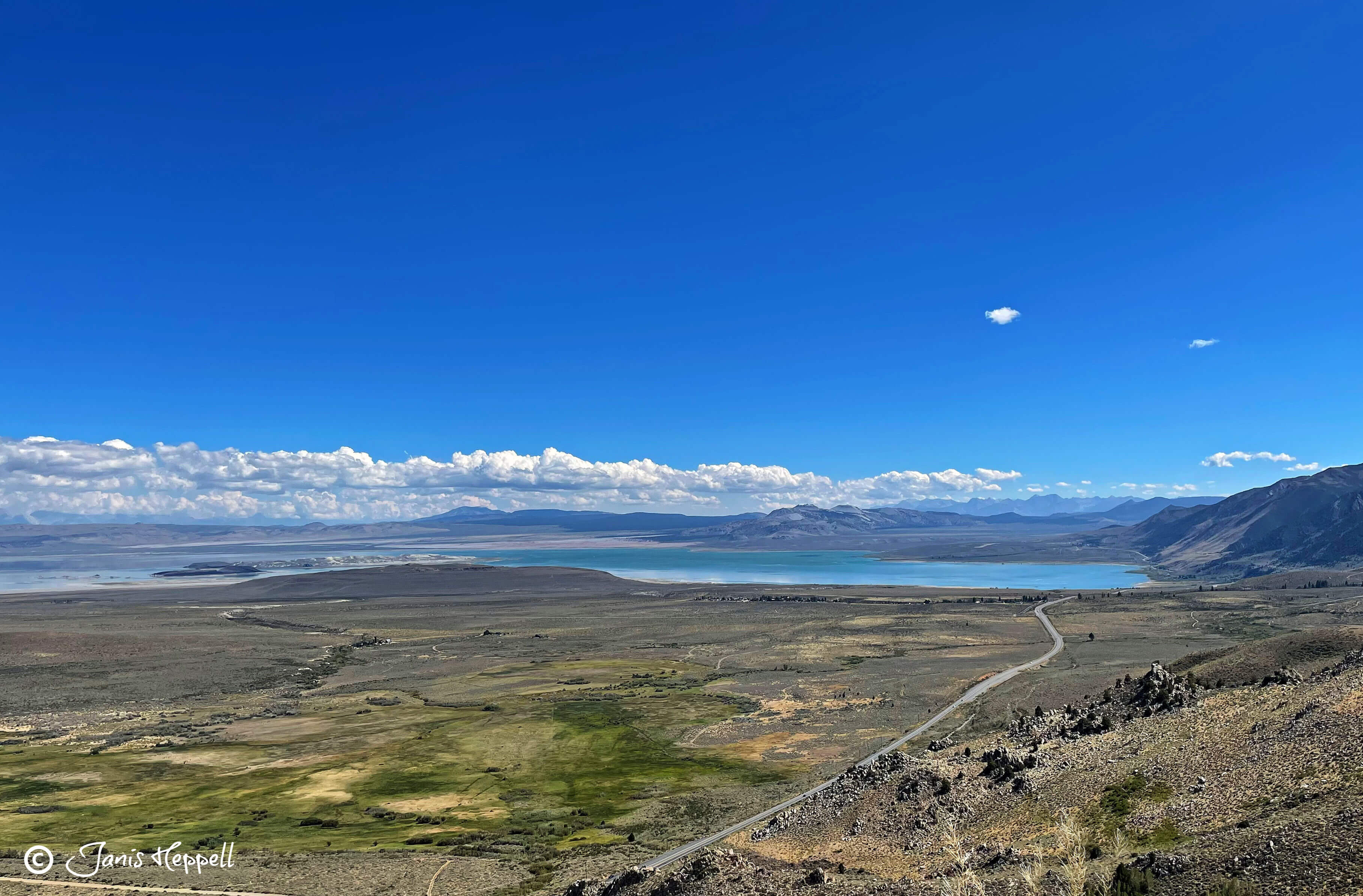
Mono Lake

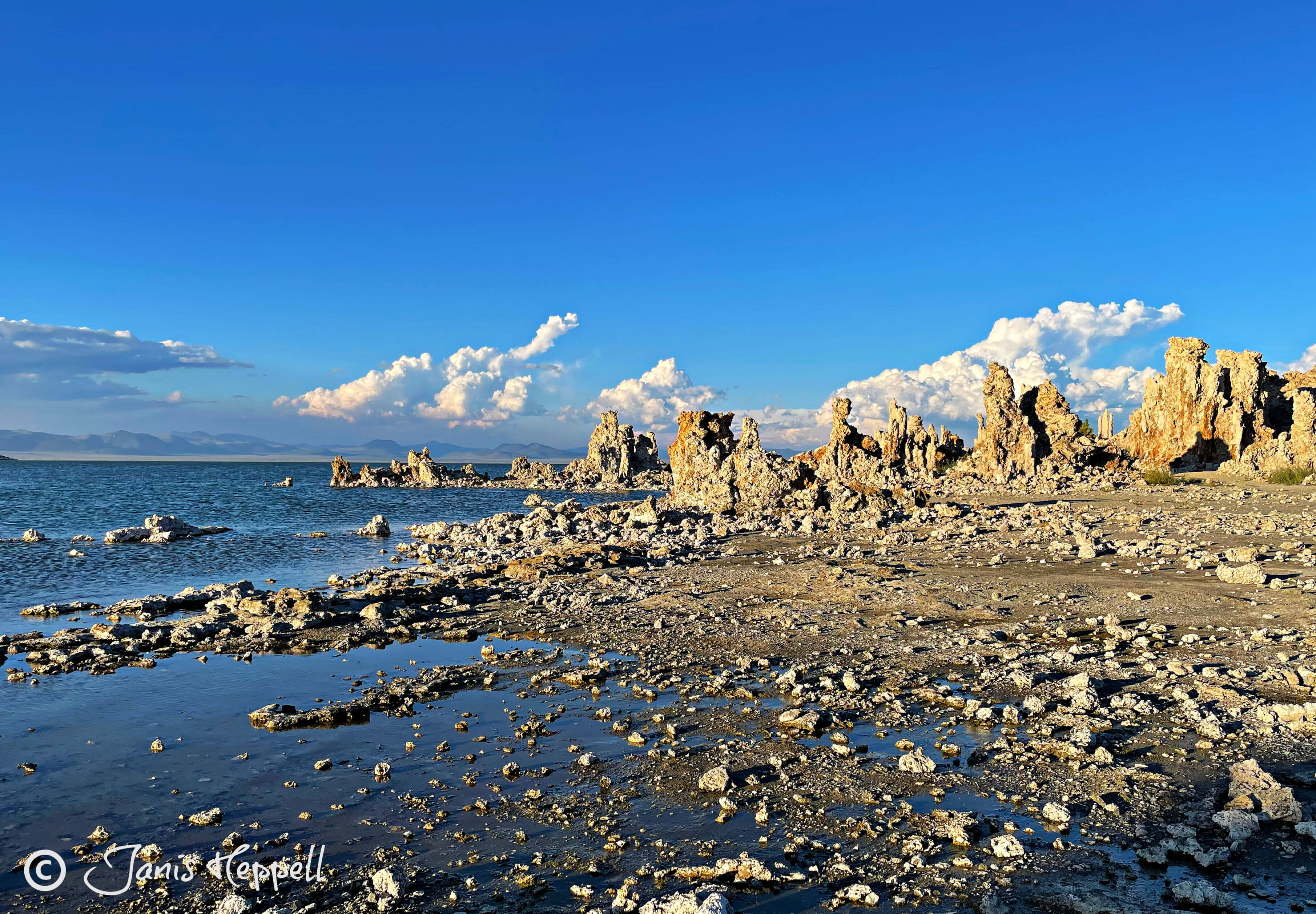
When we came around a bend in the road and first caught a glimpse of the lake from a view turnout, I was in awe. I had seen pictures of Mono Lake but was thrilled to now see it for myself.  

Our first view of Mono Lake.

Mono Lake, an ancient saline lake located at the eastern edge of the California’s Sierra Nevada Mountains, is home to trillions of brine shrimp, millions of birds, and the world-famous tufa towers. The lake was nearly destroyed when, in 1941, water was diverted from the lake’s tributary streams and sent 350 miles south to meet the growing water demands of Los Angeles. Fortunately, because of the work of dedicated activists, this practice was stopped, and the lake’s water level is slowly being restored.

The clouds in the background mimicked the shape of the Tufas.
The sun setting behind me lit up the clouds.

The Final Stretch Home

When we got on the road the next morning, our plan was to recharge twice along the way before stopping for the night about halfway home. During the drive, we continued to find charging stations available with no wait, as well as places to eat and “refresh” close by. As we approached the half-way point, we were feeling pretty good, so we decided to continue driving after charging.  

This decision is not unusual for us; we often choose to power through the last stretch because we are anxious to get home and sleep in our own bed again. What was different was how good we felt after driving for over 7 hours. Stopping every couple of hours for a quick charge (charge time averaged 10 – 15 minutes each) made us get out of the car and stretch our legs. When we arrived home after 8 pm that night, we both felt good.

So, not to get too wonky on you, here’s our final thoughts about our 1300+ mile EV trip:

What we liked:

Charging more often but to lower levels not only makes the trip more enjoyable but the total charging time is actually less.

EV owners are nice and full of information so good conversations happen while charging.

Our car had plenty of power, the cabin comfort was outstanding, and we had more than enough storage space for our luggage.

Although it wasn’t our intention, we saved money. Gas prices are high but so are electricity rates at superchargers. Even so, we spent about half as much as we would have at the gas pump (and no stinky hands). 

What could be improved:  

Because charging stations aren’t as prevalent as gas stations, the trip took extra planning, and we had a bit of a learning curve on how to use the tools available. Next time, we’ll be better at it.

California has good charging infrastructure, so we had no trouble finding stations. Although more public chargers are being added all the time, for now, we might need to stick to the main freeways when traveling in certain states.   

The biggest negative for us is the car’s single large screen located in the middle of the dashboard. Although this is a trend for a lot of cars – even gas-powered ones – we don’t like it. We prefer not to have to take our eyes off the road to perform some of the car’s functions or to see how fast we are driving vs. the speed limit. Without a co-pilot, I’m not sure either of us could comfortably drive unfamiliar roads and read the tiny print on the screen, especially with our older eyes.   

Safely home and ready for a good wash.

Now that we’ve been home for a while, we are already thinking about our next EV adventure.

Copyright © 2025 RetirementallyChallenged.com – All rights reserved.

Part 3: Three Days of Play

Continuing the story of our 1300+ mile road trip in our electric car (Part 1 & Part 2 here).

Somewhere east of Sacramento – the city where the reunion was held – we passed the halfway point of our trip, miles-wise. So far, we were pleased with the EV’s performance, comfort, and the availability of superchargers.

Amador County, California

We were looking forward to spending the next several days with my brother and sister-in-law exploring Amador County – an area famous for gold mining in the 1800s, and now known for producing wine. The fact that we would also be celebrating both our anniversary and my brother’s birthday while there, was a bonus. Besides visiting a few wineries, our plans included taking a tour of an abandoned gold mine operation, exploring a deep cave, and wandering around several gold rush-era towns and historical cemeteries.

Like many retirees, we prefer to travel in the off-season. After Labor Day, the summer crowds have dispersed, and reservations often aren’t necessary. That’s the good news. Traveling after Labor Day, especially mid-week to smaller towns, can also mean facing “Sorry, we are closed” signs in shop and restaurant windows. More about that later.

Kennedy Gold Mine  

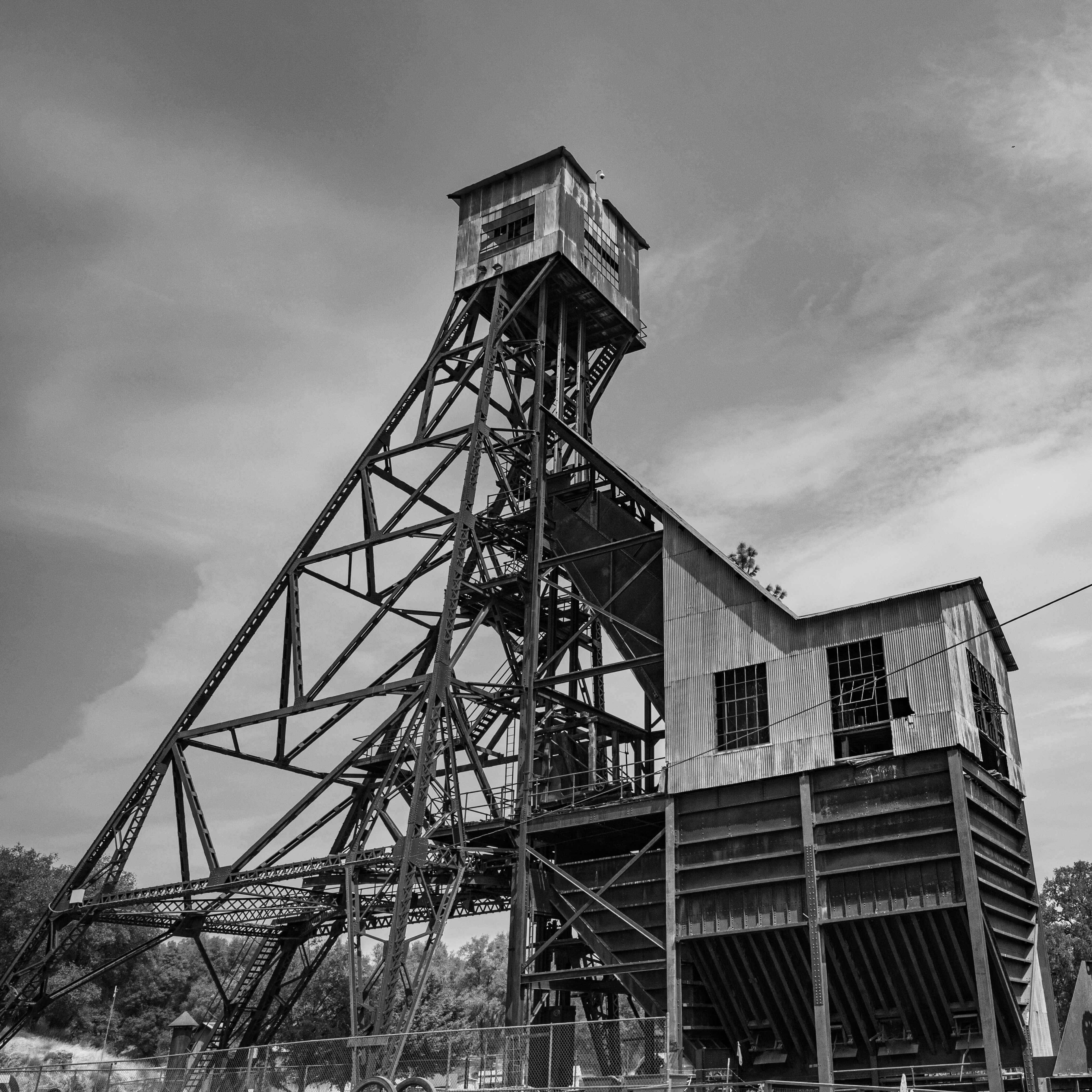
Kennedy Gold Mine headframe, where the miners were lowered into the mine shaft. Photo credit: my brother, Gary.

On our first day in Amador County, we took a tour of the Kennedy Gold Mine, one of the deepest mines in the world. Part of the tour included viewing old black and white films that showed the mine in operation. The mostly immigrant labor worked long hours in dangerous conditions. Despite the mine producing over $34 million (not adjusted for current prices) until it was closed in 1942, there was little indication that much of the wealth trickled down into the pockets of the laborers.

Although the actual mine was closed to visitors, we would have the opportunity to explore beneath the Earth’s surface the next day.

Black Chasm Cavern 

Waiting to enter the cave with the naturalist.
Stairs leading down into the cavern.
Just one of the beautiful formations we saw in the cave.

Not for those who are prone to claustrophobia or who have a fear of heights, the Black Chasm Cavern was a dazzling experience. The deep, cool cave, with its stalactites, stalagmites, and rare crystal formations called helicites, was the perfect place to spend an afternoon away from the sun.

Historical Towns – charming… and closed

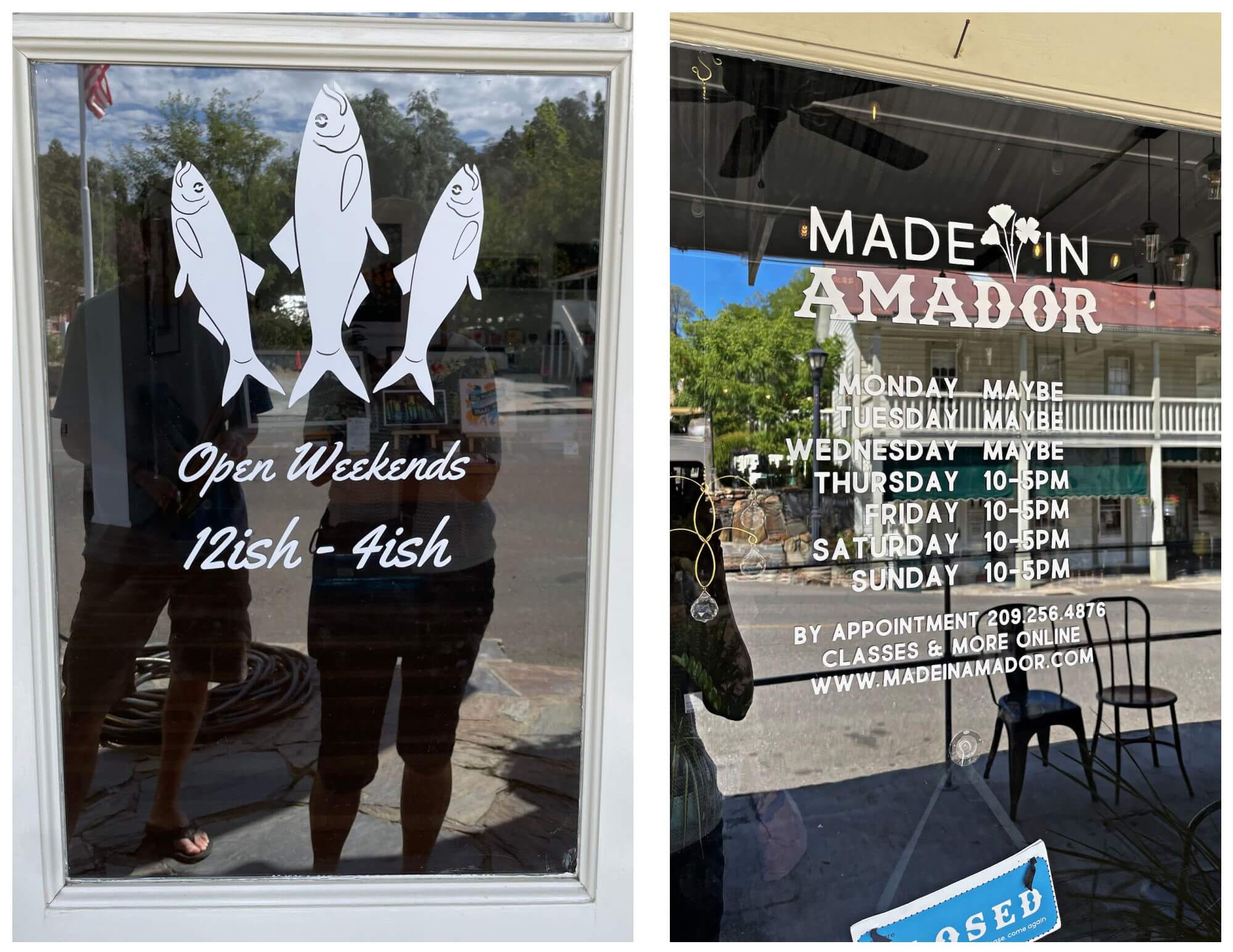
When we weren’t exploring mines, caverns, cemeteries, or wineries, we spent time wandering around several small towns whose founding dated back to the gold rush days. The main streets were quaint and lined with enticing shops and tempting restaurants. Sadly, because we were there at the beginning of the week, most of them were closed. Living in a big city, when everything is always open, this hadn’t occurred to us as a possibility.

Hours of operation were very iffy… and, sadly, closed when we were there.

Fortunately, we were able to find a nice(ish) restaurant that was open on my brother’s birthday. The next night, though, when it was our anniversary and their turn to treat, the only thing open was the restaurant attached to our hotel:

Not exactly elegant, but it’s the thought that counts, right?

I have to admit, although I have no recollection of what we ordered – most likely it was off their 55+ Special Savings menu – it was an anniversary celebration dinner that we won’t forget. Ever.  

Copyright © 2025 RetirementallyChallenged.com – All rights reserved.

Part 1: Planning Our EV Road Trip

When my husband and I first talked about taking our electric car on our upcoming road trip, I was a bit hesitant. A gathering for a high school reunion prompted the trip, but we wanted to take advantage of the location to visit family and do some exploring. My concern was that driving our EV might make us adjust our route too much. I’m a big fan of electric vehicles, but I didn’t want to miss an opportunity to go somewhere because we wouldn’t be able to charge our car.    

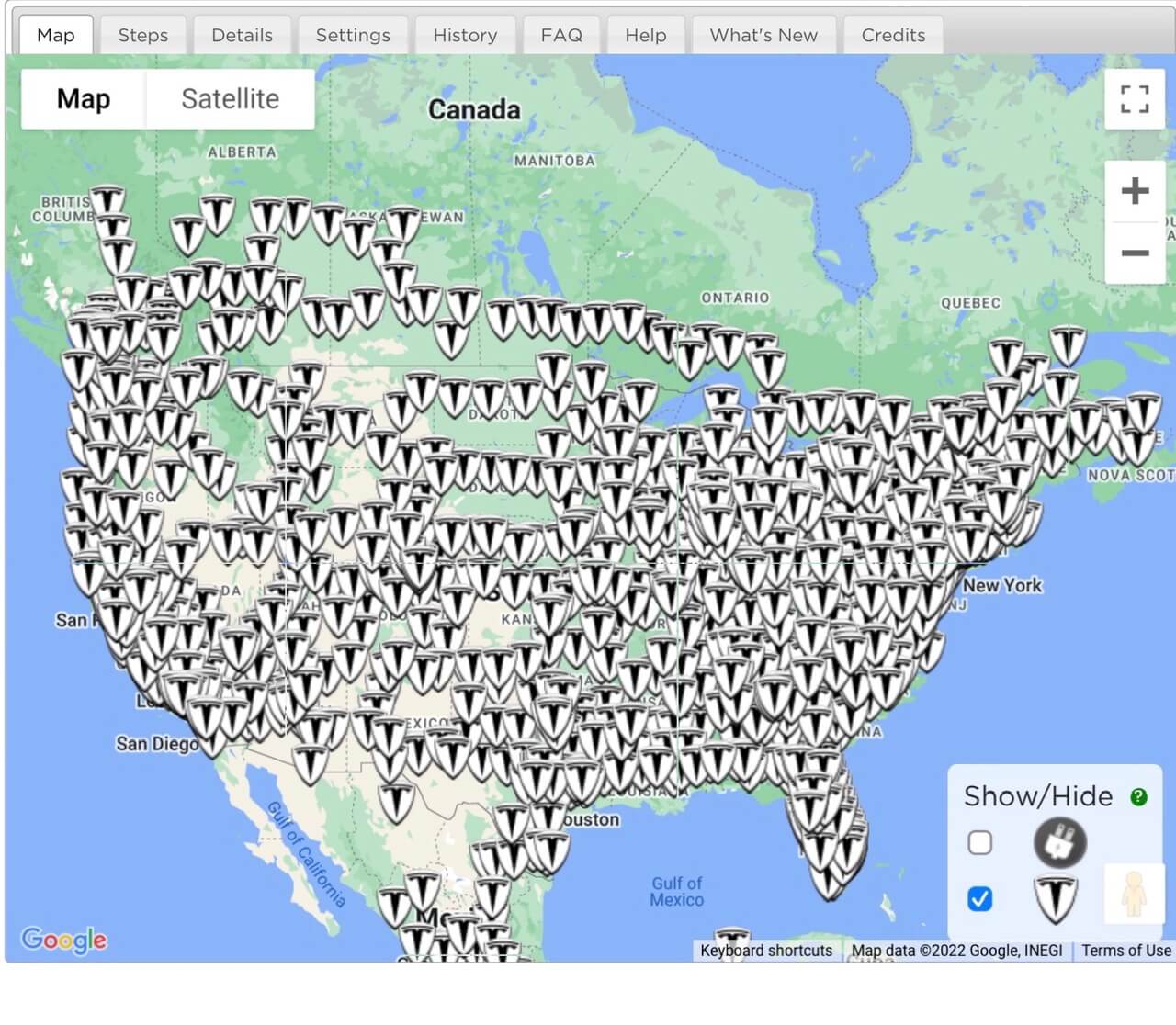
Normally, charging isn’t a problem. We plug our car in at home, charge overnight, and it’s ready to go in the morning. The car has plenty of range to last us at least a week with our usual daily driving needs. We had recently taken a couple of short trips that required some charging away from home, and they had gone well. Now that we were about to embark on a 1,300+ mile road trip, we knew that pre-planning would be important because of the multiple charging stops we’d need to make.  Even with California’s relatively robust infrastructure of charging stations – especially Tesla-branded superchargers – they aren’t as ubiquitous as gas stations.

EVTripPlanner.com was a great help with planning our trip.

There seems to be (at least) two philosophies about road trip charging: A) Make fewer stops and charge to 100% each time, or B) Make more stops, but charge to lower levels (60 – 70%) each time. After some research, we like option B best for several reasons:

  1. Each charging stop takes less time. When charging past 60-70%, charging slows way down as it tries to “stuff” more juice into the battery (this is not a scientific explanation, but you get the point).
  2. More stops mean more opportunities to stretch our legs… something we’ve come to appreciate on longer road trips.
  3. Lower stress. By not waiting until the car’s charge level was low before we re-charged, we would have a comfortable range cushion each time we reached a station (sort of like not waiting until your gas level indicator turns red before re-fueling).

The route we planned had us driving about 2 hours between charges and charging to no more than 70% each time. Of course, we could adjust this along the way, but that felt like a comfortable pace.

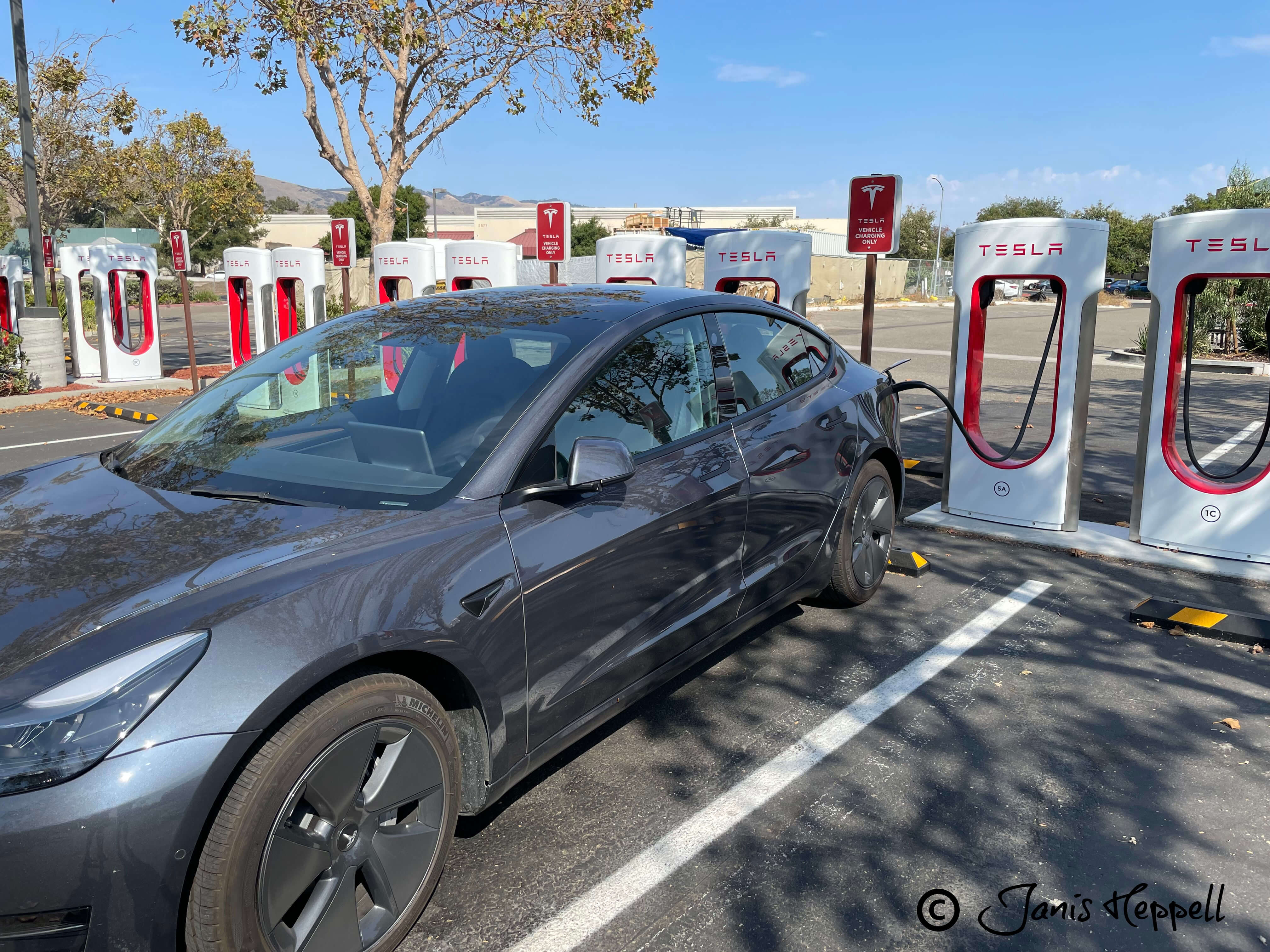
We only had to wait for a charging station once our whole trip. Usually, we’d find plenty of stations available.

Between our home and our first night’s stay, we stopped at three supercharger stations. While our car charged – a process that took about 10-15 minutes – we entered our next destination into the car’s computer. After some calculations, it told us where the next supercharger was located, how much remaining charge we’d have when we got there, how many stations they had, and how many were available for use (updated real-time).

Morro Rock at sunset.

As we strolled along the waterfront in Morro Bay, California, we congratulated ourselves on completing the first leg of our journey without any issues. Our pre-planning had paid off. We were becoming more comfortable with the car’s systems and confident that we had made the right decision to drive our EV.     

Copyright © 2025 RetirementallyChallenged.com – All rights reserved.
Hitting the Medicare Milestone

Just some of my fan mail.

The flood of mail started around September and hasn’t let up yet. I will turn 65 – the magical age for Medicare – in January and I’ve received at least two… or three… or more letters, brochures, and flyers a day begging me to sign up for this Medicare plan or the other.

Those of you who live in a country that considers healthcare a right for every citizen no matter what age, feel free to shake your head in pity and not read the rest of this post.

As I was perusing the various plans—and the options within each—I thought about how my upcoming birthday changes my appeal to the insurance companies. At 64, healthcare coverage on the open market is somewhat limited and very expensive. Even in good health, someone that age is viewed as a potential drain on their bottom line. But, as soon as my odometer clicks over to 65, I’m desirable again.

As far as I know, I will continue to get older and, as far as I know, the natural aging process can will eventually bring health challenges. Yet, they all want me to sign up for their plan.

I’m pretty sure the insurance companies aren’t offering me reasonably priced healthcare coverage out of the kindness of their hearts. Whatever agreement they’ve worked out with the government must benefit them financially.

Don’t get me wrong, I am grateful for Medicare and the comfort having good coverage brings. I just have a sneaky suspicion that it isn’t as cost-effective as it could be. Insurance companies rarely lose when negotiating with our government.

Anyway, after looking through all the options—and wondering why the heck this needs to be so complicated—we’ve made the decision that we think is best for us now. Next year, and every year going forward, we will have to reevaluate, based on our current circumstances. As we get older, I imagine this annual reevaluation will become more difficult. Call me crazy but it seems that having one plan that covers everyone would be easier to manage and less expensive.

If you, or a loved one, will turn 65 in 2021, I encourage you to start doing your homework now. There are many decisions to make and missing certain deadlines can be costly. You might feel overwhelmed and/or confused enough to want to just ignore it all together. Don’t.

Attend a few seminars if you can. Talk to your friends, family members, and colleagues. Ask how they made their decision and if they’ve found any helpful resources. One company you might want to check out is Boomer Benefits. They have a great website that contains a lot of information, answers to common questions, videos, and webinars. In addition, most areas have local Medicare insurance advisers who might be able to help you sort through the various options (at no cost to you).

Good luck and stay as healthy as you can. The best healthcare plan is the one you don’t have to use.

Useful Travel Hacks

Hack: A strategy or technique adopted in order to manage one’s time and activities in a more efficient way. Any method of doing something that either simplifies or makes your life easier.

Our retirement has allowed us to do a fair amount of traveling, for which we are very grateful. Although we enjoy being home and the day-to-day familiarity of our city, neighborhood, and friends, we are always looking forward to our next adventure. In fact, before we put away our luggage after a trip, we make sure that, zipped inside, are items we don’t want to forget when we hit the road again.

Our list of travel hacks has developed over time. As we identify items that are handy to have or we wish we had packed, we add them to the list. Nothing is expensive or unusual (in fact, you probably have most of them already) but they may not be what most people think to pack.

Nightlight
Hotel rooms and other lodging can be very dark at night, especially if they have blackout curtains. Pitch darkness and an unfamiliar room layout can lead to bumped shins, stubbed toes, and maybe even finding yourself in the closet rather than the bathroom. We bring along a nightlight just in case our room is too dark to safely get around.

Binder Clips
If the problem instead is light leakage because the curtains don’t close properly, large binder clips are great for pulling the edges of the curtains together.

Electrical Tape
Have you ever turned off the lights in a hotel room only to find a bunch of bright lights lighting up the room? Not only can clock radios and microwave displays light up a room, TVs and smoke detectors have teeny LED lights that can drill into your eyes, especially if you are light-sensitive. A piece of electrical tape can cover these lights and let you sleep.

Flip Flops
Maybe it’s just us, but we don’t like to walk around barefoot in hotel rooms, so each of us keeps a cheap pair of flip flops by our bedside. We also wear them in the shower. They don’t take up much room in our luggage and they make us more comfortable.

Long Charging Cord
Electrical outlets found on the road are often inconveniently located. Having a long charging cord (ours are 10 feet long) makes it easier to plug in wherever you are.

Pouch of Useful Stuff
On our earlier travels, when we needed items like rubber bands, paper clips, small binder clips, highlighters, scissors, or post-it notes, we would have to take the time to find a store. In addition, we often had to buy a lot more than we wanted (a box of rubber bands instead of the two or three that we needed). Finally, I got smart and put together a small travel-size supply of these items. When we get home, I resupply my yellow pouch of useful stuff and put it back in my suitcase for our next trip.

Personal Business Cards
Soon after we retired, we had personal business cards printed. Now when we meet people we want to keep in touch with, we hand them one of our cards. This avoids the need to scramble for a pen and a piece of paper to write down our contact info (our cards have our names, email addresses, and phone numbers). A card has less chance of getting lost than a scrap of paper and it’s easier to read. There are a lot of companies that print business cards (we used Vistaprint) and most offer a ton of design choices. We picked a two-sided design so we could print a travel quote on the back.

There are many other items to consider as well (an empty envelope to keep receipts in, a thin plastic bag for dirty laundry, tiny flashlight, etc.), all while balancing weight and bulk versus convenience.

So, how about you? Do you have any items that you wouldn’t leave home without? Along with clothing, toiletries, camera, maps, and journals, is there something – or things – you make sure to pack? I’d love for you to share your favorite travel hacks that have helped you enjoy your time away.

Navigating the Medicare Maze

Those of you who live in a country that believes ensuring adequate healthcare for all of its citizens is the right thing to do, may find this post puzzling. Feel free to gloat.

Recently, my husband became eligible for Medicare. After 64 years of being either covered by his parents’ healthcare plan or the one provided by his employer, his upcoming 65th birthday presented him with a dizzying array of healthcare plans and options – often with similar descriptions and letter designations – that he needed to choose from. Adding to his stress was the knowledge that he had a limited time window, a wrong decision now could be costly in the future, and, since my healthcare coverage is tied to his through his work until I turn 65, his choice directly affected me.

Even though my husband had officially retired from his company over six years ago, he continued to receive our healthcare coverage through them. With his impending birthday, he had to decide whether to switch to the company’s over 65 retiree medical plan or opt-out and dive into the Medicare pool on his own. There were pluses and minuses with both options, but, once we realized that leaving his company’s plan would force me to find coverage on the costly open market, we decided to stay.

Despite remaining under his company’s program, he still had to decide which plan they offered was best for us. I won’t go into all the details but, again, each option carried with it a set of consequences, and it wasn’t always apparent what those might be. We found ourselves trying to predict the future, including aliments, health challenges, and even if and where we might move at some point. This is one of many instances when navigating the Medicare maze, a crystal ball would have come in handy.

And, we are among the lucky ones.

We have healthcare coverage that we can afford and that is fairly robust. We are currently in good health, and we have the mental acuity – with a lot of research and careful reading – to understand the options offered and the possible ramifications of each choice.

We also know that can change.

The company or the government can – and most likely will over time – tweak the plans, and probably not to our benefit. We will most likely face health challenges as we age and our capacity to read and understand complex subjects and make sound decisions will probably fade over time. All of these likely progressions will impact our experience accessing Medicare.

It has been a month since he officially became a card-carrying member of Medicare. We are confident hopeful that we have made the right decisions for our situation. The financial penalties for non- or delayed-decisions (and there are a few so be careful) have been avoided. And, we have set things up so that we can make desired adjustments once I reach 65.

If you, or a loved one, turns 65 soon, I encourage you to start doing your homework now. There are many decisions to make and missing certain deadlines can be costly. If you haven’t already, soon you will find yourself flooded with mailings from various insurance companies and organizations that offer guidance (some better than others). You might feel overwhelmed and/or confused enough to want to just ignore it all together. Don’t.

Attend a few seminars if you can. Talk to your friends, family members, and colleagues. Ask how they made their decision and if they’ve found any helpful resources. One company you might want to check out is Boomer Benefits. They have a great website that contains a lot of information, answers to common questions, videos, and webinars. Most areas also have local Medicare insurance advisers who might be able to help you sort through the various options (at no cost to you).

Good luck and stay as healthy as you can. The best healthcare plan is the one you don’t have to use.