From Silly to Solemn

When we were planning our recent coast-to-coast road trip, we had some “must-sees” along the way and a few hard arrival dates that we needed to hit. Mostly, though, we drove for as long as we felt like it and stopped where it looked interesting. In reviewing the sketched-out itinerary that I put together before we left, it’s apparent that a lot of our “plans” were just “suggestions.”

Roswell, New Mexico

Our first of many unplanned stops was in Roswell, New Mexico. I didn’t know much about this city but, like probably many of you, I associated it with UFOs and aliens. With all the crazy conspiracy theories floating around today, the one surrounding an alleged UFO crash in 1947 and a subsequent military cover-up seems rather quant. (The googles has more information about the incident – that did or did not happen – if you care to go down that wormhole.)

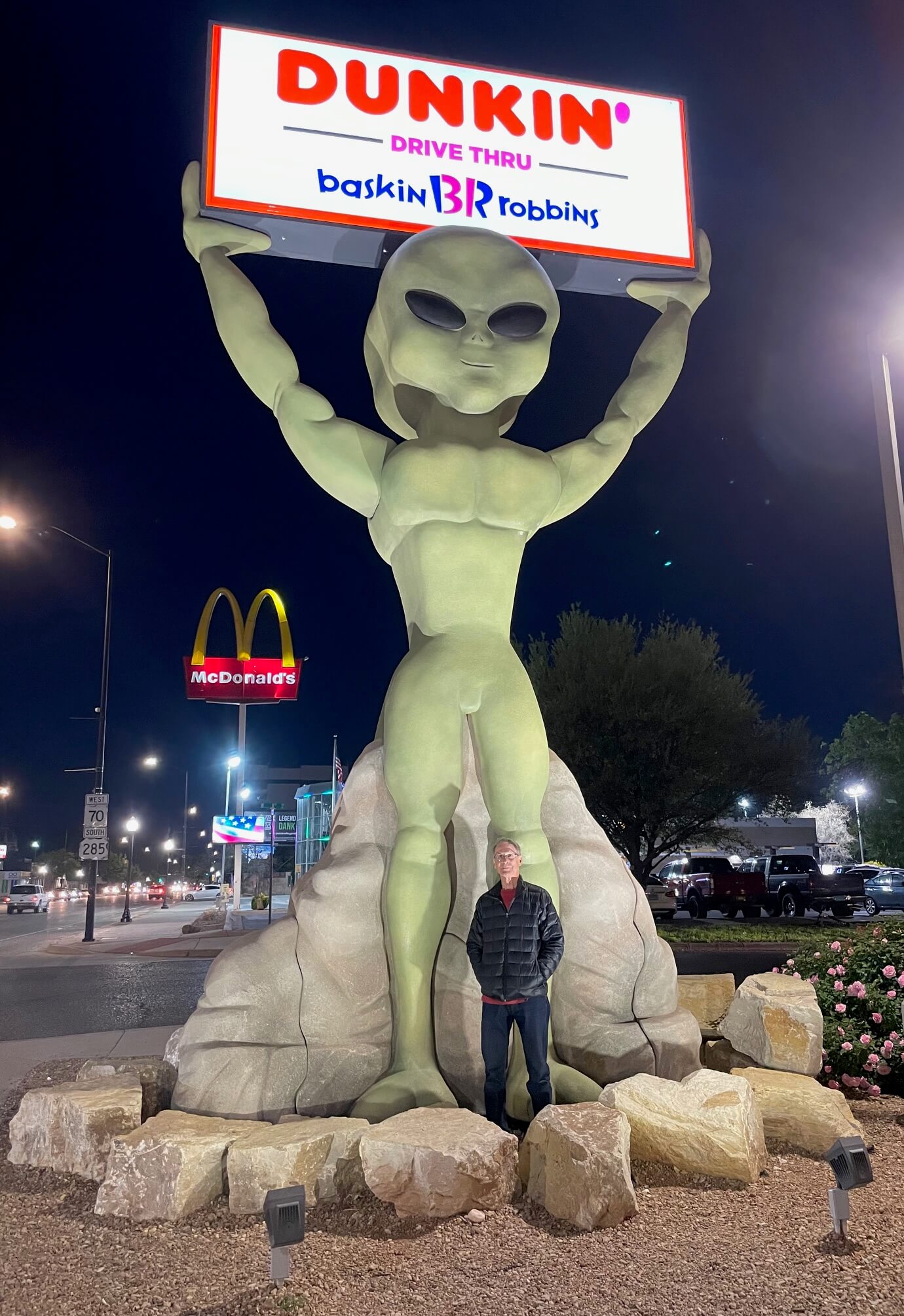
Anyway, like any self-respecting business community, Roswell has fully embraced its unique distinction. While the extraterrestrial spacecraft and captured aliens may – or may not – have been just a figment of a wild imagination, little green men can be found everywhere on the streets of downtown Roswell. 
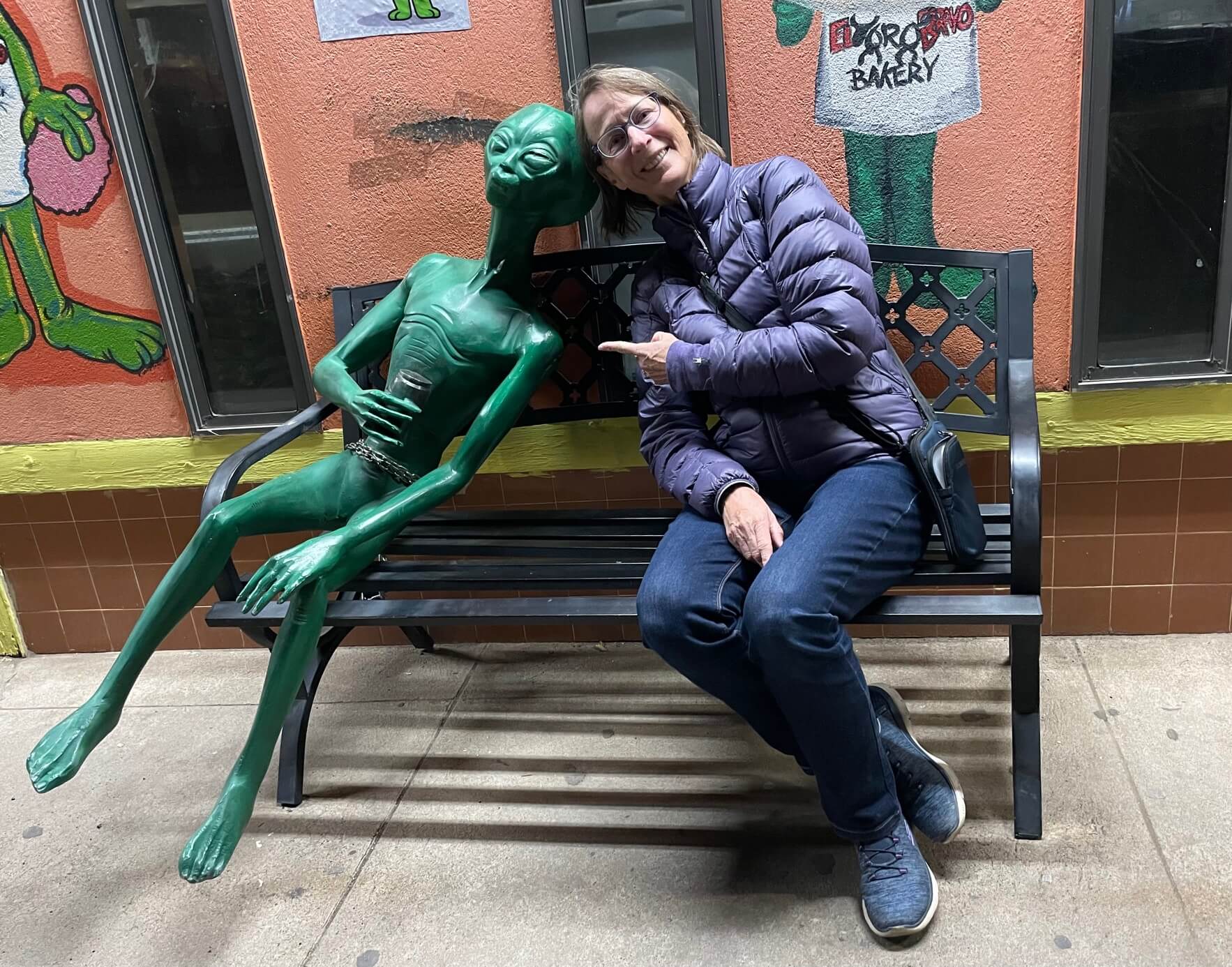
This guy may have had a bit too many cosmo-politans.

Oklahoma City

A much darker reminder of the danger of unhinged conspiracy theories and disturbed thinking was found at our next stop.  

The Oklahoma City National Memorial & Museum honors the victims, survivors, rescuers, and all who were affected by the domestic terrorist bombing of the Alfred P. Murrah Federal Building. On April 19, 1995, 168 people, including 19 children, lost their lives because of hate. The Memorial symbolizes the turning away from hate and towards finding strength and hope in a wake of unspeakable violence.

I had no idea how impactful the Memorial would be. Just the day before we arrived, there was a ceremony commemorating the 29th anniversary of that terrible day. On the day we visited, the grounds were mostly deserted and peaceful, a place of quiet reflection.

At each end of the reflecting pond stands a large bronze-clad monument, the Gates of Time that, together, frame the moment of destruction. One, the 9:01 Gate, represents the moment before the attack. The other, the 9:03 Gate, symbolizes the moment healing began. Off to one side is the Field of Empty Chairs. Each of the 168 chairs is engraved with a victim’s name, underlining the magnitude of the loss.    
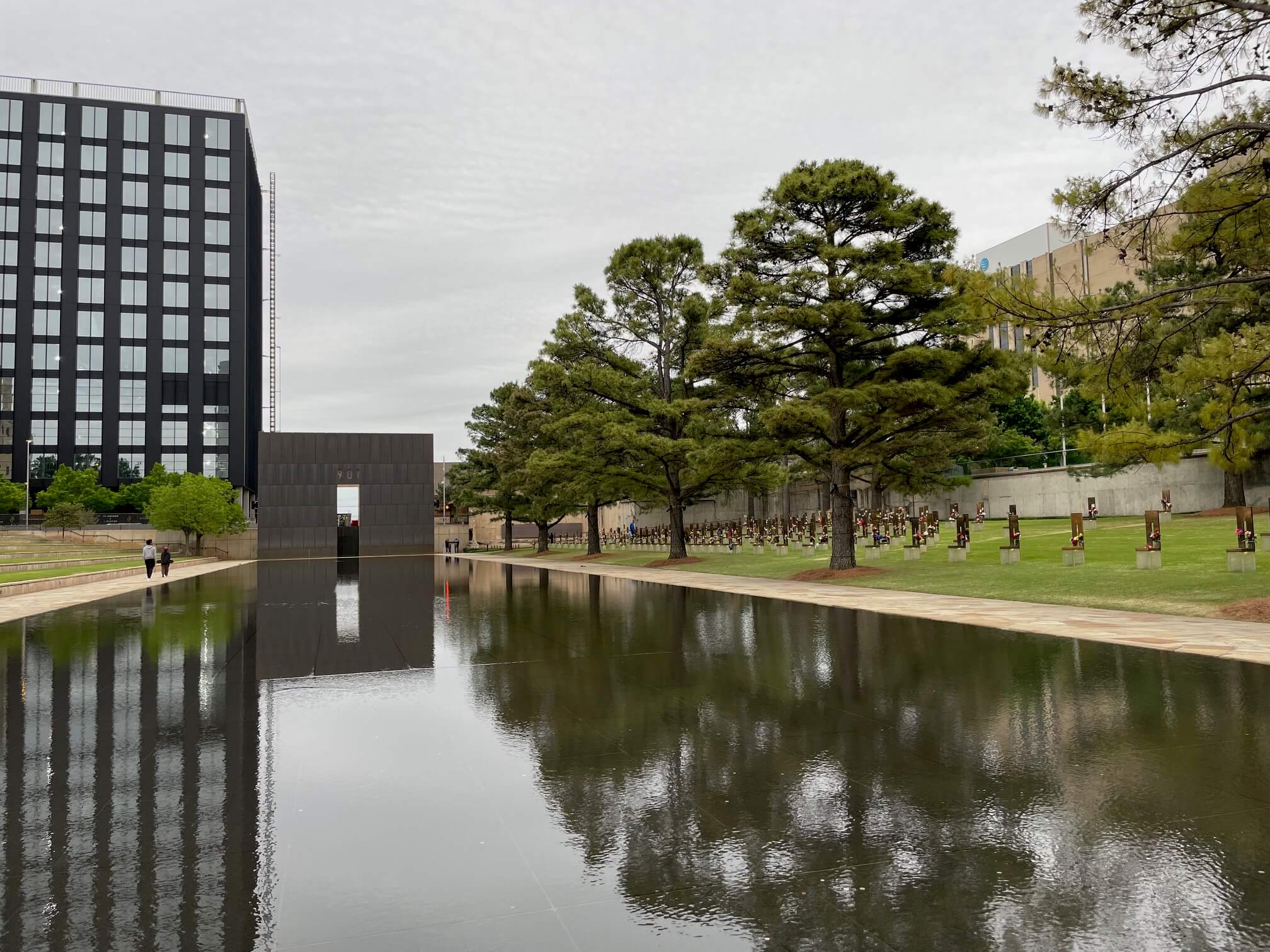
Looking towards the 9:01 Gate. Note the Field of Chairs to the right.
Looking towards the 9:03 Gate.
All of the chairs had been decorated the day before for the ceremony. The chairs of the 19 children killed were especially heartbreaking.

We first visited the Memorial in the daylight. On the advice of a security guard, we returned that evening to see the displays beautifully illuminated.

I’ll end this post with the words engraved on each Gate. They are a reminder that violence arising from hate never solved anything. It’s up to all of us to choose the path we want to take going forward:

We come here to remember 

Those who were killed, those who survived and those changed forever. 

May all who leave here know the impact of violence. 

May this memorial offer comfort, strength, peace, hope and serenity.

Copyright © 2025 RetirementallyChallenged.com – All rights reserved.
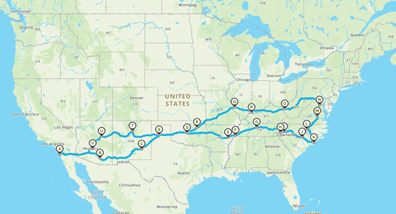
6,116 miles, 34 days, and 14 states

I was able to add one more state (West Virginia) to those I have visited over the years. Three to go (North Dakota, Minnesota, and Rhode Island).

My husband and I just returned from a lengthy road trip – both in time spent away and miles driven. We left our coastal Southern California home mid-April and touched our toes in the Atlantic Ocean a couple of weeks later before heading back home.  We saw so much beautiful scenery as we traveled across the country and observed some darker sights too. Traveling by car may have taken us a lot longer than flying, but we would have missed so much.  

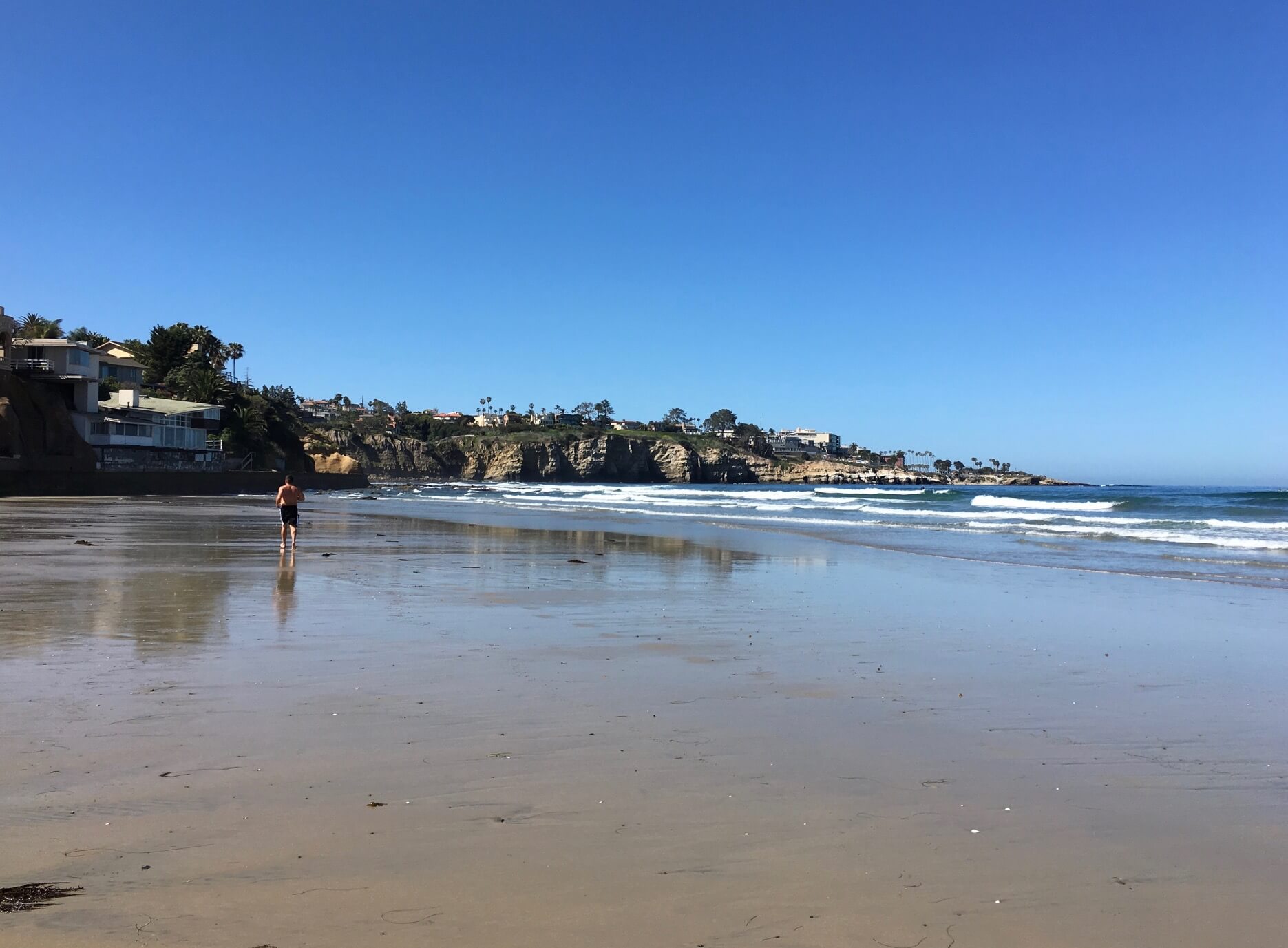
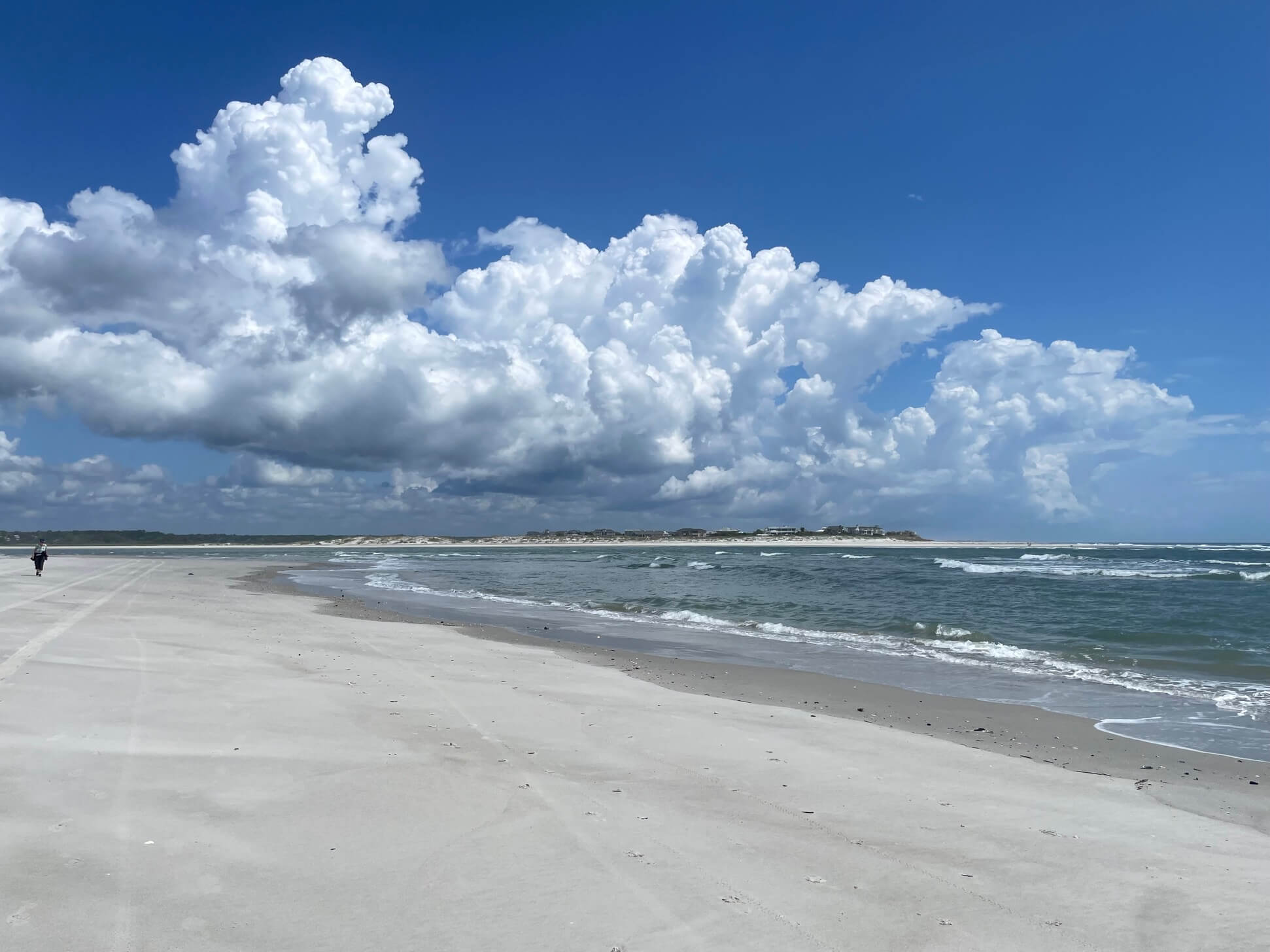
From sea (La Jolla, CA) to shining sea (Wilmington, NC)

The main motivation for our trip was to visit family and friends, and because they live here and there, we were able to include a lot of interesting stops along the way. I added two new stamps to my National Park Passport book and visited my second Presidential Library. I took hundreds (and hundreds) of pictures, experienced a variety of weather events, and ate enough road food and BBQ to last me for a while.

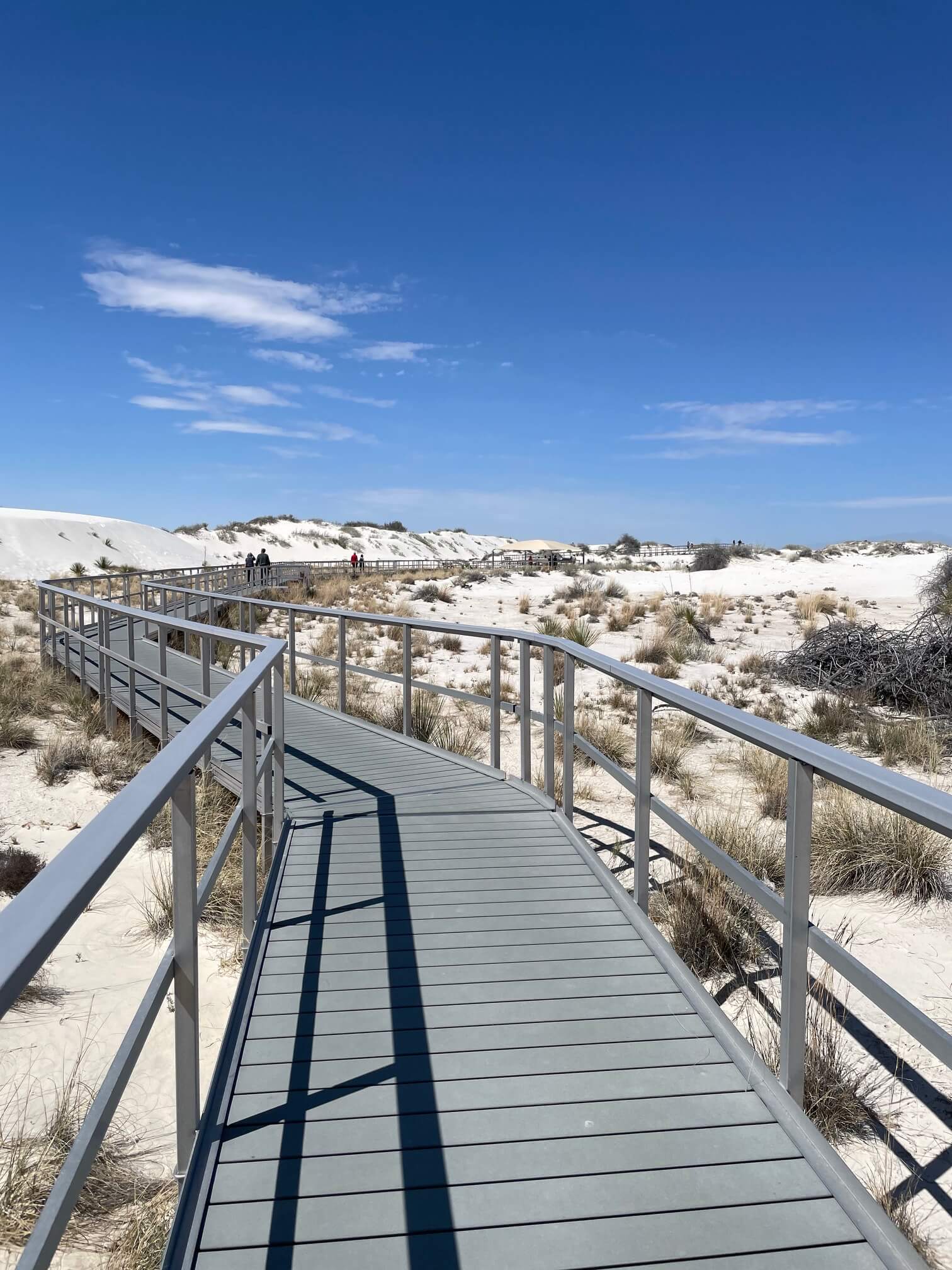
White Sands National Park, New Mexico
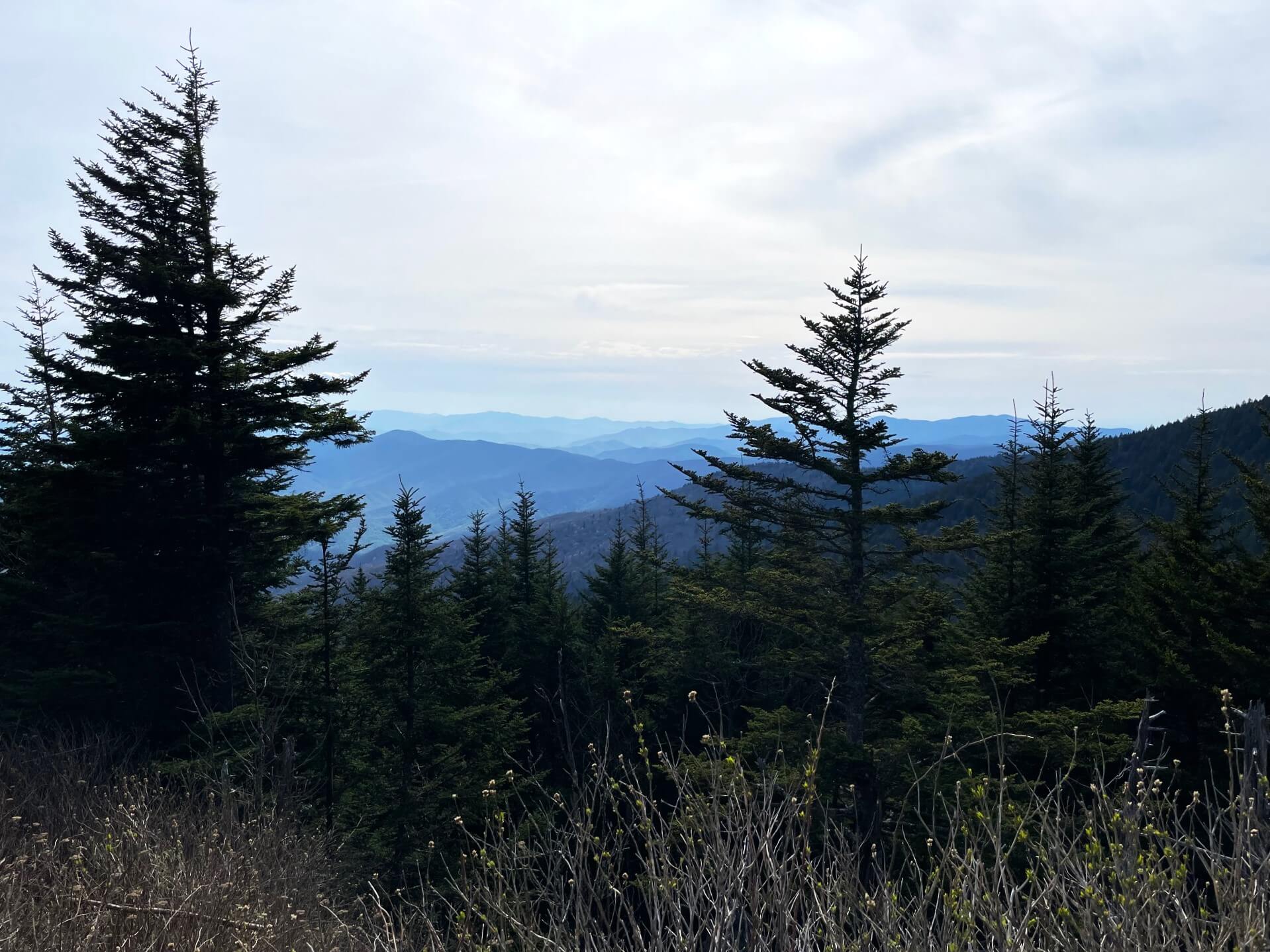
Great Smoky Mountains National Park, Tennessee and North Carolina
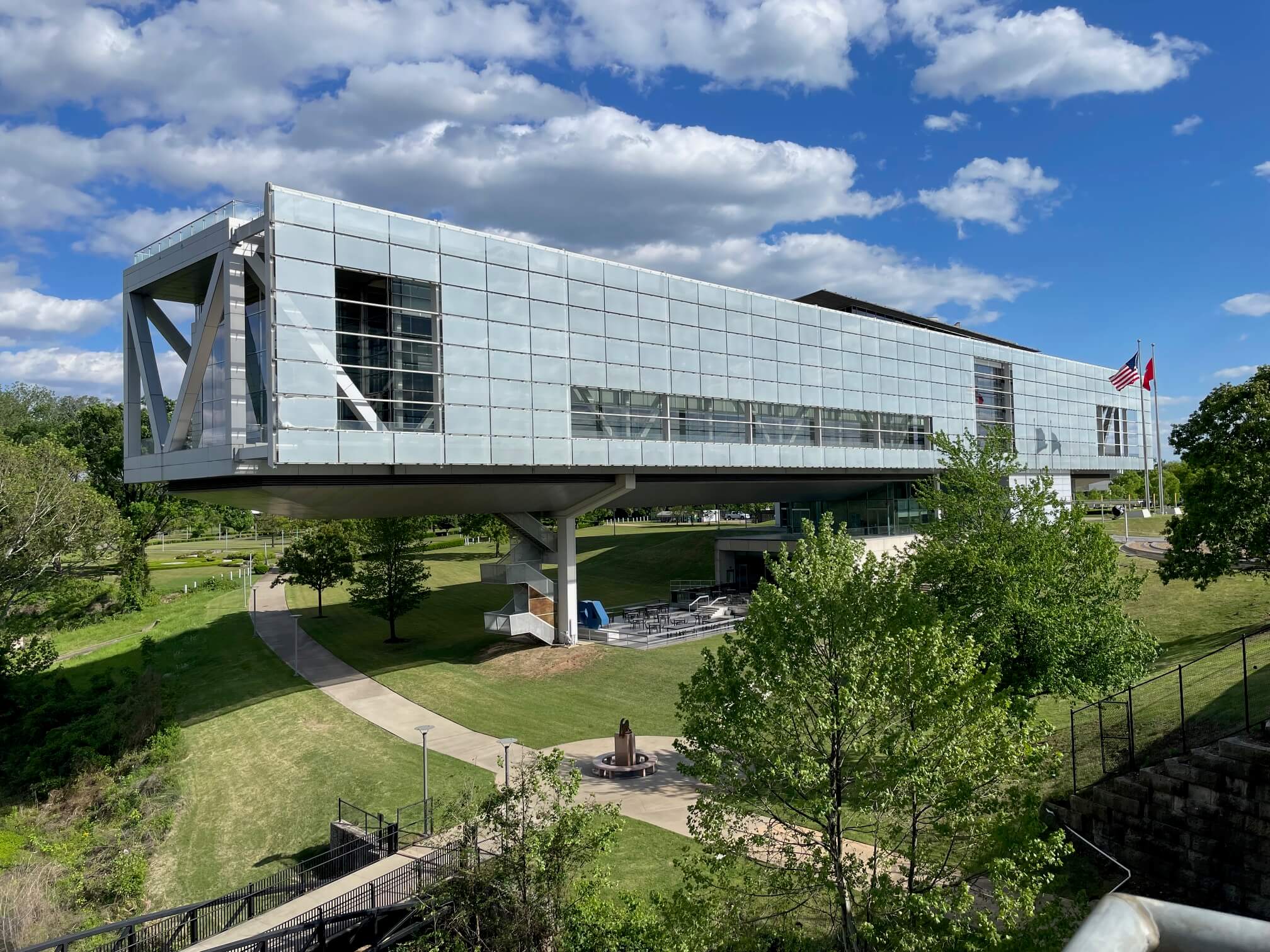
William J. Clinton Presidential Library, Little Rock, Arkansas

I didn’t intend to take such a long blogging break and I appreciate the notes of concern I received from several bloggers who noticed my absence. I had planned to write a few posts while we were gone but the WordPress gremlins had other ideas. Additionally, although I was able to read the blogs I follow, commenting was apparently not in the cards either. Oh well… best laid plans and all that. Now that I’m back and my luggage is unpacked, I will share some highlights, observations, and a few photos from our trip over the next few weeks.   

Copyright © 2025 RetirementallyChallenged.com – All rights reserved.
Stepping Out In Santa Barbara

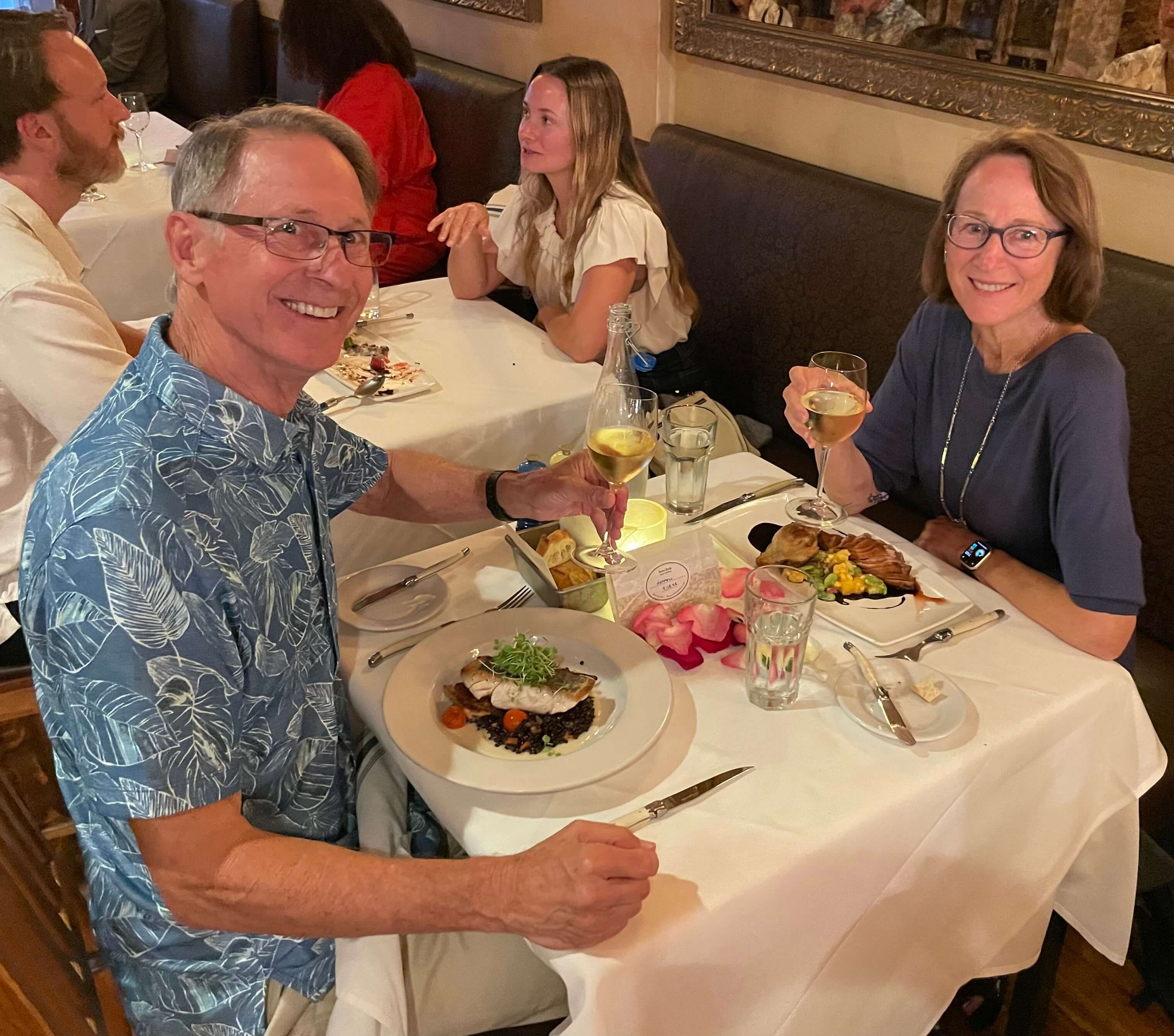
Last week, my husband and I drove a couple of hundred miles up the California coast to the seaside city of Santa Barbara. We were looking forward to spending a few days exploring the area and celebrating our 20th wedding anniversary. Other than having booked a B&B for three nights and making dinner reservations for our anniversary, we had no specific plans… just like we like it.  

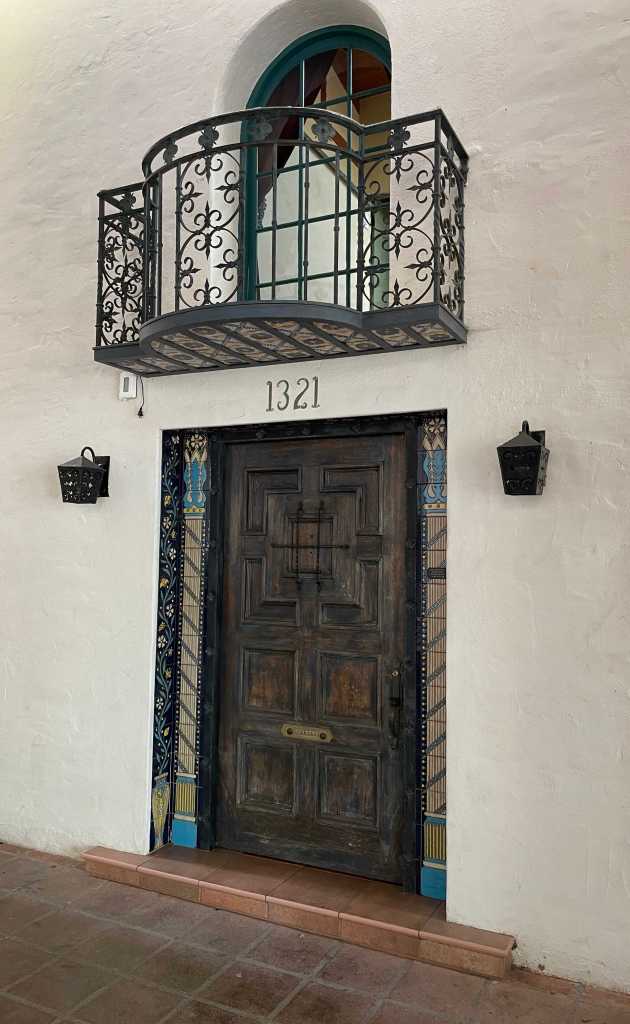
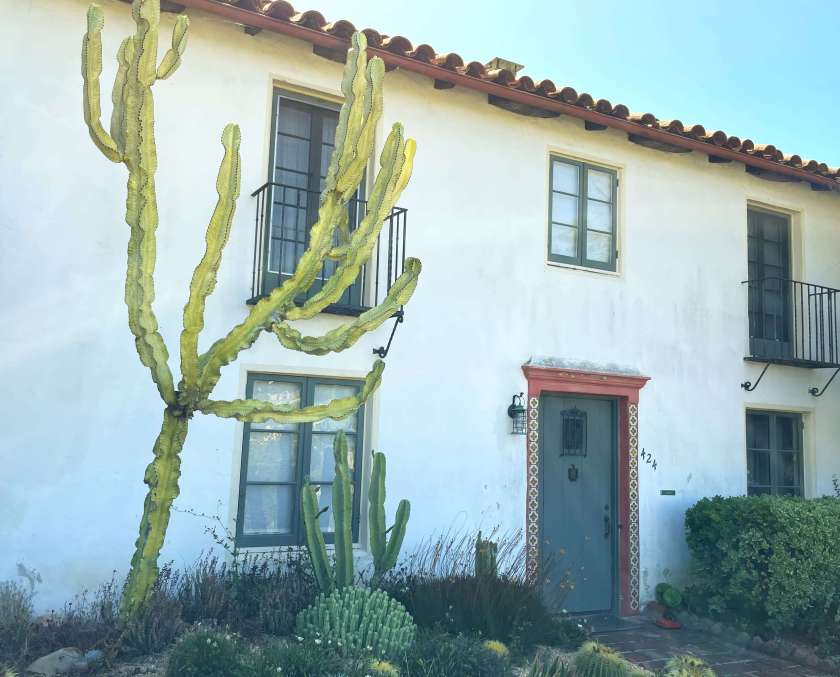
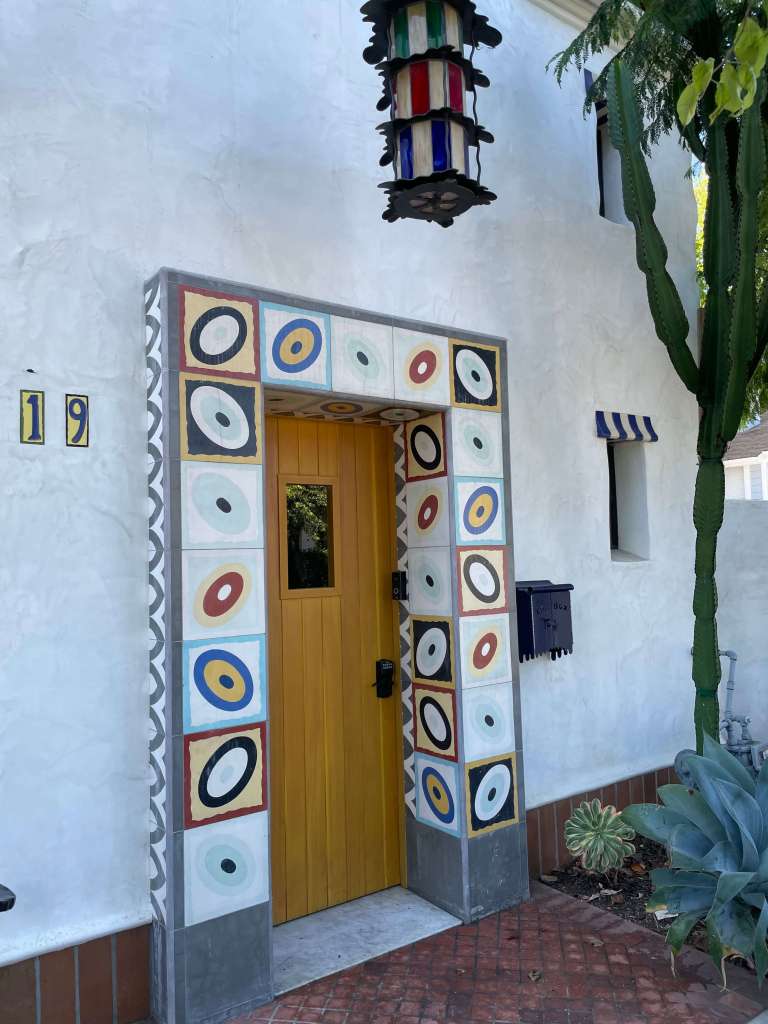
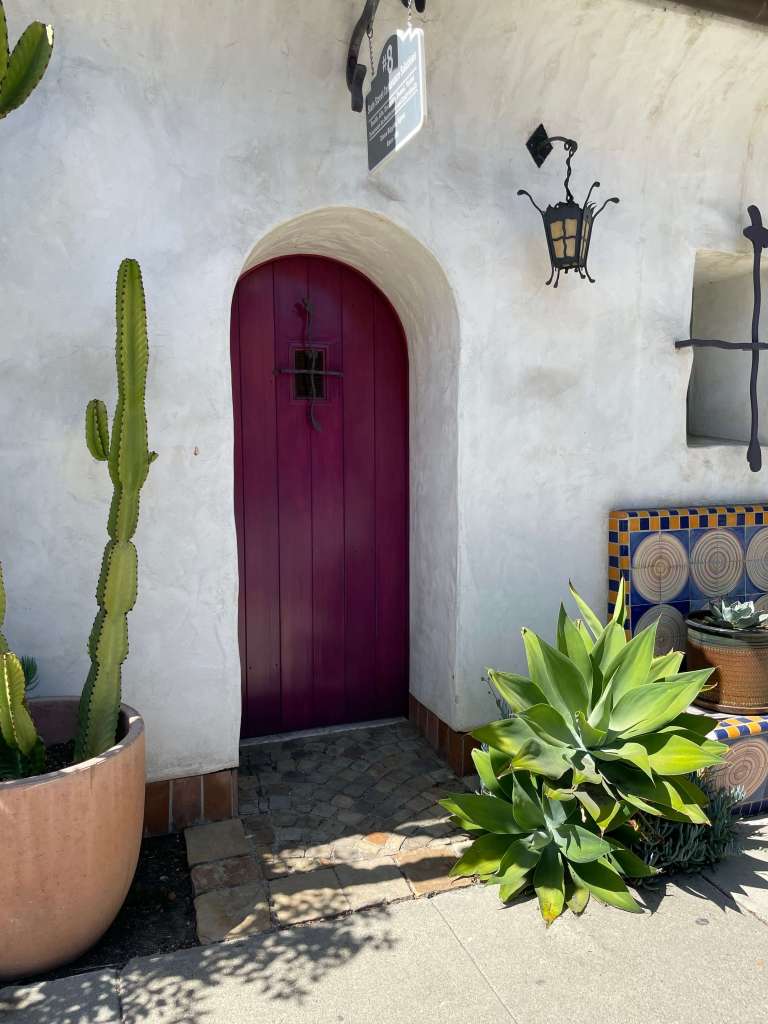
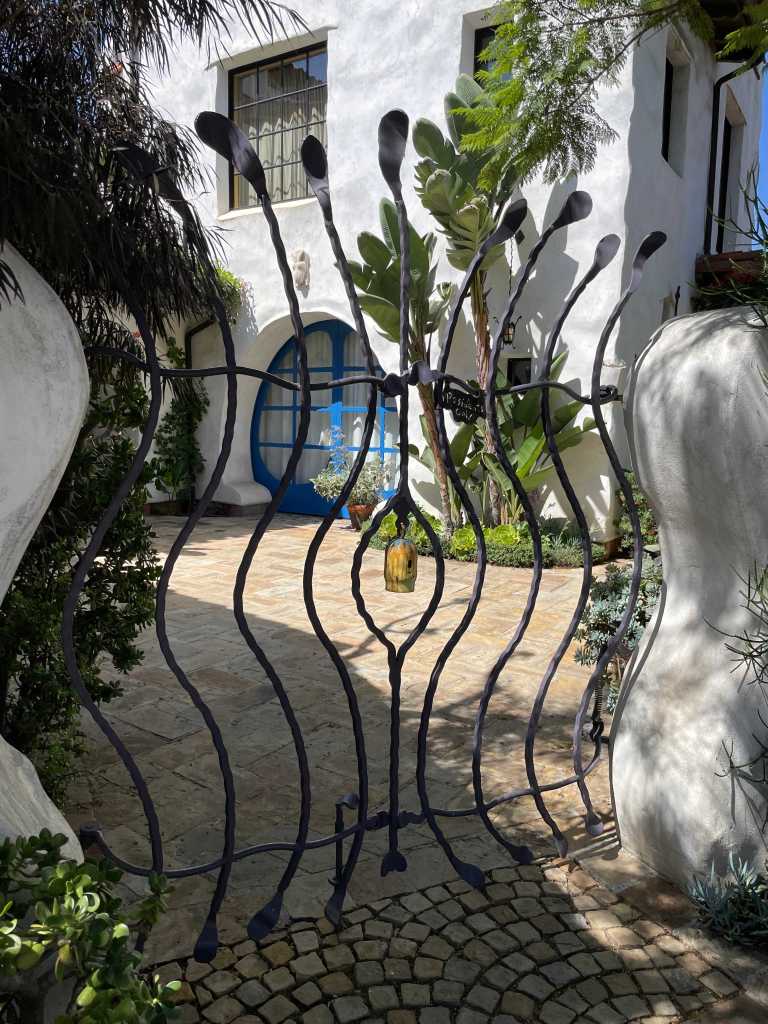
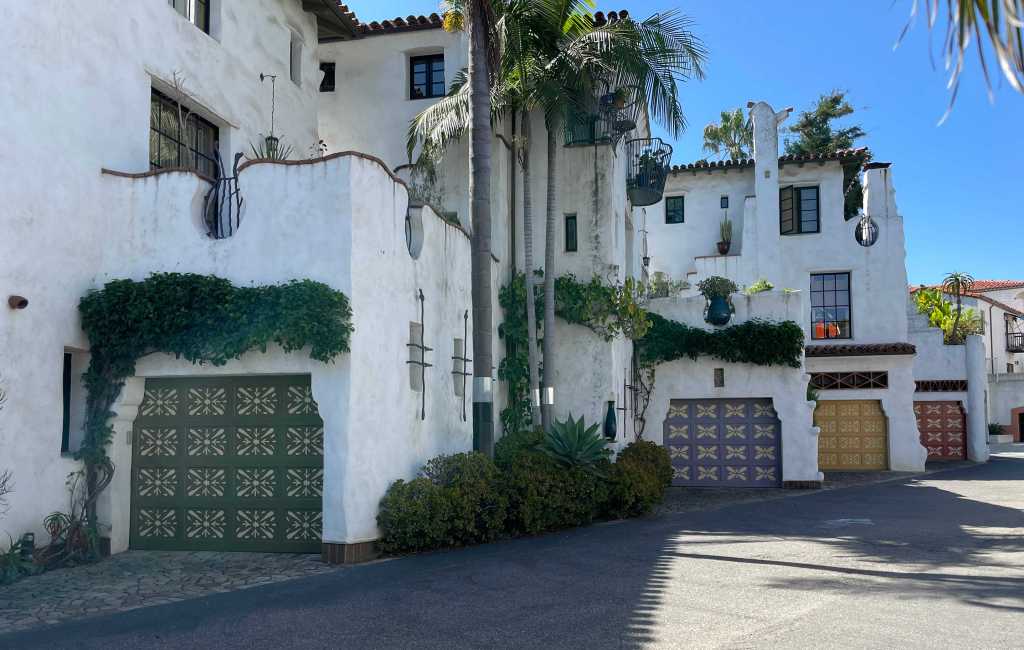
Santa Barbara is very walkable and, once we parked our car at the Inn, it sat there until we headed home. Just about everywhere we walked, the city’s beautiful architecture – ubiquitous red-tile clay roofs, whitewashed walls, ornamental iron work, and colorful tiles – reminded us of our recent trip to Spain. Although Santa Barbara’s Spanish roots can be traced back to 1542, it was after a 6.8 magnitude earthquake reduced much of the city to rubble in 1925, that Santa Barbara was mostly rebuilt in a unified Spanish Colonial Revival style.

(To see the pictures of beautiful Santa Barbara, make sure you scroll through each slideshow.)

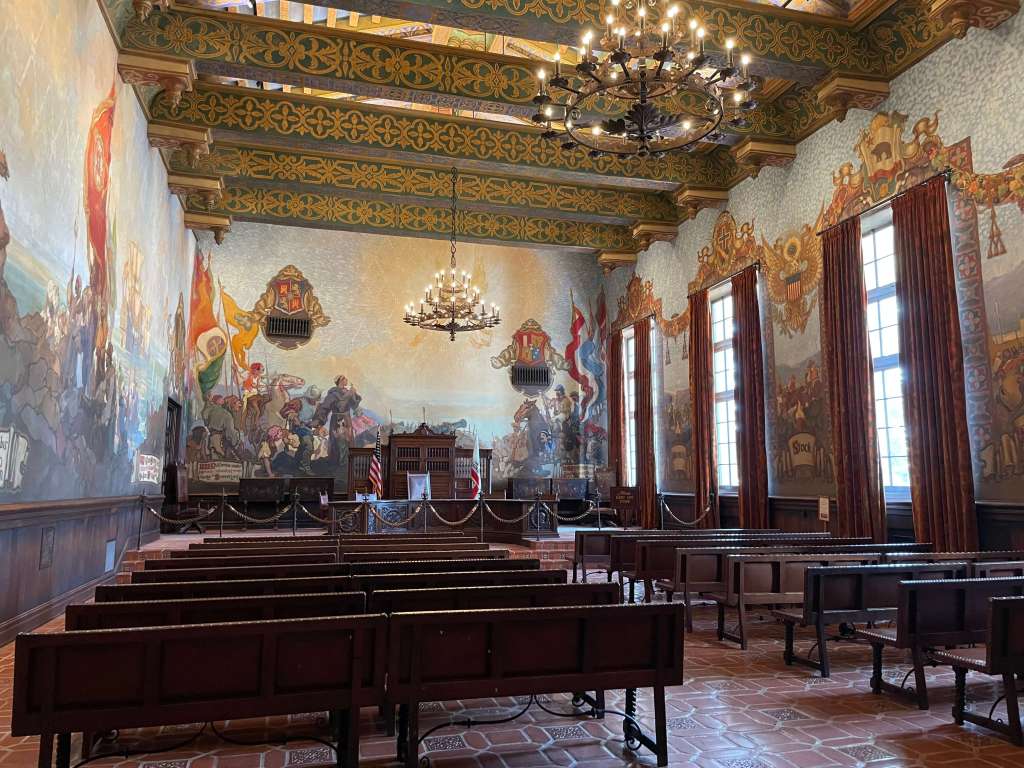
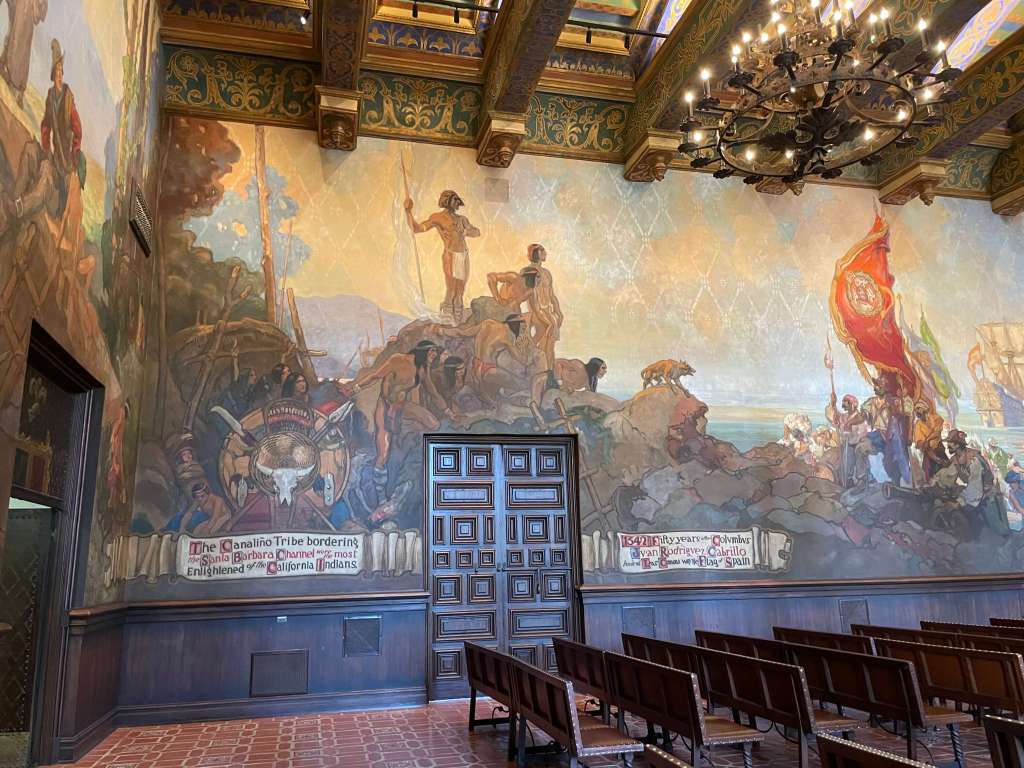
The Santa Barbara County Courthouse is one of the most beautiful public buildings I’ve ever seen. Completed in 1929, the courthouse features elaborate hand-painted murals, wrought-iron chandeliers, and a clock tower that offers panoramic views of the city, bookmarked by the nearby mountains and ocean.

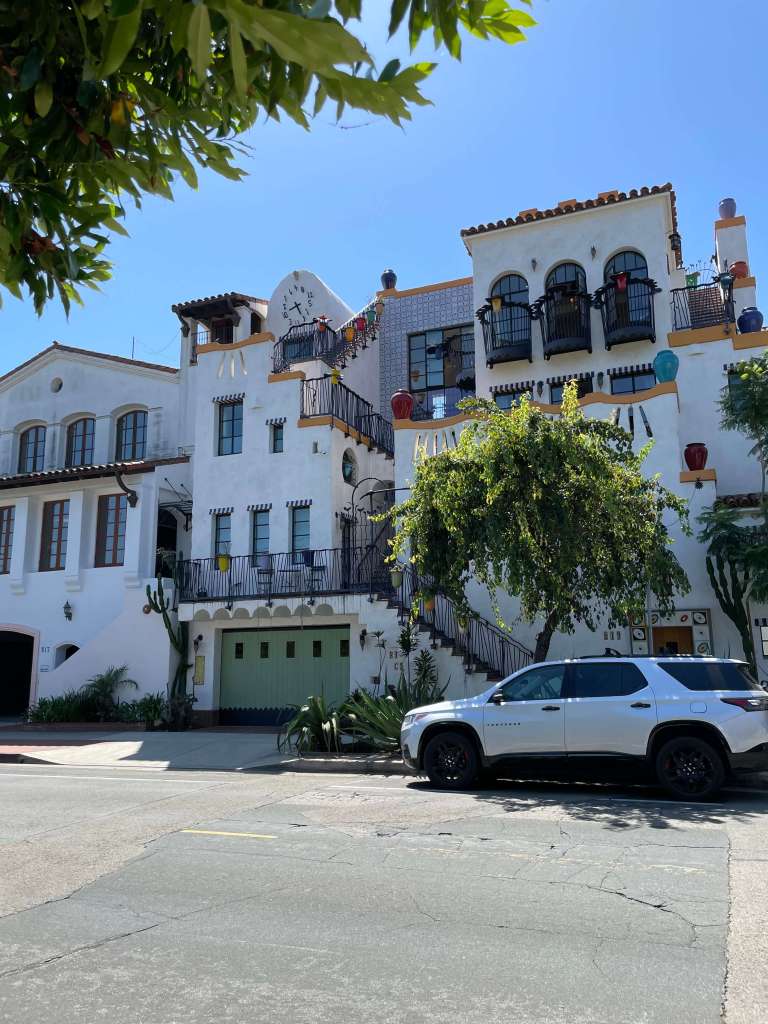
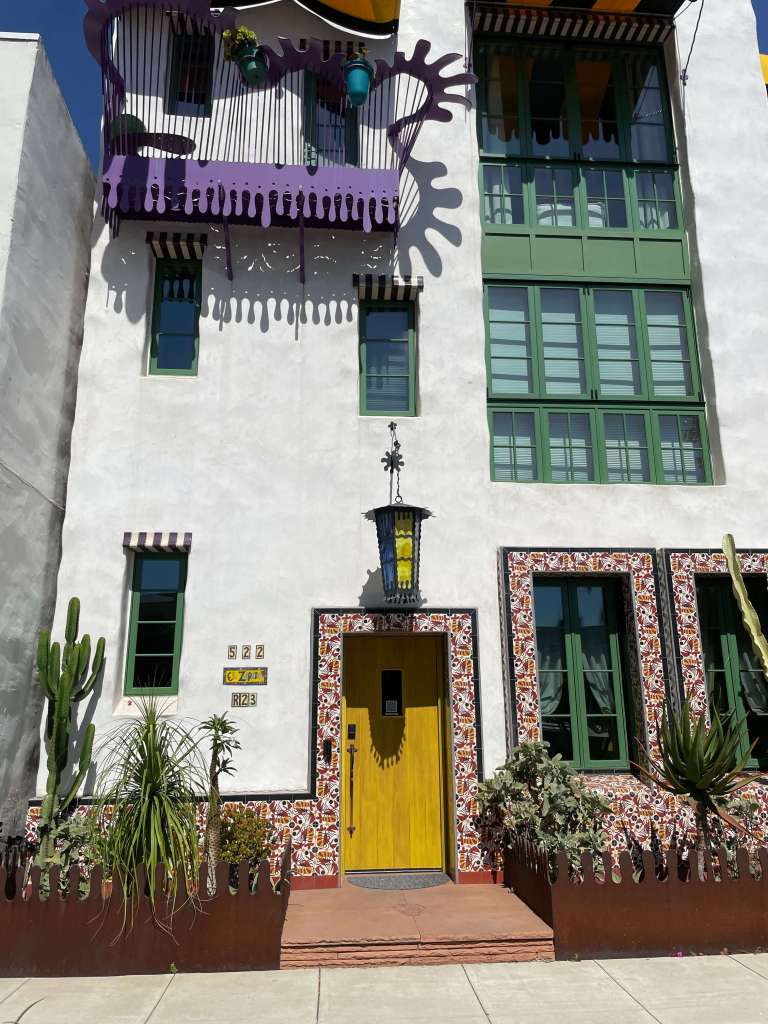
A more modern twist to the city’s architecture was introduced by Jeff Shelton, a local architect whose buildings playfully reinterpret the traditional Spanish Colonial design style. Lucky for us, he created a self-guided walking tour that took us by eight of his most noteworthy buildings, all located in a 10-block area of the downtown core.

Cheers to 20 years!

Now, head on over to No Facilities to see Dan’s Thursday Doors and links to others.

Copyright © 2025 RetirementallyChallenged.com – All rights reserved.
Part 4: Mapping Our Journey Home

The final installment of our 1300+ mile road trip in our electric car (Part 1 & Part 2 & Part 3 here).

When we first planned our road trip, we weren’t quite sure which route we’d take back home. Because of the possibility of excessive heat and unpredictable wildfires, we left that decision open until it was time to head south. The coastal route is interesting and cooler, but we drove up that way. There are a couple of north/south freeways that offer the shortest and quickest drive, but they are mind-numbingly boring. If we drove further east before heading south, we could visit Mono Lake, something that I’ve always wanted to see.    

When it was time to start home, the temperatures had dropped a bit and there weren’t any active fires, so we decided to head east, then south. This route required some additional planning because, unlike the state’s western corridor, the eastern areas aren’t as populated, and superchargers aren’t as available.

Fortunately, at this point in our trip, we had become comfortable with the apps that located the chargers and with our car’s ability to predict the level of charge we’d need at each one. As we headed east, we drove through mountain passes and pine forests – away from any population centers – but our car told us that we’d reach the next charging station with plenty of juice to spare. Although it can be anxiety-producing to watch the car’s range shrink when climbing hills, regenerative breaking adds most of that range back when driving downhill.

Mono Lake

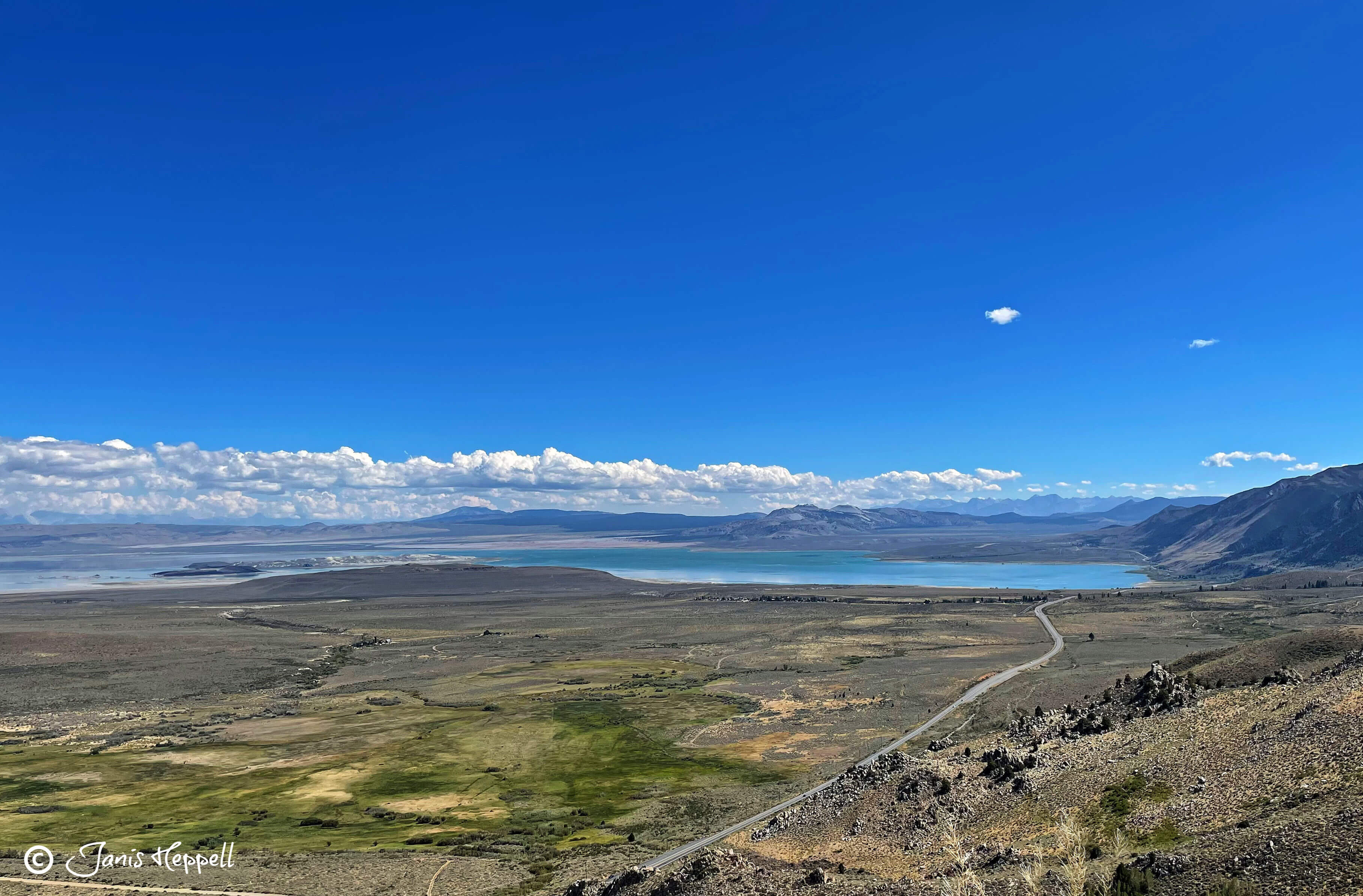
When we came around a bend in the road and first caught a glimpse of the lake from a view turnout, I was in awe. I had seen pictures of Mono Lake but was thrilled to now see it for myself.  

Our first view of Mono Lake.

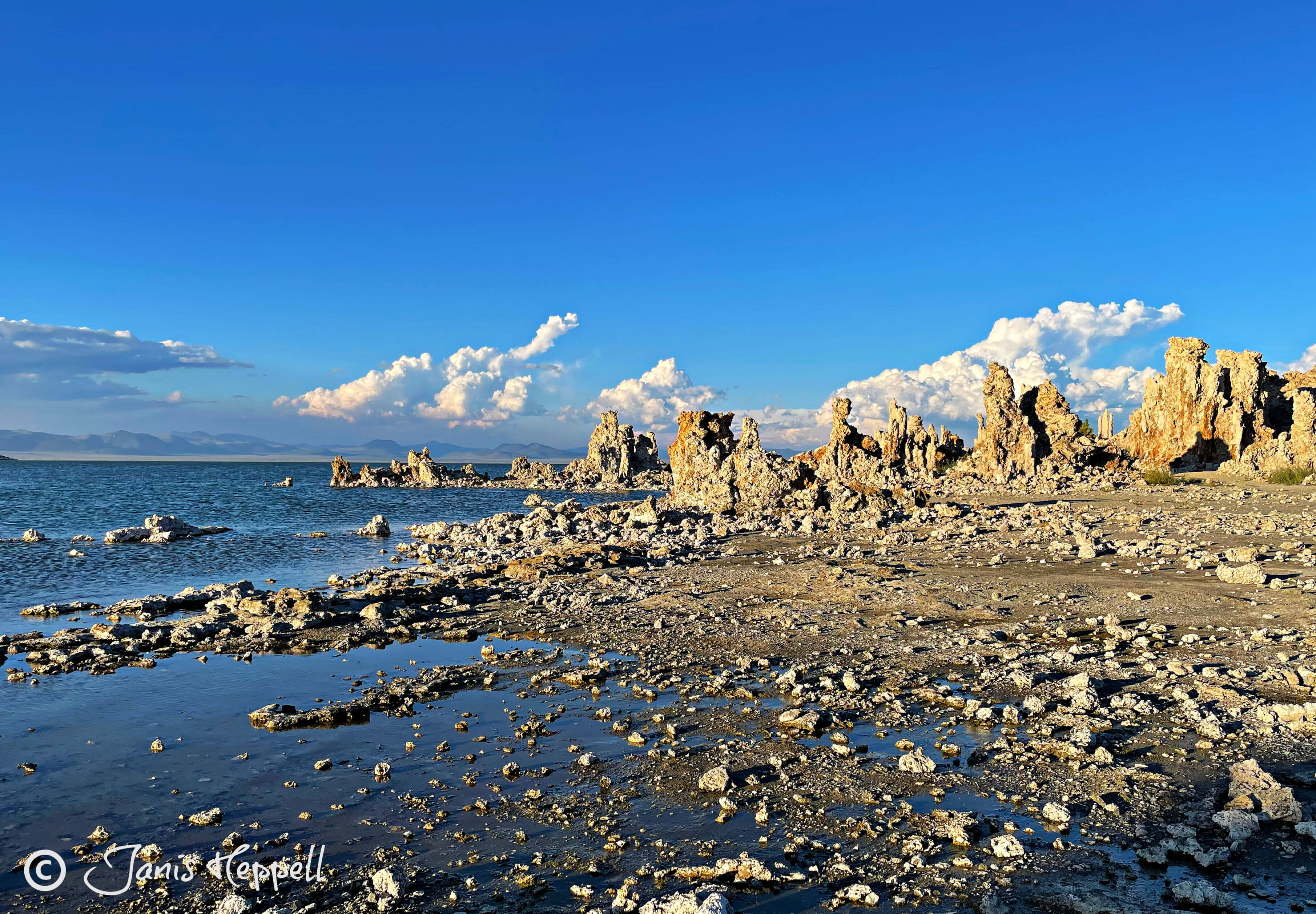
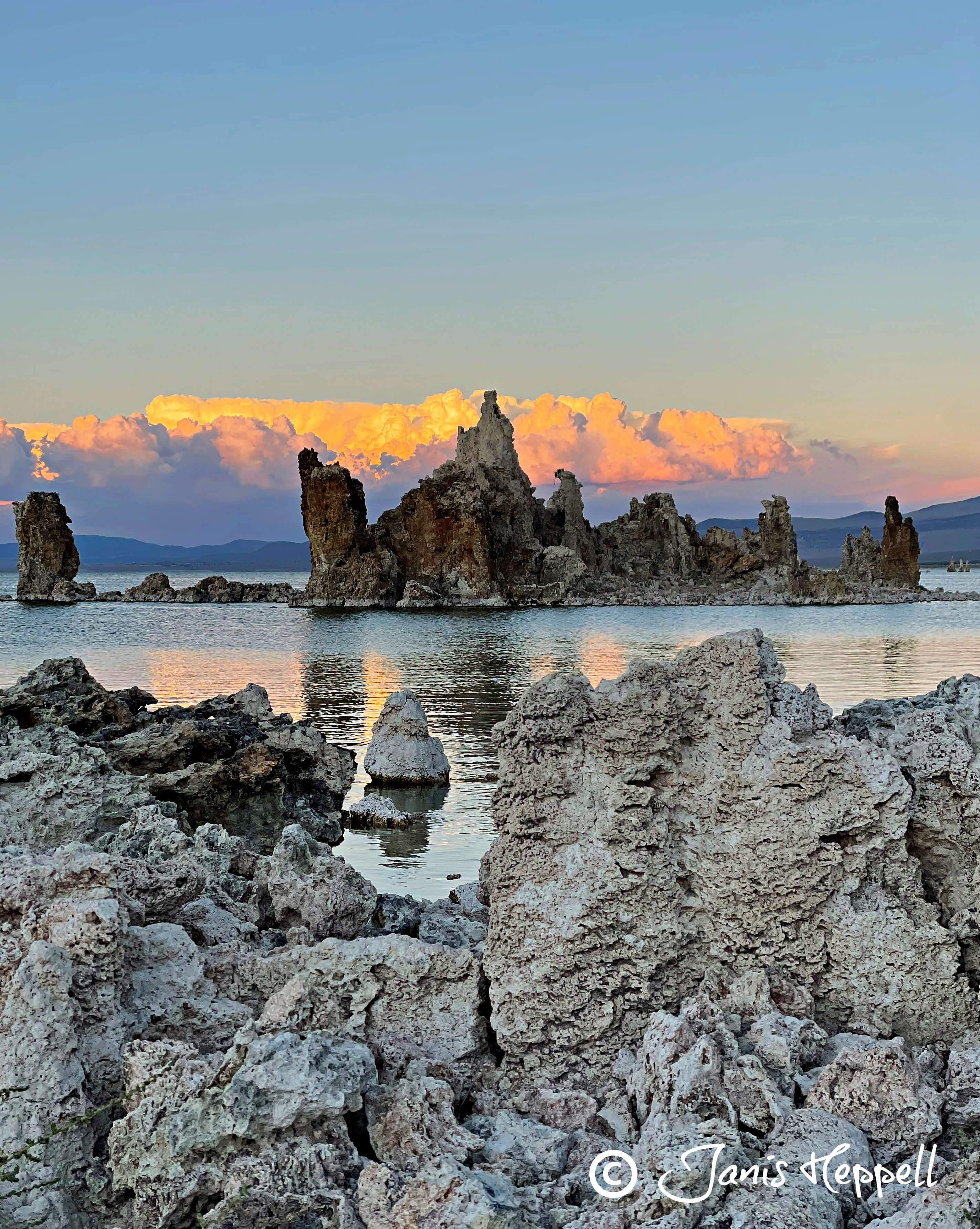
Mono Lake, an ancient saline lake located at the eastern edge of the California’s Sierra Nevada Mountains, is home to trillions of brine shrimp, millions of birds, and the world-famous tufa towers. The lake was nearly destroyed when, in 1941, water was diverted from the lake’s tributary streams and sent 350 miles south to meet the growing water demands of Los Angeles. Fortunately, because of the work of dedicated activists, this practice was stopped, and the lake’s water level is slowly being restored.

The clouds in the background mimicked the shape of the Tufas.
The sun setting behind me lit up the clouds.

The Final Stretch Home

When we got on the road the next morning, our plan was to recharge twice along the way before stopping for the night about halfway home. During the drive, we continued to find charging stations available with no wait, as well as places to eat and “refresh” close by. As we approached the half-way point, we were feeling pretty good, so we decided to continue driving after charging.  

This decision is not unusual for us; we often choose to power through the last stretch because we are anxious to get home and sleep in our own bed again. What was different was how good we felt after driving for over 7 hours. Stopping every couple of hours for a quick charge (charge time averaged 10 – 15 minutes each) made us get out of the car and stretch our legs. When we arrived home after 8 pm that night, we both felt good.

So, not to get too wonky on you, here’s our final thoughts about our 1300+ mile EV trip:

What we liked:

Charging more often but to lower levels not only makes the trip more enjoyable but the total charging time is actually less.

EV owners are nice and full of information so good conversations happen while charging.

Our car had plenty of power, the cabin comfort was outstanding, and we had more than enough storage space for our luggage.

Although it wasn’t our intention, we saved money. Gas prices are high but so are electricity rates at superchargers. Even so, we spent about half as much as we would have at the gas pump (and no stinky hands). 

What could be improved:  

Because charging stations aren’t as prevalent as gas stations, the trip took extra planning, and we had a bit of a learning curve on how to use the tools available. Next time, we’ll be better at it.

California has good charging infrastructure, so we had no trouble finding stations. Although more public chargers are being added all the time, for now, we might need to stick to the main freeways when traveling in certain states.   

The biggest negative for us is the car’s single large screen located in the middle of the dashboard. Although this is a trend for a lot of cars – even gas-powered ones – we don’t like it. We prefer not to have to take our eyes off the road to perform some of the car’s functions or to see how fast we are driving vs. the speed limit. Without a co-pilot, I’m not sure either of us could comfortably drive unfamiliar roads and read the tiny print on the screen, especially with our older eyes.   

Safely home and ready for a good wash.

Now that we’ve been home for a while, we are already thinking about our next EV adventure.

Copyright © 2025 RetirementallyChallenged.com – All rights reserved.
Part 3: Three Days of Play

Continuing the story of our 1300+ mile road trip in our electric car (Part 1 & Part 2 here).

Somewhere east of Sacramento – the city where the reunion was held – we passed the halfway point of our trip, miles-wise. So far, we were pleased with the EV’s performance, comfort, and the availability of superchargers.

Amador County, California

We were looking forward to spending the next several days with my brother and sister-in-law exploring Amador County – an area famous for gold mining in the 1800s, and now known for producing wine. The fact that we would also be celebrating both our anniversary and my brother’s birthday while there, was a bonus. Besides visiting a few wineries, our plans included taking a tour of an abandoned gold mine operation, exploring a deep cave, and wandering around several gold rush-era towns and historical cemeteries.

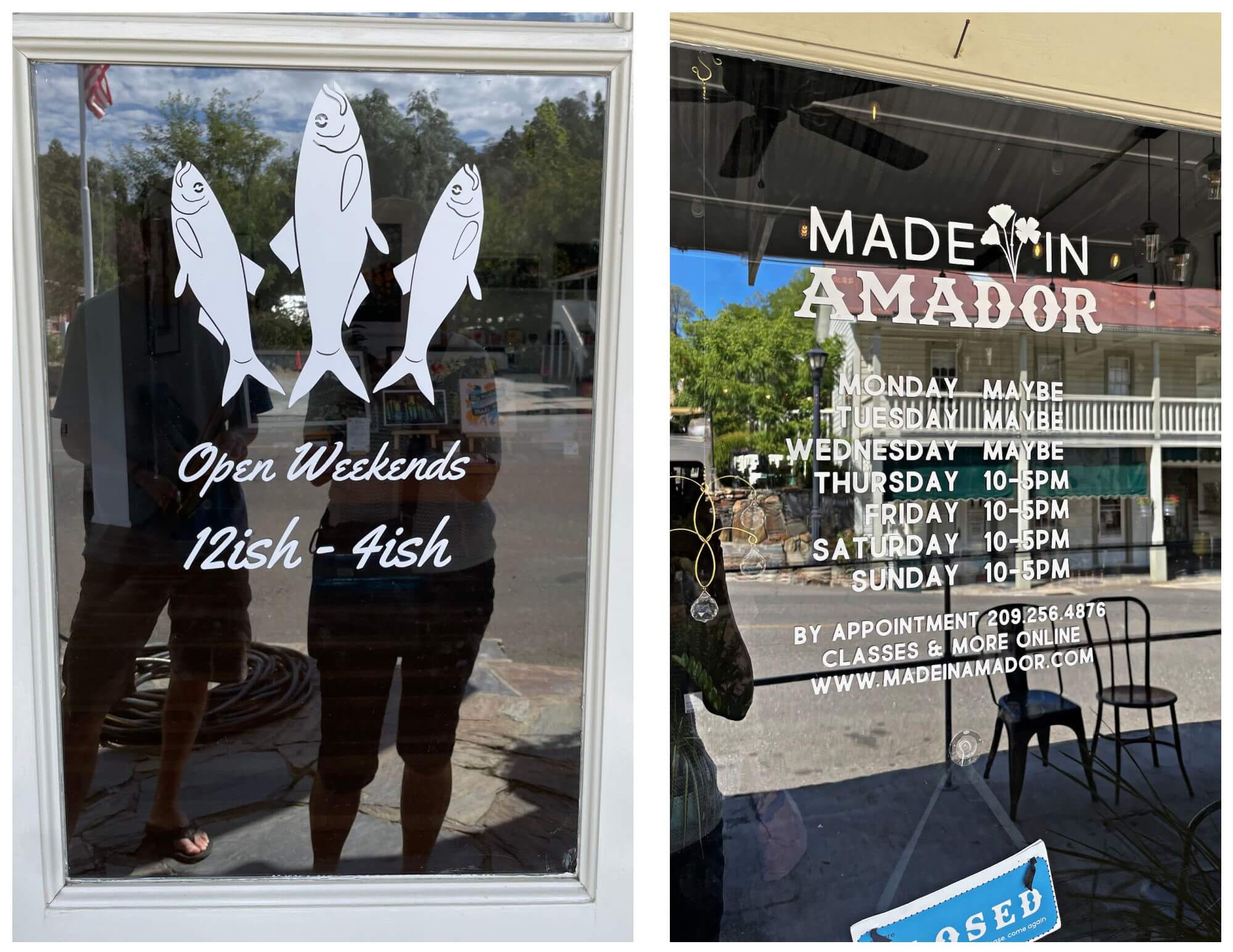
Like many retirees, we prefer to travel in the off-season. After Labor Day, the summer crowds have dispersed, and reservations often aren’t necessary. That’s the good news. Traveling after Labor Day, especially mid-week to smaller towns, can also mean facing “Sorry, we are closed” signs in shop and restaurant windows. More about that later.

Kennedy Gold Mine  

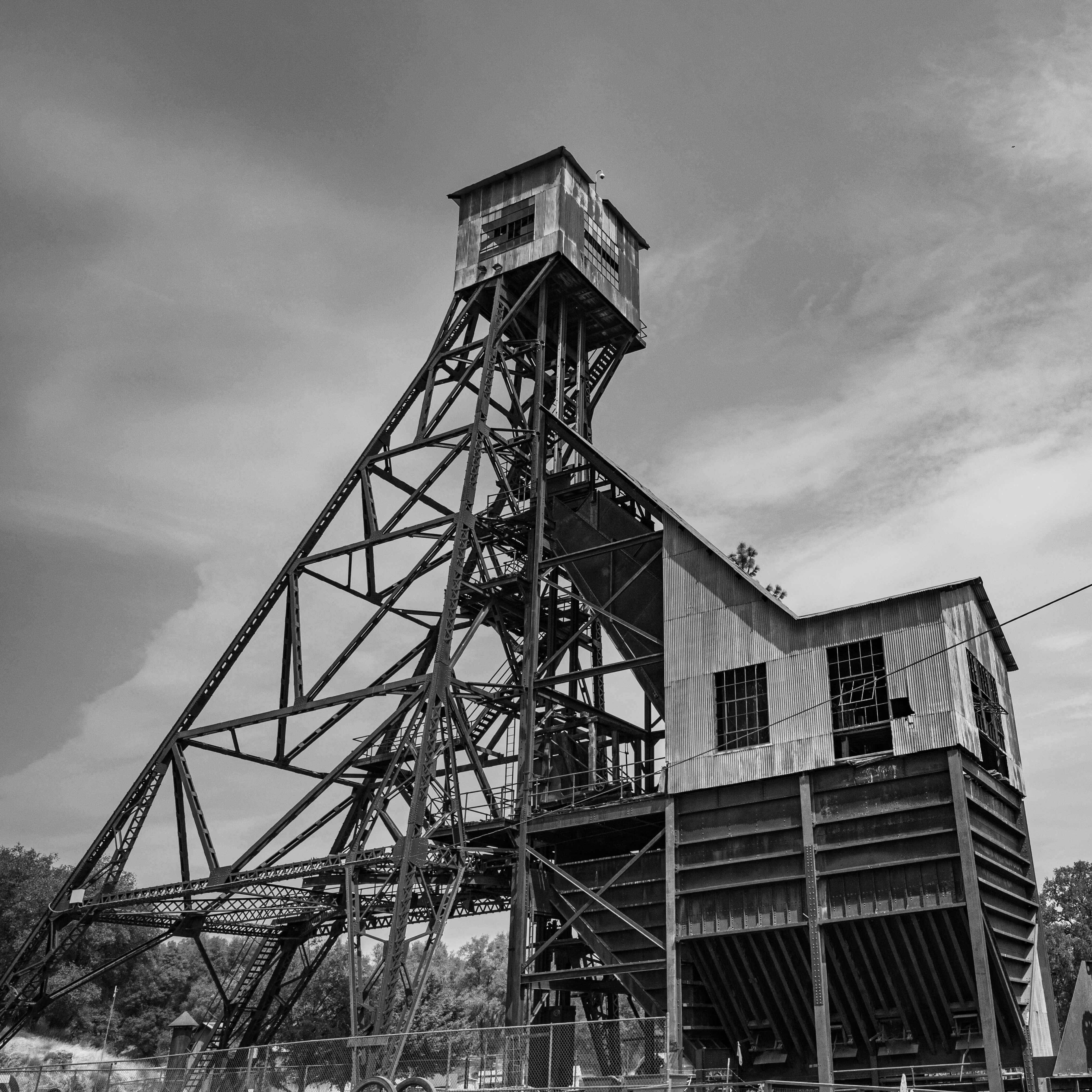
Kennedy Gold Mine headframe, where the miners were lowered into the mine shaft. Photo credit: my brother, Gary.

On our first day in Amador County, we took a tour of the Kennedy Gold Mine, one of the deepest mines in the world. Part of the tour included viewing old black and white films that showed the mine in operation. The mostly immigrant labor worked long hours in dangerous conditions. Despite the mine producing over $34 million (not adjusted for current prices) until it was closed in 1942, there was little indication that much of the wealth trickled down into the pockets of the laborers.

Although the actual mine was closed to visitors, we would have the opportunity to explore beneath the Earth’s surface the next day.

Black Chasm Cavern 

Waiting to enter the cave with the naturalist.
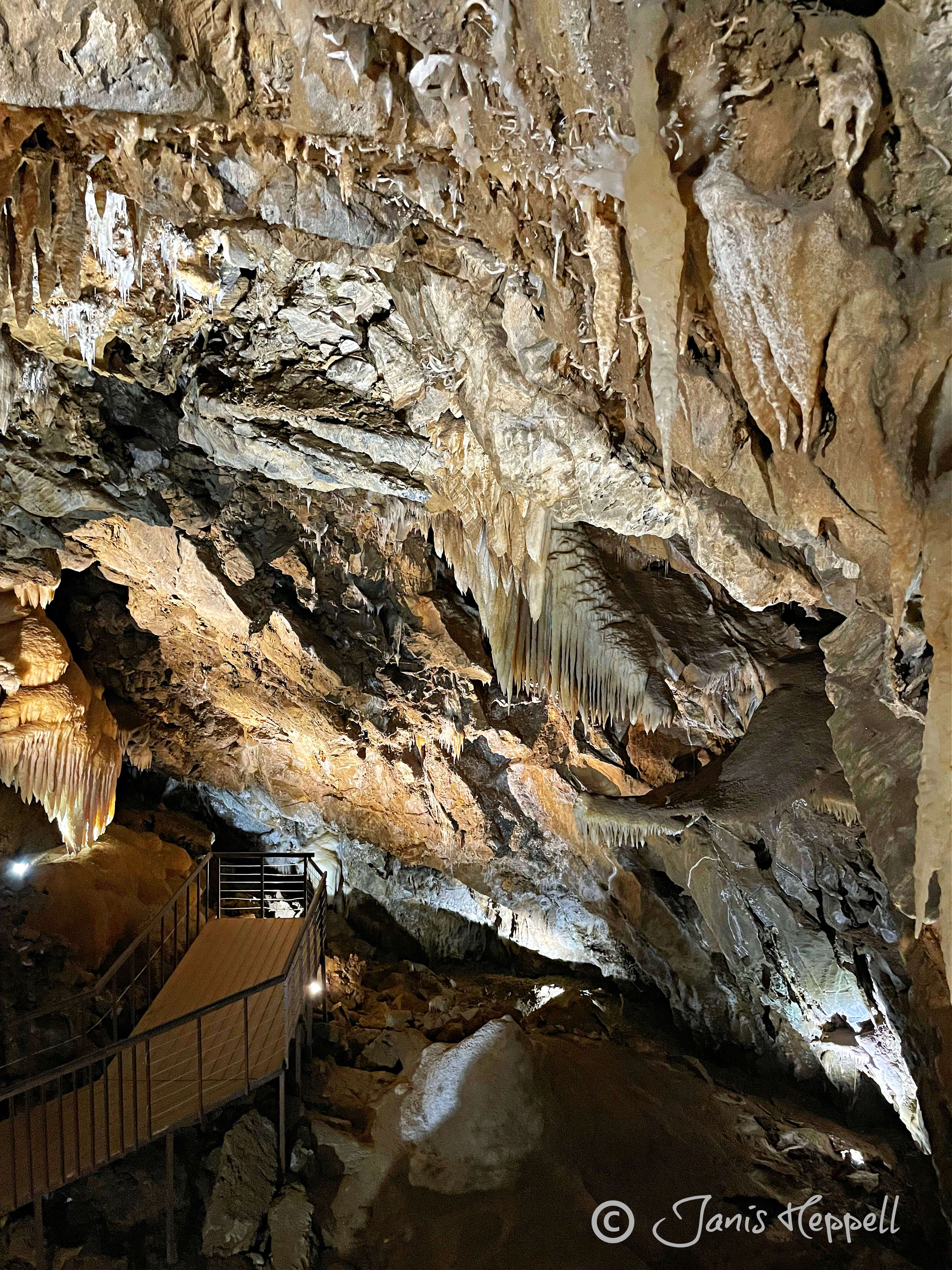
Stairs leading down into the cavern.
Just one of the beautiful formations we saw in the cave.

Not for those who are prone to claustrophobia or who have a fear of heights, the Black Chasm Cavern was a dazzling experience. The deep, cool cave, with its stalactites, stalagmites, and rare crystal formations called helicites, was the perfect place to spend an afternoon away from the sun.

Historical Towns – charming… and closed

When we weren’t exploring mines, caverns, cemeteries, or wineries, we spent time wandering around several small towns whose founding dated back to the gold rush days. The main streets were quaint and lined with enticing shops and tempting restaurants. Sadly, because we were there at the beginning of the week, most of them were closed. Living in a big city, when everything is always open, this hadn’t occurred to us as a possibility.

Hours of operation were very iffy… and, sadly, closed when we were there.

Fortunately, we were able to find a nice(ish) restaurant that was open on my brother’s birthday. The next night, though, when it was our anniversary and their turn to treat, the only thing open was the restaurant attached to our hotel:

Not exactly elegant, but it’s the thought that counts, right?

I have to admit, although I have no recollection of what we ordered – most likely it was off their 55+ Special Savings menu – it was an anniversary celebration dinner that we won’t forget. Ever.  

Copyright © 2025 RetirementallyChallenged.com – All rights reserved.
Part 2: Staying Cool During Extreme Heat

Continuing the story of our 1300+ mile road trip in our electric car (Part 1 here).

Before we started the trip, we knew that we’d be traveling during an especially severe heatwave here in California. Normally we might adjust our travel dates because of this, but since we were going for my husband’s high school reunion, that wasn’t possible.

What we could adjust was the first portion of our route, which is why we ended up in Morro Bay. When we were planning our trip, we saw that the expected temperature of our usual mid-way stop was over 100 degrees. Morro Bay’s high was in the 70s. That made it an easy choice. The cool, coastal temperatures allowed us to park our car at the hotel and comfortably walk everywhere, including to the pride of Morro Bay: Morro Rock.

Our hotel was just up the street from the waterfront and Morro Rock.

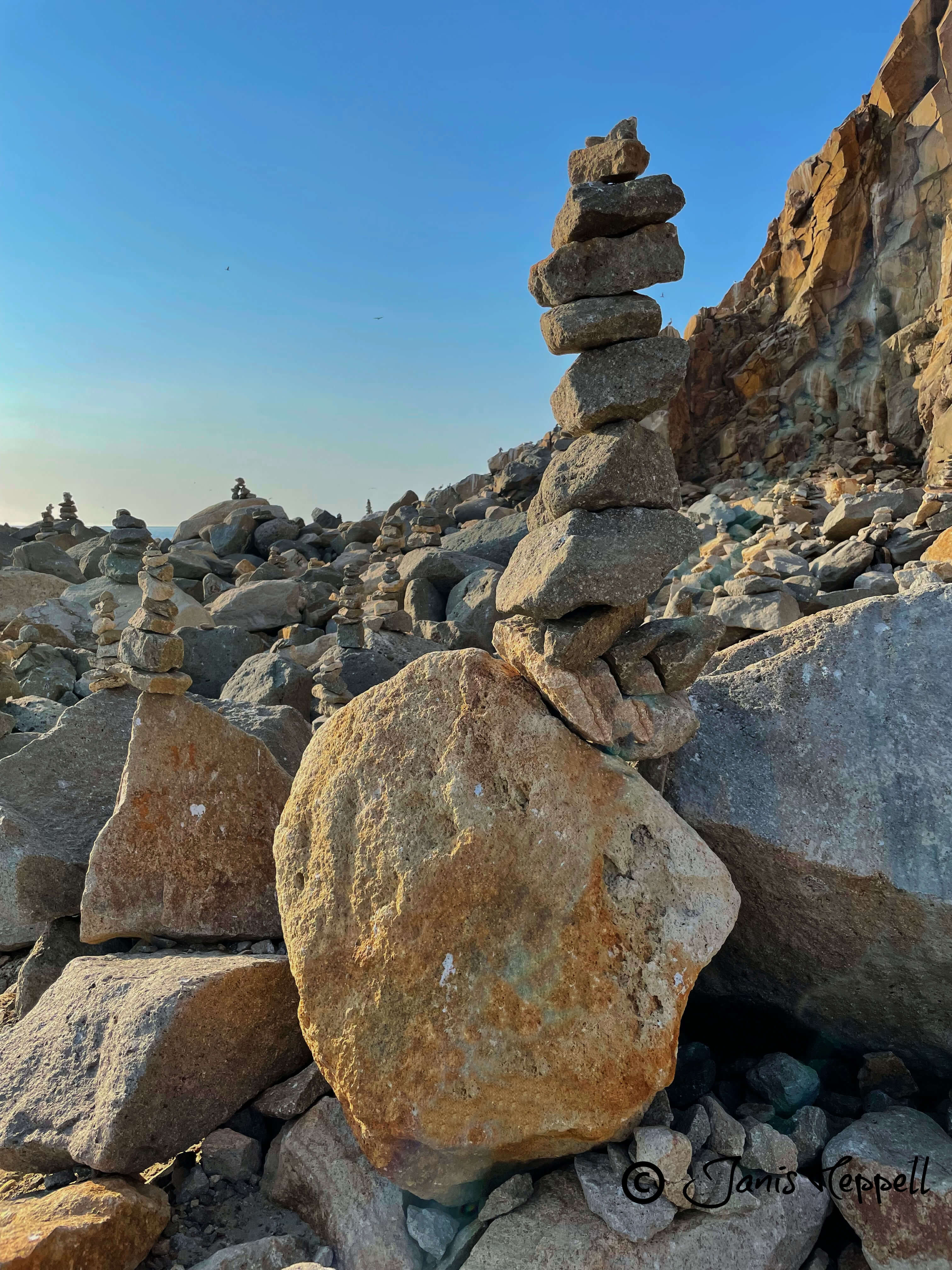
Morro Rock was formed about 23 million years ago from a long-extinct volcano. At approximately 576 feet, it is the tallest of the nine “sister” volcanic plugs that form a chain between San Luis Obispo and Morro Bay. The state historic landmark is a sanctuary for the peregrine falcon and other bird species. It is also the site of the largest field of rock carins I’ve ever seen. Not everyone appreciates these balanced piles of rocks, and I can understand their objection, but seeing so many in one place was pretty impressive.

The next morning was cool and foggy, and we reluctantly loaded up the car for our drive north towards the heat. Almost immediately, we began to see these digital freeway signs:

The temps where we were headed looked brutal and we knew we’d be giving our car’s AC a workout. Fortunately, while very cold temperatures can lower an EV’s mileage, studies have shown that using the AC doesn’t impact it much more than it does in a gas car. Happily, our car’s impressive onboard computer considers AC use when figuring range, so we never had to sacrifice our comfort to eke out more mileage.  

We were also careful to avoid charging between the high-demand period of 4 pm and 9 pm. Only once did we have to plug in during that timeframe when a traffic backup due to an accident delayed our arrival at a supercharger until 4:09 pm (oops). We felt a bit guilty, but we were able to get a quick charge and be on our way in a few minutes.

That charge got us to my brother and sister-in-law’s home located east of San Francisco. We were planning to meet up with them later in the trip but we always enjoy staying for free in their guest room  drinking good wine from their extensive collection their generous hospitality.

The next day, after another quick charge, we drove to the hotel where the reunion was being held that evening. Since this was not my reunion, I got to be more of an observer. As I looked around the room, it was clear that the past 50 years had been gentler to some than others. Most appeared happy, healthy, and engaged but others seemed fragile. On one table the reunion committee had set out pictures and candles in memory of classmates who had passed away. Many of us commented on the number of pictures and how it was a sobering reminder to enjoy life while we can because there are no guarantees.   

Before I end Part 2 of our electrified journey, I would like to touch on luggage storage space. There is a common misconception that EVs are small and tight on trunk space, but, since the batteries are located under the chassis, our car has plenty of room. Not only is our trunk generous, but we also have a decent-sized “frunk” under the front hood where a gas car’s engine would be. Although we aspire to be light packers, this trip required both play clothes and dress-up clothes. One large and one small suitcase, a garment bag, and several additional bags fit with room to spare.

Copyright © 2025 RetirementallyChallenged.com – All rights reserved.
Part 1: Planning Our EV Road Trip

When my husband and I first talked about taking our electric car on our upcoming road trip, I was a bit hesitant. A gathering for a high school reunion prompted the trip, but we wanted to take advantage of the location to visit family and do some exploring. My concern was that driving our EV might make us adjust our route too much. I’m a big fan of electric vehicles, but I didn’t want to miss an opportunity to go somewhere because we wouldn’t be able to charge our car.    

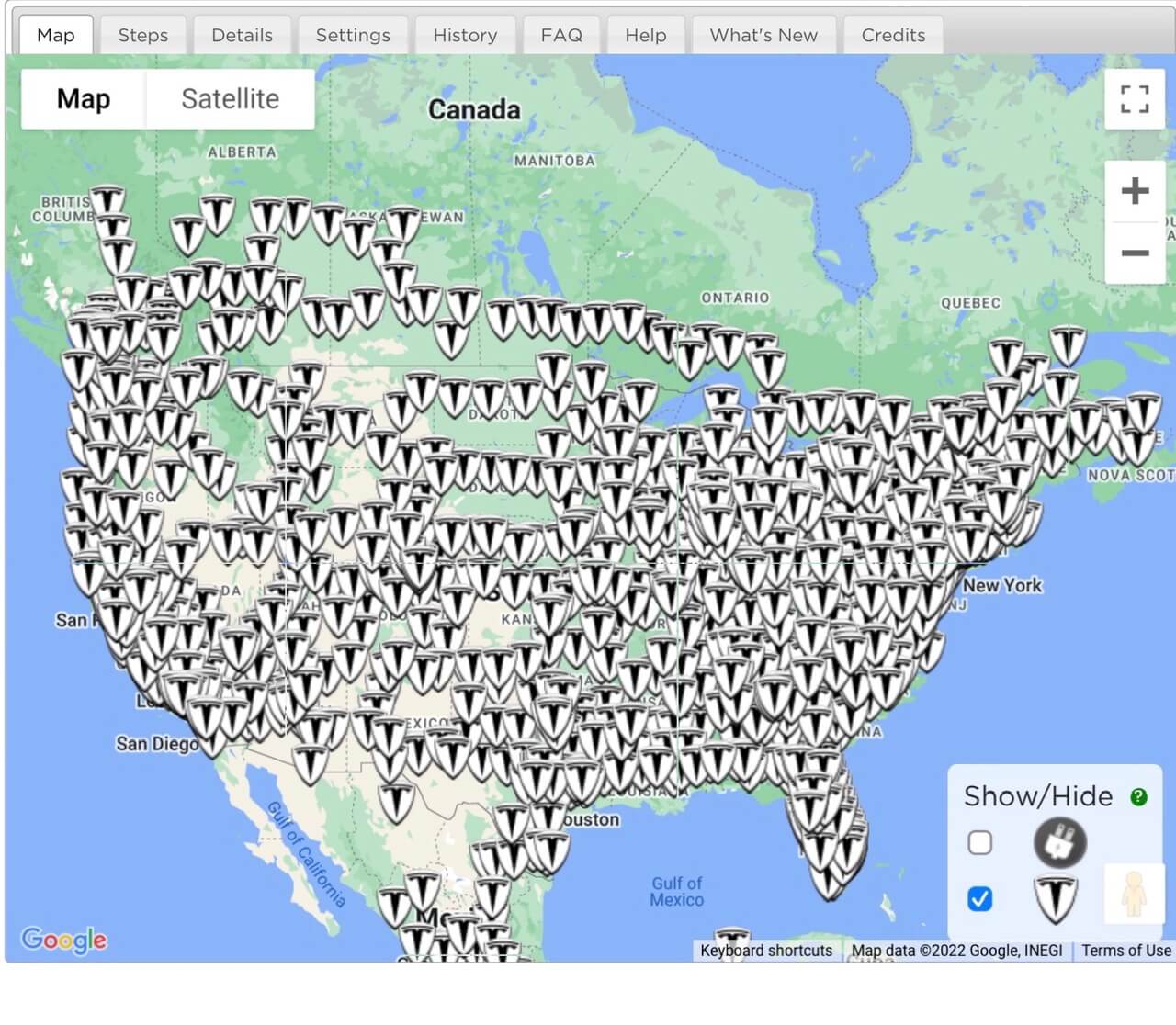
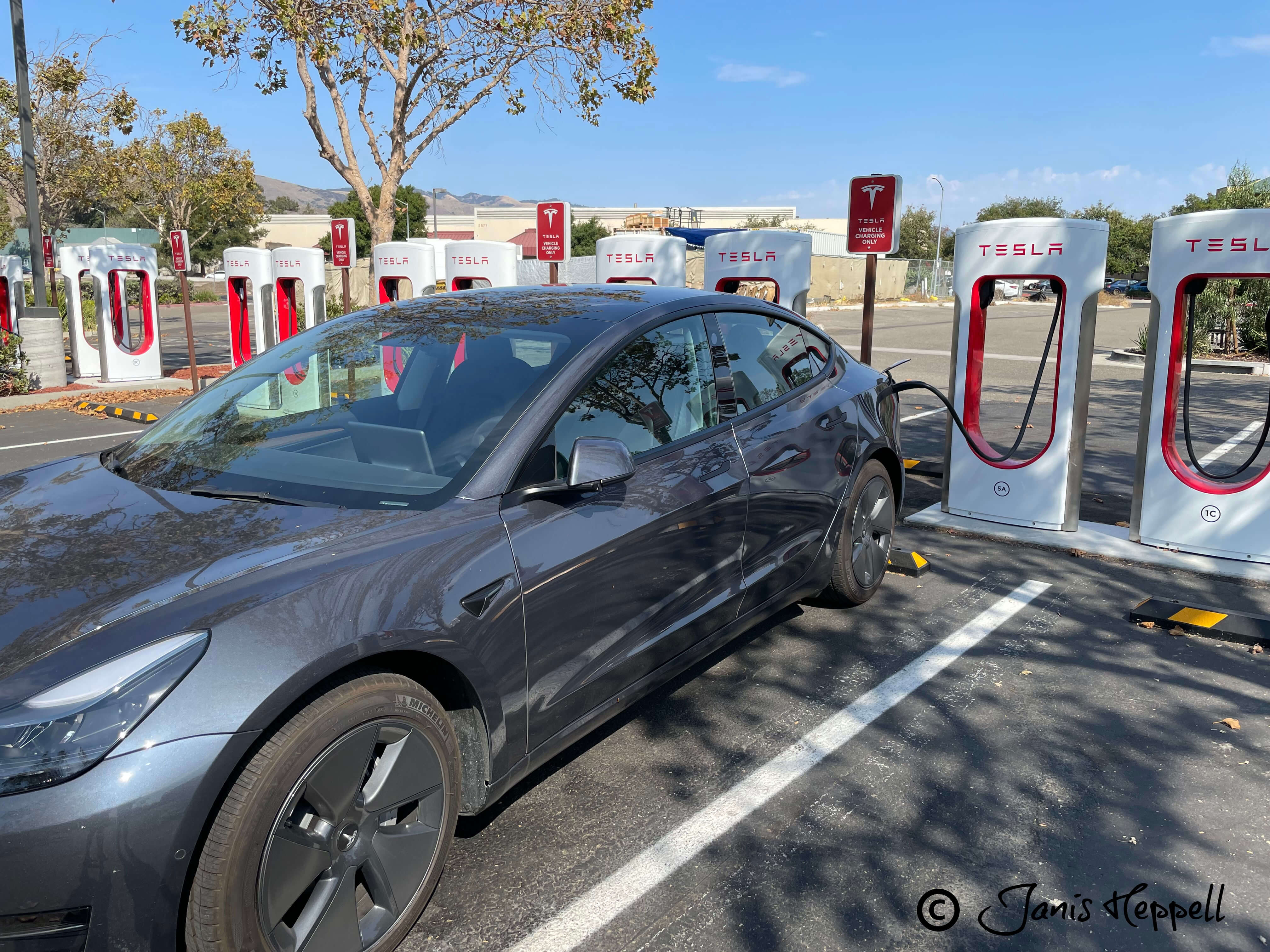
Normally, charging isn’t a problem. We plug our car in at home, charge overnight, and it’s ready to go in the morning. The car has plenty of range to last us at least a week with our usual daily driving needs. We had recently taken a couple of short trips that required some charging away from home, and they had gone well. Now that we were about to embark on a 1,300+ mile road trip, we knew that pre-planning would be important because of the multiple charging stops we’d need to make.  Even with California’s relatively robust infrastructure of charging stations – especially Tesla-branded superchargers – they aren’t as ubiquitous as gas stations.

EVTripPlanner.com was a great help with planning our trip.

There seems to be (at least) two philosophies about road trip charging: A) Make fewer stops and charge to 100% each time, or B) Make more stops, but charge to lower levels (60 – 70%) each time. After some research, we like option B best for several reasons:

  1. Each charging stop takes less time. When charging past 60-70%, charging slows way down as it tries to “stuff” more juice into the battery (this is not a scientific explanation, but you get the point).
  2. More stops mean more opportunities to stretch our legs… something we’ve come to appreciate on longer road trips.
  3. Lower stress. By not waiting until the car’s charge level was low before we re-charged, we would have a comfortable range cushion each time we reached a station (sort of like not waiting until your gas level indicator turns red before re-fueling).

The route we planned had us driving about 2 hours between charges and charging to no more than 70% each time. Of course, we could adjust this along the way, but that felt like a comfortable pace.

We only had to wait for a charging station once our whole trip. Usually, we’d find plenty of stations available.

Between our home and our first night’s stay, we stopped at three supercharger stations. While our car charged – a process that took about 10-15 minutes – we entered our next destination into the car’s computer. After some calculations, it told us where the next supercharger was located, how much remaining charge we’d have when we got there, how many stations they had, and how many were available for use (updated real-time).

Morro Rock at sunset.

As we strolled along the waterfront in Morro Bay, California, we congratulated ourselves on completing the first leg of our journey without any issues. Our pre-planning had paid off. We were becoming more comfortable with the car’s systems and confident that we had made the right decision to drive our EV.     

Copyright © 2025 RetirementallyChallenged.com – All rights reserved.

Booking On Line vs. On Phone

I just wanted to make a single-night hotel reservation for our upcoming road trip. Even though it will be after Labor Day, the coastal town is small and touristy, so I didn’t want to take the chance of waiting until we got there.

We are looking forward to visiting the Rock again.

First, I went online to check out options and reviews on a few hotel booking sites. I wanted something not too pricey but close enough to the embarcadero, shops, and restaurant area to be walkable. Fortunately, there were several reasonable choices with vacancies for the night we’d be there. Easy enough so far.

Many people would simply choose a hotel and click over to the booking site’s reservation page, but I don’t like to do this. I prefer to make my reservations either by calling the hotel directly or by going on their website. I may be old school, but I’ve often found that doing this has a few advantages:

  • Better rates
  • Better discounts
  • Better cancelation policies
  • Better communication

I typed in the name of the hotel and found a website that appeared to be theirs; the landing page gave no indication that it was not. I looked to see if they offered any discounts (AAA and AARP are the most common) but couldn’t find any. That should have been my first clue, but I figured since it was a tourist town, maybe they didn’t need to offer incentives. I made our reservations and printed out the receipt. That’s when I noticed something in the small print that concerned me. The cancelation policy was very unclear. Despite the verbiage, “free cancelation,” there was enough gobbledygook to indicate that “free” might be a euphemism for “not free.”

So, to get clarification, I did what I should have done first, and called the hotel directly.

It turns out that I hadn’t, in fact, made reservations on the hotel’s website. I did have a reservation, but I had made it through a third-party, exactly what I didn’t want to do. I asked the woman—an actual, very nice, human at the actual hotel—about their rates, if they offered any discounts, and what their cancelation policy was. Although their beginning rate was similar, they did offer a AAA discount, and their cancelation policy was 100% refund up to a day before.

Following a brief conversation about our mutual dislike of these third-party booking sites, I asked if she could cancel my original reservation and book us direct. After trying unsuccessfully, she suggested that I contact the booking site directly. She would hold the room and wait to hear back from me. So much nicer than a computer.

I won’t go into all the details but suffice it to say, the booking site did not make it easy to cancel. But, after calling a few different numbers, getting in a few automated phone tree loops, and having my call cut off, I finally reached an agent in India. She canceled my reservation, and I called the hotel back to re-book. Done.  

Like so many “conveniences” afforded us by the interwebs, these booking sites come with a price. Not only can they end up costing more, but their cancelation policies are also often stricter, and communication is challenging or nonexistent. By calling the hotel directly, I saved money, have a generous, understandable cancelation policy, and learned a bit more about the area where we’ll be staying. 

This experience did nothing to lessen my discomfort about booking through these sites. They are fine for doing research but, while they offer expediency, they don’t offer the good communication and human touch I prefer.     

GratiTuesday: The Desert’s Super Bloom

The rain came in abundance to California this year. The sheer volume caused problems in some areas, but most of us have reveled in the frequent downpours. Our gardens look lush, lawns (those that still exist) are green, and weeds are sprouting up everywhere.

March is the month that deserts traditionally experience their blooming season, but our five-year drought has negatively affected the annual spectacle. Fortunately, this year’s rains have not only benefitted homeowners and gardeners in coastal and inland areas, it has created a “super bloom” in our local desert – the likes of which we haven’t seen in many years.

After reading about the large wildflower-seeking crowds ascending on Anza-Borrego State Park during the weekends, my husband and I decided to make our trek there on a weekday. This was supposed to be a prime week and we knew the flowers could fade quickly under harsh winds, rising temperatures, and the ravenous caterpillars that can eat through the flowering plants at an amazing rate.

We got an early start Monday morning (made more difficult because we just sprang forward, and 6 a.m. felt like it came an hour too soon) so we could beat the heat and the traffic as much as possible. When we both worked, a 6 a.m. wake-up alarm was not unusual. Now that we are retired, we’ve learned to appreciate sleeping until we decide to get up. This day, though, the flowers beckoned,  so we dragged ourselves out of bed and into the shower.

The two-hour drive to the state park takes us east, winding through ranch country and along fields planted with citrus, nuts and grapes. Starting at close to sea level where we live, we climbed over 3,000 feet into the hills before heading back down the windy pass to the desert floor.

We started to spot flowers here and there as we approached Borrego Springs, the small town just outside the park, but it wasn’t until we drove into the park that we saw the blooms carpeting the desert sand, colorful against the backdrop of the mountains and blue, clear skies.

I’m so grateful for this year’s spectacular desert wildflowers. Some people think of the desert as being dull and colorless, or hot and full of plants that have painful thorns. I grew up in Southern California so I am familiar with its often subtle beauty. But, after the ample winter rains, this spring’s super bloom isn’t subtle at all; it is showy and colorful, and exploding with life.