What is on your list?

IMG_0005

I love creating lists in the first place and I love crossing items off as they are accomplished. I’ve even been known to put tasks on a list that I’ve already completed just so I could check them off.

There is a list that has been floating around the interwebs that appears to be somewhere between a bucket list and a “done it” list. The items listed are a combination of places to visit and experiences to have, with a few things we may have done when we were younger (skipped school, played cops and robbers) mixed in for good measure.

When I first saw this list on Denise’s blog My Life in Retirement, I was curious to see how my check marks would compare to hers. If you are a list devotee like I am, you might also want to see how many items on the list you have done.

Although I checked off 45 out of 68, there are only around 9 of the remaining 23 that I either would like to do or have any hope of doing (travel to South America and scuba dive, for instance). As far as the other 14 are concerned, I either have no desire (get divorced or sing in church, for example) and/or certainly the time has passed (skipped school or have a child).

The list is by no means complete (Denise pointed out that “Visit Australia” wasn’t included – Been There for her, Not Yet for me), but I hope you’ll get the same feelings of satisfaction that I did as you check items off, and maybe you’ll be inspired to add a few others to your own To Do list.

 
(x) Shot a gun – once, which was enough
(x) Gone on a blind date – it was not a good experience…
(  ) Skipped school
(x) Watched someone die – my 92-year-old father; a horrible, profound and moving experience
(x) Visited Canada
(x) Visited Hawaii
(x) Visited Cuba
(x) Visited Europe
(  ) Visited South America – definitely on my list
(x) Visited Las Vegas
(  ) Visited Central America – also on my list
(  ) Visited Asia
(  ) Visited Africa – yep, on the list
(x) Visited Florida
(x) Visited Mexico
(x) Seen the Grand Canyon in person
(  ) Flown in a helicopter
(x) Served on a jury – several times, once as the foreman
(x) Been lost – as a child at Knott’s Berry Farm; found by an “Indian” (does that count?)
(x) Traveled to the opposite side of the country – a few times by plane, once on a road trip with a girlfriend
(x) Visited Washington, DC

(x) Swam in the ocean – not a big accomplishment, I live in Southern California
(x) Cried yourself to sleep
(x) Played cops and robbers – I had two older brothers, one who became a real cop later on
(x) Played cowboys and Indians – ditto (except neither of my brothers became a cowboy or an Indian)
(  ) Recently colored with crayons
(  ) Sang karaoke
(  ) Sang a solo or duet in church
(x) Paid for a meal with coins only – not a big meal, but a meal nonetheless

(x) Made prank phone calls – oh my god, we thought we were so funny!
(x) Laughed until some beverage came out of your nose
(x) Caught a snowflake on your tongue
(  ) Had a child
(x) Had a pet
(x) Been skinny-dipping
(x) Been fishing
(x) Been boating
(x) Been downhill skiing
(x) Been water skiing
(  ) Been camping in a trailer/RV

(x) Been camping in a tent
(x) Driven a motorcycle
(  ) Been bungee-jumping
(x) Gone to a drive-in movie
(x) Done something that could have killed you
(  ) Done something that you will regret for the rest of your life – isn’t it the things not done that we regret?
(  ) Rode an elephant
(  ) Rode a camel
(  ) Eaten just cookies or cake or ice cream for dinner – popcorn, yes
(x) Been on TV
(  ) Stolen any traffic signs
(x) Been in a car accident – not my fault… either time
(  ) Been in the hospital in past 24 months
(  ) Donated blood
(  ) Gotten a speeding or any other type of ticket in the past 12 months
(x) Gotten a piercing (ears count)
(x) Gotten a Tattoo – a radiation tattoo… not that fun
(x) Driven a manual transmission vehicle
(  ) Ever owned your dream car I don’t really have a “dream car”
(x) Been married
(  ) Been divorced
(x) Fell in love
(x) Fell out of love
(x) Paid for a stranger’s meal
(x) Driven over 120 mph – 150 mph at the Bonneville Salt Flats: I’m not sure if it counts since my husband was at the wheel
(  ) Been scuba diving –  sadly only snorkeling, but it was wonderful!

(x) Written a published book/story/poetry
(x) Eaten snails – “eaten” may be overstating it – I could only manage a small bite

Could you travel full-time?

Map

About twenty years ago, when we were about to embark on a major remodel of our house, my husband asked an interesting question: do we want to continue on our path to spend many thousands of dollars adding a master suite and several hundred square feet of living space, or should we instead spend the money traveling around the world?

We had spent months of searching before we finally found the home we bought. It was in a great neighborhood and had a wonderful view, but it was definitely a fixer-upper. When we purchased the house two years prior, we did so with the intention of tearing most of it down and starting over. When my husband asked his somewhat facetious question, I didn’t hesitate long before answering that I wanted to continue with the construction.

Looking back at that decision, I’m glad we chose that path. I love our house and our neighborhood and I don’t regret spending the last twenty years enjoying our life here, but I thought about my husband’s question recently as I was reading one of the several travel blogs I follow. The decision we made twenty years ago was the right one for us at that time. But, now that we are retired, I wonder if we could make a different choice. Could we lock up our house—or maybe rent it out long-term—and start to travel the world full-time? Is that a lifestyle we could embrace and thrive in?

Michael and Debbie Campbell have been travelling the world since July, 2013. They rented out their home and took off with the intention of being gone for 12 months. Almost three years later, they are still on their journey, mostly staying in Airbnbs. You can read a summary of their adventures in their April 18th Senior Nomads in Europe post.

Tim and Joanne Joseph sold their house in 2013 and have been traveling almost non-stop since then. Their wonderfully engaging blog, A Note from Abroad, (About page) often makes me want to jump on a plane and go.

Lisa Dorenfest is following her dream of circumnavigating the globe on a sailboat. Her journal of the multi-year “sailbatical” she has taken is captivating and her photography is stunning. Currently somewhere near Australia, Lisa will take you along with her One Ocean at a Time (Introduction Page).

I think it takes a certain type of person to make a commitment to living a life of continuous travel. As attractive as it might sound, most of us enjoy the comforts of home too much to be on the road (or seas) full-time. We yearn to see different places and have new experiences but, when we return to the familiar we are refreshed and rejuvenated.

The beauty of retirement is that we can stretch out our travels as much as our comfort and budget allows. My husband and I love to take short trips lasting several days to a week or so. We’ve also taken a few longer trips which have been wonderful, but traveling for three or four weeks at a time is about our limit. After a while, we want to go home and decompress.

But, who knows; one of these days we just may find the perfect house sitters or tenants, and we’ll hand over the house keys for a year or more. The time to do that is now, when we both are healthy and relatively courageous (gulp). At some point it will be too late; we will start to experience aches and pains significant enough to keep us close to home and/or we might feel less sure of our abilities to deal with stressful situations. When that happens, will I be satisfied with the life we chose or will I regret the path not taken?

GratiTuesday: Moving beyond retirement into jubilación

Yesterday, as we were out running errands, I mentioned to my husband that it was the 2-year anniversary of my retirement. His response was, “Wow, really? Time has gone so fast, hasn’t it?”

Yes and no.

Although he was right that the two years went by rather swiftly, I also feel as if I’ve been living my retired life for a long time… and I’m getting pretty good at it. In fact, I don’t really feel “retired,” as if that word defines a specific post-work chapter of my life. I’m not just moving through a phase; I am fully engaged in my life. The Spanish word for retirement is jubilación, which I think is much more fitting.

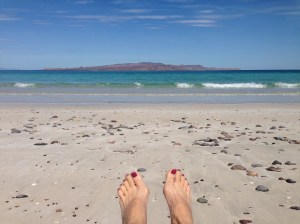
Jubilacion, La Paz style

A few days ago, I was at an event where I didn’t know many people. I thought it would be interesting to do a little experiment if when anyone asked employment-related questions. I wanted to avoid describing myself as “retired” because I’ve found that often that word can be a dead-end to a conversation. I was interested to see if a different response could generate more engaging dialog.

It didn’t take too long to find myself in the familiar, polite back-and-forth that often occurs with a stranger in a social situation.

Polite Stranger (PS): What do you do?

Me: I dabble in photography, write a bit, read, and travel whenever possible.

PS: I mean, what work do you do?

Me: Some housework, although not as much as I should, perhaps. Also, yard work.

PS: No, full-time. I mean, what do you do full-time?

Me: Oh. I guess I don’t do anything full-time. There is so many great options that it would be impossible to pick something to do full-time.

PS: Really? Tell me about some of the things you are doing.

And, then the conversation really got interesting. I don’t think it came up that I was retired until quite a bit into the discussion. I also don’t remember if PS told me what kind of work she did… it wasn’t important. I learned some interesting things about her that had nothing to do with how she spent 8-9 hours of her day. Who we are is so much more than our chosen career. And, when we are no longer wrapped up in that career, being retired is just a single data point, not a description of who we are.

I am so grateful that two years ago I had the good fortune to be able to leave the work-world behind and embrace jubilación. The word may mean the same thing, but it sure sounds more like how I feel.

Shared memories… or not

memories

Yesterday marked the 26th anniversary of my husband’s and my first date. I probably wouldn’t remember that specific day if it hadn’t occurred on Cinco de Mayo. My husband? He wouldn’t remember it at all if I didn’t remind him.

After 26 years together, we have mountains of shared experiences. We’ve been on numerous trips, attended countless events, and celebrated many, many milestones. We’ve also remodeled two houses together, dealt with several family tragedies, and supported and cheered each other through life’s ups and downs.

We’ve been through a lot together over the years; what I find fascinating is what each of us remembers… or not.

I guess there is only so much we can cram into our cranial cavities before some of it leaks out. What sticks tends to be what, for whatever reason, resonates with us; what doesn’t stick becomes jetsam that our brains jettison to lighten the load.

In addition to the date of the first time we went out, I remember other bits and pieces of relatively useless information that has long-abandoned my husband’s brain. I have a fairly vivid memory of the layout of most of the houses we looked at before we decided to purchase our home. I remember restaurants where we ate years ago, and often what each of us ordered. More useful, I have a much better memory of all of our vacations, where and when we went, what we did, and who we met.

My husband has almost no retention for the dates of past events and his memory of the homes we visited is almost nonexistent. If we are sitting in a restaurant we’ve dined at before, he will often have no recollection of having been there. When I tell him what he ordered, his usual response is, “did I like it?” Often, when I mention a shared experience from many years ago, he will look at me blankly.

My husband, on the other hand, has a much better memory for specifics of presentations we’ve attended, conversation we’ve had or been party to, and movies we’ve seen. When he recites snippets of a presentation or a conversation, I desperately try – often unsuccessfully – to rummage around in my temporal lobes for the same memory. He’ll harken back to a movie we saw months ago, recalling the plot and, often, reciting the dialog. I’m lucky if I can remember the name of the movie we saw the prior evening.

As far as we know, neither of us is experiencing age-related memory loss… it’s always been this way. Each of us is just better with different types of memories. I find that my memories tend to be more emotional and visual, his are more verbal. One’s not better than the other—both tend to be filled equally with useful and useless tidbits of information—they are just different.

After 26 years together, I think that it is safe to say that we’ve forgotten more bits and pieces than we can remember. Fortunately, it really doesn’t matter if he forgets the details of our first date or I can’t remember a movie we saw two months ago. What is really important is that we continue to make memories together. That and maybe we both should take notes.

GratiTuesday: Happy National Teacher Day, Miss Miller!

Today is National Teacher Day, a day set aside to honor those who make special contributions to the education of our society every day. Although I have had many wonderful teachers over the years (including those who teach the adult learning classes I attend now), one of the most inspirational teachers I had was my first grade teacher, Miss Miller.

Miss Miller was the kind of teacher any kid would be lucky to have. She was energetic, creative, patient, challenging, loving, and so much fun. I can’t imagine what it must have been like to be faced with a classroom of 7- and 8-year-olds, most who hadn’t mastered the ability to sit still for any length of time, few who understood the concept of using their “inside voice,” and even fewer who had any idea what to expect and what was expected of them. Because our class had a combination of first and second graders, her job must have been even more challenging.

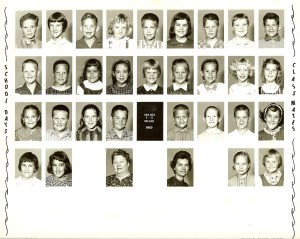
First Second 1963a

Although we entered her world with different childhood experiences and varying skill levels, on that first day we were all lumps of clay. Over the school year, Miss Miller skillfully worked her magic and slowly molded us into 30 young humans who, in addition to our academic lessons, learned to do our best, be nice to others, play fair, and to find joy in the process of acquiring knowledge.

I met some of my life-long friends in Miss Miller’s classroom. We made our way through grade school together and many of us went on to attend the same junior and senior high schools. Although our individual circumstances have changed over the years, the bond is still there.  One was my Maid of Honor, I was a guest in another’s home in Hawaii for 3 weeks, and I recently traveled to La Paz with still another.

From one of those friends, I was thrilled to learn that Miss Miller was still living in the area and was as healthy in mind and body as ever. I asked my friend if she could set up a lunch for the three of us so I could see my favorite teacher again and tell her how much she meant to me.

Out of that lunch came the germ of idea: we would gather together as many students from our first grade class as we could for a Thank You Miss Miller celebration. We figured that we couldn’t be the only two who remembered Miss Miller with a special fondness.

We reached out to as many of our classmates as we could and asked each one if they were in contact with any others. Pretty soon, we had about 20 email addresses. Out of those 20, we were able to get commitments from 10 – not bad from a class of 30 students who, over the 50+ years in between, certainly had moved on, both figuratively and literally. Happily, we discovered that we all still shared an appreciation for our teacher.

Group 2

The luncheon was a splendid success. Miss Miller (who will always remain Miss Miller to us even though she tried to have us call her Cynthia) was thrilled and touched by our show of gratitude. Her students—most of us now in our early 60s—had a delightful time catching up and sharing memories. As a special memento, we presented her with a book that contained thank you notes from each of us and our pictures, from first grade and now.

I am so grateful not only that I had the privilege of having Miss Miller as my teacher, but that I was able to thank her in person so many years later. How many 60-year-olds get to hang out with their first grade teacher?

Happy Teacher Day to all the amazing and dedicated teachers out there. You have made a difference in our lives and we are forever grateful to you!

What happens in Las Vegas…

My husband and I recently spent six days in Las Vegas. Neither of us are gamblers or heavy drinkers so the ubiquitous slot machines, card tables, and bars weren’t the beneficiaries of any poor choices on our part. We were there to attend an event, but added a few extra days to look around since neither of us had been to Sin City for many years.

Viva10 Viva9 Viva3


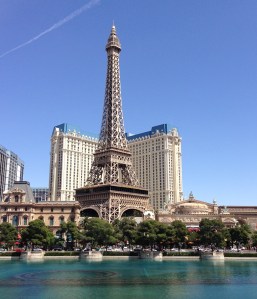
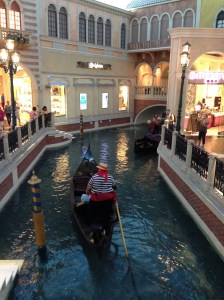
We spent one day walking up and down the Strip, enjoying the kitschy fantasy hotels created to emulate great cities of the world, such as Paris, New York, and Venice. I have to admit the designers did a pretty good job capturing their essence… if Paris, New York, and Venice were filled with bright and noisy slot machines and cigarette smoke (OK, maybe they nailed that part).

Viva4

Viva6

The next day we took a tour of the Neon Museum and Boneyard, which features discarded signs from old hotels and casinos. This two-acre outdoor museum is crammed full of vintage neon; some of signs still light up (they offer an after dark tour but it usually fills up quickly), but most are in various stages of decay and show the lovely patina of age. The hour-long walking tour was full of history and the photo ops were glorious.

Viva7

After our tour, we drove a few short blocks to the Mob Museum where we learned about the history of the Mafia, both in general and, more specifically, in Las Vegas. Although there are guided tours and audio tours available, we opted to take ourselves through the fascinating and well-organized museum. (Tours of both museums can be booked online, and there is a special price when you purchase the two together.)

As interesting as these museums were—and I do recommend them if you ever find yourself in Las Vegas—the main reason we were there was to attend Viva Las Vegas: a four-day extravaganza of music, cars, dancing, and a people-watcher’s paradise.

Viva Las Vegas is the largest Rockabilly festival in the world and attracts about 20,000 attendees from around the globe. The event features over 75 bands, North America’s biggest pre-1960s era car show, and hundreds of vendors selling vintage clothing and accessories. There are also fashion shows, tiki pool parties, and dancing, including demonstrations and contests.

Did I mention the people watching?

Viva2

Although my husband and I love to swing dance, I didn’t know very much about Rockabilly or the Rockabilly culture. Viva Las Vegas provided an extreme immersion course. Apparently, there is a whole subculture that embraces a style that combines 1940s/1950s dress with tattoos and hair colors not found in nature. I was fascinated by these Rockabilly aficionados and we’d often find a comfortable seat just to watch them stroll by. As members of the selfie and social media generation, most seemed completely comfortable in their (heavily tattooed) skin and were happy to pose for pictures.

Viva1

I couldn’t help but contrast myself at that age… trying so hard to fit in, but not stand out. If this was a “thing” when I was young, would I have gotten tattoos or dyed my hair a cartoon color? Probably not. I both admired them for their confidence, and worried for their future marketability in the job world. Hair color can be easily changed, tattoos… not so much.

We had such a great time that we already have our hotel reservations and tickets for next year. Although we won’t be getting tattooed in the interim, we do plan on picking up a few new dance steps and some vintage clothing before we return. It’s all part of the fun.

Spanning seven urban bridges, 4 – 7

In my last Spanning seven urban bridges post, I wrote about a recent hike my husband and I took called the Seven Bridge Walk. The 5.5 mile hike traverses through several older neighborhoods in our city and crosses over a mix of historic and newer bridges. That post featured the first three bridges we crossed; the four remaining bridges are just ahead…

Quince Street

The Quince Street walking bridge is a wooden-trestle bridge that was built in 1905. It is 236 feet long and rises 60 feet over Maple Canyon. Although the cost for the original construction was less than $1,000, the cost to repair the bridge in 1988/1989 was closer to $250,000. Even though I knew the bridge was in good repair, it was a little unnerving to look over the sides and see what looked like a hodge-podge of wooden planks holding it up.

Spruce1

Probably my favorite bridge on our walk is the Spruce Street suspension bridge located in the Bankers Hill neighborhood. It was constructed in 1912 to serve as a passageway for early residents to get to the newly built trolley lines. The bridge stretches 375 feet across and rises 70 feet above Kate Sessions Canyon, named after a horticulturist responsible for many of the plantings found throughout the city. The bridge swayed a little as we walked along it, but it didn’t feel dangerous at all.

After stopping for lunch in the always interesting neighborhood of Hillcrest, we next reached the Vermont Street Bridge. This modern steel bridge was built in place of a deteriorated wooden trestle bridge that dated back to 1916. Rather than replace the beloved original bridge with a merely utilitarian passage, local residents fought for something more interesting and reflective of the two neighborhoods it connects. As we walked over the bridge, we read walking-themed quotes written by people like Martin Luther King, Jr., Kate Sessions, Pythagoras, and even long-time San Diego resident, Theodor Geisel, better known as Dr. Seuss. Can you figure out the word puzzle?

Craftsman

As we journeyed towards our next bridge, we passed through an older neighborhood dotted with beautiful craftsmen bungalows. I imagine an artist lives in this one.

Georgia1

Finally, we reached our seventh and last bridge: the historic but hazardous Georgia Street Bridge. A redwood bridge was originally built here in 1907, but it was replaced in 1914. The “new” concrete Georgia Street Bridge is listed on the National Register of Historic Places. I’ve heard that it is scheduled for an $11 million dollar overhaul, including seismic and structural retrofits… hopefully they will begin soon before the bridge crumbles apart.

After crossing our final bridge, we zig-zagged a bit more, then headed back along Park Boulevard towards Balboa Park and our car. At 5.5 fairly flat miles, the walk wasn’t too strenuous but it was a lot of fun and, when we were finished, we felt a little like we had also traveled through time.

GratiTuesday: Making travel plans in the digital age

My parents were great travelers and encourage us kids to follow in their footsteps. Although I’ve visited many of the places they traveled to—and several they didn’t—I feel as if I’ve just dipped my toe into the deep well of possibilities.

Because they traveled so much, my parents had a close, personal relationship with their travel agent. Helen knew my folks’ likes and dislikes, preferred way to travel, destinations of interest, and budget considerations. Although they seldom encountered any problems while traveling, they knew that they could call Helen if they needed help and she’d work things out.

Despite all online resources, I still love paper maps.

I am currently firming up travel itineraries for two upcoming trips, and making some preliminary plans for a few more that are on our radar. Like most people in today’s digital age, I am not using a travel agent to help me plan and book our trips. The resources available to me online are vast, powerful, accessible, and, sometimes, a little scary.

I can research our destinations using multiple travel websites and helpful blogs. I have reached out to blogging buddies who live in the areas we are visiting for first-hand recommendations (and, hopefully some meet-ups). Using mapping apps, I am able to chart our route and look for points of interest along the way.

Once we know where we will stop on our journey, I can book our hotel rooms (after reading extensive reviews) online. For the first time, we are also going to try Airbnb, whose website is robust and pretty easy to navigate. Tickets for attractions can be purchased in advance and I can often load them to my smartphone so I don’t need to worry about misplacing pieces of paper.

And, of course, any airplane and rental car reservations are completed with a few keystrokes and a credit card.

There are pluses and minuses to planning travel this way, of course. Using a travel agent provided my parents with valuable peace-of-mind and allowed them to tap into Helen’s professional knowledge and years of experience. Since she did most of the work (and, as I remember, the service was provided for no, or very little, cost), my folks didn’t have to spend hours doing research. Helen’s agency was a one (or two)-stop-shop for planning, finalized itinerary, and tickets.

By making our travel plans online, I have a lot of control over our itinerary. I don’t need to rely on someone else’s preferences or affiliations. I can spend time looking at different options and search-out deals and off-the-beaten-path opportunities. Once on the road, we can take advantage of apps that will help us to find places to eat and points of interest to visit. I can read about the history of an area, check out the weather, and even avoid road construction and accidents up ahead.

Although we may not have someone like Helen to provide travel assistance and hand-holding, I am so grateful that the internet has given us the power to design our individual journeys and create our unique adventures.

Spanning seven urban bridges, 1 – 3

One of my very favorite things to do is to get out and walk. I enjoy walking for exercise either by myself or with a friend. I love to walk the hills of my neighborhood, or go down to the bay and walk along the shore, or up to the local mountains and hike the trails. I also enjoy walking as a way to discover hidden gems in unfamiliar places. Walking allows me to see the small details I would miss if I was in a car, or even on a bike. When I’m not trying to raise my heart rate, the less hurried pace allows me to observe my surroundings and to stop and take a closer look or snap a picture.

A while ago, I read about an urban hike in our city called the Seven Bridge Walk and was intrigued. The hike is about 5.5 miles long and meanders through several older neighborhoods and crosses over a mix of historic and newer bridges. The walk sounded like the perfect combination of exercise, sightseeing, and  a bit of history, so I filed it away as something to do in the spring.

Finally, last Tuesday, my husband and I decided it was the perfect day to put on our walking sandals and go.

This was the trunk of a very strange tree.

The route begins on the east side of Balboa Park, near the succulent and cactus gardens. After spending some time playing in looking at the plants, we crossed the first – and shortest – of the seven bridges.

A55837D5-5F01-4B1A-BA75-1F86BB66AD02

This concrete walking bridge was built fairly recently to provide safe passage over a busy street. The bridge has a graceful design and it was a nice way to enter Balboa Park, San Diego’s jewel and the nation’s largest urban cultural park (which deserves—and will get—its own, separate post).

Cabrillo_Bridge

Continuing west along El Prado through the middle of the park, we reached the majestic Cabrillo Bridge. The bridge was constructed in 1914 and is the first multiple-arched cantilever bridge built in California. Although Cabrillo Bridge originally spanned a small lake, cars traveling on State Route 163 now pass underneath its arches.

You can see a downtown high rise, San Diego Bay, and the end of Point Loma off in the distance.

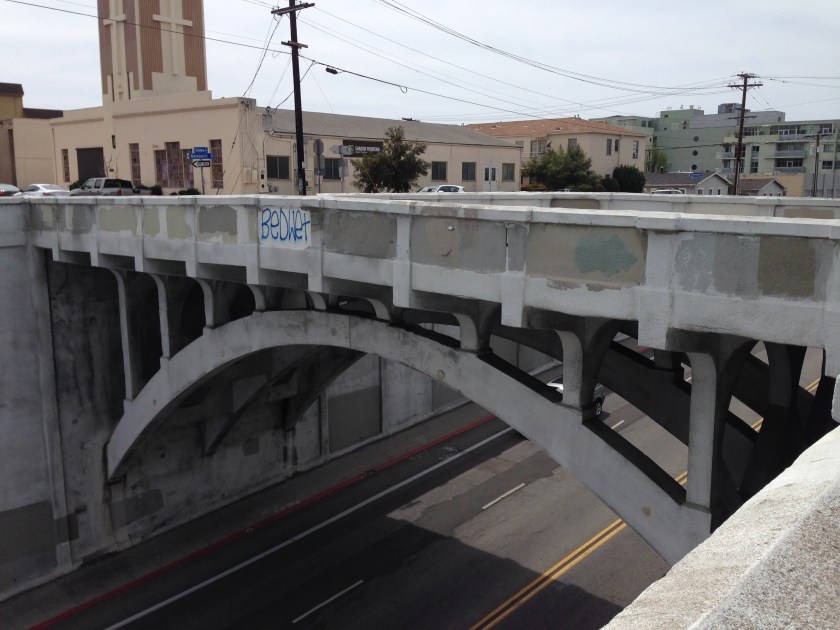
After a few zigs and zags and several stops to take pictures, we reached the third bridge on our walk. Built in 1931, the First Street Bridge is the only steel-arch bridge in the city. It was built in a fabrication plant in the Midwest, dismantled, and then shipped to San Diego to be assembled again.

Come along to see the remaining bridges on our walk in my Spanning seven urban bridges, 4 – 7 post next week.

Fasting to lose weight and gain health

The job I had before I retired involved food. Lots of it. Not only did I work with restaurant owners, managers, and chefs to promote energy efficiency in commercial food service, my office was located in an educational facility that regularly provided catered food to those attending our workshops. If there wasn’t something fabulous cooking in the kitchen, there was probably something yummy being served in one of the seminar rooms. I tried to avoid temptation as much as possible, but I’m only human. A little bit here, a little bit there adds up to a lot of bits… and a few more pounds than I was comfortable carrying.

Like a lot of people, I have periodically put on – then tried to lose – five or ten pounds throughout my adult life. I’ve been on various fad diets, unhealthy extreme diets, and mainstream programs like Weight Watchers. They all worked for a while but none offered a long-term solution that I was able to maintain. What I wanted was a healthy way of eating that I could stick with and not feel too deprived.

Enter Public Television. I realize that it’s an unusual place to get diet advice, but it happened when my husband and I watched a three-part BBC series on how the body works and improving ones health. One episode was titled The Truth About Exercise, one was Guts (how our stomachs work), and the third one was Eat, Fast, and Live Longer. The first two were fascinating, but the third one really caught my attention.

In that episode, the series’ host, Dr. Michael Mosley, shared own health journey. He was overweight and had been recently diagnosed with diabetes and high cholesterol and was looking for a path back to health that didn’t involve drugs. His research led him to the concept of intermittent fasting (IF). After testing different forms of IF, he developed what he called the 5:2 diet, which required him to restrict his calories two days a week and eat normally the other five days.

What interested me about the premise of IF as a weight-loss/weight-management program was two-fold: I felt that it was a regime I could follow over a long period of time and there appeared to be some real health benefits beyond just the weight loss. Scientific trials have shown that intermittent fasting could reduce the risk of a range of diseases from diabetes to heart disease and cancer. Other studies indicate it might even protect against strokes, Alzheimer’s and Parkinson’s.

It’s now been three years since I began fasting weekly. At first I fasted two days a week and slowly lost the ten pounds that I had gained. Once I reached my desired weight, I settled into a one-day-a-week maintenance routine.

When I retired, I wondered if I could stay with the regime but it hasn’t been a problem at all. I typically fast on my busiest day each week so I have plenty of distractions and I never choose a day when an event or a party would make me feel deprived. If I’m traveling or have another reason I can’t fast one week, I don’t. But, out of the 52 weeks each year, there are probably only two or three in which I don’t fast. If I see my weight creeping up, I return to fasting two days a week until it comes off.

There is a lot of information – both pluses and minuses – regarding intermittent fasting and the 5:2 diet. A recent New York Times article, Fasting Diets Are Gaining Acceptance, outlined the history and science of IF and highlighted different ways it can be done. The three-part PBS/BBC series that started me going is fascinating and can be found online. Dr. Mosley has written several books based on his findings, including the best-selling FastDiet and a few about managing diabetes.

I realize that IF is not for everyone. I’m not the most disciplined person in the world, but it works for me. I think knowing it is just one day (or two, when I want to lose a few), and that I’ll go back to my normal eating the next day, makes the fasting day doable. I don’t have to eat weird food, I don’t have to keep track of points, and, best of all, I don’t have to say “no” every day… just the day that I choose to fast. The weight loss and easy maintenance is great, but the possible health benefits make this lifestyle choice a good one for me.