Why, yes, I do look like an aged zombie

When my husband and I recently traveled to Mexico, our passports were six months away from expiring. We were a little nervous because we had read that some countries require passports to have more than six months left before their expiration date, but we didn’t have enough time to renew. Fortunately, we passed through the border check with no issues at all.

Almost as soon as we returned from our trip, we began the process of renewing our passports. We hope to travel outside the country later this year so we wanted to ensure adequate turnaround time without having to pay the $60 expedited service fee.

Our first order of business was to have updated photos taken.

You probably have seen – or at least have heard about – Prince’s new passport photo. He was so proud of it, he tweeted it out to his followers. And, it truly is a thing of beauty:

Since Prince’s private make-up artist and photographer were busy, my husband and I decided to get our photos taken at Costco. This would be the same Costco that manages to make me look like a shrunken pinhead each time they take my photo for my membership card. For some reason, we thought this was a good idea.

My prior passport photo was taken just after I turned fifty. It wasn’t great, but I was happy that my Farrah Fawcett winged bangs on my 1970s-era passport were a thing of the past. Fifty-year-old-me had a bit of a deer-in-the-headlights look, but it wasn’t too bad.

To be fair, the young man who took my photo this time did his best. He offered to take it again but I was pretty sure it wasn’t his skill as a photographer that was the problem. It was me. I was in a hurry that morning and didn’t take the time to fix my hair or put on makeup. I was in full retirement mode and didn’t think that it was important. I hadn’t considered that I will have this photo in my passport for the next ten years (at which time, I’ll be 70 years old and, I promise you, no better looking than I am now).

It wasn’t until after we mailed off our photos and passport renewal paperwork that I truly grasped the gravity of my mistake. I realized that I was going to cringe every time I had to present my passport to tour operators, border agents, and hotel clerks. What if it is so awful they don’t believe it is truly me? Even worse, what does it mean if they think it looks exactly like me?

Doing some online research after the fact, I found this 2014 Vogue Magazine article that provides five helpful tips for preparing for a passport photo shoot. Even though the tips are geared towards women, men also might find it helpful and even consider borrowing – and discreetly applying – a little makeup too (after all, Prince did it, why can’t you).

It’s too late for me, but there may be hope for you if your passport needs updating soon. Why look like a zombie when you could look like royalty?


The heART of La Paz

La Paz was not a destination that had been on my radar screen. There are several other locations in Mexico that we plan to visit, but when some friends asked if we’d like to join them in southern Baja for a week, we said “yes” (“yes” being our favorite word now that we’ve retired).

La Paz Map

Although we were headed for a resort a few miles from the city, I knew that my husband and I wouldn’t be satisfied staying in the cocoon of the compound. We wanted to explore the surrounding area, especially the city of La Paz.

The bit of research we did before our trip told us:

  • La Paz, which translates to “The Peace,” is located close to the southern tip of the Baja Peninsula. With about 250,000 inhabitants, La Paz is the capital of the state of Baja California Sur.
  • Because it is located on the coast of the Sea of Cortez, La Paz is known for water-centric activities like swimming fishing, sailing, snorkeling, diving, whale-watching, and kayaking.
  • The city of La Paz has a nostalgic and provincial atmosphere, with a laid-back lifestyle, friendly residents, and wonderful cuisine.

What my research didn’t tell me about was La Paz’s rich and ubiquitous art scene. As I walked around the city, I was thrilled to find richly colorful murals, whimsical sculptures, and small pocket parks that not only offered quiet places to relax in the shade, but also beautiful and thoughtful design.

The weather was perfect, the sea a tranquil mixture of turquoise and deep blues, and the resort where we stayed was gorgeous, but it’s the city of La Paz and its art that will bring me back some day.

(I’ll show more art in my next post. Apparently WordPress has a limit.)

Mural 2

Mural 1Mural 3Mural 5

U.S. National Parks on sale!

There are a lot of opportunities to save a few dollars here and there when we pass certain age milestones. Some businesses offer deals for customers as young as 50, but most of these “senior discounts” don’t kick in until we reach age 55, 60, or older. Many restaurants, hotels, airlines, rental car agencies, and retail shops try to attract our money by offering a dollar amount or percentage off… but often only if you ask (so, ask). Some of the deals are good, but many require the customer to purchase something they may not have wanted in the first place.

Bryce Canyon National Park in southern Utah should be on everyone's bucket list.
Bryce Canyon National Park in southern Utah should be on everyone’s bucket list.

The very best senior discount opportunity I know of is the one offered by the National Park Service. For just $10, plus a $10 processing fee, any U.S. citizen or permanent resident age 62 or over can purchase this lifetime pass to over 2,000 recreation sites. Senior Passes can be purchased online, by mail, or in person and will admit up to four adults (any age) in one non-commercial vehicle for free. How flipping great is that??!!

I have been anticipating the day my husband turned 62 so we can purchase a Senior Pass and, now, I am so excited to get my his hands on it! The National Park Service turns 100 in 2016 and we look forward to using the heck out of it to explore this amazing resource we are so fortunate to have in the United States (you can read my previous post about the National Park Service here).

If you aren’t yet 62 (I’m so sorry for you), there are other discount passes available, including one for current members of the military, people with disabilities, and 4th graders (I assume I don’t have any 4th graders reading my blog but some of you may have children or grandchildren who qualify). The $80 Annual Pass is available to anyone and is a great deal if you plan to visit more than one or two participating parks during a calendar year.

To learn more about the National Park Service and their discount passes, visit their website (nps.gov), or go straight to: nps.gov/findapark/passes.htm.

So little, yet so mighty!

Then, get out and explore!

GratiTuesday: Public Libraries

I spent a lot of time in my neighborhood library as I was growing up. I remember going with my mother at least once a week to check out books; usually borrowing two or three at a time. When I got older, I’d meet my friends there and we’d often do our homework sitting at the wooden desks they had scattered around. It was always kind of a magical place: not only did they have what seemed to be a never-ending supply of FREE books, but the building felt safe and familiar and the librarians were always a helpful source of information.

IMG_3777

For some reason, I stopped going to public libraries in my young adulthood. I never stopped reading, but my books mostly came from bookstores, yard sales, or were passed on to me by friends. Later, of course, I also started purchasing books from online sources.

After my husband retired two years before I did, he became a library devotee. Each time he visited our local branch, he’d came home with four or five books. Then about a week later, he’d return to drop off what he had read and get a new supply.

When I retired one of the first acts of my new-found freedom was to get my very own library card. That day I learned that a lot had changed during the many years of my absence (not that I was surprised, it had been a long time). The only downside is that I had to come up with YET ANOTHER username and password because so much can be done online now. I can research books, order them, and renew them all on my computer. How great is that?

I am now happily rediscovering the magic of the public library. We have a beautiful, brand new, main library downtown, but there is something so special about the local neighborhood branches. Familiar faces can usually be found staffing the front desk and they are always pleased to recommend a title or two based on our individual tastes.

Some people have questioned the need for public libraries in our modern world. Just about everything can be found online, they argue. Maintaining brick and mortar buildings housing books made from paper is an expensive anachronism. I wish those people would visit my local library sometime. I think they’d be amazed at what they’d see and would understand the need for this great resource.

Our latest finds, including a book by my newest favorite author, Barbara Kingsolver.

Budget shortfalls often hit our public libraries hard. Hours are curtailed, staffing is reduced, and services are cut. Even though the public often gives their libraries higher ratings for effectiveness than other local services such as parks and police, they are mostly unaware of financial difficulties facing them.

I am so grateful for those who ensure funding through taxes, local support, private philanthropy, and library “friends” efforts, so that our public libraries can be kept open and operating. They understand the value and the magic that books hold for all of us.

GratiTuesday: Lifelong learning opportunities

I’ve written several posts about the free or low-cost educational opportunities many communities offer to those who are 50+. I continue to be amazed at the breadth of subject matter and quality of instruction these classes, workshops, lectures, and field trips offered.

The OASIS Institute is just one of many learning opportunities that can be found in many communities.

Last semester, among several classes my husband and I attended, were a couple of exceptional one-day workshops offered by our local OASIS Institute. Teaching them was a tenured professor of Philosophy and Humanities at a local college and a popular speaker at both OASIS and Osher. The depth of his knowledge was amazing and his skills as a lecturer quite impressive.

One of his workshops was titled Practicing Gratitude. By weaving religion, philosophy, poetry, culture, and modern-day challenges, the instructor was able to shine a light on why we are wired to react more strongly to negative events instead of positive ones and remember insults rather than praise. Even when positive experiences outnumber negative ones, we often will focus on the negative.

Our proclivity to look for threats and be hyper aware of potential negative outcomes was hard-wired into our prehistoric brains. Our early relatives wouldn’t have lived very long by assuming everything would turn out great if they just looked on the bright side of life. Their world was full of threats and their survival depended on being wary and watchful.

Fortunately in our modern world, embracing a positive outlook and practicing gratitude won’t get us eaten by a saber-toothed cat. That’s not to say we should turn a blind-eye to possible threats and naively expect that everyone has our best interests at heart. We still need to remain attentive and protect ourselves from harm. But, we can change the way we react to events and alter our perspective by proactively and consciously practicing gratitude. Even a negative experience can yield a positive outcome (if only a small nugget of one) if we train ourselves to look for it.

Many people have embraced the practice of gratitude and have found that by doing so, they have become calmer and feel happier. Suspicion and hyper-vigilance can be exhausting and depressing. In order to help them focus, some people keep a gratitude journal; others begin every day by making a mental list of people and things they are grateful for. Beginning on the first Tuesday after the new year, I started to write a weekly GratiTuesday post. I hope to keep it up throughout 2016 and beyond.

Today, I am so very grateful for the incredible lifelong learning opportunities available to me. The instructors, volunteers, sponsors, and donors work together to inspire and engage us so we never stop learning.

What are you grateful for?

GratiTuesday: So long, fifties, it was fun!

Tomorrow, I will no longer be in my fifties. A new year and a new decade of my life begins. I’m not even sure how long I can legitimately claim to be “middle-aged” anymore (although I suspect that I’ll cling to that designation until my dying breath).

At least up until today, I’m not too freaked out about this milestone birthday. Tomorrow could be a whole different story, but right now I feel optimistic. At 59, I’m generally healthy and happy, and I have no reason to think this will change when my odometer clicks over to 60.

My fifties started out not with a bang, but a whimper… mine. On the day of my 50th birthday, I had a 4-hour meeting with a client that required a 3-hour drive each way. I felt sorry for myself the whole day and my mood was only slightly brightened when my husband greeted my return with a hug and a kiss and a homemade cake. Poor me.

Fortunately, that inauspicious start was not a harbinger of things to come over the next decade. I soon left that good but uninspiring job for a better one which allowed me to learn a lot of new skills, work with some amazing people who became much more than colleagues, and gave me a strong sense of career satisfaction. I am grateful that I was given the opportunity to work for a great company and with some outstanding individuals.

My fifties included quite a few travel adventures, including a trip to Cuba that I had dreamed about since I was in my thirties. I also got to explore parts of the United States that I hadn’t been to before, and re-visited other areas that warranted a second – or third – look. I am so grateful that my husband, traveling companion, and best friend are all wrapped up in the same package.

I took up a few new hobbies in my fifties, including blogging and photography. I am grateful for the generous help and encouragement I’ve received from others as I struggle to improve. I’m also grateful for the plethora of free, or nearly free, classes and seemingly limitless online resources that have helped to shorten my learning curve.

Of course, my fifties contained a few bumps and bruises along the way. Four years ago I lost my beloved 92-year-old father after many years of failing health. As sad as it was to say good-bye, I am so grateful that I had him in my life for so long. I, along with my brothers, had the privilege of caring for him as he declined and I am profoundly grateful that I was by his side to surround him with love as he slipped away.

My fifties is also the decade that I shut the door on the 8 – 5 world and opened the mystery door labeled “retirement.” Although it has been less than two years since I stepped over that threshold, I can’t say that I’ve ever had a second thought about that decision. I am grateful that I was able to leave work on my timetable and while young enough to experience the joys and take advantage of the opportunities retirement offers.

So, tomorrow I’ll celebrate the beginning of a new decade. I don’t know what it holds for me, but I’m grateful that I get to be here to say “hello, and welcome.”

Old perro, new tricks

I took Spanish in high school because I had to. Alternatively, I could have chosen French or German but I figured Spanish would be much more useful in my day-to-day world. I’ve never had a good ear for languages or accents, but, after three years of struggling, I ended up with a moderate grasp of conversational Spanish.

The problem with trying to learn anything only because it’s required is that, once the lessons are over, the motivation (in this case, a good grade) is gone and whatever knowledge managed to penetrate my cranium starts to fade away. Lessons learned in subjects I loved – English, social studies, history, art – are still with me for the most part. Algebra, chemistry, and Spanish… not so much.

I actually know a number of Spanish words and I can even put together a few complete sentences. But, since I live in a border city, I probably would have risen to this barely-literate level even without taking classes in high school. I’m fairly confident that the few swear words I have in my meager Spanish vocabulary weren’t taught to me in school, but instead from several helpful kitchen crews I worked with as I waitressed my way through college.

I have often regretted not building on my Spanish skills since I graduated from high school. I have had many co-workers and friends who were fluent speakers and I know they would have been happy to let me practice on them. A lot of my reluctance has been my insecurity with my accent and, frankly, not wanting to look – or sound – silly. Since most native Spanish speakers I interact with are also fluent in English, I’ve taken the lazy person’s way out and opted to converse in the language that is most comfortable for me.

On my long list of want-to-dos in retirement (or jubilación in Spanish – isn’t that a great word? It sounds like jubilation) is to take classes in subjects of interest to me. I’ve already taken several photography and photo editing classes and I’ve signed up for a few lectures on interesting topics. Between our local community college’s continuing education offerings, Osher Lifelong Learning Institute classes, and our local Oasis Institute, I could happily become a full-time student again.

Most recently, my husband and I have started taking a class in beginning Spanish. Not only do we want to better understand and converse in a language we hear just about every day, we are contemplating arranging for an extended stay in Oaxaca, Mexico. Although we hope to take Spanish classes while we are there (in addition to cooking and art classes), we want to have at least some of the basics under our belts before we arrive. Right now, we could successfully ask where the bathroom (baño) is and order a beer (cerveza) – obviously both very important – but we would have trouble with anything more complicated.

So far, the class is very different from my high school experience. The teacher is fun and not at all intimidating, my fellow students are older and grayer, and the text book contains words and phrases that one might actually hear in the real world. The biggest difference is that we are there because we want to be. The only requirements are the ones we put on ourselves: listen, participate, practice, do our homework, and, most of all, enjoy the process of learning a new skill.

A most cherished object

This post was written for the Cherished Blogfest 2015, which is taking place July 24, 25, and 26. Each participant is to write about one of their most cherished objects. After considering writing about my cherished husband, health, and friends, I decided they weren’t really “objects.” What I chose instead is a both an object and an entree to adventures.


I have in my possession, a magical and powerful document. Held within its dark blue covers is my key to foreign lands and infinite experiences. It gives me the ability to not only travel freely around the world, but to return to the United States with few questions or concerns.

Written inside the front cover are the powerful words that confer this special status to me and that asks other nations to offer me reasonable freedom of movement and protection:

The Secretary of State of the United States of America hereby requests all whom it may concern to permit the citizen/national of the United States named herein to pass without delay or hindrance and in case of need to give all lawful aid and protection.

Passport

Although certainly not unique – after all, there are close to 150 million U.S. passports in circulation – my passport allows me to visit 174 counties, many of them without the additional requirement of a visa. The ease with which my passport allows me to travel from one country to the next is almost unparalleled. In fact, United States citizens’ travel freedom is ranked first, along with Germany, Sweden, the United Kingdom, and Finland.

My passport has taken me throughout Europe and it has accompanied me across our northern and southern borders into Canada and Mexico. Most recently, it traveled with me to Cuba. I’ve only had to present it when I’ve entered and departed each country, but having it in my possession along the way has given me a greater sense of comfort and safety.

The United States is not perfect and I know that we could do many (many) things better, but I also feel very lucky to be a citizen. The happenstance of my birth has offered me privileges that many people born elsewhere don’t have. My U.S. passport represents the strength of my nation and the relationships it has built over the decades with most other governments.

Despite all of its power, my cherished document is lacking something very important which I hope to resolve over the next several years: there far too few entry stamps. My husband and I are looking forward to years of adventures in our retirement and I hope that, over time, those pages will be filled with dozens of stamps as we travel the world.


To read more posts by Cherished Blogfest participants, please link to this page to visit other most cherished blogs.

Building a bridge to Cuba

Although the news wasn’t a surprise, I was heartened to hear President Obama announce the formal re-establishment of diplomatic ties with Cuba. This breakthrough came after months of secret talks between the nations followed by his acknowledgement last December that the relationship between the two countries was headed for a profound change. This Monday, the Cuban flag was raised over the country’s newly restored embassy in Washington, DC.

In 1961, the United States enacted an economic embargo with the explicit purpose of ousting the Castro regime. The sanctions were tightened even further in 1996, again in an effort to unseat Castro. History has shown us that these restrictions haven’t attained their goals; the Castros are still in power and democracy has eluded the island’s citizens.

Political billboards are common in Cuba. This one translates as "The great homeland that grows."
Political billboards are common in Cuba. This one translates as “The great homeland that grows”

Although past U.S. administrations have sought to moderate or remove the sanctions, politics has, until now, stymied any efforts. Politicians seeking the votes of the large population of Cuban exiles in the swing state of Florida have been unwilling to support any changes.

There are many reasons why what seemed impossible before, now appears to be happening. For Cuba, their two main benefactors, first, the Soviet Union and then, Venezuela, imploded, leaving the government without critical economic support. Tourism, trade, and investments from the United States will offer them much-needed monetary infusions. For the U.S., not only have the sanctions failed to oust the Castro regime, but they have severely constrained our country’s trade and foreign policy options. In addition, with an agreement, the Cuban government will lose a powerful scapegoat. No longer will they be able to blame their failed economics on the policies of the United States.

Demographics have also played a big role in the softening of the stance of both countries. The Castro brothers are now in their eighties and soon these powerful symbols of the revolution will be gone. In addition, the original exiles – the most vocal opponents to any change – are also aging, and younger Cuban-Americans are more open to removing the restrictions of the embargo. Although no one believes that Cuba will instantly become a bastion of human rights and democracy, it will be hard for their government to maintain its current policies when there is more freedom of communication, travel, and commerce.

Cuba's famous Malecon at sunset
Cuba’s famous Malecon at sunset

When my husband and I traveled to Cuba earlier this year (you can read about our journey here, here, and here), we found a country hungry for change. The Cubans we talked to (and there appeared to be little or no restrictions on our interactions) were friendly, welcoming, and eager to engage with Americans. Despite – and maybe because of – the hardships they face, many have a tremendous entrepreneurial spirit. They are also very proud of their country. Cuba has a 96% literacy rate and their citizens enjoy free education and healthcare. According to the World Health Organization, Cuba’s water quality is among the best in the world, as is its citizens’ nutrition levels, health, and life expectancy.

Cubans are also very proud of their medical system. Cuban doctors are highly trained and their skills are in demand around the world. In fact, some 50,000 Cuban medical workers have been deployed in over 66 nations. That, of course, hasn’t included the United States, but maybe that could change. There has been a lot of concern lately about the dearth of general practice physicians here in the US. As the Baby Boomer population ages, more and more medical care will be needed. In addition, now that healthcare is more widely available through the Affordable Care Act, we need more doctors to provide care.

I know that there are many who feel that the sanctions should remain and that formally re-establishing diplomatic ties with Cuba sends the wrong signal. I, on the other hand, think it’s time to admit that our half-century estrangement hasn’t yielded the results we wanted and has actually produced many unintended negative consequences.

Because of decades of neglect, many of Havana's buildings are at risk of collapsing
Because of decades of neglect, many of Havana’s buildings are at risk of collapsing

By joining the rest of the world and opening up relations with Cuba, we can start a dialog that could result in increased freedom for their people. It might also mean that we could help satisfy our growing need for doctors by inviting members of their highly-trained medical establishment to practice here. Wouldn’t that be better than to continue a failed policy which, after more than 50 years, has yet to show any positive results?

Sitting on the deck of bidet

Like many Americans, I was first introduced to bidets when I traveled through Europe. It took me awhile to gain the required coordination and I never felt completely comfortable using one. The challenge was, after using the “regular’ toilet, I had to, with pants still down around my ankles, shuffle over to the bidet to experience the cleansing wash of water focused on my nether-regions.  I remember feeling rather silly but certainly fresher and cleaner. Once back home, I don’t think I gave bidets a second thought. I was 28, what did I know?

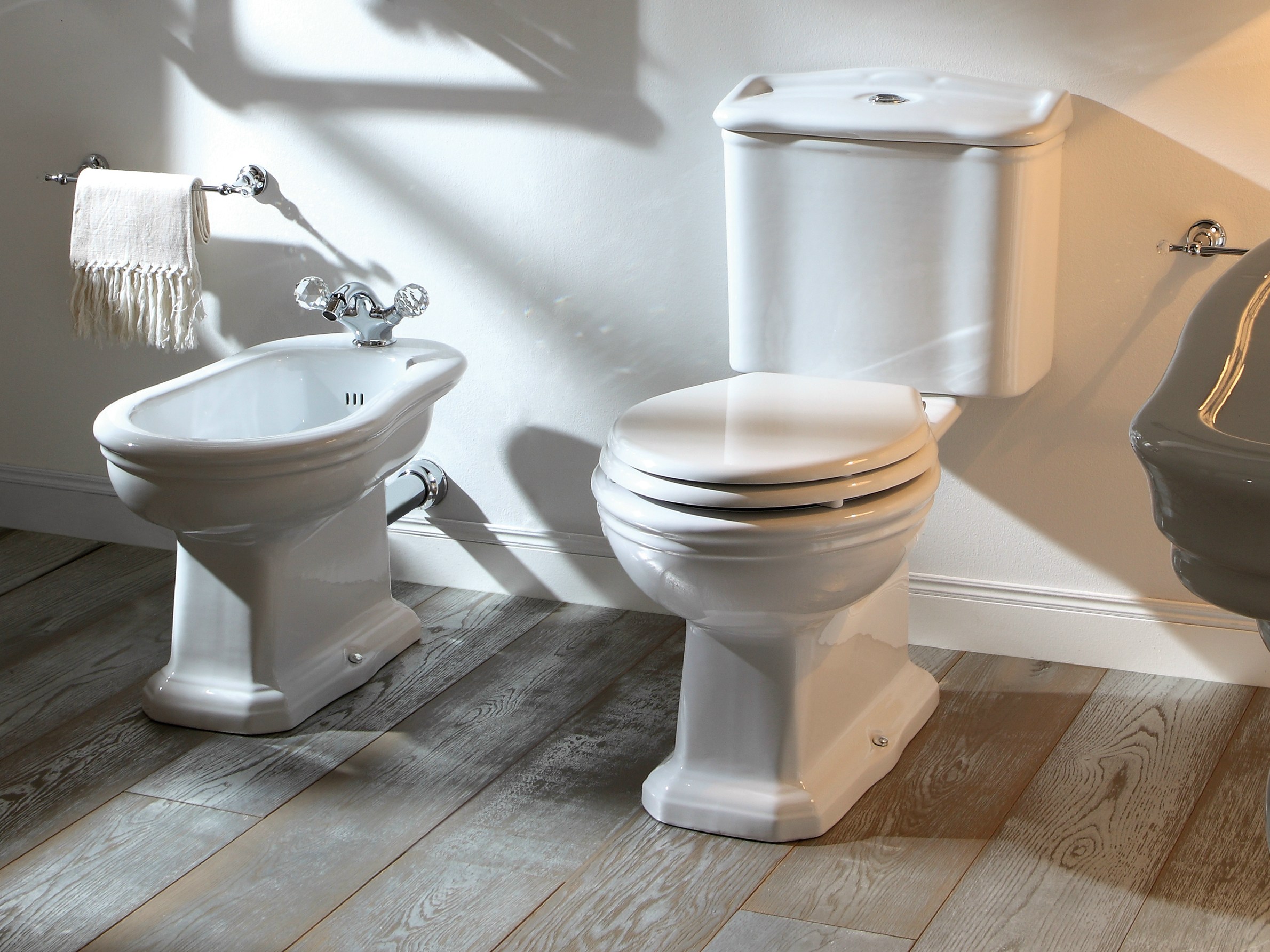
None of the bathrooms on my European travels 30 years ago were this nice, but you get the idea. Image from archiproducts.com

Over the years I’d see them in higher-end homes, but, even if I was tempted, I certainly didn’t have a bathroom big enough to hold two toilet-sized fixtures. Besides, bidets really seemed like an extravagance that was unnecessary in my life.

Then, several of things happened that helped to change my mind:

  • As I’ve gotten older there have been things other than just my skin that have, let’s just say, loosened up.
  • Unlike the bidets I found in Europe in my twenties, there are now toilet seat-integrated bidets — sort of a “one-stop-shop” for you to plop. What used to require not only a bathroom large enough for two fixtures but also extensive re-plumbing now takes up no extra room and can be installed in a few hours by a handy homeowner.
  • A dear friend whose opinion I value greatly speaks of her integrated bidet in terms that can only be described as worshipful adulation.
  • And, well, Costco.

After doing some, um, product testing at my friend’s house and a bit of online research, my husband and I began to think that getting a bidet might not be a bad idea. Then, we saw the integrated seats for sale at Costco and figured the time had come to shit or get off the pot buy one. Now, we are converts.

Do you still have a conventional toilet? I shake my head in pity for you.

Is your toilet seat as cold as ice when you first sit down? My naked bum is welcomed by a soothingly warmed seat (especially nice for those middle-of-the-night sojourns).

When you are finished doing the deed, do you reach for dry toilet paper that (let’s be honest here) doesn’t do the job very well? Then, you use more and more tissue (at the risk of clogging up your plumbing) trying to remove all evidence? My tush is treated to a cleansing warm-water spray that leaves me feeling fresh and clean.

Ah-ha, you say, at least I don’t end up with a wet end! Well, actually neither do I: after my bidet completes the rinse cycle, it finishes up by gently blow-drying my derriere with warmed air.

Oh, did I mention that it has a remote control?

The Seat of Power in our house.

I admit that our bidet has totally ruined me for regular toilet seats. Although not a fan of using public restrooms anyway, I now have an even stronger incentive to keep it together until I get home. If these things were portable, I would have taken ours with us on our recent road trip. Having to use conventional toilets for three weeks straight was almost too much for my tush to tolerate.

Sales in America are tiny compared to the rest of the world but these integrated bidet seats are slowly gaining acceptance. There are several manufacturers (Kohler, Toto and Brondell are just three) and a variety of features available in different price ranges. As consumers start to appreciate the advantages of bidets (including better hygiene care for the disabled and elderly), I’m confident that they will become mainstream here too.

In the meantime, to those of you who haven’t promoted your potty yet, what are you waiting for? Relieve yourself of that seat that just sits there and treat your gluteus to maximus luxury. I guarantee that your bum won’t be bummed.