Tip Creep in the Technology Age

You’ve probably seen them. Perhaps you’ve even purchased an item by swiping your credit card through one. If you’ve bought something from an Apple store, you definitely know what I’m talking about: those apps and accessories that turn smartphones and tablet computers into credit card payment terminals.

When the technology first came out, I thought it was genius. Suddenly, an owner of a small business – such as an artist at a craft fair – could play with the big guys. For a pretty low start-up cost, they were easily able to accept and process credit card purchases. As a customer, I liked the convenience: just swipe and sign. My credit card was never out of my sight and the receipt would instantly show up in my email.

At least I thought it was genius until the terminals began to appear at the sales counters of ice cream parlors, delis, bakeries, and coffee shops. All of a sudden, what first seemed like a convenience now feels like extortion. Technology-aided tip creep has arrived.

A couple of weeks ago, I went to a grab-and-go deli to get lunch. Making my way through the line, I picked up a couple of pre-made sandwiches from the refrigerated case. At the sales counter, I showed the cashier the sandwiches, asked him to add two ice teas to my order, and gave him my credit card. He handed me two cups (the sodas and tea were self-serve) and, after entering my order on his tablet/terminal, he swiveled the screen around to face me. There, right in the middle of the screen, I was “conveniently” given the opportunity add a tip to the transaction. I was even given a choice: I could click on 15%, 20%, or, if I was feeling especially generous, 25%. There was also a button labeled Custom Tip if I wanted to calculate another tip amount. Of course, I had the option of clicking the No Tip button, but with the cashier standing right there watching me, that choice felt very uncomfortable. Wimp that I am, I clicked 15%, signed the screen with my finger, and moved on.

Yes, of course I think ringing up two sandwiches and two ice teas is worth a 25% tip!

I usually am a pretty good tipper. I spent time in the trenches working in restaurants as I made my way through school, and a large part of my marketing career was in the food service business. The person who waits on my husband and me at a sit-down restaurant will usually find a good tip when we leave. In the type of establishment where there are tip jars present, I sometimes leave something and sometimes not. If I feel a tip is warranted, though, I’m fairly generous. I am happy to reward good service and I am grateful to be financially able to do so. What I don’t like is the expectation of tips for providing a simple service. And, I don’t like businesses relying on their customers to subsidize their employees’ salaries. Most of all, I don’t like being guilted into leaving a tip.

I did put a tip in this jar (you parents and grandparents can thank me).

Apparently these new payment systems are having a huge impact on tips received, especially in venues where tipping has never been common. When faced with the three tip percentages, customers often just tap the middle one (20%, in most cases). Tapping the No Tip option is not easy when the employee is watching you and there are people in line behind you. No one wants to feel cheap.

I’m not sure if this train has already left the station and tipping someone for scooping ice cream, ringing up a couple of sodas, or putting a bagel in a bag is now considered “normal” but I know I’m not on it. When I see that one of those devices will be used to ring up my simple transaction, I immediately start to feel uncomfortable. Do I resign myself to this new paradigm and add a tip? Do I take the easy way out and pay with cash (assuming I have enough)? Do I tap Custom Tip and enter what I might have placed in the now-vanished tip jar? Or, do I grow a spine and tap No Tip if that’s the option I would have chosen before?

I’m not sure what the answer is, but I think I’ll start carrying more cash just in case.

It’s the journey, not the destination

When my husband and I were planning our recent road trip, we realized that our drive home from St. Louis could naturally follow the same trajectory as old Route 66. Even though our trip west wouldn’t begin in Chicago (the traditional starting point) and our final destination wasn’t Santa Monica (Route 66’s “end of the trail”), we were excited to have the opportunity to see many of the famed byways and unique roadside attractions we had heard so much about.

Chain of Rocks Bridge in St. Louis, MO. Where our journey west began.

Like many of the original highways constructed in the early 1920s, Route 66 was designed to connect urban and rural communities and break the monopoly of the railroads. Nicknamed “America’s Main Street” and the “Mother Road,” it linked hundreds of small towns along a winding 2,400-mile ribbon of asphalt. Although the highway was used during the Dust Bowl and the Depression by those who traveled west seeking better lives, it wasn’t until the late 1940s and early 1950s that Route 66 fully became a symbol of freedom and the wide open road. With the economic boom of the post-war area, more Americans had money to buy cars and the leisure time to travel, and a road trip on Route 66 was almost a rite of passage for many.

That began to change in 1956, as the Interstate Highway System started to develop super highways that were straight-lined and designed to move people from one place to another as quickly as possible. Because the modern highways bypassed hundreds of the small towns along the path of Route 66, many couldn’t survive. Just like the cracked and crumbling asphalt, the towns and the business that depended on travelers began to decline. In 1985, Route 66 was officially decommissioned by the federal government.

Missouri Hick Bar-B-Q in Cuba, Mo. Very different from the Cuba we visited in January.

As we made our way west, we ran into a lot of fellow travelers who were also tracing the historic route. Some were dedicated Route 66 explorers and others, like us, made stops here and there at towns and attractions that sparked an interest. We were surprised to discover many Route 66 aficionados were visiting from other countries, including a group from Sweden traveling on rented motorcycles.  Just about all of us were baby boomers.

World’s largest rocking chair in Fanning, Mo.

Many of the shopkeepers and restaurant owners we talked to along the way shared that business wasn’t what it used to be. Several pointed to the recent recession as the beginning of the downward trend and I’m sure that had a big influence. But, I also wonder if the lure of America’s Main Street just doesn’t tug at the imagination of Gen Xers and Millennials as it does for Baby Boomers*. Yes, there are various Route 66 associations and preservation groups, but most members are over 50. Back in 1999, our former Boomer-in-Chief, Bill Clinton, signed a National Route 66 Preservation Bill. I’m not sure a similar bill could pass today.

Oklahoma Route 66 Museum in Clinton, OK.

A majority of the original road is gone and many of the roadside attractions are no longer open. Some of the small towns are now boarded up ghost towns. But, there still is a lot to see and do. If the lore of Route 66 has ever pulled at you, or if you want to find some escape from our modern generic world (even in bits and pieces), I encourage you to make your travel plans soon. Route 66 awaits you and I’m not sure how long many of the places can hang on.

The Cadillac Ranch outside of Amarillo, TX.
Wigwam Motel in Holbrook, AZ. Yes, we stayed here and, yes, it was awesome.
Standing on the corner in Winslow, AZ. We were a fine sight to see.

* There may be hope for Generation Z as many of them would have see Pixar’s 2006 animated film Cars. In it, the once-booming Radiator Springs, situated along Route 66, is now nearly a ghost town because it was bypassed by Interstate 40. Perhaps the movie’s success has generated a resurgence of public interest in Route 66.

0 to 5161 in three weeks

Last night, my husband and I arrived back home after being on the road for three weeks.  We took off from Southern California on April 24 with a rough itinerary that included a couple of hard dates but also a lot of flexibility. We had family and calendared events waiting for us in Omaha and later in St. Louis, but, other than that, we were on our own.

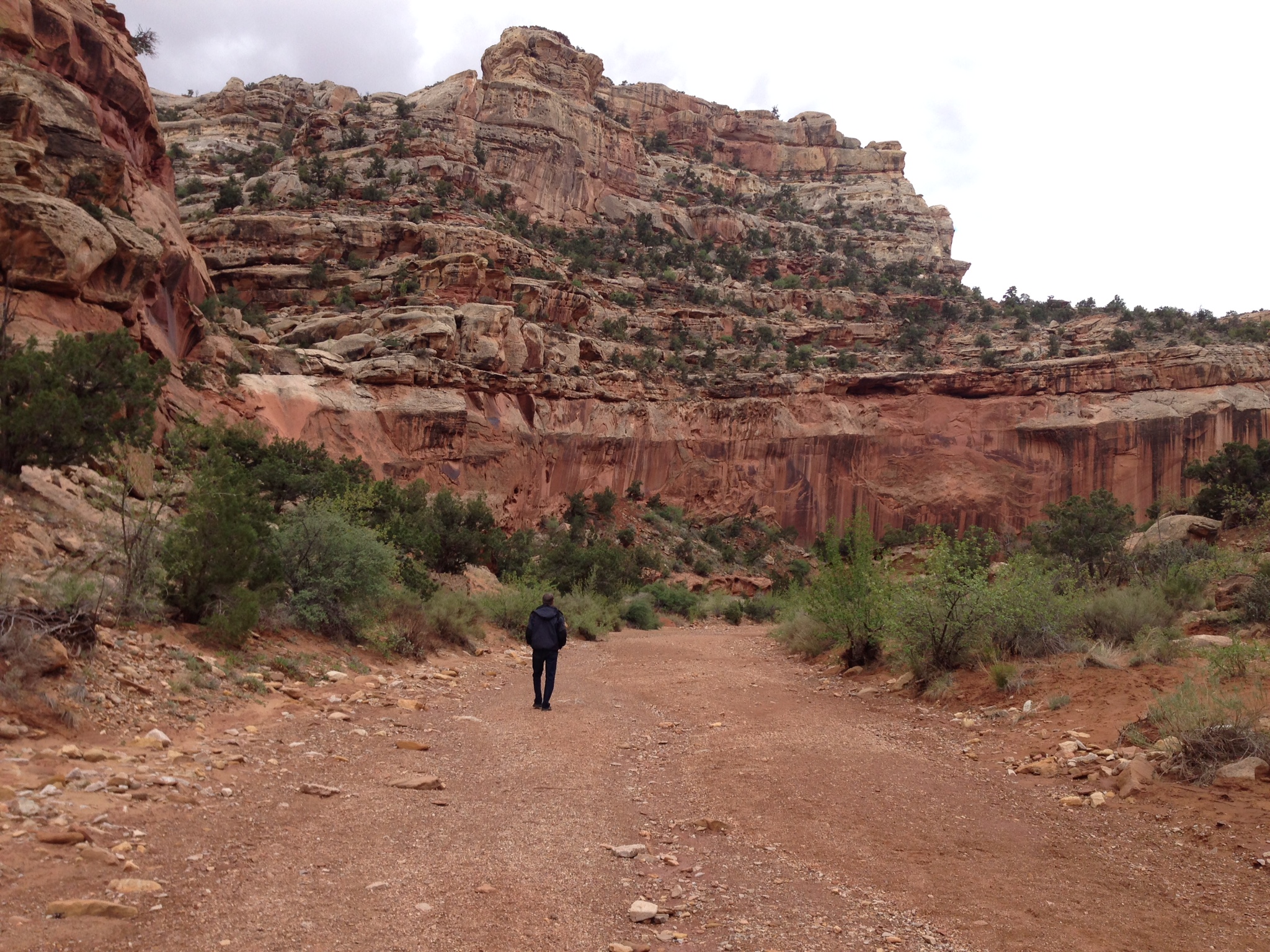
A quiet walk among the the red rocks in Capitol Reef National Park

The 5,161 miles we traveled took us through 14 states and to 11 national parks and monuments, several state parks, and quite a few museums. We had days when there wasn’t a cloud in the sky, days full of ice and snow, and just about every weather pattern in between. We experienced the majesty of nature in the red rocks of Utah and Arizona and the audacity of men whose dreams led them to carve the likenesses of four presidents and an Indian chief on the sides of mountains. We saw a giant depression in the earth where a meteorite landed 50,000 years ago and we enjoyed the kitsch of visiting a giant rocking chair and sleeping in a motel room shaped like a teepee along the route made famous in the 1920s and 1930s.

My husband, best friend, and traveling buddy (I’m fortunate to have all three wrapped in one person) indulged my photographic whims by happily stopping whenever I asked him to. Our tastes are similar enough so that we usually easily agreed on attractions to stop for as well as food and lodging choices, but we are flexible enough so that we could change plans to accommodate each other’s interests.

Today is the one-year anniversary of my retirement. Over the past twelve months we’ve taken two driving trips and two trips that have required getting on a plane. Planes allow us to get to far-off destinations, but there is nothing like a road trip to best explore this country and build a greater understanding of ourselves and others.

As I do on every one of our travels, I kept a journal of our day-to-day activities and adventures. I also jot down inspirations, insights, and possible blog topics as they occur to me. I will share some of these over the next several posts.

Looking forward through the rear-view mirror

Rear View_edited-1

I began this blog almost a year-and-a-half ago, just about 6 months before my retirement date. I’ve always enjoyed writing and I knew I wouldn’t have many opportunities outside of work unless I created them for myself. I subscribed to several blogs so starting my own blog seemed like a great way to do this. Deciding on my blog’s focus was easy; I was headed into a big unknown. I wasn’t sure what my personal retirement would look like – I had some ideas, but no real plan of action – so I wanted to explore the social and psychological aspects of retirement as well as learn from others who had gone before.

Originally, I envisioned writing posts several times a week. I had lots of ideas for topics and I figured spending an hour or two each week writing, formatting, and posting would be easy peasy. Soon, after realizing I was being much too optimistic about the time commitment, I dialed my expectations back to once a week. Now, a couple of posts a month has become the norm.

I still enjoy writing and I still have ideas for topics, but, because the perfect words don’t just flow out of my brain onto the screen, each post takes much longer than it probably appears it should have. I am the queen of edits and re-writes.

WordPress does a lot to encourage regular posts by offering a multitude of tutorials, challenges, and prompts. In addition, established bloggers invite others to join in on photo and writing challenges of their own. Last fall, I took part in WordPress’s Photography 101 challenge. It turned out to be a great way to share my photos of the Hawaiian vacation that coincided with the challenge and I managed to gain more followers because of my participation. Although I think these prompts and challenges can be quite helpful and fun to take part in, I find that, at least for my blog, they can dilute the main message and take the focus off what I want my blog to be about – life in retirement.

I will be celebrating my first retireversary next month and I am pleased to report that it’s going quite well. My husband and I have completed a few house projects, we’ve done some traveling and plan do a lot more, and we are discovering the joys and challenges of spending so much time together and being the masters of our own schedules.

I look forward to continuing this blog and I hope that I can be much more regular with my posts. I really appreciate everyone who stops by to read what I have to say, and I am especially grateful to those who take the time to add comments.

Although my blog is ultimately about retirement and “learning to navigate through my post-work world,” I imagine that it will morph a bit as time goes on, just as my life will change. There is so much to do, creative outlets to explore, and social interactions to enjoy. I want my blog to reflect all of this and more.

Cuba: A Nation Rich in History

On the morning of our second day in Cuba, we were treated to an unexpected scene in downtown Havana. In celebration of Jose Marti’s birth date, hundreds of school children paraded down the avenue next to our hotel. Many of them were in costume, some held signs or flags, and all participated in vigorous chants led by their adult supervisors. It was the first of many times on our trip that I wished that my Spanish was better but even so, the pageantry and the sweet, earnest faces of the children was a joy to watch.

School children celebrating Jose Marti's birthday
School children celebrating Jose Marti’s birthday
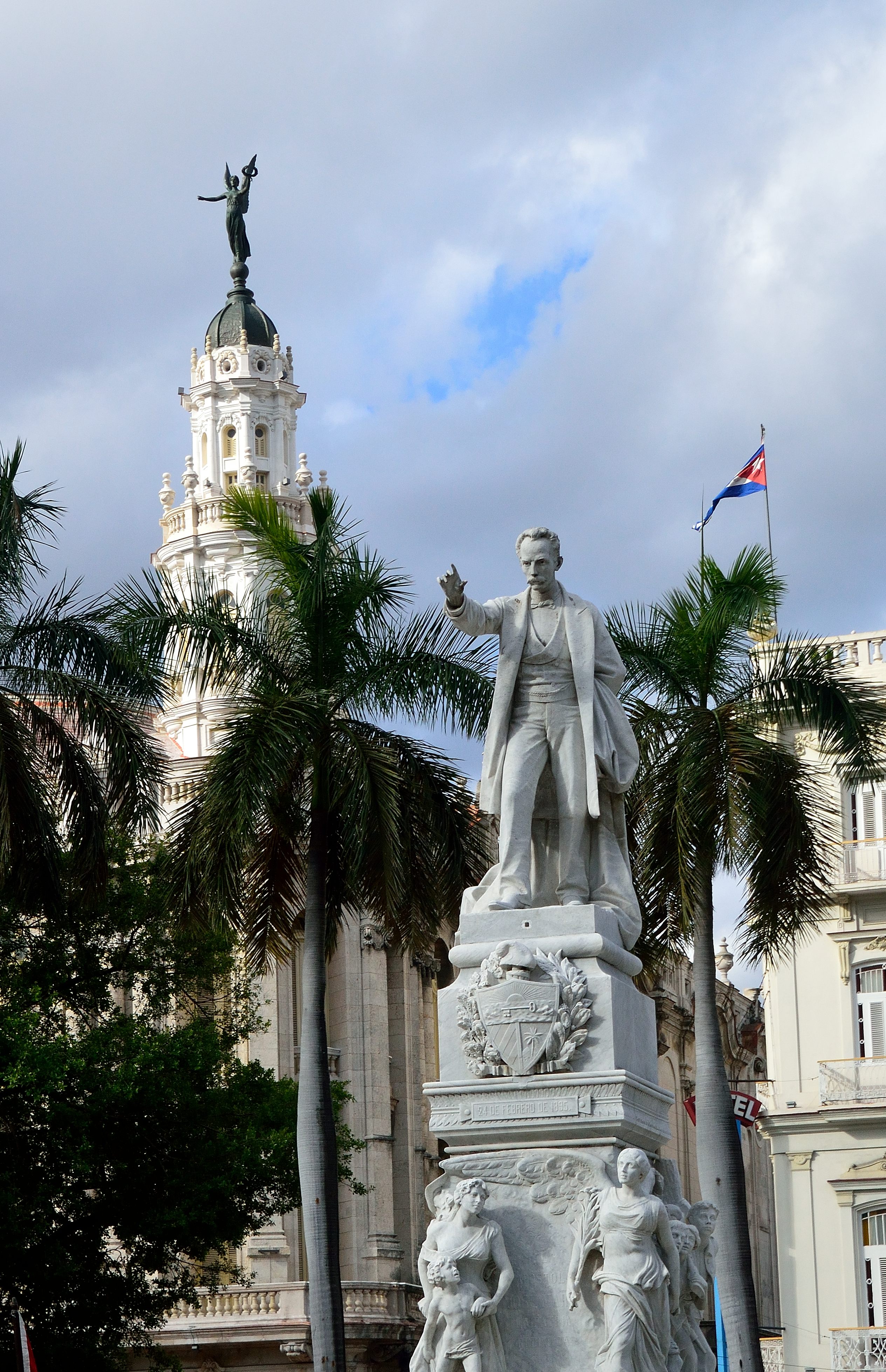
Statue of Jose Marti in Havana's main square
Statue of Jose Marti in Havana’s main square

Jose Marti is a Cuban national hero for his role in the struggle for independence from Spain in the 19th century. His writings, including poems and essays, promoted liberty and political freedom. His dedication to Cuban independence – including sovereignty from the United States — and his fight against slavery and racial discrimination is honored throughout Cuba with statues and celebrations like we were fortunate to witness.

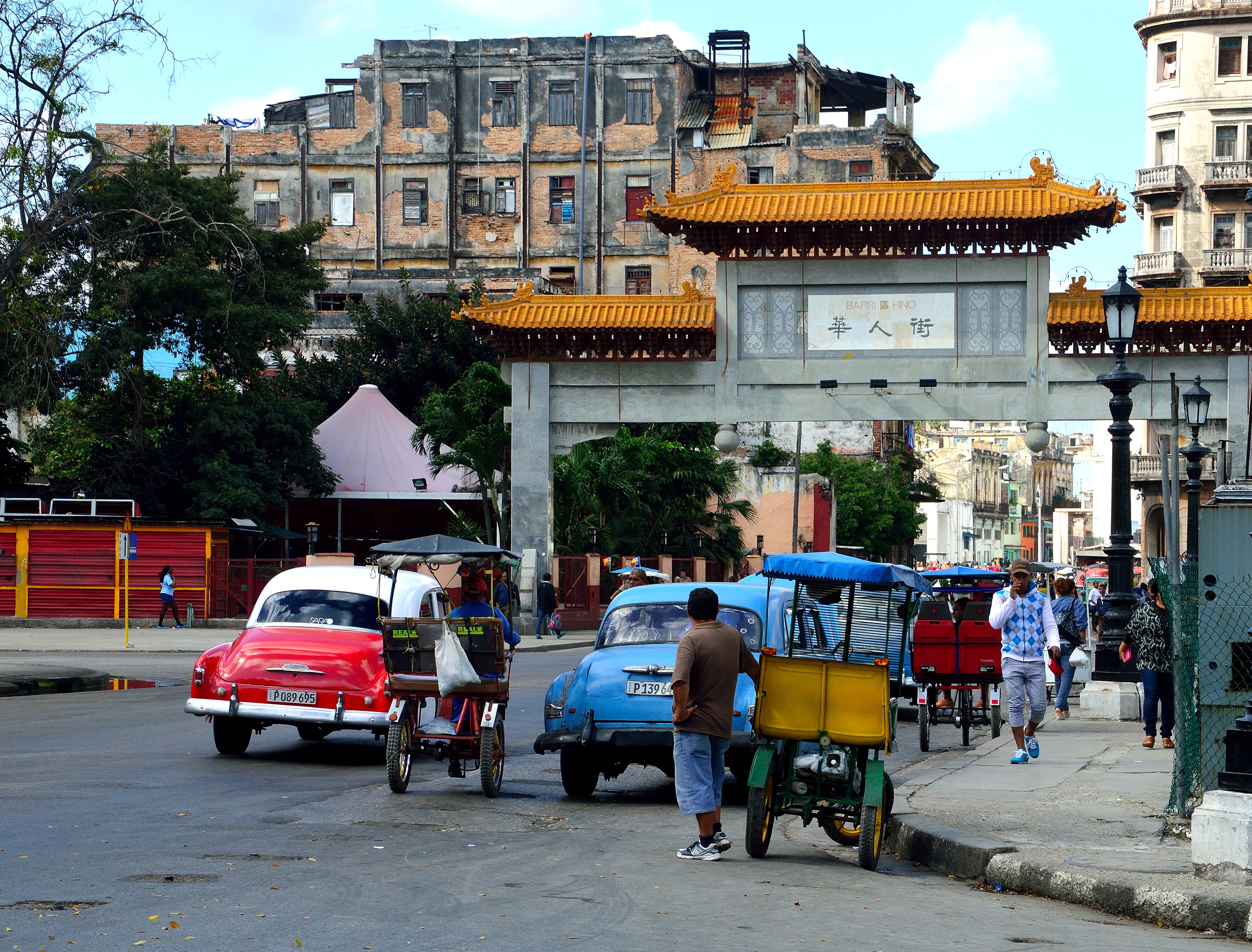
After watching the parade, we took off on foot to discover other sights of Havana, including the capitol dome (currently undergoing renovations), magnificent old buildings in various stages of decay, and the entrance arch to a long-gone Chinatown.

The rest of the day included a tour of the Necropolis de Colon, one of the largest cemeteries in the world, a private talk given by Roberto Salas’ about his stint as Fidel Castro’s private photographer in the 1960s, and a tour of ceramic artist Fuster’s amazing compound in which he has created a spectacular and joyful “Homenate a Gaudi” (“Homage to Gaudi”).

Havana is a photographer's dream
Havana is a photographer’s dream

Colorful buildings in Havana

Entrance to Chinatown


The capitol building under repair
Necropolis de Colon cemetary
Necropolis de Colon cemetery
It is easy to see how the artist Fuster was inspired by Antoni Gaudi
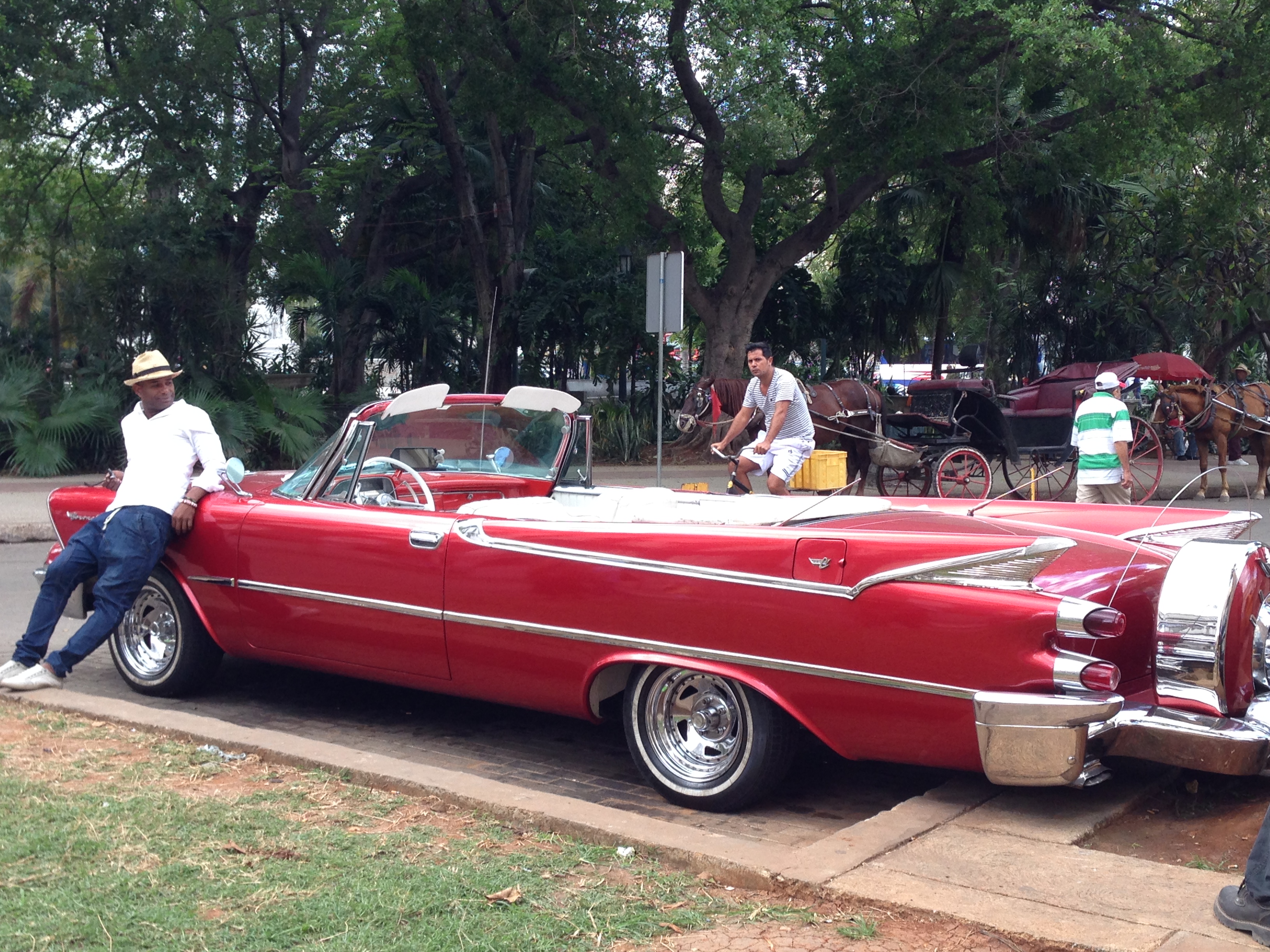
No day in Cuba is complete without a cool dude and an even cooler car


Cuba: Separated from the U.S. by 90 miles and 50 years

There are many reasons why the tiny nation of Cuba had such a huge hold on my imagination for so many years. Some of the lure was the image I had of a country frozen in time; most of the buildings, infrastructure, and automobiles pre-date 1961, when the United States began its trade embargo. What I knew of the culture and the people was also appealing; I’ve always been attracted to the Latin ethos, perhaps because it contrasted so strongly with my plain vanilla self. And then there’s the arts – especially the music and the dancing – which had a special hold over me.

Just a few years ago, traveling to Cuba as a U.S. citizen would mean breaking the law. The travel ban was relaxed somewhat in 2009, which allowed Cuban-Americans to travel freely to Cuba. When, in 2011, “people-to-people” visits were sanctioned so other U.S. citizens were able to travel to Cuba, albeit with certain restrictions, I started to research my options. I hoped to find a tour that had a good mix of organized excursions and unstructured free time so we could explore our surroundings on our own. Last October, when I found one that fit my requirements, I signed up for the next planned trip without hesitation.

Very early on the morning of our departure, a group of 18 mostly strangers gathered together, visas in hand, in the Charter Airline terminal at Miami airport. Exhausted but excited, we began the process of getting to know one another as we made our way through the series of steps necessary for U.S. citizens to travel legally to Cuba. About 2 1/5 hours after we arrived at the airport we boarded our plane for the short flight to Havana’s Jose Marti Airport.

My first glimpse of Cuba!

When we landed and I stepped off the plane onto the tarmac, I could barely contain my emotions. I had dreamed of this moment for so long it was hard to believe that I had finally made it. I was in Cuba!

After making our way through immigration, retrieving our bags, and going through customs, we exchanged dollars for CUCs and we were on our way. Our first day’s agenda included a short orientation walk in Old Havana, lunch, and a tour of the Havana Club Rum Museum before checking into our hotel in downtown Havana.

Jose Marti International Airport
Taxis wait for passengers in front of the airport
The first of many government-sponsored billboards and murals we saw
Catholic church in Old Havana
The Havana Club Rum Museum
The view from our hotel room in Havana

Stringing Together the Florida Keys

Because our journey to Cuba would be launched from Miami, my husband and I had an opportunity to fulfill another long-held desire: to drive the scenic coastal highway along the Florida Keys. Although we had been to Florida several times before, we had never tacked the time onto our vacation necessary to make the journey. This visit though, we added a few days to explore the area, which had the additional benefit of allowing us to acclimate ourselves to the three-hour time zone difference before we reached our main destination.

Although I was aware that the Keys – and especially Key West – had become a bit of a tourist trap, I still wanted to see them for myself. I was intrigued by pictures of turquoise waters and distinctive architecture, fascinated to read about the time Hemmingway spent in Key West, and inspired by the romance of the many songs written about this beautiful necklace of islands along the coral archipelago.

There are more than 800 islands that make up the Keys but fewer than 50 of these are inhabited (“Key” is derived from the Spanish word Cayo which means small island).  The Overseas Highway that stretches from Key Largo to Key West is a series of causeways and bridges — including the spectacular Seven Mile Bridge – and provides plenty of vistas along the way. It was built to replace the Overseas Railway that was constructed in the early 1910s and then destroyed by a category 5 hurricane in 1935. It takes about 3 – 4 hours to drive the 110 mile route, depending on traffic and the number of stops needed to admire the scenery and, of course, to grab a cheeseburger in paradise.

We only had two days set aside for our visit and, looking back, we should have allowed for more. There is a lot to see and do on these beautiful and captivating little islands.

Hemmingway's house and museum is home to 40 - 50 polydactyl (six-toed) cats
Hemingway’s house and museum is home to 40 – 50 polydactyl (six-toed) cats. If you look closely, you can see Truman’s “thumb”
The study in Hemmingway's Key West home
The study in Hemingway’s home, where it is said that he wrote “To Have and Have Not,” a novel about Key West during the Great Depression
In Key West a marker indicates the southernmost point in the continental U.S. (just 90 miles from Cuba!)
Sailing into the sunset
Sailing into the sunset off the shores of Key West
The crowd at Mallory Square gathers to watch the sunset
The crowds at Mallory Square gather each night to watch the sunset
After the sun set, the crowd applauded and disbursed, unaware that the best part of the sunset occurs several minutes after it disappears below the horizon

Kicking the Bucket List

Ever since the film “The Bucket List” came out in 2007, the phrase has become a part of the American vernacular. Whether or not the term pre-dates the movie, I have no idea, but it seems that now just about everyone has made some type of bucket list. It might be a list of things they want to do before they “kick the bucket” or it could be a list of places to visit or goals to achieve before a specific end time (going off to college or getting married, for instance).

When I first heard the term I thought it was a clever, light-hearted way to describe a list of experiences to be had and dreams to fulfill. I’ve used the phrase many times myself but, lately, what used to sound clever now strikes me as trite. In many cases, “Bucket List” trivializes the passion, desire, and curiosity that helped to create the collection of destinations and dreams I would like to pursue while I am still able to do so. These are not merely items on a to-do list to be checked off as I flit from one to the next, but real experiences to be lived and savored.

Recently, I was able to fulfill a dream I have had for as long as I can remember: travel to Cuba. I’m not sure what planted the seed of desire in me, but I have fed and nurtured it for many years. I’ve collected articles, accumulated books, and closely charted the political winds as they have raged, then calmed, then raged again, carrying my hopes with them. As close as Cuba is – just 90 miles from the tip of Florida – it might as well have been on another planet because of the travel restrictions placed on U.S. citizens.

Then, last fall, the right opportunity presented itself and we immediately said “yes”! The person putting the trip together had experience, passion, and a great sense of fun and adventure. We’ve never been interested in traveling with tour group before, but this one promised just the right combination of group time and free time. It would give us the opportunity to see parts of the country, learn about its culture and history, and have experiences that we would find very difficult to realize on our own.

All of the arrangements were made before President Obama’s December 17 announcement of the beginning of normalizing relations between Cuba and the United States. When we heard of the impending thaw, we were so grateful that we would see Cuba before the travel restrictions were lifted. We wanted to see Cuba before it is irreversibly altered by the deluge of American tourists that are sure to come once diplomatic relations are reestablished.

A few weeks ago, my husband and I flew to Miami to begin what would feel like a journey on a time machine, back to the late 1950s, before the U.S. imposed a trade embargo on this tiny island nation.

Next:

Key West: Separated from Cuba by 90 miles and 50 years

Verizon: Can You Hear Me Now? You are Fired!

Although we are in the fortunate position of not having to count pennies now that we’ve retired, my husband and I have been looking for ways to save money on our monthly bills. What we don’t send to the phone, internet, cable, water and other utility companies, goes into our savings and can be spent on better things like travel, dining out, and entertainment.

The first change we made was to install drought-tolerant landscaping. Not only is our yard more interesting visually, we no longer need to water a thirsty lawn.

Yard

We’ve also ditched our landline. It seemed wasteful to pay over $30 each month for a phone that remained silent much of the time, except when it became a conduit for telemarketers and political campaign workers to reach out and annoy us. Since we make and receive most of our calls using our cellphones, that was an easy decision to make.

When we made this switch, we still wanted the option to direct certain calls to a number other than our cellphones so we bought an Ooma internet-based phone system.  After the initial purchase price, we now pay only applicable taxes and fees, which has been less than $4 each month.

Now, we are getting ready to say goodbye to our cellphone service carrier, Verizon. We don’t use a lot of data (we currently share 2GB but never use even close to that), and our talking and texting is on the low-side, so our current monthly bill of $130 (plus taxes and fees) for two phones  seems high. When our 2-year contract recently expired, we visited a Verizon store to find out what our options were. We knew that the major service carriers were feeling pressure from the smaller start-ups so we hoped to get a better deal.

We were disappointed to learn that Verizon’s “deal” involved the mandatory purchase of new phones and then monthly charges to pay off those phones. Even though they claimed that we’d no longer be on a 2-year contract, the new phone would be paid off at the end of – surprise! – 24 months. After that, the monthly installments would be removed from the bill and we could either keep our now fully paid for phones, or purchase the latest wiz-bang phone and start all over again. Um, no thank you.

Thinking that we could do better, we went in search of a carrier that offered decent coverage, a no-contract option, and one where we could keep our current, perfectly good phones. We found that there are quite a few smaller carriers out there and they all offer slightly different plan options. When comparing plans, we found that it’s important to accurately estimate current and (as much as possible), future data and minutes usage, and understand the carriers’ cell coverage.

After some research, we settled on the carrier that Consumer Reports and PC Magazine have rated #1: Consumer Cellular. Based on our usage and because we can continue to use our existing phones, the new monthly bill will be about $60 for our two phones. If (when) in the future we decide to upgrade our phones, our option would be to purchase the phones outright or pay for them in monthly installments. But, for now, we are happy with what we have… and saving $70 every month.

Next on our agenda is to see how we can say goodbye to our satellite TV bill. We aren’t completely sure how streaming and/or accessing digital content works, but I’m confident that we can figure it out. In addition, we are exploring ways to lower our internet bill (how did it get to be more than $50 per month??).

59 Candles

I hate my birthday. Actually, it’s not so much my birthday – as a child, I loved the attention and getting presents – it’s the month that my birthday falls in that I dislike.

Growing up, I was always so envious of my friends who had birthdays in late spring and summer. They got to have beach parties, and pool parties, and parties in the park. Because my birthday is in January, my parties always had to be held indoors. It was cold outside and sometimes wet; not exactly party weather.

Not only is my birthday in what is often the coldest month of the year, it is in early January… just days after the holidays. I can’t tell you how often I’ve heard a version of this joyful birthday greeting: “Oh great, it’s your birthday. Jeez, we just had Christmas and now I have to think about your birthday?” Um, sorry?

Fortunately, my parents always made a big deal about my birthday, just as they did for my two brothers. I never had to open a combined Merry Christmas/Happy Birthday gift or was made to feel that the timing of my birthday was inconvenient (after all, it was kind of their fault, right?). In fact, it was the year they forgot my birthday that I knew something was terribly wrong and my brothers and I needed to step in and become their vigilant care givers.

In just a few days, I will enter the final year of my fifties. The year I turned 29, 39, and even 49, didn’t have much significance for me. Those 365 days ticking down to my next decade didn’t seem like they were leading to anything terribly transformative. For some reason, 59 feels different.

According to several dictionaries, “middle age” is considered to span between the ages of 40 and 60. Before turning 40, a person is considered to be a “young adult.” Once that person turns 60, according to the definition, he or she has now reached “old age.” OLD AGE?? I can’t speak for everyone in my age range, but I certainly don’t feel like I’m just one short year away from being of “old age.” I have a lot of friends who are several – some who are many – years older than I am and I don’t consider them to be of “old age” either.  Some are still working and some are retired. They travel, they volunteer, they are involved with their families, friends, and their community.

I wonder if we need to create another definition for the years after 60. I’m not in denial that, at some point in the future, “old” will be an apt description of my age, but it sure isn’t what I’d define myself as being now, or a year from now, or, I hope, for many years to come.

Over the next 365 days, I might put some thought into coining a new phrase to describe the years following my 60th birthday. Even better, I think I’ll just continue to be active, engaged, creative, and connected, and let my reality define my age.