GratiTuesday: A Cuppa Gratitude

When I first saw this café along one of the pretty pedestrian walkways in Oaxaca, I, of course, had to stop for a cup of coffee and to take a few pictures.

Gratitud

Comida que hace bien

(Food that is made well)

Therapia y Cocina, con Alma y Corazon

(Therapy and Cooking, with Heart and Soul)


Not only was I grateful for the smile this café served me along with my coffee, I was doubly grateful that it included a side helping of a GratiTuesday post.

El secreto en Gratitud es hacer las cosas con amor

(The secret to gratitude is to do things with love)


Yes.

By the way, did you notice the menu board out front in the first picture? Least you think they were charging $20 US dollars for a Café Americano or a Café Expreso, or $30 US dollars for a Cappuccino, the current peso to US dollar conversion rate is about 18.9 to one. The price of those coffees is around $1.06 and $1.59… that is something to be grateful for!

Oaxacan Celebrations

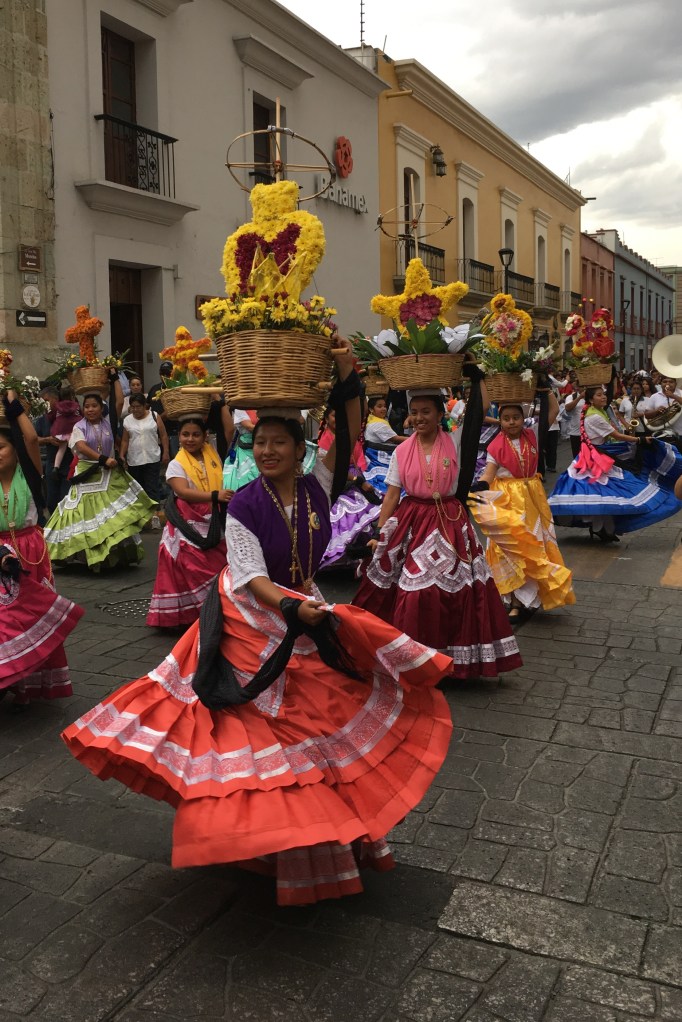
Although the timing of our recent stay in Oaxaca didn’t coincide with any of the large festivals that city is famous for, there was no lack of celebratory events. And, lucky for us, many of these festivities took place in public so we could experience the magic, color, music, and joy of an Oaxacan celebration.

We had no idea what this parade was for, but we were happy to join in!

Whether it was a wedding, graduation, quinceanera, or a religious celebration of unknown (to us) origin, the cobblestone streets were often filled with revelry and processions. What I especially liked about these celebrations is that they weren’t arranged by the chamber of commerce or designed to entertain tourists. Instead, they were authentic and steeped in ritual. That we were there to witness the festivities was fine, but the celebration was for the invited guests, the citizens of Oaxaca, and for those who roots run deep in its culture and traditions.

Many of Oaxaca’s festivals trace their origin to indigenous rituals that were later combined with Catholicism, brought to the region by Spanish conquistadores. One such holiday, Dia de los Muertos (Day of the Dead), is celebrated on the same day as All Saints Day (November 1st) and All Souls Day (November 2nd). Unlike the solemn rituals surrounding these Catholic holidays, Dia de los Muertos is marked with festivals, parades, and celebrations. The holiday and its rituals recognize death as a natural part of the human experience. The departed are seen as part of the community and on these days, they are awakened from their eternal sleep to share celebrations with their loved ones.

During the Day of the Dead celebrations, this cemetery will be filled with people and flowers.

Other festivals that are tempting us for a return visit include the huge Fiesta Guelaguetza, held in July, and the many festivals surrounding the Christmas season including Noche de Rabanos (Night of the Radishes), which brings people from all over the valley into the city center to display their homegrown radishes that have been carved into imaginative sculptures .

Whether they are remembering their departed loved ones, marking a religious holiday, or observing part of their ancient culture, the people of Oaxaca are creative and artistic, exuberant and friendly. They know how to celebrate and, best of all, we are all welcome to join in.

Oaxaca’s Street Markets

The tianguis, or open-air street market, is much more than a place to buy and sell merchandise. Throughout Mexico – and maybe especially in Oaxaca – markets are a fundamental element of the cultural structure. They are where people meet and catch up on news and gossip, new babies are shown off, and young romances are kindled. Market day is a ritual that has been celebrated every week – virtually unchanged – for thousands of years. These markets are not set up for the tourists (although tourists certainly can be found there – often with their cameras, like me), they are an important component in the day-to-day lives of many of the citizens.

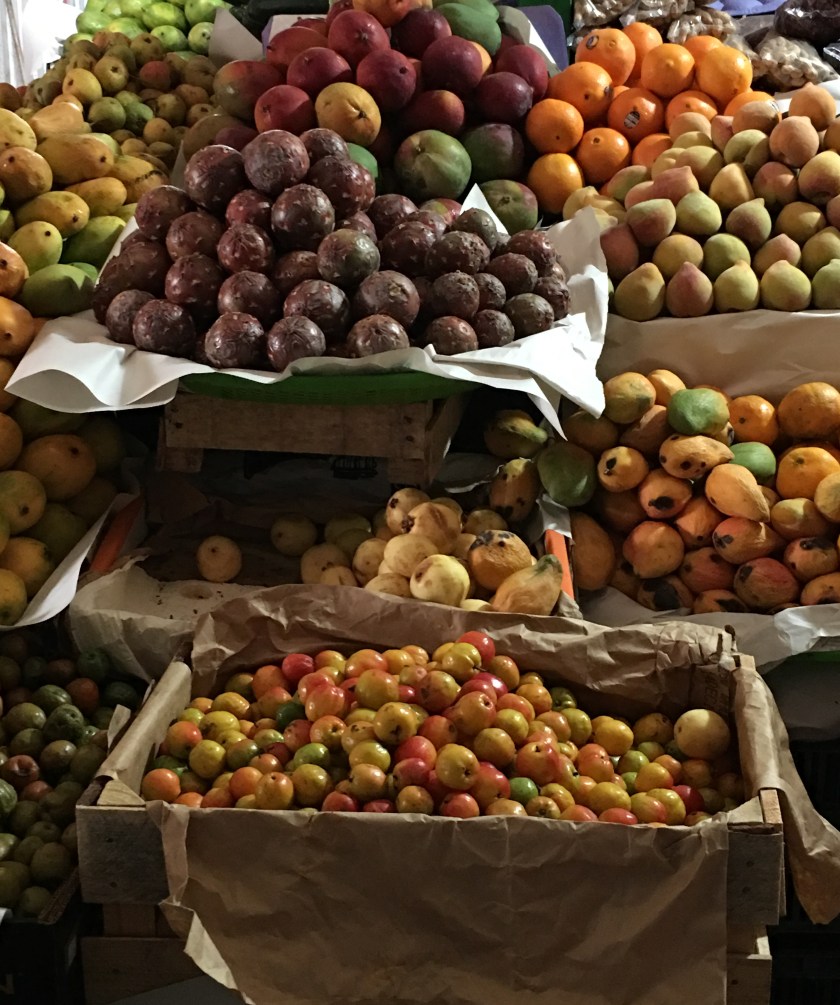
We were able to enjoy amazing fruit every day.

The city of Oaxaca has several tianguis that are open each day. Mercado Sanchez Pasqua, located very close to our house, was our go-to source for fruits and vegetables, as well as freshly made tamales. Just about every day, we stopped by on our way home to purchase delicious, just-picked avocados, mangos, and bananas.

Oaxaca’s original and best known market, Mercado Juarez, is housed in a huge, warehouse-like building. The energy and chaotic mix of sounds, colors, smells, textures, and shapes is an experience not to be missed. Among the multitude of stalls selling merchandise, one can find fruits, vegetables, herbs, flowers, mezcal, sauces, beef, chicken, and seafood. Other stalls tempt buyers with displays of brightly colored clothing, crafts, woven bags, shoes, and blankets.


In addition to the markets in the city center, the Valley of Oaxaca is famous for the tianguis that each of the surrounding villages set up one day a week (each village has its designated day). These local markets not only sell the usual food, flowers, and clothing, but they also feature items that their particular village is known for, such as weavings, cheese, or wooden furniture.

Don’t forget to pick up your Chapulines (fried grasshoppers). And, yes, I tried them.

As unique and exciting as these markets are, there is some worry that they might eventually become a victim of our global society. Oaxaca now has two Walmarts and several large grocery/department stores called Chedraui (all, mercifully, outside the city center). Amazon deliveries are also available. While I understand the ease and time-savings of going to a single location for all ones needs, I fear this convenience will someday lead to the demise of the traditional street markets. A ritual that has been around for thousands of years could be made irrelevant in a few years by big box stores and the internet. That would be an unimaginatively sad and irretrievable loss.

Slow Travel

Since we both retired, my husband and I have done quite a bit of traveling. Sometimes we take a quick drive somewhere close, other times we are away for several weeks or even a month.

Two years ago, a month-long road trip took us through several western and midwestern states, and included a journey along a good portion of Route 66. Last year, we flew to Montreal, rented a car, and traveled through parts of south eastern Canada, and the north eastern United States.

Although we thoroughly enjoyed these trips and relished visiting a lot of different places, each time we moved on we regretted not being able to stay longer and experience all that a specific location had to offer.

This time, we decided to travel in a different way, one that allowed us to slow down, breathe, and relax into life in a foreign country. For a little over five weeks, we rented a private home in Oaxaca, Mexico and enjoyed the luxury of unpacking our bags just once. The house was within walking distance to the central area: close to activity, shops, and restaurants, but far enough away to provide us with a place to enjoy our own company and recharge our batteries.

Our oasis came with a private garden.

By staying in one location for an extended period, we found that our pace slowed and our appreciation for this beautiful city and its culture was allowed to deepen and grow.  Because we weren’t on a tight schedule, we started to match – at least somewhat – our rhythm to that of the city around us.

Santa Domingo at twilight.

This isn’t to say that we didn’t take a few tours or enjoy other “touristy” pursuits – we did. But, because we knew that we had a lot of time to engage and explore, we also could make discoveries that most short-term visitors would probably miss.

What type of travel do we enjoy more? Our answer is that it really depends: it depends on the location, it depends on our curiosity level, and it depends on the time we have to devote to a particular trip.

We just returned home yesterday and I have already found my pace quickening. I have hundreds of photos to go through and pages of notes to organize. Although I promise to not share everything, I do have enough post ideas, along with pictures of doors, murals, churches, architecture, archaeological sites, celebrations, and many other delights we found in this UNESCO World Heritage city, to keep me busy for a while.

Rockabilly Style Comes to Las Vegas

There aren’t many things that would prompt my husband and me to drive 320 miles – through boring scenery and across the desert – with the final destination being a town built on gambling, excessive partying, and staying out late (none of which we are fond of). But, the Viva Las Vegas Rockabilly Weekend event, the largest rockabilly festival in the world, is well worth the trip.

IMG_1672.JPG

People from all over the world gather for this annual event. Some come to the Rockabilly Weekend for the cars, others come for the tattoos, many come to see and be seen, or for the vintage and kitschy merchandise, or maybe the tiki pool parties, pin-up, and burlesque, but almost all come for the music.

IMG_1687.JPG

The car show was great (Over 1,000, pre-1963 vehicles were on display), tattoos were both colorful and plentiful (and you could add even more ink at the event), the people-watching was stellar, you could buy just about anything from parasols to pomades, and rockabilly style ranged from sweet to sexy, but it was the music and dancing that enticed my husband and me to return to Las Vegas for this year’s event.

Although this was only our second year, Viva Las Vegas was celebrating its 20th anniversary, and they – and the attendees – really put on a show. Over 60 bands played on six stages over the 3-day weekend and when they weren’t playing, the DJs kept everyone entertained. Typically, the music started around 3:00 pm and ended well after midnight (or so the schedule said, we were long asleep by then).


We enjoy swing dancing and, for the most part, the music gave us a lot of opportunities to get out on the dance floor. When we weren’t dancing, we were watching others far more talented than us. Although some of the dancers were older, most were young(ish) and it was nice to see the classic dance styles being preserved. Jive, Jitterbug, Balboa, Lindy, Cha-Cha, West Coast Swing, and even some Texas Two-Step and Polka: whatever dance the music inspired.


IMG_1685IMG_1696IMG_1697

Besides the great music and dancing opportunities, we enjoyed watching the young men and women who love the rockabilly style and dressed to impress. Many of them wore classic 1940s clothes and had their hair styled to match (although the colors were often not those found in nature). Some dressed that way just for the weekend, but others had clearly committed themselves to that look.

Whether we go next year or not, we haven’t decided. We have decided, though, to sign up for Lindy classes. It was a dance style that looked like a lot of fun and we want to be ready when the music moves us to get up and out on the floor.
U.S. National Parks on Sale!

I first posted this last year in February. If you are 62 or older and haven’t already taken advantage of this wonderful offer, the time to do it is now! The National Park Service has announced that the price for its Senior Pass will be raised from $10 to $80 sometime later this year. Here, with a few updates, is information about obtaining your pass.

So little, yet so mighty!

 There are a lot of opportunities to save a few dollars here and there when we pass certain age milestones. Some businesses offer deals for customers as young as 50, but most of these “senior discounts” don’t kick in until we reach age 55, 60, or older. Many restaurants, hotels, airlines, rental car agencies, and retail shops try to attract our money by offering a dollar amount or percentage off… but often only if you ask (so, ask). Some of the deals are good, but many require the customer to purchase something they may not have wanted in the first place.

The very best senior discount opportunity I know of is the one offered by the National Park Service. For just $10 (plus a $10 processing fee, if by mail or online), any U.S. citizen or permanent resident age 62 or over can purchase this lifetime pass to over 2,000 recreation sites. Senior Passes can be purchased online, by mail, or in person and will admit up to four adults (any age) in one non-commercial vehicle for free. How flipping great is that??!!

As soon as my husband turned 62, we drove to our local National Monument for a hike and to get his Senior Pass. We’ve already used the pass several times, and look forward to using it more in the future.

Even if you, like me, won’t be 62 until after the price increase, $80 is still a great bargain, and the increase will help the Park Service address its estimated $12 billion maintenance backlog. If $80 is too steep, another option for seniors is a $20 annual pass. Either way, The National Park System is an amazing resource and, especially with federal funding a bit shaky right now, well worth the investment.

Other discount passes are available, including one for current members of the military, people with disabilities, and 4th graders (I assume I don’t have any 4th graders reading my blog but some of you may have children or grandchildren who qualify). An $80 Annual Pass is available to anyone of any age and is a great deal if you plan to visit more than one or two participating parks during a calendar year.

To learn more about the National Park Service and their discount passes, visit their website (nps.gov), or go straight to: nps.gov/findapark/passes.htm.

Then, get out and explore!

GratiTuesday: The Desert’s Super Bloom

The rain came in abundance to California this year. The sheer volume caused problems in some areas, but most of us have reveled in the frequent downpours. Our gardens look lush, lawns (those that still exist) are green, and weeds are sprouting up everywhere.

March is the month that deserts traditionally experience their blooming season, but our five-year drought has negatively affected the annual spectacle. Fortunately, this year’s rains have not only benefitted homeowners and gardeners in coastal and inland areas, it has created a “super bloom” in our local desert – the likes of which we haven’t seen in many years.

After reading about the large wildflower-seeking crowds ascending on Anza-Borrego State Park during the weekends, my husband and I decided to make our trek there on a weekday. This was supposed to be a prime week and we knew the flowers could fade quickly under harsh winds, rising temperatures, and the ravenous caterpillars that can eat through the flowering plants at an amazing rate.

We got an early start Monday morning (made more difficult because we just sprang forward, and 6 a.m. felt like it came an hour too soon) so we could beat the heat and the traffic as much as possible. When we both worked, a 6 a.m. wake-up alarm was not unusual. Now that we are retired, we’ve learned to appreciate sleeping until we decide to get up. This day, though, the flowers beckoned,  so we dragged ourselves out of bed and into the shower.

The two-hour drive to the state park takes us east, winding through ranch country and along fields planted with citrus, nuts and grapes. Starting at close to sea level where we live, we climbed over 3,000 feet into the hills before heading back down the windy pass to the desert floor.

We started to spot flowers here and there as we approached Borrego Springs, the small town just outside the park, but it wasn’t until we drove into the park that we saw the blooms carpeting the desert sand, colorful against the backdrop of the mountains and blue, clear skies.

I’m so grateful for this year’s spectacular desert wildflowers. Some people think of the desert as being dull and colorless, or hot and full of plants that have painful thorns. I grew up in Southern California so I am familiar with its often subtle beauty. But, after the ample winter rains, this spring’s super bloom isn’t subtle at all; it is showy and colorful, and exploding with life.

GratiTuesday: My Funny Valentine

My husband cracks me up. He doesn’t tell a lot of jokes, not in the conventional sense anyway (“Did you hear the one about…”), but his silliness quotient is pretty high. In fact, he can be a total dork… and I love it.

Having a good sense of humor is one of the most important traits I looked for in anyone I’m going to spend time with, let alone live with. If someone can laugh at themselves and find the humor in less-than-humorous situations, it is a sign of self-confidence and flexibility. Who wants to hang out with anyone who needs to maintain a polished image or present their best self at all times?  People who generally feel good about themselves and aren’t too self-conscious are usually confident enough to be silly. And being silly is when life gets fun.

I love our inside jokes… some that date back to the first days of our relationship. I love how just one word or look can instantly recall a funny story that resides in both of our memories. I love how we riff off of each other when one of us starts a silly streak, and the other picks it up, adds to it, and then sends it back for more. I love how we can laugh at ourselves and – gently – laugh at each other, confident that we are safe in each other’s heart.

funny4a

We don’t celebrate Valentine’s Day in traditional “Hallmark Holiday” ways; we don’t go out to dinner nor do we give each other gifts of flowers or chocolates. In fact, we spend Valentine’s Day pretty much like any other day… but that’s OK. As long as our day contains a fair amount of fun and a good dose of silliness, I have all the hearts and romance I need.


I am so grateful to my husband for bringing his special brand of joy and laughter into our marriage. I wouldn’t trade my funny valentine for any other.
GratiTuesday: A Most Perfect Day

My husband and I stopped buying each other special occasion gifts a long ago. Not only would we rather purchase items as they are needed, but, like so many people our age, we are more interested in getting rid of things than acquiring them.

What I can’t buy for myself – but certainly need more of – is quality time spent hanging out with my best friend. So, when my birthday rolled around a few days ago, I asked my husband for a day doing exactly what I wanted: a day spent with him, exploring one of our area’s most beautiful cities – Coronado.

We’ve been having an unusual amount of rain in Southern California this winter. It has come in waves… a few rainy days interspersed with cloudy days, then rain again. Because of our persistent drought none of us are complaining, but every so often, in between the rainstorms, we get a day that just sparkles. And, two days after my birthday, they were predicting one of those days – a perfect day.

It wasn't exactly on my birthday... but it was Elvis's birthday so it rocked.
It wasn’t exactly on my birthday… but it was Elvis’s birthday so it rocked.

Coronado Island, a small beach community just west of San Diego’s downtown, is home to the North Island Naval Air Station and the headquarters of the U.S. Navy Seals, but is probably best known for the historic Hotel del Coronado. You might recognize it if you’ve ever see the 1958 movie “Some Like It Hot” (starring Marilyn Monroe, Tony Curtis, and Jack Lemmon), which was filmed on its grounds.

marilyn-monroe-and-turret-pg183-copy
Marilyn.

hd1

hd3

Surrounded by San Diego Bay and the Pacific Ocean, Coronado’s beaches go on for miles and the views are breathtaking.

Looking towards Point Loma.
The view of downtown across San Diego Bay.

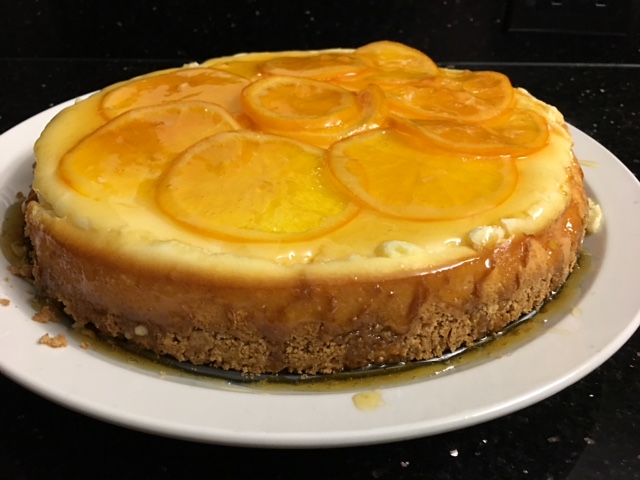
After spending the day strolling on the beach, enjoying lunch in a lovely outdoor courtyard, admiring the gorgeous views, and exploring the grand Hotel del, we headed home… where the Caramelized Orange Birthday Cheesecake my husband made for me was waiting.

cheesecake
Worth every calorie.

I am so grateful for being able to spend this most perfect day in the most perfect way.

GratiTuesday: A Blank Slate for a New Year

After my husband and I retired several years ago, we looked around a bit to find a good system for keeping track of our day-to-day lives. When we worked, we took advantage of our Outlook calendars on our office computers. Along with scheduling our business-related meetings, travel, and deadlines, we also noted doctor appointments, get-togethers with friends, and other non-work life events. Since we were on our work computers all day and they were linked up with our cellphone calendars, it was easy to keep everything straight.

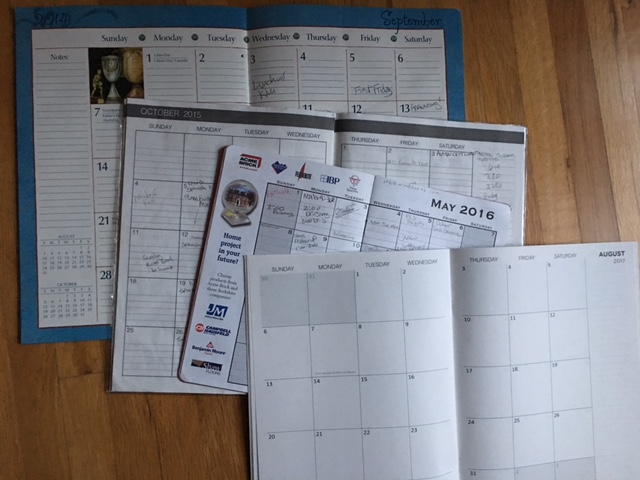
Once we both were retired, we found ourselves missing a few important dates, including a quarterly tax payment due date (oops). That expensive mistake made us realize that we needed a system to help us manage our schedules. After several unsuccessful attempts at using fancy apps and digital assistants that others had recommended, we found that nothing had the same ease and appeal for us than just a simple desk calendar.

calendars

Now, after three years, we still swear by our yearly date books. We have found that not only do they help us manage our schedules in the current year, but the calendars from prior years can be a valuable tool to help us remember past events that our grey matter has lost. When did we take that trip? How long has it been since I’ve seen the dentist, where were we last February? – it’s all there for us in writing.

Now, it’s time to file away our 2016 calendar and start a new one for 2017. I’ve already jotted down a few appointments, important due dates (including quarterly taxes), and upcoming trips, but most of the 365 squares are blank and waiting to be filled.

I am so grateful to have this blank slate in front of me: empty of words but full of possibilities. Although it looks pretty bare now, I’m looking forward to all the special occasions, interesting classes, and exciting adventures that will soon start appear on its pages.