Old perro, new tricks

I took Spanish in high school because I had to. Alternatively, I could have chosen French or German but I figured Spanish would be much more useful in my day-to-day world. I’ve never had a good ear for languages or accents, but, after three years of struggling, I ended up with a moderate grasp of conversational Spanish.

The problem with trying to learn anything only because it’s required is that, once the lessons are over, the motivation (in this case, a good grade) is gone and whatever knowledge managed to penetrate my cranium starts to fade away. Lessons learned in subjects I loved – English, social studies, history, art – are still with me for the most part. Algebra, chemistry, and Spanish… not so much.

I actually know a number of Spanish words and I can even put together a few complete sentences. But, since I live in a border city, I probably would have risen to this barely-literate level even without taking classes in high school. I’m fairly confident that the few swear words I have in my meager Spanish vocabulary weren’t taught to me in school, but instead from several helpful kitchen crews I worked with as I waitressed my way through college.

I have often regretted not building on my Spanish skills since I graduated from high school. I have had many co-workers and friends who were fluent speakers and I know they would have been happy to let me practice on them. A lot of my reluctance has been my insecurity with my accent and, frankly, not wanting to look – or sound – silly. Since most native Spanish speakers I interact with are also fluent in English, I’ve taken the lazy person’s way out and opted to converse in the language that is most comfortable for me.

On my long list of want-to-dos in retirement (or jubilación in Spanish – isn’t that a great word? It sounds like jubilation) is to take classes in subjects of interest to me. I’ve already taken several photography and photo editing classes and I’ve signed up for a few lectures on interesting topics. Between our local community college’s continuing education offerings, Osher Lifelong Learning Institute classes, and our local Oasis Institute, I could happily become a full-time student again.

Most recently, my husband and I have started taking a class in beginning Spanish. Not only do we want to better understand and converse in a language we hear just about every day, we are contemplating arranging for an extended stay in Oaxaca, Mexico. Although we hope to take Spanish classes while we are there (in addition to cooking and art classes), we want to have at least some of the basics under our belts before we arrive. Right now, we could successfully ask where the bathroom (baño) is and order a beer (cerveza) – obviously both very important – but we would have trouble with anything more complicated.

So far, the class is very different from my high school experience. The teacher is fun and not at all intimidating, my fellow students are older and grayer, and the text book contains words and phrases that one might actually hear in the real world. The biggest difference is that we are there because we want to be. The only requirements are the ones we put on ourselves: listen, participate, practice, do our homework, and, most of all, enjoy the process of learning a new skill.


If this was a job, I’d be fired!

All throughout my varied careers I was a good employee. I worked hard, stayed late when needed, met deadlines, and worked well with others. My annual reviews were consistently positive and I received regular promotions along the way. I’m pretty sure my coworkers were genuinely sorry to see me go when I retired.

DSC_0229Now that I am no longer receiving a paycheck and no one is evaluating my work but me, I have to admit I’ve become somewhat of a summertime slacker.

I haven’t posted to my blog since July. I’ve partially written four or five posts, but summoning the motivation to re-write, re-re-write, then re-re-re-write them again has been a challenge. So there they sit. I just hope they are still relevant when I relocate my “ON” button.

This is not to say that I haven’t been busy. My husband and I have been involved in a few house projects, I’ve had several events to plan and to attend, I’ve taken some interesting classes, and we’ve had a series of house guests. But, I’ve come to realize that I’m much more likely to complete something if it has a deadline attached. No deadline? I’ll try to get to it tomorrow.

I know many bloggers follow a strict posting schedule. Some have monetized their blogs so posting regularly is important to their bottom-line. Others have made a commitment to themselves to post a specific number of times a week – or on specific days – and they faithfully maintain that schedule. A few seem to be bursting with inspiration, and links to their posts appear in my email inbox almost daily. Good for them.

I, on the other hand, seem to have liquefied into a puddle of prolonged procrastination. If this was a job and I had a boss, she would have fired me long ago… that is if she could find me.

Where we live, summer weather often continues into October. In fact, that month can yield some of our nicest temperatures. Soon will begin what those of us who are permanent residents refer to as the “locals’ summer.” Most of the tourists are gone from our beaches and parks, the kids are in school, and the roads, stores, and attractions become less congested. The weeks between the first of September and the end of daylight savings time are usually my favorite time to enjoy my city.

I’m not too worried about my current lack of motivation. I’ve already started to fill my fall and winter calendar with interesting classes, workshops, and travel plans. After a long, long period of drought, weather forecasters are predicting an extended drenching of our area courtesy of El Nino. As the temperature starts to drop and the outdoors doesn’t beckon me like it is doing now, I’m sure I’ll be reunited with my self-discipline.

In the meantime, I’ll be outside avoiding anything that has a deadline and feels like work.

Sitting on the deck of bidet

Like many Americans, I was first introduced to bidets when I traveled through Europe. It took me awhile to gain the required coordination and I never felt completely comfortable using one. The challenge was, after using the “regular’ toilet, I had to, with pants still down around my ankles, shuffle over to the bidet to experience the cleansing wash of water focused on my nether-regions.  I remember feeling rather silly but certainly fresher and cleaner. Once back home, I don’t think I gave bidets a second thought. I was 28, what did I know?

None of the bathrooms on my European travels 30 years ago were this nice, but you get the idea. Image from archiproducts.com

Over the years I’d see them in higher-end homes, but, even if I was tempted, I certainly didn’t have a bathroom big enough to hold two toilet-sized fixtures. Besides, bidets really seemed like an extravagance that was unnecessary in my life.

Then, several of things happened that helped to change my mind:

  • As I’ve gotten older there have been things other than just my skin that have, let’s just say, loosened up.
  • Unlike the bidets I found in Europe in my twenties, there are now toilet seat-integrated bidets — sort of a “one-stop-shop” for you to plop. What used to require not only a bathroom large enough for two fixtures but also extensive re-plumbing now takes up no extra room and can be installed in a few hours by a handy homeowner.
  • A dear friend whose opinion I value greatly speaks of her integrated bidet in terms that can only be described as worshipful adulation.
  • And, well, Costco.

After doing some, um, product testing at my friend’s house and a bit of online research, my husband and I began to think that getting a bidet might not be a bad idea. Then, we saw the integrated seats for sale at Costco and figured the time had come to shit or get off the pot buy one. Now, we are converts.

Do you still have a conventional toilet? I shake my head in pity for you.

Is your toilet seat as cold as ice when you first sit down? My naked bum is welcomed by a soothingly warmed seat (especially nice for those middle-of-the-night sojourns).

When you are finished doing the deed, do you reach for dry toilet paper that (let’s be honest here) doesn’t do the job very well? Then, you use more and more tissue (at the risk of clogging up your plumbing) trying to remove all evidence? My tush is treated to a cleansing warm-water spray that leaves me feeling fresh and clean.

Ah-ha, you say, at least I don’t end up with a wet end! Well, actually neither do I: after my bidet completes the rinse cycle, it finishes up by gently blow-drying my derriere with warmed air.

Oh, did I mention that it has a remote control?

The Seat of Power in our house.

I admit that our bidet has totally ruined me for regular toilet seats. Although not a fan of using public restrooms anyway, I now have an even stronger incentive to keep it together until I get home. If these things were portable, I would have taken ours with us on our recent road trip. Having to use conventional toilets for three weeks straight was almost too much for my tush to tolerate.

Sales in America are tiny compared to the rest of the world but these integrated bidet seats are slowly gaining acceptance. There are several manufacturers (Kohler, Toto and Brondell are just three) and a variety of features available in different price ranges. As consumers start to appreciate the advantages of bidets (including better hygiene care for the disabled and elderly), I’m confident that they will become mainstream here too.

In the meantime, to those of you who haven’t promoted your potty yet, what are you waiting for? Relieve yourself of that seat that just sits there and treat your gluteus to maximus luxury. I guarantee that your bum won’t be bummed.

It’s the journey, not the destination

When my husband and I were planning our recent road trip, we realized that our drive home from St. Louis could naturally follow the same trajectory as old Route 66. Even though our trip west wouldn’t begin in Chicago (the traditional starting point) and our final destination wasn’t Santa Monica (Route 66’s “end of the trail”), we were excited to have the opportunity to see many of the famed byways and unique roadside attractions we had heard so much about.

Chain of Rocks Bridge in St. Louis, MO. Where our journey west began.

Like many of the original highways constructed in the early 1920s, Route 66 was designed to connect urban and rural communities and break the monopoly of the railroads. Nicknamed “America’s Main Street” and the “Mother Road,” it linked hundreds of small towns along a winding 2,400-mile ribbon of asphalt. Although the highway was used during the Dust Bowl and the Depression by those who traveled west seeking better lives, it wasn’t until the late 1940s and early 1950s that Route 66 fully became a symbol of freedom and the wide open road. With the economic boom of the post-war area, more Americans had money to buy cars and the leisure time to travel, and a road trip on Route 66 was almost a rite of passage for many.

That began to change in 1956, as the Interstate Highway System started to develop super highways that were straight-lined and designed to move people from one place to another as quickly as possible. Because the modern highways bypassed hundreds of the small towns along the path of Route 66, many couldn’t survive. Just like the cracked and crumbling asphalt, the towns and the business that depended on travelers began to decline. In 1985, Route 66 was officially decommissioned by the federal government.

Missouri Hick Bar-B-Q in Cuba, Mo. Very different from the Cuba we visited in January.

As we made our way west, we ran into a lot of fellow travelers who were also tracing the historic route. Some were dedicated Route 66 explorers and others, like us, made stops here and there at towns and attractions that sparked an interest. We were surprised to discover many Route 66 aficionados were visiting from other countries, including a group from Sweden traveling on rented motorcycles.  Just about all of us were baby boomers.

World’s largest rocking chair in Fanning, Mo.

Many of the shopkeepers and restaurant owners we talked to along the way shared that business wasn’t what it used to be. Several pointed to the recent recession as the beginning of the downward trend and I’m sure that had a big influence. But, I also wonder if the lure of America’s Main Street just doesn’t tug at the imagination of Gen Xers and Millennials as it does for Baby Boomers*. Yes, there are various Route 66 associations and preservation groups, but most members are over 50. Back in 1999, our former Boomer-in-Chief, Bill Clinton, signed a National Route 66 Preservation Bill. I’m not sure a similar bill could pass today.

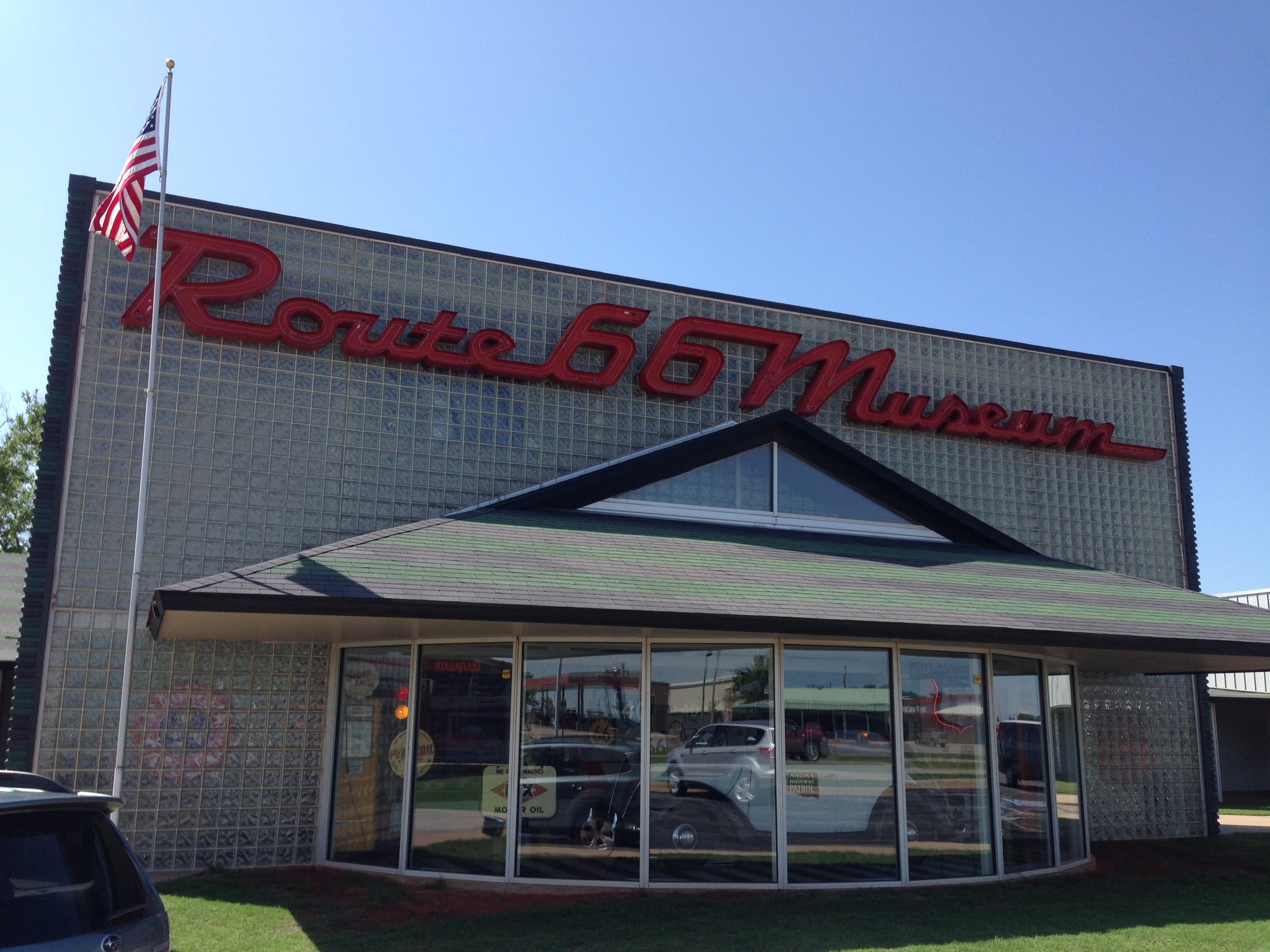
Oklahoma Route 66 Museum in Clinton, OK.

A majority of the original road is gone and many of the roadside attractions are no longer open. Some of the small towns are now boarded up ghost towns. But, there still is a lot to see and do. If the lore of Route 66 has ever pulled at you, or if you want to find some escape from our modern generic world (even in bits and pieces), I encourage you to make your travel plans soon. Route 66 awaits you and I’m not sure how long many of the places can hang on.

The Cadillac Ranch outside of Amarillo, TX.
Wigwam Motel in Holbrook, AZ. Yes, we stayed here and, yes, it was awesome.
Standing on the corner in Winslow, AZ. We were a fine sight to see.

* There may be hope for Generation Z as many of them would have see Pixar’s 2006 animated film Cars. In it, the once-booming Radiator Springs, situated along Route 66, is now nearly a ghost town because it was bypassed by Interstate 40. Perhaps the movie’s success has generated a resurgence of public interest in Route 66.

Hit the road, Jack!

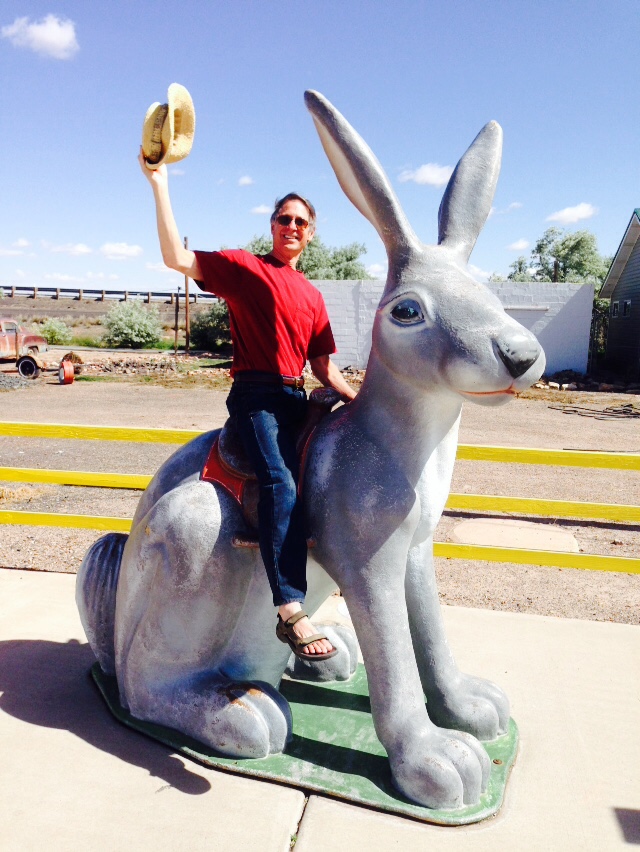
Jack Rabbit

Although our recent road trip (see this post and that post) included visits to several spectacular national parks and some family time spent with mid-west relatives, we also enjoyed stopping at interesting and often amusing roadside attractions along the way.

The era of America’s roadside attractions exploded in the 1930s, with the expansion of the highway system. Often marketed to the newly mobile public with flashy billboards and unique architecture, they were designed to attract attention and encourage travelers to stop and spend some money. Early entrepreneurs came up with crazy ideas like Mexican restaurants topped with huge sombreros, motel rooms shaped like tepees, and countless “world’s largest” just about anything you can imagine.

Unfortunately, the 1956 Federal Highway Act and subsequent development of the interstate superhighways doomed many of these attractions. Some were completely demolished, leaving no trace. Others were closed years ago and only their run-down, boarded-up shells can be seen. A lucky few, though, have somehow managed to survive and can be visited and enjoyed today.

Wall Drug

Wall Drug in Wall, South Dakota

We were told about this (apparently) world-famous drug store by a hotel owner in eastern Wyoming. He not only gave us great pointers about the best routes for us to take on our journey across South Dakota, he said that a stop at Wall Drug was pretty much mandatory.

We began to spot billboards advertising Wall Drug (“120 Miles to Wall Drug,” “Free Ice Water,” “5¢ Coffee,” “Entering Wall Drug Country”) as soon as we hit I-90 and headed east across the prairie. Even if we hadn’t heard about the place, I think the billboards would have lured us in.

Wall Board

Opened in 1931, when Wall, South Dakota was a 231-person town, Wall Drug is now less of a drug store and more of a shopping mall of kitsch. It has been featured on travel shows and in international magazines and purports to take in over $10 million and attract over two million visitors annually.

Corn Palace

Cornelius, the Corn Palace Mascot

Soon after leaving Wall, we began to see billboards for another small-town attraction: the Corn Palace located in Mitchell, South Dakota. Since we both vaguely remembered hearing about the attraction (and, since who could pass up seeing a palace made of corn?), we decided to stop and check it out.

The Corn Palace was originally built in 1892 as a way to showcase South Dakota’s farming community and lure settlers. It was rebuilt in 1905 when the city of Mitchell attempted to be designated as the state capitol. In the 1920s, the Palace was rebuilt once again, this time to lure tourists, not farmers, to the area.

One of the murals made out of corn

Although we arrived too late to go inside, we enjoyed wandering around the exterior and admiring the beautiful murals made of corn. The murals, designed by local artists, are reconstructed each year. This year’s theme is the 125th anniversary of South Dakota.

After our visit we did a quick Google search to find out why the Corn Palace sounded so familiar to us.  Following 9/11, when grants were being distributed by the Department of Homeland Security to beef up security at various sites deemed to be at risk, some fiscally responsible politicians felt that protecting the Corn Palace deserved a portion of the funds. In 2004, the Corn Palace gained unwanted notoriety from Jon Stewart on the Daily Show in the ensuing controversy. In 2012, the Corn Palace was featured on the Stephen Colbert Show (“A Shucking Disaster: Nightmare at the Mitchell Corn Palace”).

These are just two of the roadside attractions we enjoyed on our 5,161 mile road trip. We visited many more as our trip took us west out of St. Louis, through Oklahoma, Texas, New Mexico, Arizona, and back to California. I hope you’ll follow along with us to see some of the attractions made famous by travelers past and present, as we made our way home along portions of old Route 66.

Awe Creators

Tree-at-ArchesWeb

With today’s thinly veiled political-speak, anytime the term “job creator” is attached to a proposal, I’m pretty sure some billionaire is going to get richer, a corporation will see their profits soar, a politician’s slush fund will grow, and at least one regulation designed to protect the environment or worker rights will be overlooked or trashed. Decisions that promote short-term gains (for a select few) are too often made at the expense of long-term consequences (for all of us).

Fortunately, beginning more than 140 years ago, there were visionaries and influencers willing to stand up to those who wanted to develop and exploit the wilderness. Instead, they proposed that the government act as a protector of vast swatches of unspoiled nature and spectacular beauty. This idea, which began with the establishment of Yellowstone National Park in 1872, has now grown to include over 450 national parks, national monuments, national historical sites, national scenic trails, and other wonders which are protected and preserved for future generations.

I found myself silently thanking these courageous “awe creators” many times during the three-week road trip my husband I just returned from. If these proactive private citizens, government employees (including presidents), and even an industrialist* hadn’t embraced and promoted the concept of long-term preservation, many of our national treasures would be lost to us today.

That’s not to say we all can breathe easy thinking that the national – and state – parks are safe.  Underfunding, inattention, and political and corporate meddling are all very real threats, as are some of the very people the parks are set aside for. Through our taxes, entrance fees and in-park behavior, we all must diligently protect these wonders to ensure they will be around for generations to come.


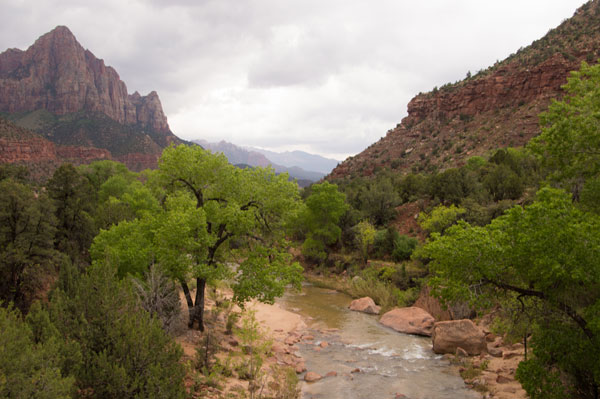
Zion National Park in southern Utah

Bryce Canyon Nation Park in southern Utah

Bryce Canyon Nation Park in southern Utah


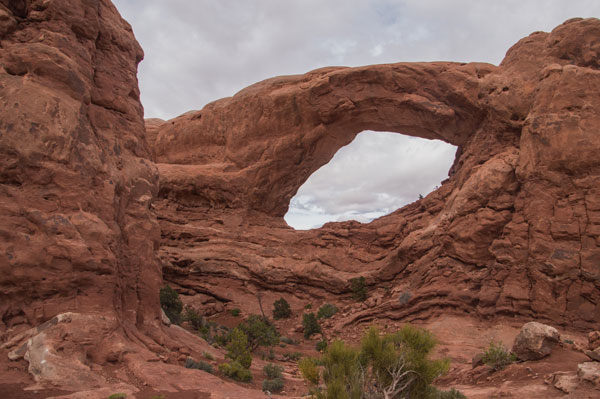
Arches National Park in eastern Utah

Arches National Park in eastern Utah


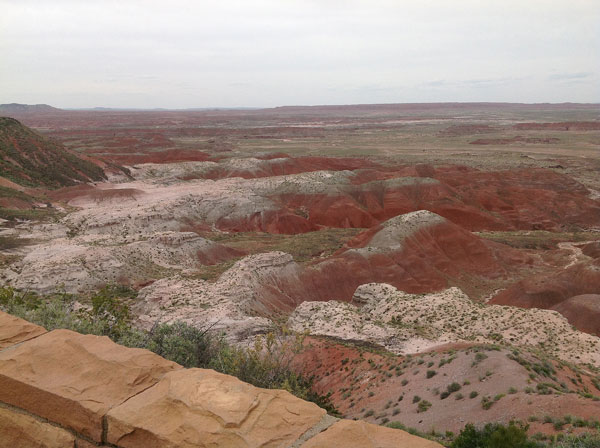
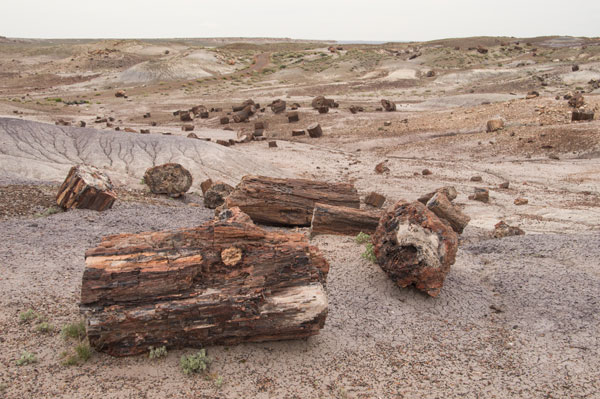
Painted Desert/Petrified National Park in eastern Arizona

Painted Desert/Petrified National Park in eastern Arizona


Petrified-ForestWeb

Painted Desert/Petrified National Park in eastern Arizona


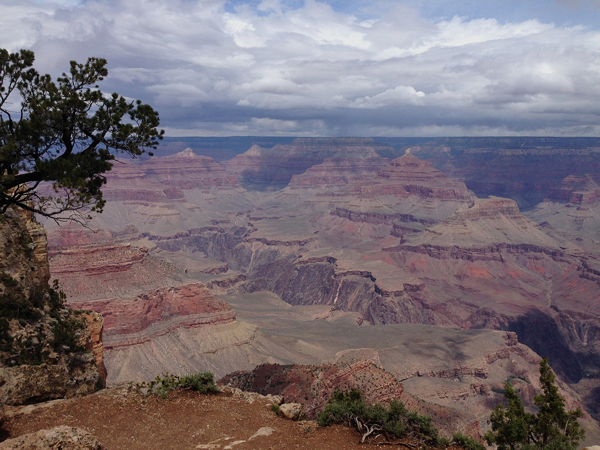
Grand Canyon National Park in northern Arizona


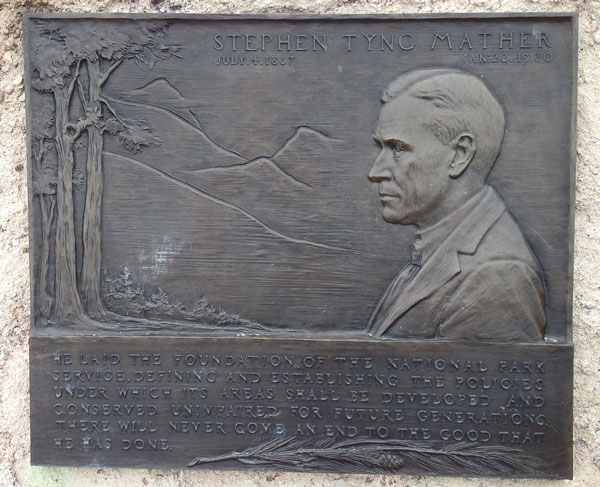
*Stephen Tyng Mather, conservationist and president of the Thorkildsen-Mather Borax Company promoted the creation of a federal agency to oversee the national parks. He later became the first director of the National Park Service.

MatherWeb
The plaque reads: “He laid the foundation of the national park service, defining and establishing the policies under which its areas shall be developed and conserved unimpaired for future generations. There will never come an end to the good that he has done.”

0 to 5161 in three weeks

Last night, my husband and I arrived back home after being on the road for three weeks.  We took off from Southern California on April 24 with a rough itinerary that included a couple of hard dates but also a lot of flexibility. We had family and calendared events waiting for us in Omaha and later in St. Louis, but, other than that, we were on our own.

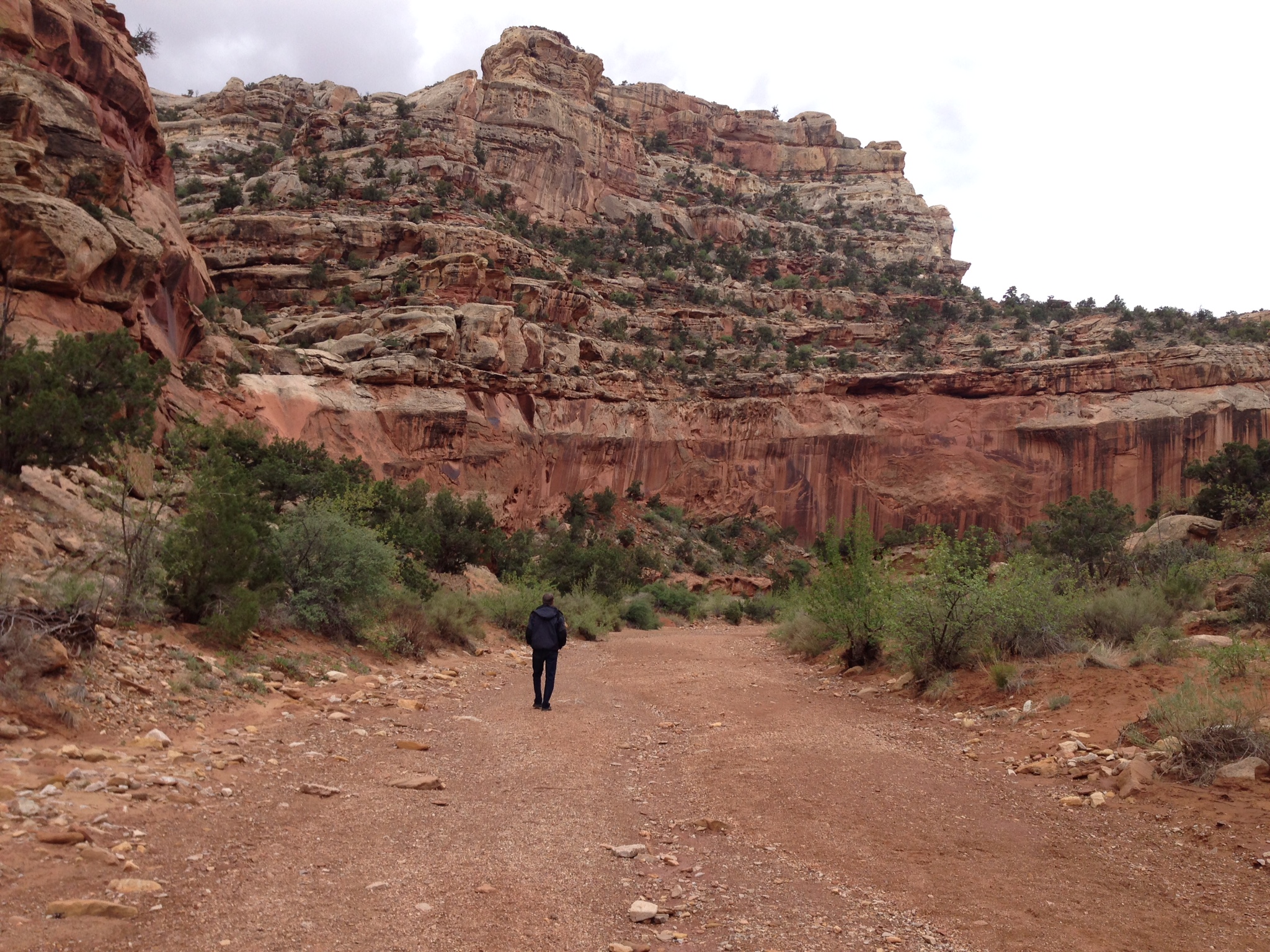
A quiet walk among the the red rocks in Capitol Reef National Park

The 5,161 miles we traveled took us through 14 states and to 11 national parks and monuments, several state parks, and quite a few museums. We had days when there wasn’t a cloud in the sky, days full of ice and snow, and just about every weather pattern in between. We experienced the majesty of nature in the red rocks of Utah and Arizona and the audacity of men whose dreams led them to carve the likenesses of four presidents and an Indian chief on the sides of mountains. We saw a giant depression in the earth where a meteorite landed 50,000 years ago and we enjoyed the kitsch of visiting a giant rocking chair and sleeping in a motel room shaped like a teepee along the route made famous in the 1920s and 1930s.

My husband, best friend, and traveling buddy (I’m fortunate to have all three wrapped in one person) indulged my photographic whims by happily stopping whenever I asked him to. Our tastes are similar enough so that we usually easily agreed on attractions to stop for as well as food and lodging choices, but we are flexible enough so that we could change plans to accommodate each other’s interests.

Today is the one-year anniversary of my retirement. Over the past twelve months we’ve taken two driving trips and two trips that have required getting on a plane. Planes allow us to get to far-off destinations, but there is nothing like a road trip to best explore this country and build a greater understanding of ourselves and others.

As I do on every one of our travels, I kept a journal of our day-to-day activities and adventures. I also jot down inspirations, insights, and possible blog topics as they occur to me. I will share some of these over the next several posts.

Sharks circling the mailbox

Like many retirees, my husband and I have been focused on getting rid of the clutter around our house. Over the years we have managed to collect a lot of stuff; stuff that is no longer relevant to our lives. But, as we continue to offload piles of things we’ve acquired over the years, there continues a flood of unwanted and useless stuff through our front door, via the U.S. Postal Service. Despite our best efforts to keep on top of it, we often find ourselves drowning in annoying junk mail.

In addition to the grocery store flyers, coupon mailings, and offers of various types of insurance coverage, most of the remaining useless pre-trash fits into one of the following categories:

Let us help you acquire more debt

Amid the destruction and turmoil the 2007-2008 financial crisis caused, we found one small ray of sunshine peeking through the rubble: no more unwanted credit card offers junking up our already junky junk mail.  Although nothing had changed about our personal credit-worthiness, all of the various banks, retail chains, airlines, etc. suddenly went silent. They no longer were anxious to offer anyone with a pulse the opportunity to accumulate debt by applying for their credit cards. When the economy melted it was as if a spigot had suddenly been turned off and we were grateful for the reprieve.

Unfortunately, judging from the mail that we have been receiving lately, that reprieve is over. Almost daily it seems that we get multiple offers of cards that will earn us airline mileage, free hotel stays, or cash back on specific purchases.

Just as they did before the financial meltdown, these offers go straight to the shredder. We have the cards we need (just one and a back-up) and we probably aren’t the kind of customers they want anyway since we pay our balance off each month.

Even though you already gave, please give us more

Also junking up our mailbox are donation requests from charitable organizations and non-profits that we already give to. It’s not unusual to send in our annual membership fee and, just a few months later, receive another mailing that looks surprisingly like an annual membership fee request. We have started to keep a spreadsheet listing the organization, what we gave, and when we gave just so we can keep everything straight.

You’d think that these organizations could save a ton of money by just mailing once a year, but obviously these ongoing solicitations must work or they wouldn’t send them. It bothers me to think that these organizations I think so highly of have, as part of their fund-raising tactics, a strategy to fool people into making more than one “annual” donation.

You have several years left on your magazine subscription but how about paying in advance for several years more?

Magazines have been employing the scheme of multiple solicitations for ages. Although I’ve cut way back on my subscriptions, I still receive a few print magazines. Choosing the multi-year subscription option will usually save money but I’ve also found that it gives them more chances to send annoying and confusing solicitations. Long before my subscriptions are up, I start to receive requests to renew, extend, and send gift subscriptions to friends.

And, these are just those mailings from the magazine company. Often magazine sales companies – with no connection to the actual publisher – try to trick subscribers into re-ordering their magazines through them. These are the mailings that are made to resemble legitimate renewal notices or even invoices. I’m fortunate to live in a state that requires magazine companies to disclose the current subscription end date on their renewal notices, but they do their best to camouflage them.


As annoying and wasteful as this type of mail is, I worry about a time in the future when my husband and I may be less able to keep track of what is legitimate and what isn’t. When I took over the management of my father’s household and finances as his health declined, I was shocked by the number of sharks ready to feed on those most vulnerable. Without an honest and diligent gatekeeper, it’s easy to get eaten alive.

Looking forward through the rear-view mirror

Rear View_edited-1

I began this blog almost a year-and-a-half ago, just about 6 months before my retirement date. I’ve always enjoyed writing and I knew I wouldn’t have many opportunities outside of work unless I created them for myself. I subscribed to several blogs so starting my own blog seemed like a great way to do this. Deciding on my blog’s focus was easy; I was headed into a big unknown. I wasn’t sure what my personal retirement would look like – I had some ideas, but no real plan of action – so I wanted to explore the social and psychological aspects of retirement as well as learn from others who had gone before.

Originally, I envisioned writing posts several times a week. I had lots of ideas for topics and I figured spending an hour or two each week writing, formatting, and posting would be easy peasy. Soon, after realizing I was being much too optimistic about the time commitment, I dialed my expectations back to once a week. Now, a couple of posts a month has become the norm.

I still enjoy writing and I still have ideas for topics, but, because the perfect words don’t just flow out of my brain onto the screen, each post takes much longer than it probably appears it should have. I am the queen of edits and re-writes.

WordPress does a lot to encourage regular posts by offering a multitude of tutorials, challenges, and prompts. In addition, established bloggers invite others to join in on photo and writing challenges of their own. Last fall, I took part in WordPress’s Photography 101 challenge. It turned out to be a great way to share my photos of the Hawaiian vacation that coincided with the challenge and I managed to gain more followers because of my participation. Although I think these prompts and challenges can be quite helpful and fun to take part in, I find that, at least for my blog, they can dilute the main message and take the focus off what I want my blog to be about – life in retirement.

I will be celebrating my first retireversary next month and I am pleased to report that it’s going quite well. My husband and I have completed a few house projects, we’ve done some traveling and plan do a lot more, and we are discovering the joys and challenges of spending so much time together and being the masters of our own schedules.

I look forward to continuing this blog and I hope that I can be much more regular with my posts. I really appreciate everyone who stops by to read what I have to say, and I am especially grateful to those who take the time to add comments.

Although my blog is ultimately about retirement and “learning to navigate through my post-work world,” I imagine that it will morph a bit as time goes on, just as my life will change. There is so much to do, creative outlets to explore, and social interactions to enjoy. I want my blog to reflect all of this and more.

Is this when the wheels start to come off?

I have a friend who is battling colon cancer. She has undergone several series of chemotherapy over the past year and has yet to receive an “all clear” diagnosis from her doctors. Each time she thinks she is done, they’ve found new reasons for concern. After completing her last round of chemotherapy, she is now in a wait-and-see holding pattern and we are all cautiously optimistic.

Another friend is currently undergoing chemotherapy for Lymphoma.  She is one month into her treatments and after another 4 – 5 months her doctors will do another evaluation. She is getting a lot of support from her husband and friends, and we are cautiously optimistic about her outcome.

A neighbor who is also a good friend had a mastectomy a few years ago when a small tumor was discovered in her left breast. Recently, during a routine follow-up with her oncologist, it was discovered that her HCG levels were unusually high. High HCG levels are normal in pregnant women; high levels in a non-pregnant woman can be an indicator of ovarian cancer. She will get her test results later this week and her friends and family are cautiously optimistic that she will get a clean bill of health.

Then, just the weekend, I called a friend that I’ve known since grade school regarding an upcoming get-together. She told me that her attendance was up in the air at this time because her husband was recently diagnosed with severe Myelodysplastic Syndromes (MDS), a bone marrow disorder. In general, the prognosis for patients with advanced MDS isn’t encouraging, but she is doing her best to maintain a cautiously optimistic perspective for her husband and her family.

These four medical challenges are not the only ones faced by friends and acquaintances; I know a few who have battled cancer and won (at least for now) and several others who are living with MS and other long-term health issues.  But, these are the most recent and I can’t shake the feeling that there seems to be an uptick in the number of serious diagnoses received by friends, friends of friends, and their family members – all close to my age.

In general, when we reach retirement age, we are focused on our finances and our emotional well-being. Many also realize that it is important to exercise regularly and eat a healthy diet. When we think about the future, our concern is often how to ensure adequate care in our advanced age. I don’t think most of us put a lot of thought into facing an early death – of either ourselves or our loved ones.

A recent article in the New York Times titled Why Everyone Seems to Have Cancer discusses how cancer is slowly overtaking heart disease as the number 1 cause of death. Due to an increased focus on the benefits of exercise and a healthy diet, and the availability of medications to control blood pressure and cholesterol, heart disease is less likely to affect someone between 55 and 85. Because of the way cancers develop (over time, due to errors in cell evolution), just the fact that we have lived a long time makes us susceptible to these cell mutations.

Although there have been a lot of strides made in the treatment of some cancers, preventing it in the first place seems to hold the most promise. Governments do this by improving sanitation, regulating and banning certain toxins, and promoting research and the development of vaccines. On the individual level, we can make sure we pay attention to what we eat and get plenty of exercise to keep our weight at a healthy level, stop smoking – and if you don’t smoke, stay away from second-hand smoke, and avoid excessive sun exposure. Of course none of this is a guarantee: not one of the four friends mentioned at the beginning are overweight or have poor eating habits, they don’t smoke, and none of their cancers resulted from too much sun exposure.

I’m not sure what the takeaway from all of this is. I don’t want to live my life in fear of what could be waiting around the corner. I am fair-skinned but I love the being outdoors, so I slather on SPF 50 and go out and enjoy myself. Although I’d love to be able to encase my husband in bubble wrap when he goes on one of his routine 50-mile bike rides, I know I can’t. We both try our best to avoid unhealthy food but, sometimes, something bad is just the thing that makes us feel so good.

So, we do our best. We try to get as much out of this life that we can, love the people who we hold close as hard as we can, take as good care as we can of our frustratingly aging bodies and minds, and always strive to treat others with patience, kindness, and respect.

We remain cautiously optimistic about the future.