We are the Storm

The concept for the Women’s March in Washington D.C. started as germ of an idea a grandmother in Hawaii had who was devastated by Trump’s presidential victory. Because she felt compelled to do something, she created a Facebook event page calling for a march on our nation’s capital. She expected a handful of people to sign up; a day after her post, she had more than 10,000 responses.

From that initial idea, a movement was started. Soon, in addition to the Women’s March in Washington D.C., solidarity marches were being planned all over the United States and around the world in opposition to President Trump’s agenda, and support of women’s rights and human rights in general.

Artist Brian Andreas created a poster just for the Women's March
Artist Brian Andreas created a poster just for the Women’s March

Today, my husband and I joined an estimated 30,000 – 40,000 of our fellow citizens to walk in the Women’s March in San Diego.

The crowds were large, loud, friendly, and optimistic. Some carried children and some carried signs, but all carried a determination to make their voices heard. As we stood in the on-and-off sprinkling of rain listening to a group of speakers, there was a palpable feeling that the crowd was anxious to start their march and show their numbers.

Travelers on a docked cruise ship watched and (some) cheered as we walked by.

And march we did: from the Civic Center Plaza, down Broadway towards the Embarcadero, and finally culminating at San Diego’s Administration Building, one mile away. The crowds were so large that by the time the first of the marchers reached their destination, there were still those who were just leaving the staging area.

As I was walking with the other participants, I couldn’t help feeling that my mother and father were there right beside me. Many years ago, I joined them as they protested and marched against another very unpopular president and a war that exacted a huge human cost. If they were still alive, I am confident that they would have joined us today.

Media reports are indicating that the “sister marches” in all fifty states have shattered participation expectations. In addition, large crowds attended marches around the world, including, London, Paris, Mexico City, Buenos Aires, and Sydney, Australia. A friend of mine currently visiting Oaxaca, Mexico joined about 500 marches there. Global estimates indicate that over 3 million individuals participated in the marches, up from the 1.3 million initially anticipated.

I am confident that this won’t be the last time we are asked to raise our voices in solidarity. And, it won’t be the last time I answer “Yes.” As was written on one of the signs held by a fellow marcher:

The devil whispered in my ear,

“You’re not strong enough to withstand the storm.”

Today I whispered in the Devil’s ear,

“I am the storm.”
GratiTuesday: A Blank Slate for a New Year

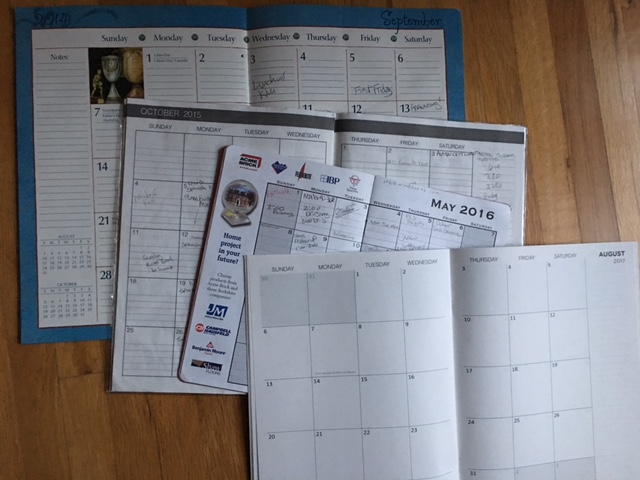
After my husband and I retired several years ago, we looked around a bit to find a good system for keeping track of our day-to-day lives. When we worked, we took advantage of our Outlook calendars on our office computers. Along with scheduling our business-related meetings, travel, and deadlines, we also noted doctor appointments, get-togethers with friends, and other non-work life events. Since we were on our work computers all day and they were linked up with our cellphone calendars, it was easy to keep everything straight.

Once we both were retired, we found ourselves missing a few important dates, including a quarterly tax payment due date (oops). That expensive mistake made us realize that we needed a system to help us manage our schedules. After several unsuccessful attempts at using fancy apps and digital assistants that others had recommended, we found that nothing had the same ease and appeal for us than just a simple desk calendar.

calendars

Now, after three years, we still swear by our yearly date books. We have found that not only do they help us manage our schedules in the current year, but the calendars from prior years can be a valuable tool to help us remember past events that our grey matter has lost. When did we take that trip? How long has it been since I’ve seen the dentist, where were we last February? – it’s all there for us in writing.

Now, it’s time to file away our 2016 calendar and start a new one for 2017. I’ve already jotted down a few appointments, important due dates (including quarterly taxes), and upcoming trips, but most of the 365 squares are blank and waiting to be filled.

I am so grateful to have this blank slate in front of me: empty of words but full of possibilities. Although it looks pretty bare now, I’m looking forward to all the special occasions, interesting classes, and exciting adventures that will soon start appear on its pages.

I Blame Pinterest

Well, not really, but…

When did the holiday season – and especially Christmas – get so over-the-top stressful? My childhood memories of pre-Christmas preparations include buying and trimming a tree, placing decorations around the living room, and stringing lights in front of our house. Granted, most of these tasks fell to my parents, but I don’t recall a heightened sense of stress related to any of these activities.

The tree wasn’t decorated in an overall theme, nor were the trimmings color-coordinated. The ornaments were a mixture of well-loved heirlooms handed down through the generations, holiday crafts that my brothers and I made at school, and decorations that my mother bought over the years at after-Christmas sales.

xmas-tree

Our living room shelves and the credenza beneath it had various Santas, reindeer, and snowman decorations placed among the books and next to the TV. As Christmas cards arrived in the mail, they filled up any remaining spaces.

xmas-house

The outdoor lights – the large, tear-drop shaped, multi-colored bulbs that everyone had – were strung in a straight(ish) line from the far corner of our garage, across the front of our house, then down to a couple of the bushes below.

It was pretty much the same thing every year… and we wouldn’t have wanted it any other way.

Fast forward to the age of social media.

Friends on Facebook post pictures of perfectly decorated homes (inside and out) and lavishly prepared meals, Houzz offers a myriad of ways to accessorize our rooms for the holidays – in prices ranging from a lot to are you kidding me?, and Pinterest is bursting with photos of just the item, product, display, project, recipe, etc. that we need to purchase or create to assure our holiday is perfect.

Now, don’t misunderstand: I am not immune to the eye candy that is everywhere this season. I love to see what others have done to decorate or which appetizers, cocktails, or meals they have planned for their holiday celebrations. But, even as I admire their decorating talents (to say nothing about the off-season storage space they must have) or their creativity in the kitchen, I prefer the low-key way my husband and I choose to celebrate the holidays.

I realize that decorating every nook and cranny with just the right seasonal accessory or wowing family and guests by baking and serving a Chocolate Espresso Bûche de Noël fills some with joy. We’re just happier to eschew the tree (there really isn’t room for one anyway) and put out fewer, but well-loved, decorations. And, while we enjoy attending holiday parties given by friends who love to entertain lavishly, our get-togethers tend to be small and pretty casual.

img_1262

If I find myself grumbling about being stressed out or feeling like I don’t have enough time to do the things I “need” to do, I stop and consider how much unnecessary burden I’ve willingly put on my own shoulders. Am I doing what pleases me, or am I trying to emulate someone else’s version of the holiday? What works for one person, or one family, may not be a good fit for another.

And that’s OK.  This season isn’t about an exquisitely decorated home or perfectly prepared food, it’s about the people in our homes and those who share our food.

That’s where the memories are made.

GratiTuesday: Pearl Harbor Memory Keepers

Tomorrow marks the 75th anniversary of the surprise attack on the U.S. naval base at Pearl Harbor by the Imperial Japanese Navy. On December 7, 1941, the residents of Pearl Harbor were just waking up to a quiet Sunday morning when, just before 8 a.m., the first wave of Japanese fighter planes and bombers began their quest to destroy the Pacific Fleet and cripple the U.S. military. The following day, December 8, the United States declared war on Japan.

The USS Arizona during the attack. Photographer unknown. This photograph is in the public domain.

Ninety minutes after it began, the attack was over. 2,008 members of the military and 68 civilians died and 1,178 were wounded. Eighteen ships were sunk or run aground, including five battleships. All of the Americans killed or wounded were non-combatants, given that there was no state of war when the attack occurred.

As we continue to lose members of the Greatest Generation, this special group – those who were witness to the attack – is also dwindling rapidly. Those who were there shared the rallying cry: “Remember Pearl Harbor!” Sadly, fewer and fewer people really do. In fact, the national organization of the Pearl Harbor Survivors Association disbanded five years ago after its membership, once close to 30,000, fell to less than 3,000.

Commemorations of the attack are held annually at the Pearl Harbor memorial site in Oahu. On this 75th anniversary, a key focus will be on our country’s relationship with Japan and a celebration of 71 years of peace between us. In fact, on Monday, Japanese Prime Minister Shinzo Abe announced that he would visit Pearl Harbor, becoming the first sitting Japanese leader to go to the site of the attack.

Yesterday’s unexpected announcement came six months after President Obama became the first sitting U.S. president to visit the memorial in Hiroshima for victims of the U.S. atomic bombing of that city. Prime Minister Abe, in a brief statement to reporters, said he would visit Hawaii on Dec. 26 and 27 to pray for the war dead at the naval base. “We must never repeat the tragedy of the war,” he said. “I would like to send this commitment. At the same time, I would like to send a message of reconciliation between Japan and the U.S.”

I am so grateful for those who are keeping the memory of Pearl Harbor alive. As we “Remember Pearl Harbor,” it’s also important to appreciate the power of reconciliation. For anyone witnessing the attack that day it would have been nearly impossible to believe that the United States and Japan – bitter adversaries – could now be close allies. I am grateful that we are.

Thursday Doors: Balboa Park (Part 1)

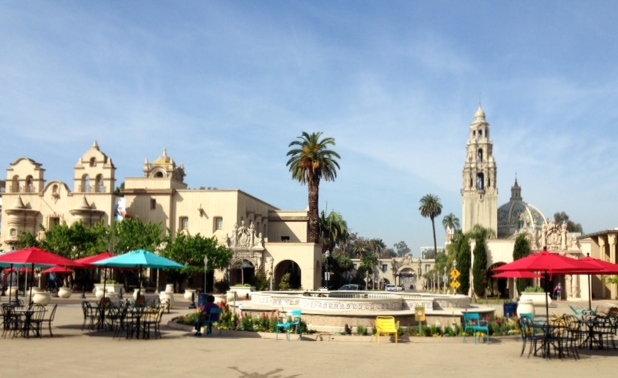
I recently posted about spending a gorgeous day with a dear friend in one of San Diego’s most beautiful and popular destinations, Balboa Park.  Since there are so many beautiful doors, arches, and entrances in the Park, I thought it would be a fitting submission for Norm 2.0 Thursday Doors link up.

balboa-park

I thought this gem in the middle of our city deserved a few more posts and pictures.

Balboa Park covers over 1,200 acres and is situated just minutes from downtown San Diego. It is home to 15 major museums, renowned performing arts venues, beautiful gardens, and the world famous San Diego Zoo. It is the nation’s largest urban cultural park and one of the oldest in the United States dedicated to public recreational use.


When the park (then named City Park) began in 1868 as land set aside by San Diego civic leaders, it was just a scrub-filled mesa without formal landscaping or development. That would change after the turn of the century when a master plan for improvements was formally introduced. San Diego was set to play host to the 1915 Panama-California Exposition and the city leaders wanted to put their best face forward as they welcomed visitors from around the world. San Diego would be the smallest city to ever hold a World’s Fair; its population at the time was less than 40,000.

The Exposition’s lead designer, Bertram Goodhue, wanted a regionally appropriate aesthetic for the architecture. To accomplish this, he and his design team combined the styles of highly ornamented Spanish Baroque with Spanish Colonial architecture to create the Spanish Colonial Revival Style used for the Exposition’s buildings. After attending the Exposition, President Theodore Roosevelt put his stamp of approval on the architectural style and recommended that the “buildings of rare phenomenal taste and beauty” be left as permanent additions.


Unfortunately, most of the expo buildings were only supposed to remain standing through 1916, and were not constructed with long-lasting materials. When the expo ended, several discussions were held to determine what to do with the buildings. Even the lead architect, Goodhue, recommended demolishing the buildings, saying “They are now crumbling, disintegrating and altogether unlovely structures, structures that lack any of the venerability of age and present only its pathos, and the space they occupy could readily be made into one of the most beautiful public gardens in the New World.”

Happily, cooler heads prevailed. A city-appointed committee hired an architect to review the buildings, and he determined that they could be restored by a slight margin over the costs to demolish the buildings. The necessary funds and materials for restoration were donated by San Diegans and the labor was financed by the federal government.


My next Thursday Doors post will cover another area of the Park, which was constructed for the 1935 California Pacific International Exposition.

GratiTuesday: Memories of family vacations

As I was growing up, family vacations usually involved long road trips in our Ford (always a Ford) station wagon, pitching tents, and sitting around camp fires. Even if Disney Cruises existed back in the 50s and 60s, I doubt if our sole-breadwinner father supporting a family of five, could have afforded such an extravagance. So, just about every summer, we went camping.

Looking back, I can’t imagine having any richer memories then the ones I have exploring the wonders of our national parks with my family.  Over the years, the parks we visited included Yosemite, Sequoia, Kings Canyon, Crater Lake, Grand Canyon, Bryce, and Zion. We hiked, fished, rode horses, traded stories around camp fires, and learned about the importance of preserving our natural heritage.

On a recent trip to Northern California to visit family, my husband and I decided to take a “slight” detour through Yosemite National Park. It had been over 30 years since my last visit, and my husband had never been there before. Although we only had about a half a day, it was enough time to take in a few of the “must-see” sights and perhaps plan for a longer stay sometime in the future.

As we drove to Glacier Point – which offers commanding views of Yosemite Valley, Half Dome, and the High Sierra – something about the wall along the road looked very familiar. Deep within my memory was an image of a picture my father had taken many years ago of me looking out over the valley. In hopes of recreating the shot, I positioned myself in what I thought was a similar pose and had my husband take my picture.

Although it turned out that we weren’t in quite the same spot as before (Half Dome was much further in the distance in the old photo), I am pretty pleased with the result.

A little later in the day, while hiking around the valley floor, I took a picture of Half Dome from across a meadow. Home from our trip, I was looking through my old family photo album for the picture of me sitting on the wall and found another picture of my father’s that was quite similar to the one I had taken.

I am so grateful that my parents introduced me to the joys of camping and to appreciate the miracles of nature. I cherish the memories I have of those childhood vacations and the times we spent together as a family.

GratiTuesday: It’s the little things (and some big things too)

One step at a time.
One step at a time.

Gardening, making meals, climbing stairs, grocery shopping… just getting from Point A to Point B without assistance. It’s the little things that we don’t think much about until we lose our ability to do them.

It’s been almost exactly two months since I executed a rather inelegant dismount from a ladder and fractured my hip on our concrete patio. Some of you have asked how I am doing and I’m please to say that I’m doing much, much better. About three weeks after my surgery, I graduated from a walker to a cane and for the last two weeks or so I have been walking completely under my own power. Although I still have a bit of a limp, it gets better every day. I’m not back power-walking or dancing yet, but I’m confident that it’s only a matter of time.

Today, I am grateful for many things, including modern surgical procedures and the remarkable healing ability of the human body. It amazes me that two months after having my broken bone screwed back together, I am almost completely mobile and pain-free.

I am grateful for patient people: those who were behind me as I limped forward with my cane and didn’t angrily push their way around me. My balance wasn’t always great and I found myself close to being tripped several times as some people brushed by me to get ahead. I appreciated those who understood my limitations and didn’t try to shave off a few seconds by zipping around and risk toppling me over. I hope that lesson stays with me when I’m the one who needs to be patient.

I am grateful that I can again putter in the yard, drive myself where I want, walk up and down stairs, and pretty much do all the little things I took for granted before my accident. My accident gave me a brief glimpse of what it could be like when I’m much older. Maintaining my health and taking good care of my body is even more important to me now.

Finally, I am grateful to my husband for taking such good care of me, encouraging my progress, and keeping my spirits up when I was struggling. “For better” is the easy part, “For worse” is what matters.

GratiTuesday: Lucky Thirteen


My husband and I were married thirteen years ago, on the thirteenth of September, after being together for thirteen years.

We didn’t plan it that way; it was just how everything happened to align.

One of my husband’s favorite anecdotes about our getting married is that he never really asked me to marry him.

It’s true, at least in the formal, romantic proposal, actually asking me sense…

A little over a year before we were married, we attended his high school reunion in northern California. I didn’t grow up in the same community so most of the people there were strangers to me. During the event, introductions were uncomfortable since most people assumed that I was his wife. Referring to me as his “date” wasn’t at all correct, “partner” sounded stiff and business-like, and I was certainly more than a “girlfriend” (by that time we owned a home together).

On our drive home, I told him how awkward I felt because we didn’t have a simple way to define our relationship to others. That’s when he very innocently said, “Well, maybe we should think about getting married.” Silly man… I was thinking that it was about time too and, before he knew what hit him, we had a date set and wedding plans beginning to form.

wedding

I am so very grateful for my husband and the life we have built together. Although it took us thirteen years to make it official, we’ve been together for twenty-six years and I’d happily marry him again today (whether he asked me or not). God knows we can drive each other crazy at times, but the inscription on our wedding invitation thirteen years ago is still true today:

This day I will marry my friend…

The one I laugh with, dream with,

live for and love.

Oh, Ottawa!

Oh Canada you're looking good for 149 and with Justin on the Hill it's only getting better, keep it Trudeau Canada!
Oh Canada you’re looking good for 149 and with Justin on the Hill it’s only getting better, keep it Trudeau Canada!

We had mixed feelings as we left Toronto and made our way to Ottawa, the penultimate stop on our road trip (the last stop would be an overnight stay close to the airport in Montreal). We had been traveling for almost a month and were a bit homesick, but we also were having a great time and didn’t want the trip to end.

Our Airbnb apartment in Ottawa was definitely the nicest one we experienced on our trip. The host, a young, self-described “day-trader” who owned several apartments in the building, was helpful and very welcoming. The apartment was clean, quiet, nicely decorated, and well-located. Once we parked our rental (free parking was included – bonus!), we were able to walk everywhere we wanted to.

This slideshow requires JavaScript.

Parliament Hill is the political and cultural heart of Ottawa. The Gothic-style government buildings overlooking the Ottawa River are open for free guided tours (the tickets are first-come, first-served, so get them early). Our tour of the Centre Block building ended with an elevator ride to the top of the Peace Tower which provided sweeping views of the city and the river.

Another tourist favorite during the summer months is the Changing of the Guard ceremony, which takes place each morning on the front lawn of Parliament Hill.

This slideshow requires JavaScript.

The Rideau Canal is the oldest continuously operated canal system in North America. There are 45 locks along the 125 mile (202 kilometer) length of the canal. It was completed in 1832 as a precaution in case of war with the United States and remains in use today primarily for pleasure boating (and ice skating in the winter). The canal begins (or ends, depending on the direction of travel) in Ottawa where the large wooden lock doors are opened and closed using hand cranks. The park surrounding the locks was beautiful and we spent a relaxing few hours just watching the process of the boats making their way up through the gates.

Standing on very spindly legs next to the world-class National Gallery of Canada is the Maman sculpture by Louise Bourgeois – a 30-foot bronze cast of a spider.  The title is the French word for Mother, which explains the sac on her belly containing 26 marble eggs. Similar Maman sculptures can also be found at art museums in the UK, Spain, Japan, South Korea, and the US.

We also enjoyed exploring the historic and trendy ByWard Market, one of Canada’s oldest and largest public markets. It was just a few blocks from our apartment and the four-block area was full of shops, cafes, pubs, and galleries.

As we left Ottawa after only a few days, we once again felt that our too-short stay only allowed us to scratch the surface of this beautiful city. I’d love to return some day and explore all that we missed this time around.

Vibrant Toronto

IMG_0701

Toronto is Canada’s biggest and busiest city, and its most diverse. Over 140 languages are spoken there and it is estimated that over half of its residents were born outside of Canada. The most populous city in Canada, it is the fourth largest city in North America (behind Mexico City, New York City, and Los Angeles).

Even knowing all of this, I found myself a little overwhelmed at first by the size and vibrancy of Toronto.

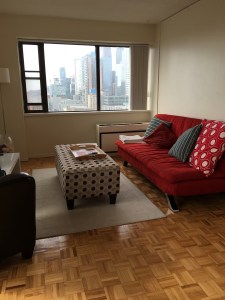
Our Airbnb was located on a side street in the downtown area, between two busy boulevards. It appeared that most of the residents of the tall apartment building were students, possibly attending the nearby Ryerson University. The flat itself was quiet and nicely appointed and, because it was up on the 21st floor, we had a nice view of the downtown.

Although we didn't sit around much, our Airbnb flat was very comfortable.
Although we didn’t sit around much, our Airbnb flat was very comfortable.

As we did during most of the other stops along our recent road trip, once we parked our car (free, off-street parking was included – a huge plus in this busy city), it remained unused for the three days we were there. We were able to get everywhere we wanted to go either on foot or using public transportation.

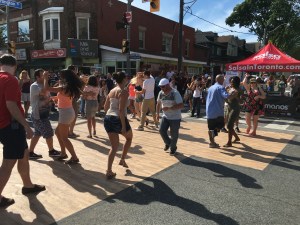
Dancers enjoying the Salsa Festival.

In addition to a high-quality outdoor art show (top picture), we were delighted to discover that there was also a food festival and a Salsa music festival taking place on the days we were in town.

This slideshow requires JavaScript.

All within walking distance from our flat was Toronto’s Chinatown, the funky Kensington Market neighborhood, Old Town Toronto’s famous St. Lawrence Market, the Entertainment District, the busy Waterfront, and lots of tempting places to eat.

This slideshow requires JavaScript.

Like other Canadian cities we visited, street art seemed to be everywhere in Toronto. Much of it was big and gorgeous, but there were also plenty of unauthorized contributions.

After just a three-day stay in Toronto, we felt that we hadn’t even scratched to surface of this amazing city. It’s loud and messy and crowded, but the vitality and energy is infectious. Although our travel schedule didn’t allow us to stay any longer, we agreed that a return trip – one that included much more time to explore other neighborhoods and indulge in additional culinary delights – could quite possibly be in our future.