Building a bridge to Cuba

Although the news wasn’t a surprise, I was heartened to hear President Obama announce the formal re-establishment of diplomatic ties with Cuba. This breakthrough came after months of secret talks between the nations followed by his acknowledgement last December that the relationship between the two countries was headed for a profound change. This Monday, the Cuban flag was raised over the country’s newly restored embassy in Washington, DC.

In 1961, the United States enacted an economic embargo with the explicit purpose of ousting the Castro regime. The sanctions were tightened even further in 1996, again in an effort to unseat Castro. History has shown us that these restrictions haven’t attained their goals; the Castros are still in power and democracy has eluded the island’s citizens.

Political billboards are common in Cuba. This one translates as "The great homeland that grows."
Political billboards are common in Cuba. This one translates as “The great homeland that grows”

Although past U.S. administrations have sought to moderate or remove the sanctions, politics has, until now, stymied any efforts. Politicians seeking the votes of the large population of Cuban exiles in the swing state of Florida have been unwilling to support any changes.

There are many reasons why what seemed impossible before, now appears to be happening. For Cuba, their two main benefactors, first, the Soviet Union and then, Venezuela, imploded, leaving the government without critical economic support. Tourism, trade, and investments from the United States will offer them much-needed monetary infusions. For the U.S., not only have the sanctions failed to oust the Castro regime, but they have severely constrained our country’s trade and foreign policy options. In addition, with an agreement, the Cuban government will lose a powerful scapegoat. No longer will they be able to blame their failed economics on the policies of the United States.

Demographics have also played a big role in the softening of the stance of both countries. The Castro brothers are now in their eighties and soon these powerful symbols of the revolution will be gone. In addition, the original exiles – the most vocal opponents to any change – are also aging, and younger Cuban-Americans are more open to removing the restrictions of the embargo. Although no one believes that Cuba will instantly become a bastion of human rights and democracy, it will be hard for their government to maintain its current policies when there is more freedom of communication, travel, and commerce.

Cuba's famous Malecon at sunset
Cuba’s famous Malecon at sunset

When my husband and I traveled to Cuba earlier this year (you can read about our journey here, here, and here), we found a country hungry for change. The Cubans we talked to (and there appeared to be little or no restrictions on our interactions) were friendly, welcoming, and eager to engage with Americans. Despite – and maybe because of – the hardships they face, many have a tremendous entrepreneurial spirit. They are also very proud of their country. Cuba has a 96% literacy rate and their citizens enjoy free education and healthcare. According to the World Health Organization, Cuba’s water quality is among the best in the world, as is its citizens’ nutrition levels, health, and life expectancy.

Cubans are also very proud of their medical system. Cuban doctors are highly trained and their skills are in demand around the world. In fact, some 50,000 Cuban medical workers have been deployed in over 66 nations. That, of course, hasn’t included the United States, but maybe that could change. There has been a lot of concern lately about the dearth of general practice physicians here in the US. As the Baby Boomer population ages, more and more medical care will be needed. In addition, now that healthcare is more widely available through the Affordable Care Act, we need more doctors to provide care.

I know that there are many who feel that the sanctions should remain and that formally re-establishing diplomatic ties with Cuba sends the wrong signal. I, on the other hand, think it’s time to admit that our half-century estrangement hasn’t yielded the results we wanted and has actually produced many unintended negative consequences.

Because of decades of neglect, many of Havana's buildings are at risk of collapsing
Because of decades of neglect, many of Havana’s buildings are at risk of collapsing

By joining the rest of the world and opening up relations with Cuba, we can start a dialog that could result in increased freedom for their people. It might also mean that we could help satisfy our growing need for doctors by inviting members of their highly-trained medical establishment to practice here. Wouldn’t that be better than to continue a failed policy which, after more than 50 years, has yet to show any positive results?

The girl I never knew

scan0009Today is (was?) my mother’s birthday. She passed away back in 2000, after having a series of strokes, but seldom a day goes by that I don’t think of her. Sometimes it’s a memory of a conversation we had, or a place we visited, or a question that I would like to ask her. Each time I write a blog post, I wish I could rely on her excellent writing and editing skills to proofread my words before I hit “publish.”

My mother and I were close, but we weren’t best friends. I depended on her for love, emotional support, good advice (even if I didn’t take it all the time), and help with my homework. She taught me to work hard, revere nature, nurture a positive outlook, and not to take myself too seriously. We didn’t share all of our secrets or spend hours talking on the phone. I loved her very much and I know she loved me but our roles were fairly well defined.

Now that she is gone, I am often struck by how little I know about her life before I was born. I have a lot of tangible memories of my mother: many of her favorite recipes, magazine articles she wrote, and some beloved tchotchkes. I also have a lot of photos of her; what I don’t have is the comfort that I really knew the women in those photos. I love hearing stories from relatives who grew up with her and I treasure the diaries that both she and my father kept in their twenties and thirties. But, looking back, I wish I had asked her more questions about her childhood, her teenage years, and when she was a young woman – before and after she met my father.

I know that her mother died just days after my mother was born, but I don’t know how the loss might have shaped her as she grew up. I know where and how my parents met, but I don’t know what she thought about when they decided to get married after just three months of knowing each other – and just a few weeks before my father was shipped off to Europe for his Army service during WWII.

scan0003I think many of today’s mother/daughter relationships are different. Many of my friends who have kids talk about how close they are and they seem to be more open with them about their past. Some mothers and daughters share clothes and Facebook updates. A few discuss their sexual histories and past drug use. One friend even shares Botox appointments with her adult daughter.

If I had a daughter, I’m not sure where along the closeness spectrum we would sit, but I’d like to think it would be somewhere in the middle. I understand the desire to be “best friends,” but I also appreciate the need to maintain a certain amount of separation. Although I wish I had asked more about my mother’s past, I appreciate that she had pieces of her life that she wanted to keep private. Just as her past shaped her, mine has shaped me, and my relationship with my mother is one of the parts of who I am that I most cherish.

**

Mom and Me1Although I don’t remember many of my dreams, every once in a while I have a vivid one about my mother. It is usually the same: we are sitting together on the sofa in my parents’ living room chatting about this and that and enjoying each other’s company. Everything seems completely normal when suddenly I realize it is just a dream. When that happens, I reach over and hug her tightly to me, knowing she won’t be there when I wake up.

I hope I have that dream again tonight.

Sitting on the deck of bidet

Like many Americans, I was first introduced to bidets when I traveled through Europe. It took me awhile to gain the required coordination and I never felt completely comfortable using one. The challenge was, after using the “regular’ toilet, I had to, with pants still down around my ankles, shuffle over to the bidet to experience the cleansing wash of water focused on my nether-regions.  I remember feeling rather silly but certainly fresher and cleaner. Once back home, I don’t think I gave bidets a second thought. I was 28, what did I know?

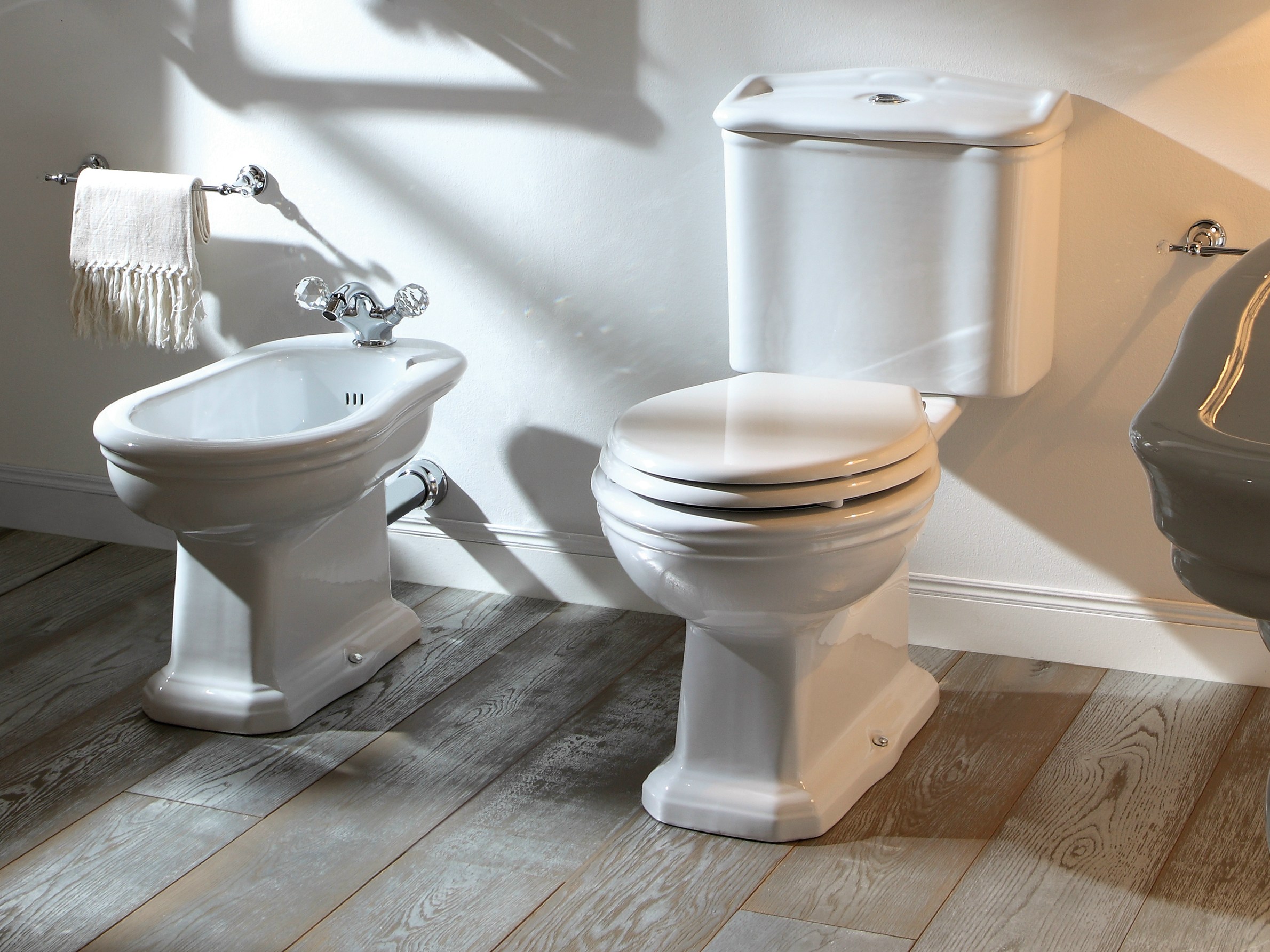
None of the bathrooms on my European travels 30 years ago were this nice, but you get the idea. Image from archiproducts.com

Over the years I’d see them in higher-end homes, but, even if I was tempted, I certainly didn’t have a bathroom big enough to hold two toilet-sized fixtures. Besides, bidets really seemed like an extravagance that was unnecessary in my life.

Then, several of things happened that helped to change my mind:

  • As I’ve gotten older there have been things other than just my skin that have, let’s just say, loosened up.
  • Unlike the bidets I found in Europe in my twenties, there are now toilet seat-integrated bidets — sort of a “one-stop-shop” for you to plop. What used to require not only a bathroom large enough for two fixtures but also extensive re-plumbing now takes up no extra room and can be installed in a few hours by a handy homeowner.
  • A dear friend whose opinion I value greatly speaks of her integrated bidet in terms that can only be described as worshipful adulation.
  • And, well, Costco.

After doing some, um, product testing at my friend’s house and a bit of online research, my husband and I began to think that getting a bidet might not be a bad idea. Then, we saw the integrated seats for sale at Costco and figured the time had come to shit or get off the pot buy one. Now, we are converts.

Do you still have a conventional toilet? I shake my head in pity for you.

Is your toilet seat as cold as ice when you first sit down? My naked bum is welcomed by a soothingly warmed seat (especially nice for those middle-of-the-night sojourns).

When you are finished doing the deed, do you reach for dry toilet paper that (let’s be honest here) doesn’t do the job very well? Then, you use more and more tissue (at the risk of clogging up your plumbing) trying to remove all evidence? My tush is treated to a cleansing warm-water spray that leaves me feeling fresh and clean.

Ah-ha, you say, at least I don’t end up with a wet end! Well, actually neither do I: after my bidet completes the rinse cycle, it finishes up by gently blow-drying my derriere with warmed air.

Oh, did I mention that it has a remote control?

The Seat of Power in our house.

I admit that our bidet has totally ruined me for regular toilet seats. Although not a fan of using public restrooms anyway, I now have an even stronger incentive to keep it together until I get home. If these things were portable, I would have taken ours with us on our recent road trip. Having to use conventional toilets for three weeks straight was almost too much for my tush to tolerate.

Sales in America are tiny compared to the rest of the world but these integrated bidet seats are slowly gaining acceptance. There are several manufacturers (Kohler, Toto and Brondell are just three) and a variety of features available in different price ranges. As consumers start to appreciate the advantages of bidets (including better hygiene care for the disabled and elderly), I’m confident that they will become mainstream here too.

In the meantime, to those of you who haven’t promoted your potty yet, what are you waiting for? Relieve yourself of that seat that just sits there and treat your gluteus to maximus luxury. I guarantee that your bum won’t be bummed.

Finding my happy place

Last week, Sammy over at Bemuzin, posted a list of ten things she loves and ten things she hates. She had been tagged by a fellow blogger to participate in the Love-Hate Challenge, then she tagged ten different bloggers to pass the baton to, including me.

Fortunately, she didn’t list “procrastinators” as one of the ten things she hates, because I’m a bit tardy submitting my lists to the blogosphere.

Blueberries definitely take me to my happy place!

For my lists, I’m going to change it up a bit (Sammy also didn’t include “rule-breakers” on her hated list, so I think I’m in the clear). First, few things rise to the level of “hate” in my life, so I will modify my list titles a bit. Second, I’m not going to tag a new group. But, give some thought to compiling your own lists, it was a lot of fun!

Ten things that take me to my happy place:

  • Beginning the morning lazing about and cuddling with my husband
  • Sitting on my deck and enjoying the sunshine
  • Taking walks with friends for exercise and conversation
  • Starting a new book and, after just a few pages, realizing that it’s REALLY good
  • Our blueberry bushes bursting with berries
  • All the yummies we make with our blueberry harvest
  • Small get-togethers with friends – good conversation, good food, and good wine
  • Road trips
  • National Public Radio
  • Coaxing a contented purr from a kitty by scratching behind its ears

Ten things that harsh my buzz:

  • Guilt-tipping (I talk all about it here)
  • When people post controversial things on Facebook without checking its authenticity
  • Drivers who endanger themselves and others by texting or talking on their cellphones
  • Mean people
  • Cooked carrots
  • When I forget someone’s name and have to fumble around in my brain to retrieve it
  • Missing Stephen Colbert and, soon, Jon Stewart on Comedy Central
  • Gophers
  • Ever-shrinking seats on airplanes
  • People who don’t pick up their dog’s poop

Tip Creep in the Technology Age

You’ve probably seen them. Perhaps you’ve even purchased an item by swiping your credit card through one. If you’ve bought something from an Apple store, you definitely know what I’m talking about: those apps and accessories that turn smartphones and tablet computers into credit card payment terminals.

When the technology first came out, I thought it was genius. Suddenly, an owner of a small business – such as an artist at a craft fair – could play with the big guys. For a pretty low start-up cost, they were easily able to accept and process credit card purchases. As a customer, I liked the convenience: just swipe and sign. My credit card was never out of my sight and the receipt would instantly show up in my email.

At least I thought it was genius until the terminals began to appear at the sales counters of ice cream parlors, delis, bakeries, and coffee shops. All of a sudden, what first seemed like a convenience now feels like extortion. Technology-aided tip creep has arrived.

A couple of weeks ago, I went to a grab-and-go deli to get lunch. Making my way through the line, I picked up a couple of pre-made sandwiches from the refrigerated case. At the sales counter, I showed the cashier the sandwiches, asked him to add two ice teas to my order, and gave him my credit card. He handed me two cups (the sodas and tea were self-serve) and, after entering my order on his tablet/terminal, he swiveled the screen around to face me. There, right in the middle of the screen, I was “conveniently” given the opportunity add a tip to the transaction. I was even given a choice: I could click on 15%, 20%, or, if I was feeling especially generous, 25%. There was also a button labeled Custom Tip if I wanted to calculate another tip amount. Of course, I had the option of clicking the No Tip button, but with the cashier standing right there watching me, that choice felt very uncomfortable. Wimp that I am, I clicked 15%, signed the screen with my finger, and moved on.

Yes, of course I think ringing up two sandwiches and two ice teas is worth a 25% tip!

I usually am a pretty good tipper. I spent time in the trenches working in restaurants as I made my way through school, and a large part of my marketing career was in the food service business. The person who waits on my husband and me at a sit-down restaurant will usually find a good tip when we leave. In the type of establishment where there are tip jars present, I sometimes leave something and sometimes not. If I feel a tip is warranted, though, I’m fairly generous. I am happy to reward good service and I am grateful to be financially able to do so. What I don’t like is the expectation of tips for providing a simple service. And, I don’t like businesses relying on their customers to subsidize their employees’ salaries. Most of all, I don’t like being guilted into leaving a tip.

I did put a tip in this jar (you parents and grandparents can thank me).

Apparently these new payment systems are having a huge impact on tips received, especially in venues where tipping has never been common. When faced with the three tip percentages, customers often just tap the middle one (20%, in most cases). Tapping the No Tip option is not easy when the employee is watching you and there are people in line behind you. No one wants to feel cheap.

I’m not sure if this train has already left the station and tipping someone for scooping ice cream, ringing up a couple of sodas, or putting a bagel in a bag is now considered “normal” but I know I’m not on it. When I see that one of those devices will be used to ring up my simple transaction, I immediately start to feel uncomfortable. Do I resign myself to this new paradigm and add a tip? Do I take the easy way out and pay with cash (assuming I have enough)? Do I tap Custom Tip and enter what I might have placed in the now-vanished tip jar? Or, do I grow a spine and tap No Tip if that’s the option I would have chosen before?

I’m not sure what the answer is, but I think I’ll start carrying more cash just in case.

It’s the journey, not the destination

When my husband and I were planning our recent road trip, we realized that our drive home from St. Louis could naturally follow the same trajectory as old Route 66. Even though our trip west wouldn’t begin in Chicago (the traditional starting point) and our final destination wasn’t Santa Monica (Route 66’s “end of the trail”), we were excited to have the opportunity to see many of the famed byways and unique roadside attractions we had heard so much about.

Chain of Rocks Bridge in St. Louis, MO. Where our journey west began.

Like many of the original highways constructed in the early 1920s, Route 66 was designed to connect urban and rural communities and break the monopoly of the railroads. Nicknamed “America’s Main Street” and the “Mother Road,” it linked hundreds of small towns along a winding 2,400-mile ribbon of asphalt. Although the highway was used during the Dust Bowl and the Depression by those who traveled west seeking better lives, it wasn’t until the late 1940s and early 1950s that Route 66 fully became a symbol of freedom and the wide open road. With the economic boom of the post-war area, more Americans had money to buy cars and the leisure time to travel, and a road trip on Route 66 was almost a rite of passage for many.

That began to change in 1956, as the Interstate Highway System started to develop super highways that were straight-lined and designed to move people from one place to another as quickly as possible. Because the modern highways bypassed hundreds of the small towns along the path of Route 66, many couldn’t survive. Just like the cracked and crumbling asphalt, the towns and the business that depended on travelers began to decline. In 1985, Route 66 was officially decommissioned by the federal government.

Missouri Hick Bar-B-Q in Cuba, Mo. Very different from the Cuba we visited in January.

As we made our way west, we ran into a lot of fellow travelers who were also tracing the historic route. Some were dedicated Route 66 explorers and others, like us, made stops here and there at towns and attractions that sparked an interest. We were surprised to discover many Route 66 aficionados were visiting from other countries, including a group from Sweden traveling on rented motorcycles.  Just about all of us were baby boomers.

World’s largest rocking chair in Fanning, Mo.

Many of the shopkeepers and restaurant owners we talked to along the way shared that business wasn’t what it used to be. Several pointed to the recent recession as the beginning of the downward trend and I’m sure that had a big influence. But, I also wonder if the lure of America’s Main Street just doesn’t tug at the imagination of Gen Xers and Millennials as it does for Baby Boomers*. Yes, there are various Route 66 associations and preservation groups, but most members are over 50. Back in 1999, our former Boomer-in-Chief, Bill Clinton, signed a National Route 66 Preservation Bill. I’m not sure a similar bill could pass today.

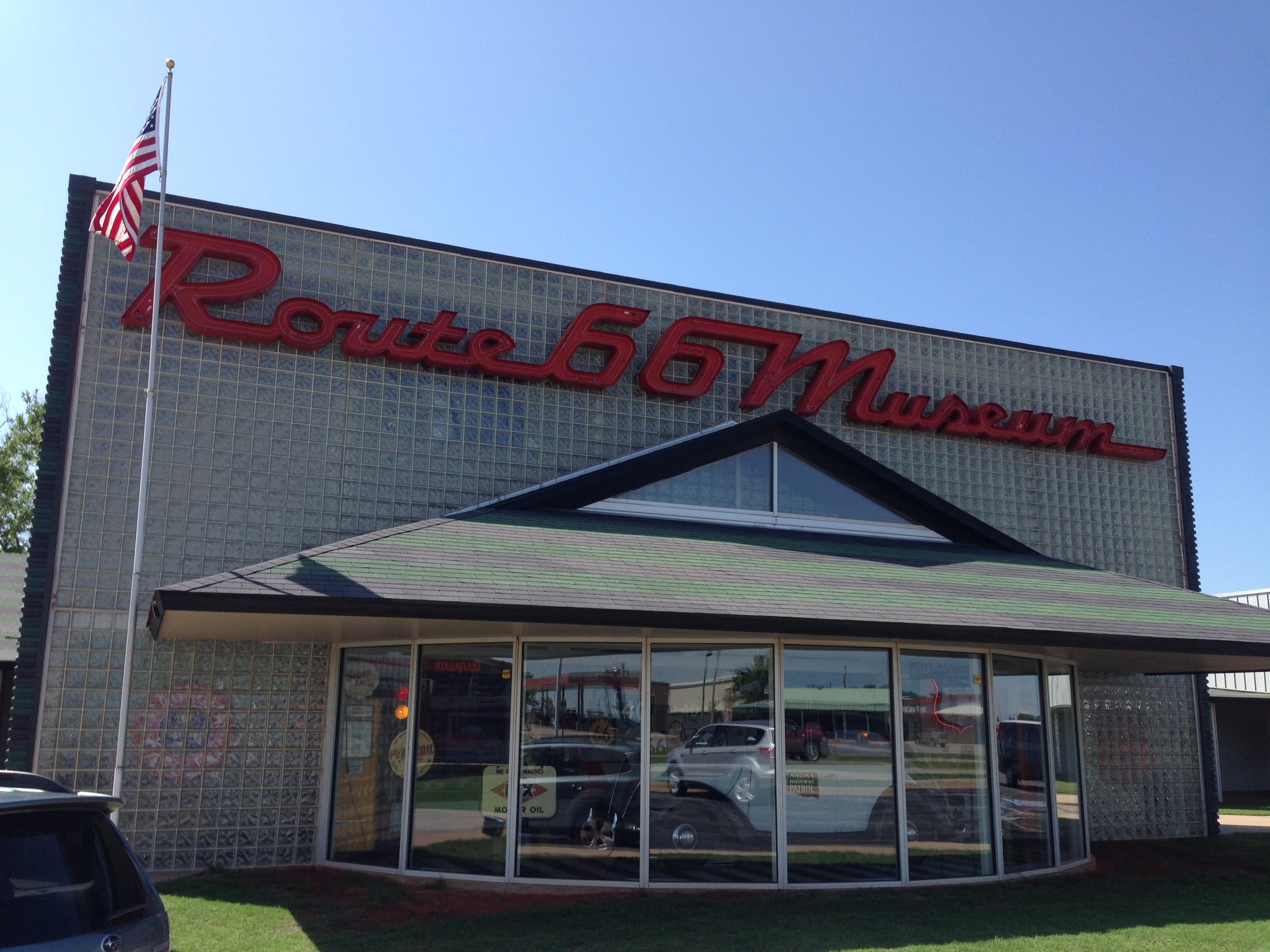
Oklahoma Route 66 Museum in Clinton, OK.

A majority of the original road is gone and many of the roadside attractions are no longer open. Some of the small towns are now boarded up ghost towns. But, there still is a lot to see and do. If the lore of Route 66 has ever pulled at you, or if you want to find some escape from our modern generic world (even in bits and pieces), I encourage you to make your travel plans soon. Route 66 awaits you and I’m not sure how long many of the places can hang on.

The Cadillac Ranch outside of Amarillo, TX.
Wigwam Motel in Holbrook, AZ. Yes, we stayed here and, yes, it was awesome.
Standing on the corner in Winslow, AZ. We were a fine sight to see.

* There may be hope for Generation Z as many of them would have see Pixar’s 2006 animated film Cars. In it, the once-booming Radiator Springs, situated along Route 66, is now nearly a ghost town because it was bypassed by Interstate 40. Perhaps the movie’s success has generated a resurgence of public interest in Route 66.

Hit the road, Jack!

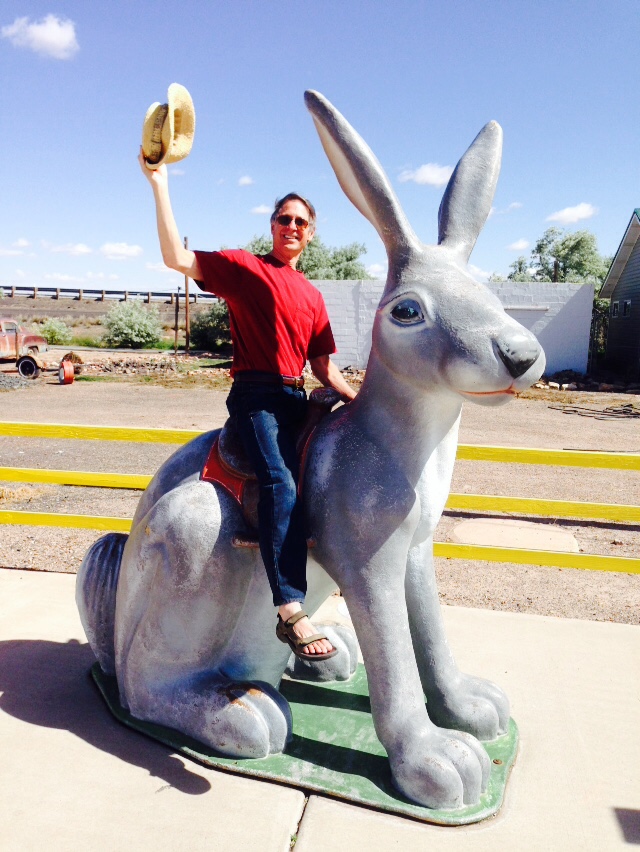
Jack Rabbit

Although our recent road trip (see this post and that post) included visits to several spectacular national parks and some family time spent with mid-west relatives, we also enjoyed stopping at interesting and often amusing roadside attractions along the way.

The era of America’s roadside attractions exploded in the 1930s, with the expansion of the highway system. Often marketed to the newly mobile public with flashy billboards and unique architecture, they were designed to attract attention and encourage travelers to stop and spend some money. Early entrepreneurs came up with crazy ideas like Mexican restaurants topped with huge sombreros, motel rooms shaped like tepees, and countless “world’s largest” just about anything you can imagine.

Unfortunately, the 1956 Federal Highway Act and subsequent development of the interstate superhighways doomed many of these attractions. Some were completely demolished, leaving no trace. Others were closed years ago and only their run-down, boarded-up shells can be seen. A lucky few, though, have somehow managed to survive and can be visited and enjoyed today.

Wall Drug

Wall Drug in Wall, South Dakota

We were told about this (apparently) world-famous drug store by a hotel owner in eastern Wyoming. He not only gave us great pointers about the best routes for us to take on our journey across South Dakota, he said that a stop at Wall Drug was pretty much mandatory.

We began to spot billboards advertising Wall Drug (“120 Miles to Wall Drug,” “Free Ice Water,” “5¢ Coffee,” “Entering Wall Drug Country”) as soon as we hit I-90 and headed east across the prairie. Even if we hadn’t heard about the place, I think the billboards would have lured us in.

Wall Board

Opened in 1931, when Wall, South Dakota was a 231-person town, Wall Drug is now less of a drug store and more of a shopping mall of kitsch. It has been featured on travel shows and in international magazines and purports to take in over $10 million and attract over two million visitors annually.

Corn Palace

Cornelius, the Corn Palace Mascot

Soon after leaving Wall, we began to see billboards for another small-town attraction: the Corn Palace located in Mitchell, South Dakota. Since we both vaguely remembered hearing about the attraction (and, since who could pass up seeing a palace made of corn?), we decided to stop and check it out.

The Corn Palace was originally built in 1892 as a way to showcase South Dakota’s farming community and lure settlers. It was rebuilt in 1905 when the city of Mitchell attempted to be designated as the state capitol. In the 1920s, the Palace was rebuilt once again, this time to lure tourists, not farmers, to the area.

One of the murals made out of corn

Although we arrived too late to go inside, we enjoyed wandering around the exterior and admiring the beautiful murals made of corn. The murals, designed by local artists, are reconstructed each year. This year’s theme is the 125th anniversary of South Dakota.

After our visit we did a quick Google search to find out why the Corn Palace sounded so familiar to us.  Following 9/11, when grants were being distributed by the Department of Homeland Security to beef up security at various sites deemed to be at risk, some fiscally responsible politicians felt that protecting the Corn Palace deserved a portion of the funds. In 2004, the Corn Palace gained unwanted notoriety from Jon Stewart on the Daily Show in the ensuing controversy. In 2012, the Corn Palace was featured on the Stephen Colbert Show (“A Shucking Disaster: Nightmare at the Mitchell Corn Palace”).

These are just two of the roadside attractions we enjoyed on our 5,161 mile road trip. We visited many more as our trip took us west out of St. Louis, through Oklahoma, Texas, New Mexico, Arizona, and back to California. I hope you’ll follow along with us to see some of the attractions made famous by travelers past and present, as we made our way home along portions of old Route 66.

Awe Creators

Tree-at-ArchesWeb

With today’s thinly veiled political-speak, anytime the term “job creator” is attached to a proposal, I’m pretty sure some billionaire is going to get richer, a corporation will see their profits soar, a politician’s slush fund will grow, and at least one regulation designed to protect the environment or worker rights will be overlooked or trashed. Decisions that promote short-term gains (for a select few) are too often made at the expense of long-term consequences (for all of us).

Fortunately, beginning more than 140 years ago, there were visionaries and influencers willing to stand up to those who wanted to develop and exploit the wilderness. Instead, they proposed that the government act as a protector of vast swatches of unspoiled nature and spectacular beauty. This idea, which began with the establishment of Yellowstone National Park in 1872, has now grown to include over 450 national parks, national monuments, national historical sites, national scenic trails, and other wonders which are protected and preserved for future generations.

I found myself silently thanking these courageous “awe creators” many times during the three-week road trip my husband I just returned from. If these proactive private citizens, government employees (including presidents), and even an industrialist* hadn’t embraced and promoted the concept of long-term preservation, many of our national treasures would be lost to us today.

That’s not to say we all can breathe easy thinking that the national – and state – parks are safe.  Underfunding, inattention, and political and corporate meddling are all very real threats, as are some of the very people the parks are set aside for. Through our taxes, entrance fees and in-park behavior, we all must diligently protect these wonders to ensure they will be around for generations to come.


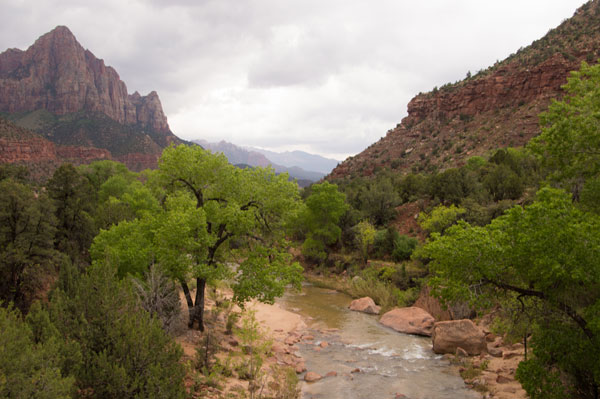
Zion National Park in southern Utah

Bryce Canyon Nation Park in southern Utah

Bryce Canyon Nation Park in southern Utah


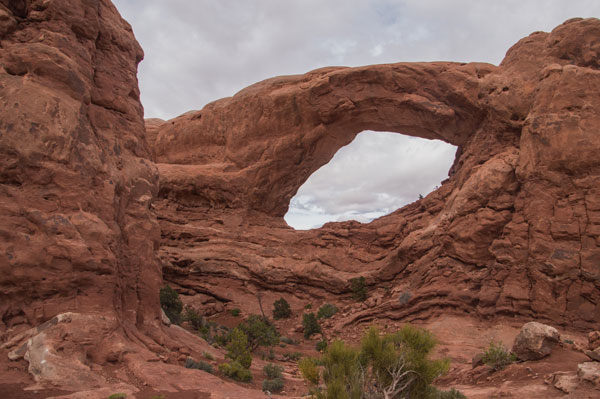
Arches National Park in eastern Utah

Arches National Park in eastern Utah


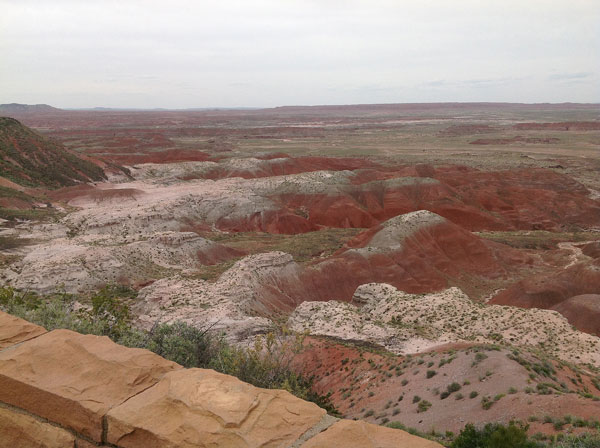
Painted Desert/Petrified National Park in eastern Arizona

Painted Desert/Petrified National Park in eastern Arizona


Petrified-ForestWeb

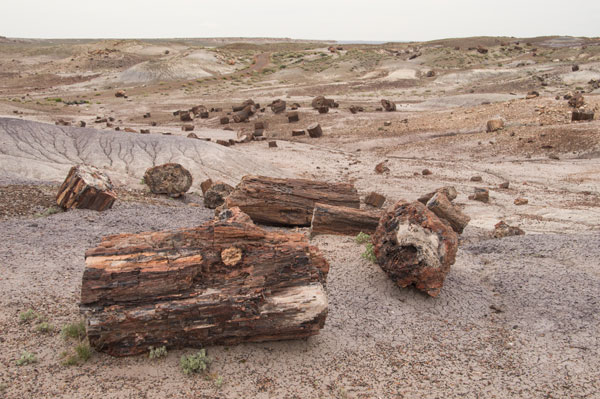
Painted Desert/Petrified National Park in eastern Arizona


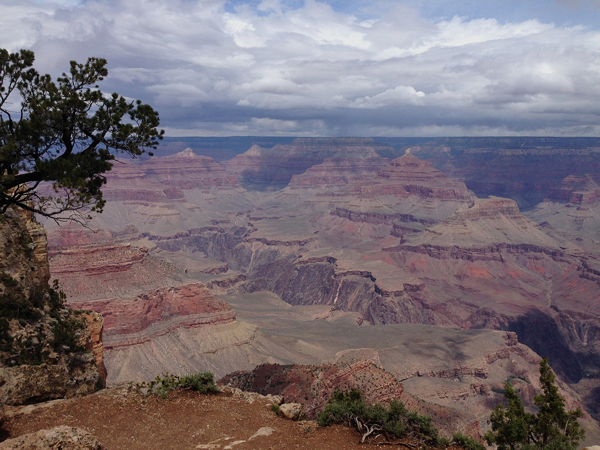
Grand Canyon National Park in northern Arizona


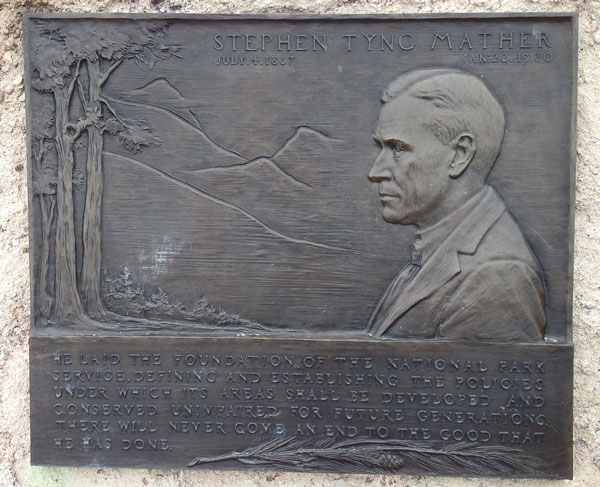
*Stephen Tyng Mather, conservationist and president of the Thorkildsen-Mather Borax Company promoted the creation of a federal agency to oversee the national parks. He later became the first director of the National Park Service.

MatherWeb
The plaque reads: “He laid the foundation of the national park service, defining and establishing the policies under which its areas shall be developed and conserved unimpaired for future generations. There will never come an end to the good that he has done.”

0 to 5161 in three weeks

Last night, my husband and I arrived back home after being on the road for three weeks.  We took off from Southern California on April 24 with a rough itinerary that included a couple of hard dates but also a lot of flexibility. We had family and calendared events waiting for us in Omaha and later in St. Louis, but, other than that, we were on our own.

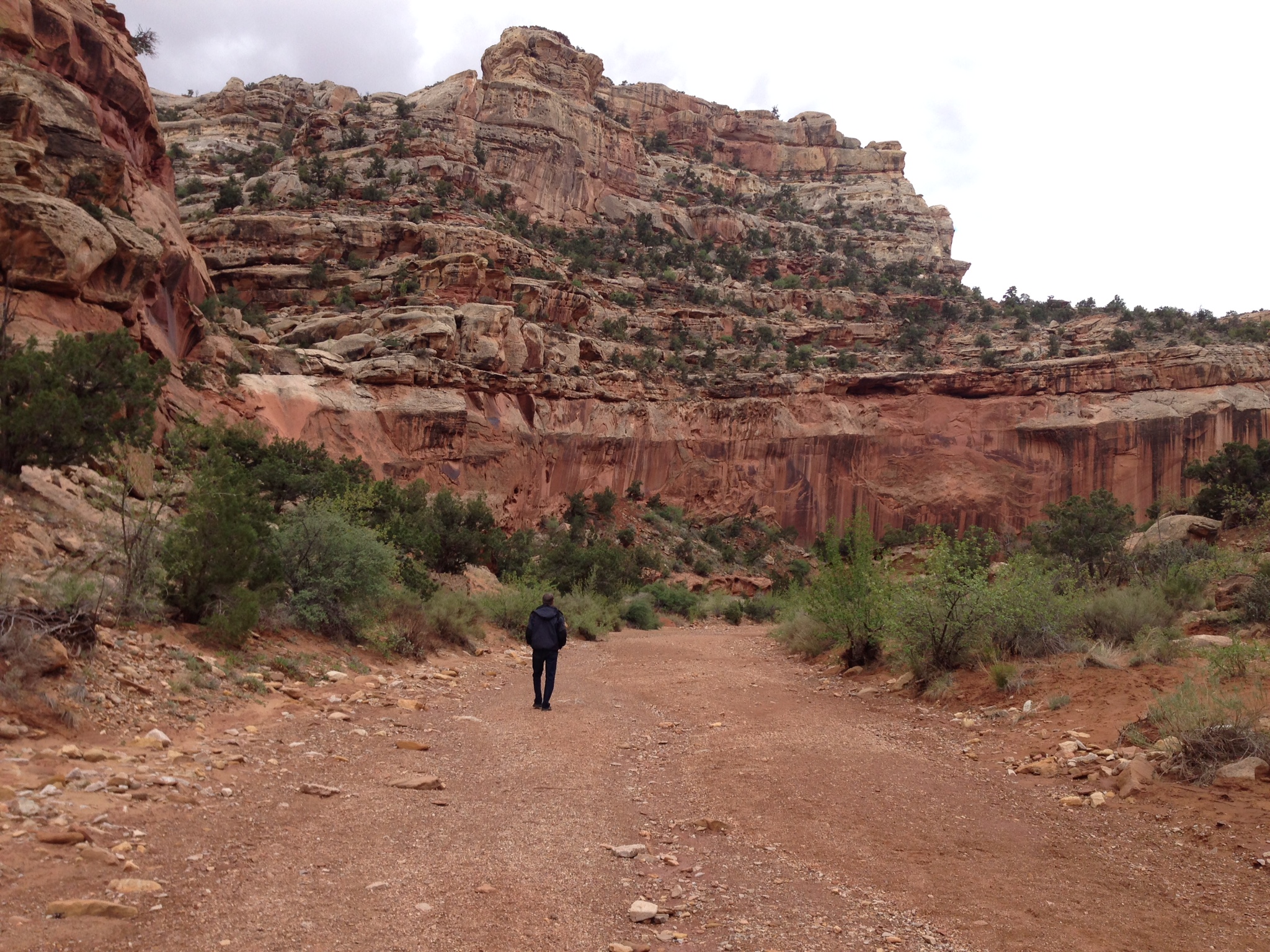
A quiet walk among the the red rocks in Capitol Reef National Park

The 5,161 miles we traveled took us through 14 states and to 11 national parks and monuments, several state parks, and quite a few museums. We had days when there wasn’t a cloud in the sky, days full of ice and snow, and just about every weather pattern in between. We experienced the majesty of nature in the red rocks of Utah and Arizona and the audacity of men whose dreams led them to carve the likenesses of four presidents and an Indian chief on the sides of mountains. We saw a giant depression in the earth where a meteorite landed 50,000 years ago and we enjoyed the kitsch of visiting a giant rocking chair and sleeping in a motel room shaped like a teepee along the route made famous in the 1920s and 1930s.

My husband, best friend, and traveling buddy (I’m fortunate to have all three wrapped in one person) indulged my photographic whims by happily stopping whenever I asked him to. Our tastes are similar enough so that we usually easily agreed on attractions to stop for as well as food and lodging choices, but we are flexible enough so that we could change plans to accommodate each other’s interests.

Today is the one-year anniversary of my retirement. Over the past twelve months we’ve taken two driving trips and two trips that have required getting on a plane. Planes allow us to get to far-off destinations, but there is nothing like a road trip to best explore this country and build a greater understanding of ourselves and others.

As I do on every one of our travels, I kept a journal of our day-to-day activities and adventures. I also jot down inspirations, insights, and possible blog topics as they occur to me. I will share some of these over the next several posts.

Sharks circling the mailbox

Like many retirees, my husband and I have been focused on getting rid of the clutter around our house. Over the years we have managed to collect a lot of stuff; stuff that is no longer relevant to our lives. But, as we continue to offload piles of things we’ve acquired over the years, there continues a flood of unwanted and useless stuff through our front door, via the U.S. Postal Service. Despite our best efforts to keep on top of it, we often find ourselves drowning in annoying junk mail.

In addition to the grocery store flyers, coupon mailings, and offers of various types of insurance coverage, most of the remaining useless pre-trash fits into one of the following categories:

Let us help you acquire more debt

Amid the destruction and turmoil the 2007-2008 financial crisis caused, we found one small ray of sunshine peeking through the rubble: no more unwanted credit card offers junking up our already junky junk mail.  Although nothing had changed about our personal credit-worthiness, all of the various banks, retail chains, airlines, etc. suddenly went silent. They no longer were anxious to offer anyone with a pulse the opportunity to accumulate debt by applying for their credit cards. When the economy melted it was as if a spigot had suddenly been turned off and we were grateful for the reprieve.

Unfortunately, judging from the mail that we have been receiving lately, that reprieve is over. Almost daily it seems that we get multiple offers of cards that will earn us airline mileage, free hotel stays, or cash back on specific purchases.

Just as they did before the financial meltdown, these offers go straight to the shredder. We have the cards we need (just one and a back-up) and we probably aren’t the kind of customers they want anyway since we pay our balance off each month.

Even though you already gave, please give us more

Also junking up our mailbox are donation requests from charitable organizations and non-profits that we already give to. It’s not unusual to send in our annual membership fee and, just a few months later, receive another mailing that looks surprisingly like an annual membership fee request. We have started to keep a spreadsheet listing the organization, what we gave, and when we gave just so we can keep everything straight.

You’d think that these organizations could save a ton of money by just mailing once a year, but obviously these ongoing solicitations must work or they wouldn’t send them. It bothers me to think that these organizations I think so highly of have, as part of their fund-raising tactics, a strategy to fool people into making more than one “annual” donation.

You have several years left on your magazine subscription but how about paying in advance for several years more?

Magazines have been employing the scheme of multiple solicitations for ages. Although I’ve cut way back on my subscriptions, I still receive a few print magazines. Choosing the multi-year subscription option will usually save money but I’ve also found that it gives them more chances to send annoying and confusing solicitations. Long before my subscriptions are up, I start to receive requests to renew, extend, and send gift subscriptions to friends.

And, these are just those mailings from the magazine company. Often magazine sales companies – with no connection to the actual publisher – try to trick subscribers into re-ordering their magazines through them. These are the mailings that are made to resemble legitimate renewal notices or even invoices. I’m fortunate to live in a state that requires magazine companies to disclose the current subscription end date on their renewal notices, but they do their best to camouflage them.


As annoying and wasteful as this type of mail is, I worry about a time in the future when my husband and I may be less able to keep track of what is legitimate and what isn’t. When I took over the management of my father’s household and finances as his health declined, I was shocked by the number of sharks ready to feed on those most vulnerable. Without an honest and diligent gatekeeper, it’s easy to get eaten alive.