A Backward Glance at 2014, Part 3

Rather than making New Year’s resolutions that I’d probably break before the end of January, I decided to look back on 2014, the first year of my retirement, to see how my vision corresponded with my reality. In Part 1 and Part 2, I explored six specific areas of focus. Here in Part 3, I look at three more.

Learn new things – C

When I envisioned my retirement years before I actually made the step, I knew they would include ongoing education. There are so many subjects I want to learn about and, fortunately in my city, there are many avenues I can take to pursue this knowledge.

Osher is an amazing resource for lifelong education

I’ve already taken classes on Photoshop and social media (both free through the Continuing Education system) and there are so many other subjects I am interested in. We are fortunate to have several colleges in the area that offer courses through the Osher Lifelong Learning Institute that I plan to take advantage of. If you haven’t heard about Osher, I encourage you to Google them and see if they offer classes where you live.

I’m giving myself a C because I sort of took the spring and summer off right after I left work. I expect to refocus in the new year and feed my brain on a regular basis.

Be creative – B-

I’ve always been a fairly creative person; in fact I was a graphic design major in college. For those of you who haven’t reached 50 yet, it’s probably difficult to picture a time when design was done without a computer, but that was my world. Soon after I graduated, I decided not to make a career out of art and get into something more stable and lucrative.

I’ve dabble in artistic pursuits on and off over the years, but I looked forward to the free time I’d have in retirement to reawaken my creative side. I’ve made some progress, mostly in photography, but I want to do much more.

Care for and nurture my marriage – B+

This is the biggie. I wasn’t sure how being together almost 24-hours-a-day would affect my relationship with my husband. As solid as our marriage is, I realized that we needed to be mindful of this huge change in our lives. Would each of us get enough “me time”? Would we still find joy in being together? Would we drive each other crazy?

Looking back on the past year, I think we’ve done a great job adjusting to our new reality. It takes a lot of work, flexibility, and good communication, but isn’t that true of any relationship? I consider my husband my best friend and I know we are each other’s biggest fan. We can always improve (hence the B+, not an A), but there is no one else I’d rather find joy with or drive crazy.


So, tomorrow night is New Year’s Eve and we plan to spend a wonderful evening with good friends. We may even stay up until midnight (or, not). 2014 turned out to be a very good year and I look forward to filling 2015 with great adventures, personal growth, fulfilling connections with others, healthy living, and much laughter and joy. I wish the same for you.

A Backward Glance at 2014, Part 2

In my previous post, I looked at some of the goals I made for myself in my first year of retirement and tried to honestly assess what I did well and what I didn’t. Here are three more of my goals and my evaluation of my progress with them so far.

Get Organized and Off-Load Stuff – C

My husband and I are making some strides in this area. We’ve donated, recycled, tossed, and sold quite a bit of stuff. We also are careful not to bring too much into the house. But, there’s still a lot left to go through and get rid of. I knew this would take time, so I’m fairly pleased with our progress.

One of many bags of work clothes that we don't need anymore
One of many bags of work clothes that we don’t need anymore

Because we have some items to get rid of that have value (at least to someone), I have been selling them on eBay. Although it’s been kind of fun, I’m not happy with how the boxes and shipping materials have taken over our guest room. What used to be the one room that was always neat and clean now looks like a poorly organized warehouse. That mess will need to be resolved somehow in the near future or my foray into e-commerce will have to end.

Keep Busy and Stay Productive – B

I am very easily entertained. Since I’ve been retired, I’ve learned that trait can be a good thing or a bad thing. I can spend a good part of the day on the computer, or reading a good book, or wandering around an interesting part of town. I can Pin with the best of them, get lost exploring the rooms on Houzz, and read and comment on my favorite blogs… all day long. A book can captivate me from morning to evening, and there is always a new one waiting for me when I finish. And then, of course, I love taking walks… just about anywhere… the further the better. And if we stop for lunch, even more better. So, keeping busy? No problem.

Staying productive? I guess it depends on your definition of “productive.” I’ve always worked best with deadlines and in retirement, a lot of those deadlines go away. I know I can do better at accomplishing tasks that I don’t want to do, but need to be done, and ensuring those things get done in a reasonable amount of time. I intend to start that as soon as I finish my book.

Stay Connected – B-

This is a bit of a challenge since many of my friends are still working. More than a few lunch dates have been cancelled due to unexpected conflicts at work. Since that was my world not too longs ago, I always understand and am happy to reschedule.

My husband and I have discussed our need to be more proactive about connecting with people we care about – and expanding our circle of friends. It’s too easy to just rely on each other for our entertainment. Although we always happily say “yes” when we are invited to someone else’s gathering, we need to be better about planning get-togethers and extending our own invitations.


In Part 3, I’ll assess my efforts and outcomes in three other areas, including the biggie: focusing on maintaining a positive, enjoyable, and loving relationship with my husband – despite being with each other almost 24-hours a day.

A Backward Glance at 2014, Part 1

Although I don’t have a tradition of making New Year’s resolutions, I think it can be helpful to take stock of the year gone by and look for ways to do more of what worked and improve on what didn’t.

2014 was a year of big changes for me because on May 16, I made the leap into retirement. Some of the changes I experienced were predictable, but some took me by surprise. I’m happy to report that most were positive, but some… not so much.

Here’s how I think I did in a few categories (more in my next post):

Embracing Retirement – A+

It's hard to predict what is around the retirement corner
It’s hard to predict what is around the retirement corner

No one can predict how well they will take to a life change as major as retirement. I remember approaching the date with a mix of excitement and trepidation. I was grateful that I had the opportunity at a fairly young age, and I looked forward to joining my husband who retired two years previously.  On the other hand, I had a good job, an almost non-existent commute, and work friends that I enjoyed and knew I would miss. My fear was that I would wake up one morning and realize that I had made a terrible – and irreversible – choice.

I know now that I had nothing to fear. I wake up every day thankful that I don’t have to go to work. I stay in touch with several of my work friends and none of our conversations that are about work make me want to dive in again.

Diet and Exercise – C

I really had every intention of putting together an exercise program and sticking to it. Nothing crazy or too time-consuming; I wanted consistent and semi-challenging. Even just walking my three-mile, hilly course around our neighborhood would have been a great start. I envisioned taking up yoga.

That didn’t happen.

The worst part is that I have no excuse. Weather – too hot or cold – is seldom a barrier in Southern California and I actually enjoy exercising once I get started. It’s the getting started that has been the problem. I’m fortunate to be in pretty good shape despite my lethargy but I know I can’t rely on my good genes forever.

Fortunately, I have been successful in keeping my weight in my target range. I was concerned that being at home with the refrigerator just a few steps away would be my undoing. Although the temptations are plenty and my husband and I go out to lunch more often than we probably should, we manage to eat fairly healthily. In addition, I continue to follow the Fast Diet, a way of eating based on intermittent fasting. After learning about Dr. Mosley’s research on a PBS program almost two years ago I lost the weight I wanted to, and have kept it off without feeling deprived. It’s not for everyone, but it works for me.

Travel – A

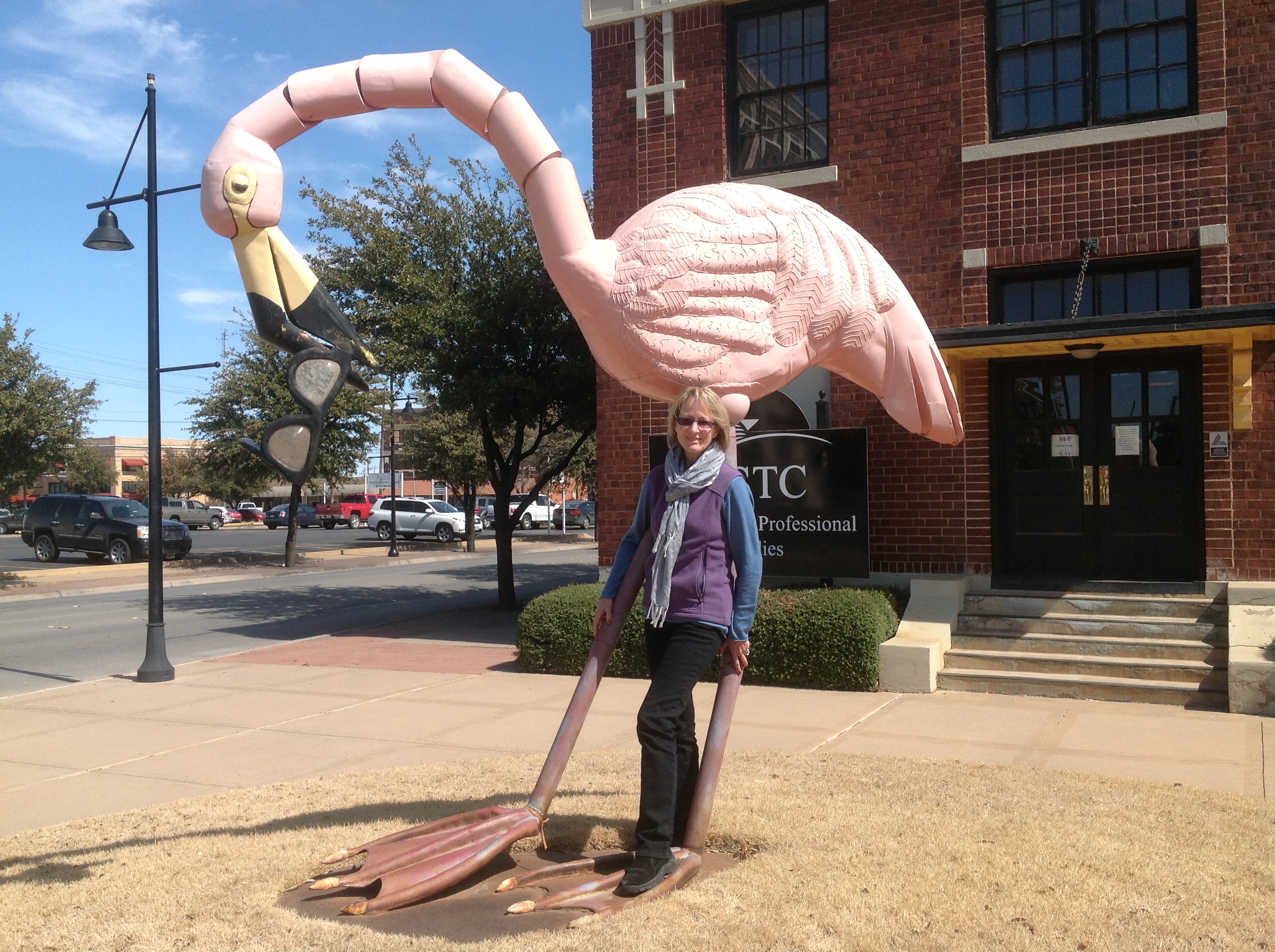
Birds of a feather in Abilene

A couple of months before I retired I went on a two-week cross-country road trip with a friend. She had made this trip many times alone, traveling between her home in Pennsylvania and Southern California, but this time I decided to tag along. It was great fun and I saw many parts of the country I hadn’t seen before.

In June, my husband and I traveled to Northern California for a three-week adventure that included car club activities and visits with both sides of our family. It was the first time we’ve vacationed that a work schedule didn’t force us to come home earlier than we wanted.

In the fall, we took off for a three-week trip to the big island, Hawaii. We were fortunate to have a very generous friend who opened her home to us for the entire time. Staying in someone’s home and having the luxury of time made the trip very special. Not only was our host an excellent tour guide, we didn’t feel that we had to choose between snorkeling, relaxing, and sight-seeing – we could do it all.


In my next post, I’ll look at several other retirement goals I have and assess my efforts and outcomes for those.

Is Your Tinsel All Tied Up In a Knot?

Yesterday, my husband and I attended a holiday open house hosted by a former co-worker and his wife.  Although they live quite a few miles from our home, it’s an annual event we always look forward to. Now that we are retired, we are especially happy to have the opportunity to catch up with many of the people we used to work with.

Our hosts’ house is always decorated beautifully for the party. We haven’t been to their home at other times of the year so I don’t know what it looks like on other holidays, but it is obvious that Christmas is a BIG deal to them.  My understanding is that they start decorating in late October and are always scrambling up to the last minute to get everything done before their open house.

Tree1

They have four full-size Christmas trees and several table-top vignettes scattered throughout their home. The room that normally functions as the husband’s office has the largest Dickens’ Village display I have ever seen. The room is also decorated with 20 – 30 golf-themed Santas and elves. One of the three Christmas trees in the living room has an owl-theme. The other two trees are crammed full of beautiful, sparkly ornaments. In a hallway off the living room is a table full of dachshund-themed ornaments (the couple doesn’t have children but they lavish their love on their fur-babies).

Although all of the trees and the table vignettes are impressive, the most eye-catching decorations are the (possibly hundreds?) Santas and elves that line the tops of cabinets, open areas just below the ceiling, fireplace mantel, and bookshelves. Even though it appears that not one more figure could possibly find a spot, every year one or two new ones are added.

Elves2

As beautiful as the whole effect is (and it really is done quite well), I can’t help but think about the time it takes them to set everything up, keep it all dusted throughout the holidays, take it down in January, then store everything until next October. Although I know it is a labor of love for them – and I enjoy seeing it every year – I am grateful that hyper-decorating isn’t part of our holiday tradition. I like to display some holiday sparkle, but everything we do can be set up in one day, enjoyed for about a month, then taken down and stored in just a few plastic bins.

Several of the people at the party last night are recently retired and more than once the conversation turned to our individual efforts to pare down and off-load stuff. Not all of us have been equally successful but most share the goal of freeing our lives of unneeded things and instead filling them with experiences, friends, and passions.

We each have to find the path that works best for us. Our hosts find their bliss in decorating every inch of their house and sharing their joy of Christmas with others. I, on the other hand, am happy to enjoy their holiday exuberance at the open house, but then come home to our more understated decorations.

Death Didn’t Take a Holiday

We had a death in the neighborhood yesterday. Actually, we aren’t sure when our neighbor died. It could have been yesterday, but more than likely he had been dead for several days – or more – before being discovered. The last time his neighbor across the street saw him alive was on Thanksgiving. She later became concerned after noticing that his garbage hadn’t been brought curb-side for pick-up and that a flyer hung on his door hadn’t been touched.

We live in a fairly tight-knit neighborhood. We pretty much know everyone up and down both sides of our long block. There are a lot of long-time residents; one or two are the original owners of their late 1950’s era homes. It’s almost impossible to walk from one end of the block to the other without stopping multiple times to chat. It is the type of neighborhood many people want to live in—friendly, sociable, supportive, and connected.

John’s mother was one of those original owners. Before Audrey passed away several years ago, she put the house and a sizable amount of money into a trust for her son. She did this because she knew that John wouldn’t be able to care for himself because of his mental illness. Despite his violent behavior towards her and others, and his pattern of eschewing medication for his bipolar disorder and instead feeding his meth habit, she decided that the best place for her son was in our neighborhood.

Most of the time, we were able to ignore John and his craziness. He could often be seen walking in the area wearing multiple layers of clothing (even in the summer) and large headphones, constantly talking to himself. Other than being odd, he was mostly harmless; he avoided us and we avoided him. Other times, though, he’d become enraged and verbally attacked those who lived around him. He was enough of a threat that a few neighbors took out restraining orders against him. It was not unusual to see several police cars in front of his house. We quickly learned, though, that it’s not possible to force a mentally ill person into treatment if he refuses. Even if he doesn’t have water or gas service because of unpaid bills. Even if it is obvious that his mental and physical health is deteriorating. Even if we think he could be a threat to himself or others. Even if.

John had a sister and two kids from an earlier marriage. All had been victims of his abuse and all had become estranged from him over the years. Once his mother died the only people who “cared” about him were those who could profit from him; the ones who took advantage of his mental state by crashing at his house, eating his food, or selling him drugs.

So, now John is dead and the neighborhood is breathing a sigh of relief. Whether he died of drugs or a heart attack; whether he had been dead one day or six before being found, we’ll probably never know.

What we do know is that he died alone and without a friend in the world. His kids – both now young adults and seemingly reasonably-adjusted – will live with a memory of a father they could never know. They also now have a house to dispose of- the inside of which is probably so disgusting a sane person wouldn’t live there. They have a lot of work ahead of them to get it in any shape to sell.

We are a neighborhood that looks out for one another. We help each other with house and car projects. We celebrate good times together and support each other when bad things happen. But, this one got away from us. We watched helplessly as John’s life careened out of control and spiraled down to its inevitable conclusion.

I admit that I wasn’t sad when I found out that John had died. His pain is over and his neighbors no longer need to be afraid of what he might do. I am sad that we can’t, as a society, do more to aid these tortured souls. Because of lack of funding and a few probably well-intentioned laws that had unintended consequences, we are often helpless to intervene.

I think we can do better.

Having a Cool Yule

Wow, here it is December 1, and I haven’t purchased a single Christmas gift. I didn’t leave the Thanksgiving dinner table and head to the mall. I didn’t set my alarm for o-dark-thirty the next morning so I could join the Black Friday throngs standing in line to save a few bucks. And now my Cyber Monday virtual shopping carts are empty.

Many years ago my brothers and I, along with our spouses, decided to stop buying gifts for each other. Every Thanksgiving, we’d each write our name on a slip of paper and put it in a bowl. Then we’d draw a name and that would be the only one of the six of us we bought a gift for. $50 limit. In addition to that gift, my husband and I bought presents for each other, our parents, a niece, a grandniece, and a couple of friends. Pretty simple.

This plan worked well for several years but, after awhile, even the one gift seemed silly. The $50 gift price limit soon became a gift card exchange which didn’t feel very personal… or needed. So, a few years ago, the six of us decided to stop exchanging gifts with each altogether. Now, with my parents’ passing my husband’s and my gift list has dwindled down to just a few people. For the most part, we don’t even exchange gifts with each other. Sometimes we’ll buy each other little things for fun, and we can usually identify an upcoming trip or a household need that becomes our joint “gift” to each other, but usually there’s not much under the Christmas tree… if we even have a Christmas tree.

I'm pretty sure some of these gifts under my family's 1964 Christmas tree are now on eBay.
I’m pretty sure some of these gifts under my family’s 1964 Christmas tree are now on eBay.

These decisions have helped to change the holiday season for the better. I don’t experience the stress I used to because now I no longer am focused on buying PERFECT GIFTS. My husband and I can stroll the mall and enjoy the hustle and bustle and the lovely displays, but not get wrapped up in the craziness.

Do I sound like a bah humbug? I’m really not. I love the holiday lights, decorations, music (as long as it doesn’t start before Thanksgiving) and the parties. I don’t love the crass commercialism and the media-driven expectations. I’m also not against Christmas presents; if I happen to think of the perfect gift for someone, I’ll get it. If not, I don’t spend time running around desperately trying to find something. I’ve never been particularly religious but the whole idea of Christmas gifts seems odd to me anyway. Why is the focus on buying things for each other when the “reason for the season” is supposed to be about peace and joy?

In addition to the stress relief, our move away from buying and receiving presents has been beneficial in other ways. At this stage of our lives we are actively working on getting rid of “stuff.” Thanks to thrift stores, eBay, consignment shops, and the landfill, I finally feel like we’re making progress. No gifts means no more stuff. Besides, instead of a friend or loved one spending their time searching for THE PERFECT GIFT for me, I’d much prefer they give me the gift of time spent together, enjoying each other’s company.

Gratitude: Bloggers and Their Blogs

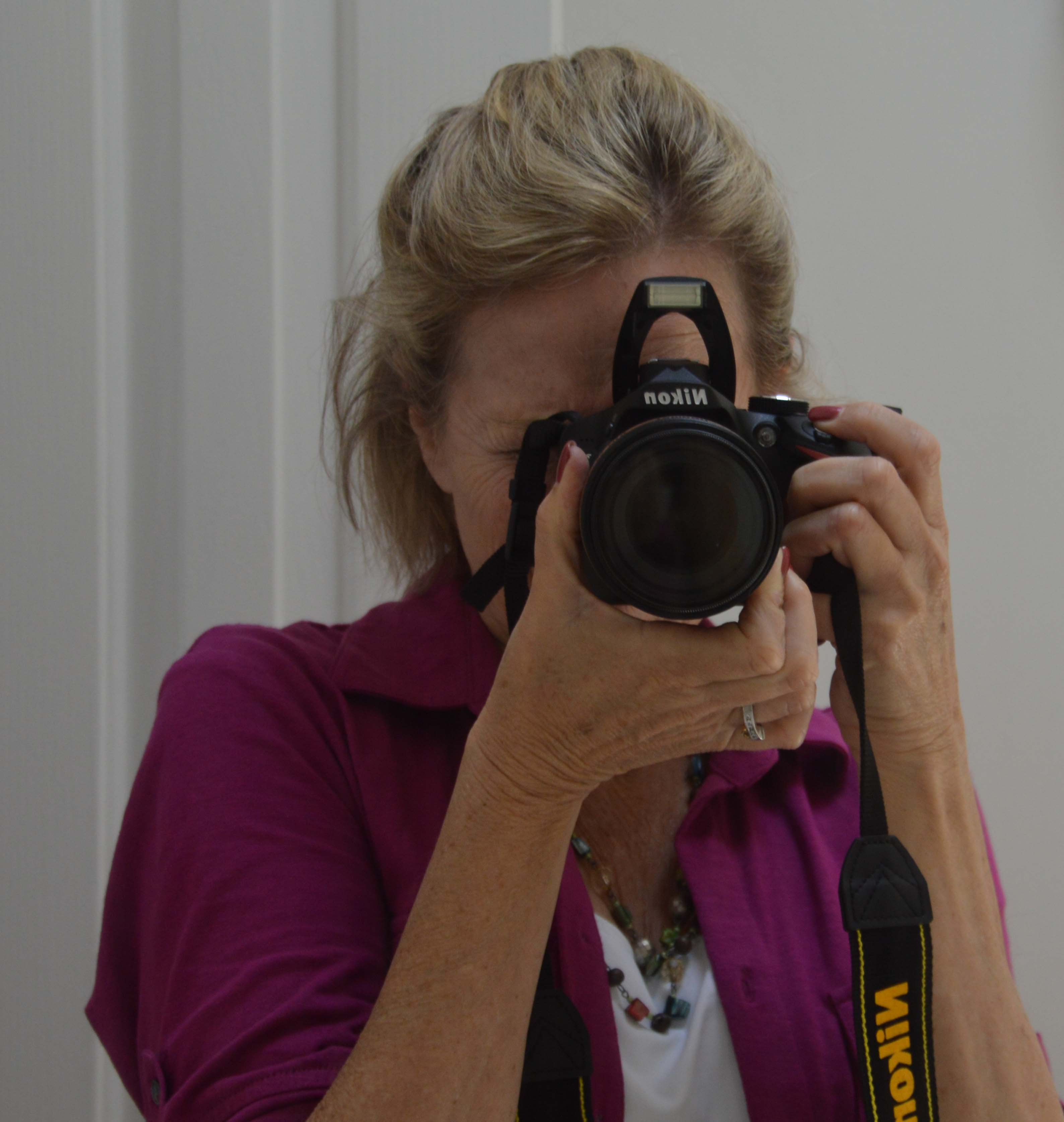
One of the items on my retirement “To-Do” list is to become a better photographer. I purchased a nice DSLR that I hope will help me take my photos to a level beyond the images I get from my point-and-shoot camera or my cell phone.

Despite—or, maybe because of—all the bells and whistles available to me on my new camera, I still find myself reaching for my cell phone when I want to take a picture. It is so easy to grab it and shoot. I don’t need to think about the correct aperture, shutter speed, and ISO settings. The results, while not great, are usually at least acceptable. When I pick up my DSLR camera, I feel overwhelmed with all of the possible setting combinations. If I take a photo and I’m unhappy with the result, I have no idea what went wrong. If it comes out well, I am equally perplexed as to how to recreate it.

Me and Camera

Because of some upcoming trips, I feel that I can no longer ignore my “grown up” camera. I really need to learn about its features and capabilities, and what all the mysterious dials and buttons do. I must finally wrap my head around the concept that a larger f-stop number indicates a smaller aperture opening. That a bigger aperture shortens the depth of field, while a smaller aperture will bring the background and foreground equally in focus. That the shutter speed and aperture settings work together to stop or blur motion, or allow photos to be taken in very low light or in extremely bright settings. Yikes!

Where do I go to educate myself? Blogs, of course.

Just as I have favorite blogs with cooking and entertaining information, travel tips, book reviews, opinions on politics and world events, and ones that make me laugh, make me think, or just make me feel as if I’m reading a letter from a friend, I am now reading blogs to help me learn more about my camera and how to take better pictures.

I continue to be amazed at the level of information available in the blogosphere. I am in awe of the generous souls who are passionate about what they do and have worked hard to become proficient, who now take the time to share their wisdom and talent with an unseen universe of strangers. Even if they have been able to monetize their blog, or hope to do so in the future, the information is still free and available to anyone who searches for it. Granted, the content on some blogs is questionable or just plain wrong, but I have found plenty of blogs that are well-written, beautifully designed, and full of information and inspiration.

I don’t know what it is that makes someone want to share so much of their knowledge with others, but I’m very grateful that they do. Because they blog, I have become a better cook and entertainer, I have read books that otherwise I might have missed, I have learned about different parts of the world, and I have had my mind opened to various points of view. I have also “met” quite a few interesting people that I wouldn’t have if not for their blogs.

I know that whether or not I become a better photographer is up to me but I am thankful to those who have helped me gain the tools I need to improve. I consider each post a gift and I am grateful that they placed it on their blog for me to open.

Party Nuts for Hire

spicy-party-nuts-pic2

My husband and I worked for the same company before we retired. It is not only one of the largest employers in our city; it is also a major sponsor of a number of charitable and civic organizations.

Over the years, we have been invited to attend numerous events as company representatives. Neither one of us was high up on the corporate food chain, but when the company “bought” a table at an event and needed to fill seats, they could always rely on us to say “YES!” Not only were we enthusiastic, we didn’t need much advanced notice; he owns a tux, I have a few fancy dresses of various lengths, and we didn’t need to hire a baby sitter.

As surrogate “important people,” we’ve been fortunate to attend some really fun parties; most involved good food and wine and, if we were lucky, a band and a big dance floor. I thought it surprising that the company had a difficult time finding attendees but I realized not everyone had our flexibility or the same idea of fun. We, on the other hand, were usually ready, willing and able to fill in when asked.

One of my favorite events is a major fundraiser in support of a local hospice program.  The annual gala is held at a local resort hotel and consists of a silent auction/reception, sit-down dinner, and dancing. The following day, attendees are treated to a regatta on the bay aboard a number of personal yachts donated for the day. We’ve been invited to attend six or seven times and have always enjoyed ourselves immensely.  

boats

The fundraiser is in mid-August… for the first time in many years we have not been invited.

I’m not terribly surprised that these invitations will disappear now that we no longer work for the company, but I admit a sense of loss and regret. Yes, of course we could actually pay for our tickets, but most of these benefits have quite a high per-person price-tag, a cost that isn’t in our retirement budget.

Because we’d still like to enjoy the good life without actually paying for it, I am exploring the idea of starting second careers as professional event attendees. We’ve got a lot to offer and we won’t ask for anything in compensation beyond the cost of admission and, of course, the food, wine and festivities that go with it.

  • Last minute need to fill seats? Our closets contain a selection of clothes for a variety of occasions. With little notice we can dress up for a formal occasion, dress down for a barbeque, or anything in between. 
  • Worried that some guests might be shy and feel left out? We can make pleasant conversation with anyone. We know a little about a wide range of subjects, and we will strictly avoid the topics of religion and politics.
  • Want to assure the band isn’t playing to an empty dance floor? We can “break the ice” by being the first ones out. We are decent dancers but not so good that we’d discourage other couples from joining us on the floor.
  • Need someone to start the bidding at an auction or to deliver the first “impromptu” tribute for a guest of honor? Just tell us what needs to be done and we can start the ball rolling.
  • Party over, need people to leave? We can subtly yet firmly encourage guests to pack up and go home. We can do it seamlessly and without anyone catching on.

My husband and I can dress well enough to blend in, but not so well that we stand out. We can guarantee that our pictures won’t appear in the society columns.

No worries about us eating or drinking too much. We won’t crowd the buffet table or embarrass our hosts employers by heaping mounds of food on our plates. We also won’t run up the bar bill excessively and make fools of ourselves by over-imbibing.

We are, after all, professionals.

Although my husband and I donate regularly to a number of favorite non-profits and charities, usually the most we get in return is a sheet of pre-printed address labels or maybe a tote bag. Being professional attendees will give us the opportunity to enjoy the same events as do those who give big and who regularly eat and drink better than we do.

I think it could work. I’m going to contact our former company’s corporate giving department to let them know we are available for hire. Maybe there’s still time to get tickets to the August fundraiser.

Resiliency

Even those who deny climate change (or, at least the impact we humans have had) must have a hard time ignoring the wild swings of weather conditions the United States—and the world—has experienced over the last several years.

Those of us on the West Coast are in a severe, multi-year drought while those in other areas of the country have endured record cold temperatures. Now, I’m reading news stories about torrential rain and flooding on the East Coast.

Here in San Diego, fire crews are just finishing battling nearly a dozen individual wild fires that burned around 26,000 acres and required over 125,000 people to evacuate. Although California has had wild fires throughout the state’s history, this mix of low humidity, triple-digit temperatures, and hot, dry Santa Ana winds in May is most unusual… and troubling. No one is naive enough to think that we’ve seen the worst of it. This is just the earliest start of our fire season in decades. What we used to brace ourselves for in September and October could now be a threat year-round.

Our home was well away from the fires, but, along with so many others, we watched the scenes of the firestorms on the TV; cheering the heroics of the fire fighters as they battled the blazes in their attempt to save homes and lives. Because of their efforts, “only” around 70 homes were destroyed and no lives were lost (contrast that to 2003, when 2,232 homes were destroyed and 15 people died, and 2007 when 1,500 homes were lost and 9 died).

Now that most of the fires are fully contained the focus has switched from fighting the fires to mopping up and surveying the damage. It is heartbreaking to see the bewildered faces of people standing in front of what once were their homes. It is the same look seen after the devastating hurricanes, super storms, tornados, earthquakes, and so many other recent disasters we’ve witnessed.

As I look at photos of the fires’ destruction, I wonder how the people who have lost their homes will be able to bounce back after such devastation. Most of them say—and it’s true—that it’s only “things” and they are lucky to be alive, but I know how much all of the “things” that are in a home can make us feel safe, connect us to our past, and help us define who we are.

A word that I am hearing more and more in the aftermath of these disasters is “resilience” as it relates to systems, nature, and people. Andrew Zolli, the author of Resilience: Why Things Bounce Back described resilient systems as being able to “sense and respond to their own state and to the state of the world around them, compensate or dynamically reorganize themselves in the face of novel shocks, decouple themselves from other fragile systems when necessary, fail gracefully, and have a strong local self-sufficiency.” I think much the same thing could be said of people who are resilient.

I don’t believe that we either are or are not resilient. Some who are perceived as fragile by others can exhibit great resilience when faced with a personal challenge or devastating loss. Others, who may appear to be strong and stoic on the outside, might not be able to bounce back as well. Not everyone reacts in the same way to traumatic and stressful life events, but there are steps we can take to become more resilient in the face of adversity. A resilient person will still experience difficulty or distress, but their resilience can influence their ability to recover, persist, or even thrive amid disruption.

We all experience traumas in some form, whether because of a natural disaster, the loss of a loved one, the ending of a relationship or a job, or because of health challenges. What is important is to develop the tools—behaviors, thoughts and actions—now that will help us when we are faced with adversity. According to the American Psychological Association (APA), these attributes can be learned and developed by anyone. In order to increase our ability to be resilient, the APA suggests that we foster these important personal foundations*:

• Cultivate caring and supportive relationships, both inside and outside the family
• Nurture relationships that create love and trust, provide role models, and offer encouragement and reassurance
• Develop the capacity to make realistic plans and take steps to carry them out
• Maintain a positive view of one’s self and confidence in our strengths and abilities
• Develop skills in communication and problem solving
• Learn to manage feelings and impulses

We all will face increased challenges as we age; the death of loved ones, decreased physical capacity, perhaps a serious illness or even a natural disaster. Building our resilience now will help us better respond and adapt.

“If your heart is broken, make art with the pieces”

– Shane Koyczan

* This list paraphrases a list from the APA’s brochure The Road to Resilience.