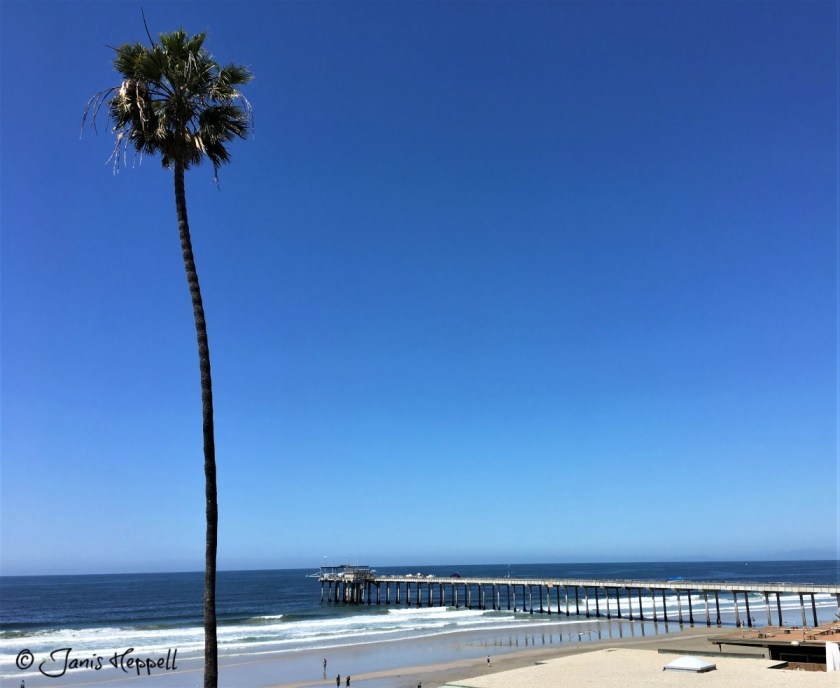
A beautiful spring day, temperatures in the low 70s, a cloudless blue sky, four friends who have known each other since elementary school, and a -0.81 low tide making the beach wide and the tide pools inviting.
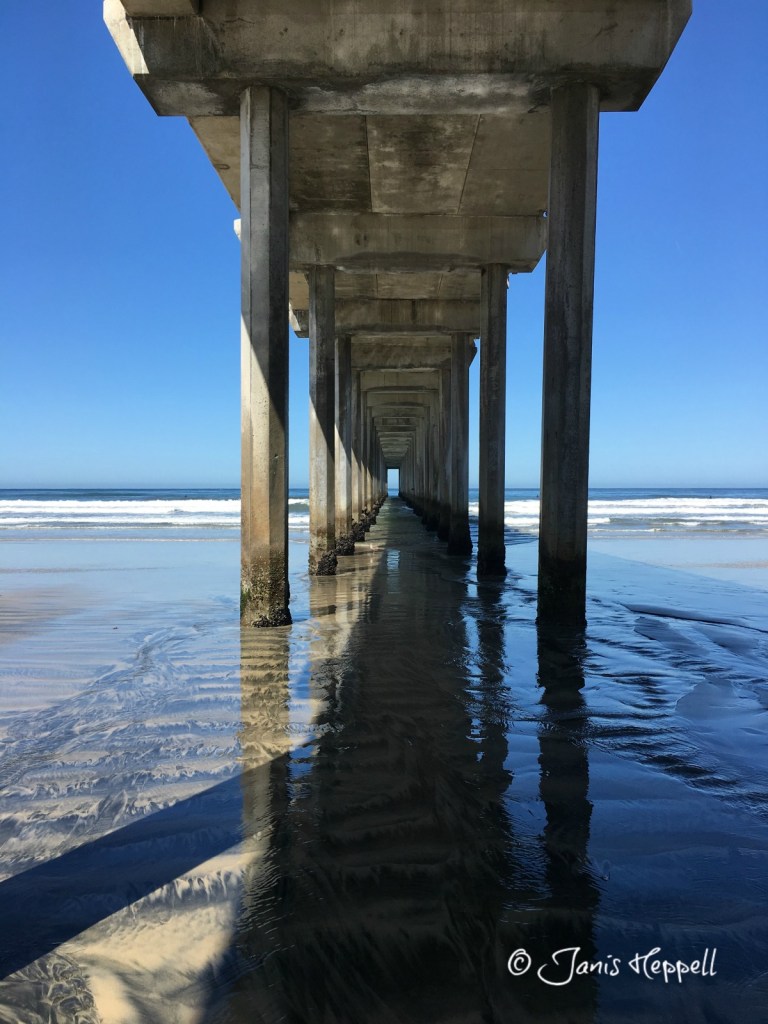
Dear friends and walking buddies.Clown fishScripps PierScripps PierScripps PierRocks exposed during low tide.Looking south towards La Jolla Cove.
I am grateful for the beauty of this day and the company of dear friends.
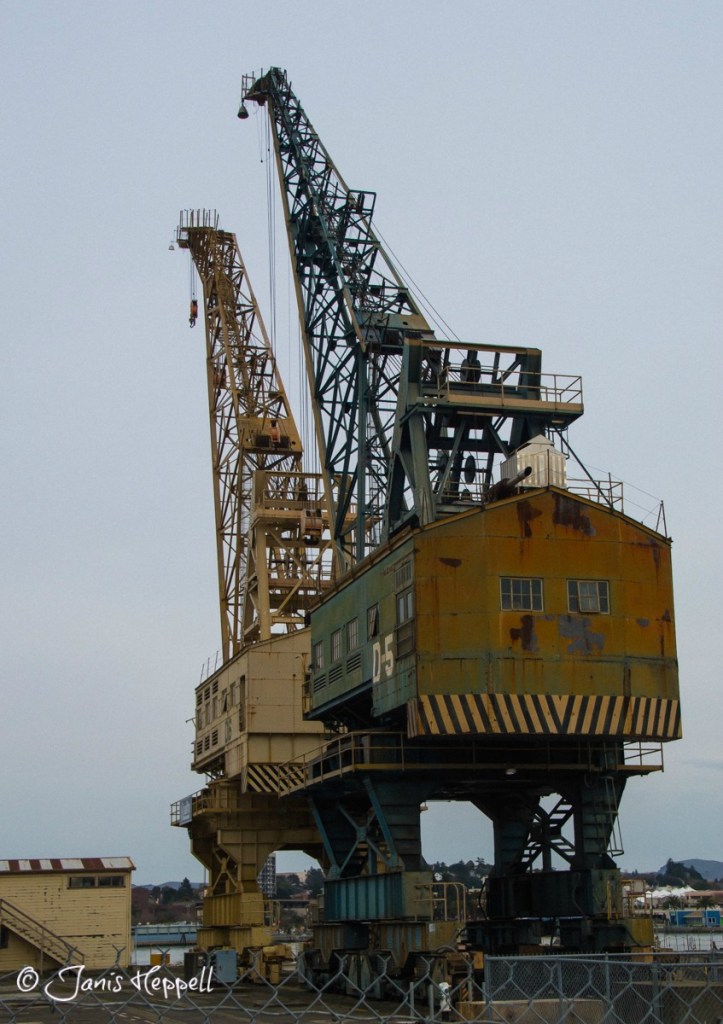
Located just over the bridge from the city of Vallejo, California, Mare Island was established in 1854 as the first naval shipyard on the West Coast. During World War II the base had a population of 46,000 and played a critical role in the military’s efforts.
It was at Mare Island on Dec. 7, 1941, that an urgent transmission came reporting the Japanese air raid on Pearl Harbor. And it was there that the guts of the atomic bombs that destroyed Nagasaki and Hiroshima were loaded aboard the cruiser Indianapolis.
The shipyard was closed in 1996 after producing 512 ships, including 17 nuclear submarines. After years of neglect, Mare Island is currently reinventing itself as a desirable place to visit, recreate, and live.
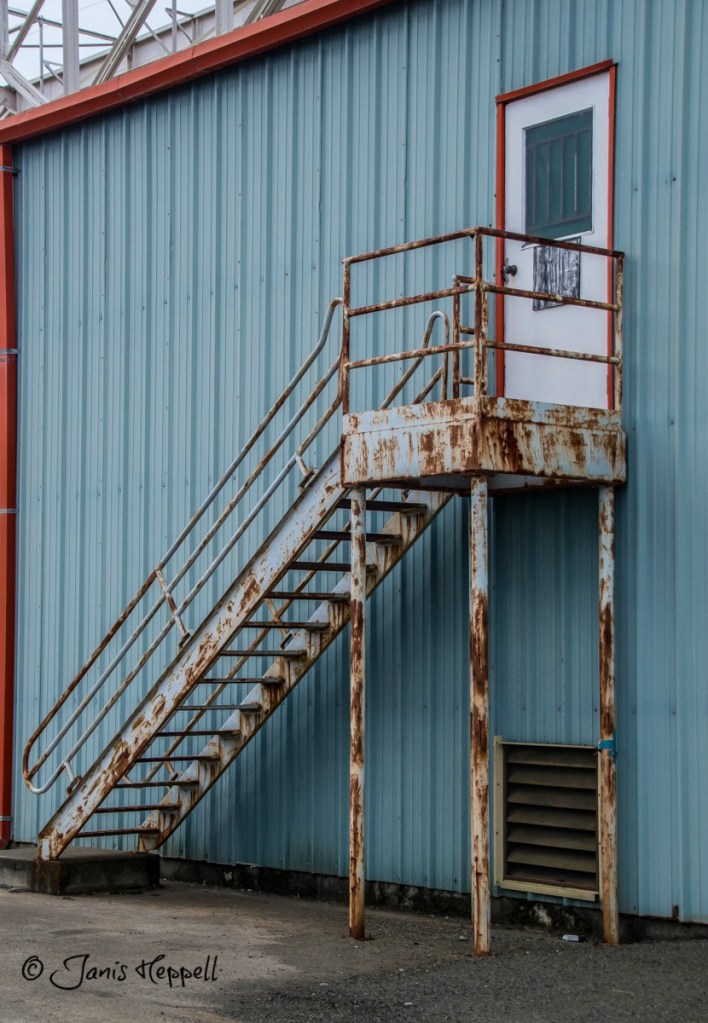
Lucky for me and others who lust-for-rust and pray-for-decay, much of the old shipyard and many of the buildings used by the military still stand. Although the brick warehouses are being renovated into breweries, brewpubs, distilleries, and office space, the beautiful old shells – and doors – remain… at least for now.
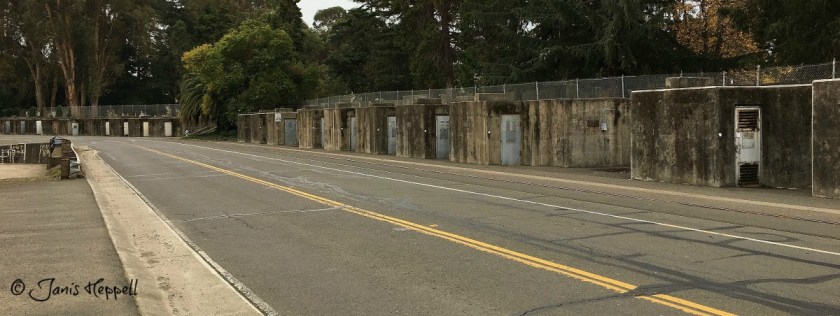
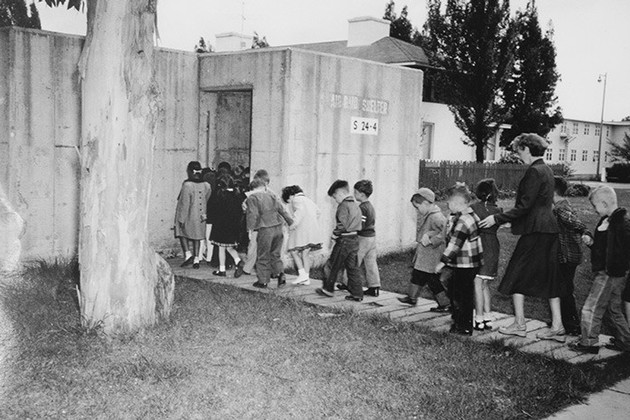
Decay makes me happy.Rust, broken windows, and doors… oh joy!Rusty stairs.What a great door for a brewpub!I think I can see a door… but this shot really is for Dan.Shelters built to protect shipyard workers from potential Japanese air raids.The shelters literally line some streets.Undated picture of children filing into the shelters.
Thursday Doors is a link-up of fellow door aficionados generously hosted by Norm Frampton. Head over to his blog to view all the amazing doors he and others have posted.
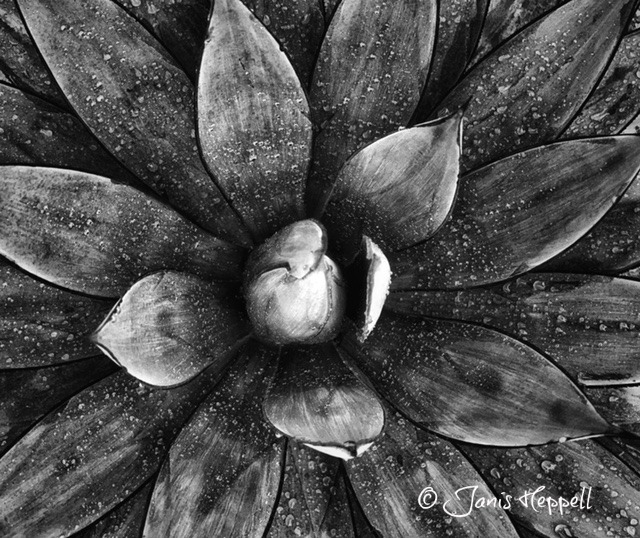
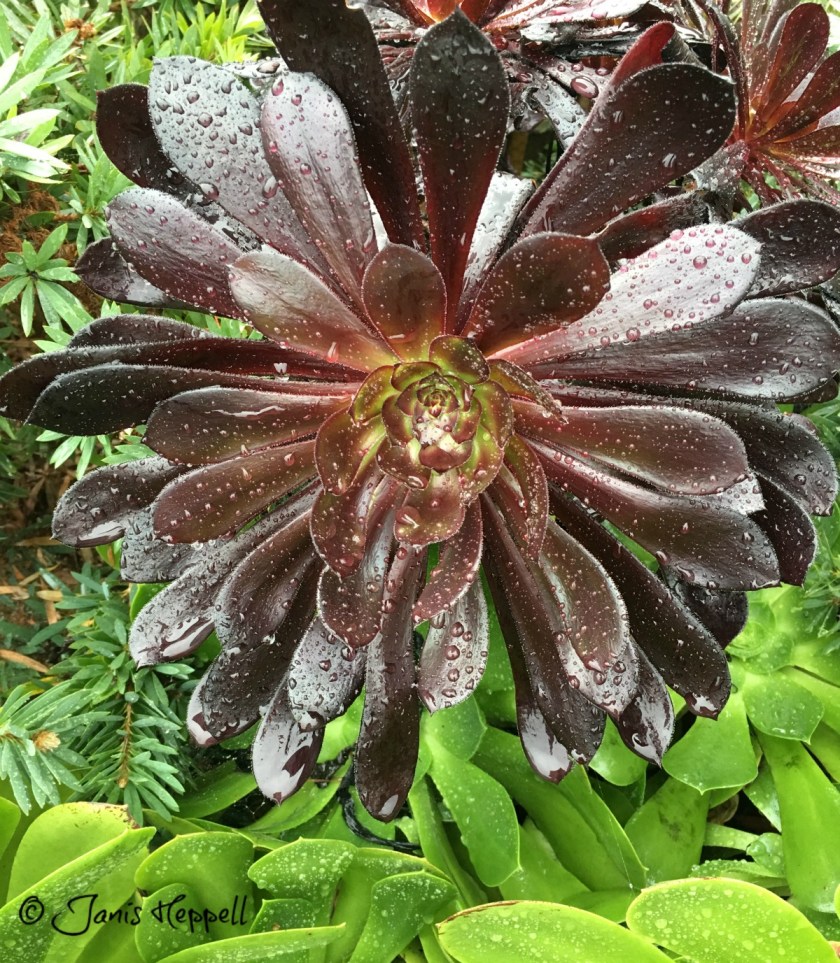
Southern California hadn’t had significant rainfall since May of 2017, when we received just under an inch. Then yesterday, a strong sub-tropical storm sent both wind and rain our way – bringing much-needed moisture to our parched region.
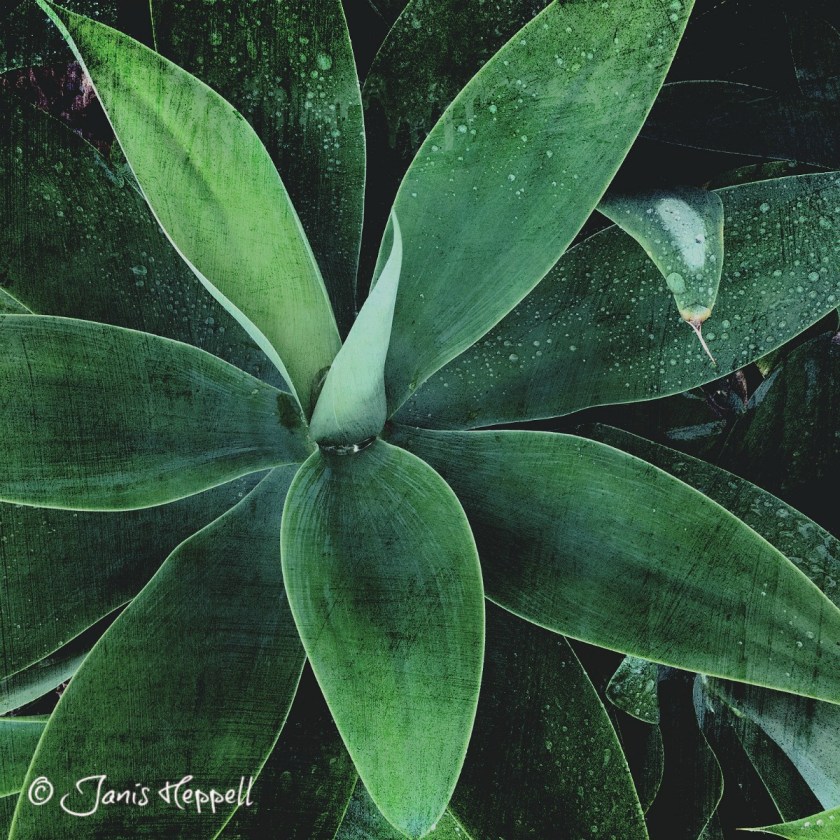
My husband and I removed our grass and other thirsty plants from our landscaping and installed drought-tolerant succulents years ago. But, even though these elegantly architectural plants can survive on little water, they also welcome the rain; catching and displaying the droplets on their broad, fleshy leaves.
I have been considering making a few tweaks to my GratiTuesday posts, and the start of a brand new year seems like the perfect time to put them in place. I really enjoy writing these posts and, judging by the likes and comments they receive, they are popular and appreciated. Just as I had hoped, thinking about possible subjects for my (almost) weekly posts has helped to foster a greater awareness of the beauty and goodness around me.
My original intention was for these posts to be short ones. Easy to write, and quick to read. Pretty soon, though, they began to morph into longer essays, which, of course, take more time to put together (have I mentioned that I am a tortured writer?).
Starting next week, my GratiTuesday posts will often consist of just a photograph and a short expression of gratitude or appreciation. Most likely, the comment section will be turned off for these posts too. Easy to write, and quick to read. Changing the format will also give me a chance to concentrate more on my photography, which is a retirement passionette of mine.
I am so grateful for the freedom retirement gives me to start, stop, revise, and adjust. Although I love the connections I make through my blog, I am looking forward to spending less time in front of my computer screen and more time enjoying this remarkable stage of my life.
Although I enjoy a stroll through an old cemetery just about any time (OK, maybe not at midnight on a moonless night), during the celebrations of Halloween and Dia de los Muertos, cemeteries take on a special significance.
Because this particular Thursday Doors link-up occurs right before these celebrations, it seems like a frighteningly good time to share some photos of doors (and other… um… entrances) I discovered while visiting the San Miguel Cemetery in Oaxaca, Mexico this past spring (my Grave Discoveries post has more pictures and information about this amazing cemetery).
Thursdays Doors is a weekly cauldron of doors hosted by Norm Frampton. Spirit away to Norm’s blog where you’ll find a spooktacular selection of doors by clicking the blue (toe of) frog link at the end of his post.
Port Townsend sits at the northeast tip of the Olympic Peninsula. Because of its prime location near the Strait of Juan de Fuca and the site of a safe harbor, it became an important shipping port in the late 1800s. The town grew rapidly on speculation as investors banked on Port Townsend becoming the largest port north of San Francisco. Although that dream never came to fruition, many beautiful Victorian homes and historical buildings still stand as a reminder of its heyday.
Boating and maritime life are still central elements, but now Port Townsend is also well-known as an artists’ community. The tree-lined streets of the waterfront downtown area features multiple galleries, artists’ collectives, unique shops, and tempting restaurants.
And doors. Port Townsend has so many beautiful doors, it was hard to capture them all… which I didn’t… which is why I’m sure that I will return.
Thursday Doors is usually run by Norm 2.0, but is guest-hosted by Joey this week. Please visit her blog to find links to more doors.
I would love to see what’s inside this jewel of a door
You can get your fortune told just inside this gypsy door
My last post, titled Hodgepodge Travel, outlined a recent trip my husband and I took to the Pacific Northwest. Continuing with the theme, this week’s pictures are a hodgepodge assortment of doors that caught my fancy along the way.
The Seattle Center Armory was built in 1939 to house the 146th Field Artillery. The building was incorporated into the footprint of the 1962 World’s Fair, when it was reconfigured into a food and shopping mall.
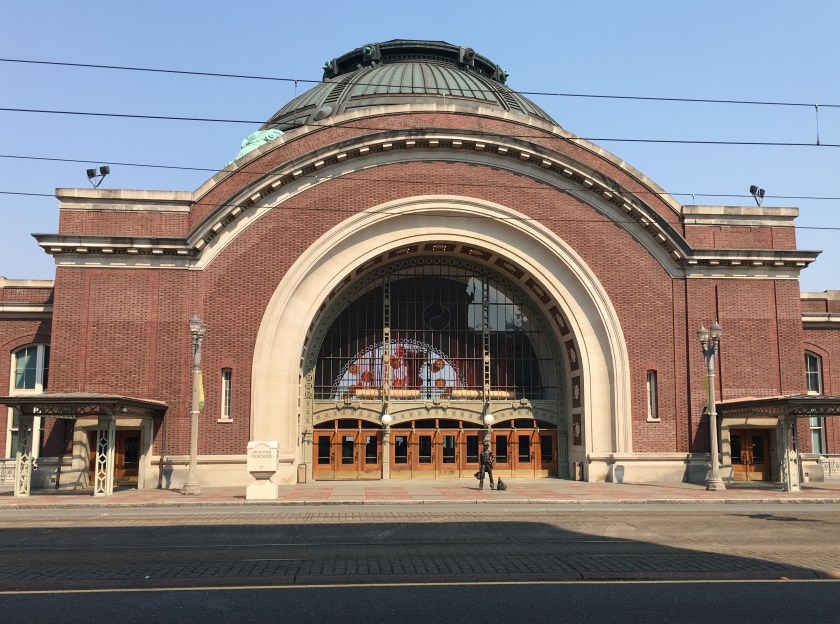
The U.S. Courthouse at Union Square in Tacoma, Washington began its life in the early 1900s as the city’s rail station. In the early 1990s, the abandoned Union Station was completely renovated and reconfigured into a federal courthouse. Its magnificent Beaux-Arts architecture was maintained and the light-filled rotunda houses a “stunning collection” of glass art by Tacoma native Dale Chihuly (I had to put the description in quotes since, unfortunately, we were there on a Sunday when the courthouse was closed).
I’m pretty sure this tunnel door is in Idaho. The Hiawatha Trail, a 13-mile bike path, was built along an old railroad route. The trail goes through eight tunnels – including one that is a dark 1.6 miles long – and travels over seven high trestles. The portion of the trail we rode begins in Montana and soon (somewhere in the middle of a tunnel) transitions into Idaho.
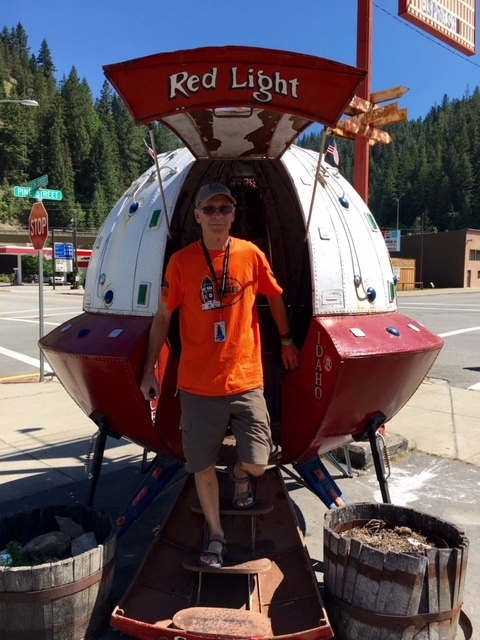
We found this spaceship docked in a parking lot in Wallace, Idaho. We could find no evidence of recent occupation by spacemen.
Maybe not technically a door, but certainly a gate qualifies? This historic headgate, located in Post Falls, Idaho, was part of a system that provided water power for the region’s first commercial lumber mill as well as irrigation water to the Spokane Valley. The headgate was raised and lowered to control the flow of water.
Not historically significant, but I just loved the teal patina of these doors found at the Barrister Winery in downtown Spokane.
The British Columbia Parliament Buildings, located in Victoria, B.C., overlook Victoria’s Inner Harbour. The impressive buildings, constructed in the late 1800s, were designed in the Baroque and Romanesque Revival styles. They are open to the public and offer free guided tours, but we arrive too late to take advantage of them. Fortunately, they left the lights on for us.
Thursday Doors is a link-up of fellow door addicts aficionados generously hosted by Norm Frampton. Head over to his blog to view all the amazing doors he and others have posted.
The tianguis, or open-air street market, is much more than a place to buy and sell merchandise. Throughout Mexico – and maybe especially in Oaxaca – markets are a fundamental element of the cultural structure. They are where people meet and catch up on news and gossip, new babies are shown off, and young romances are kindled. Market day is a ritual that has been celebrated every week – virtually unchanged – for thousands of years. These markets are not set up for the tourists (although tourists certainly can be found there – often with their cameras, like me), they are an important component in the day-to-day lives of many of the citizens.
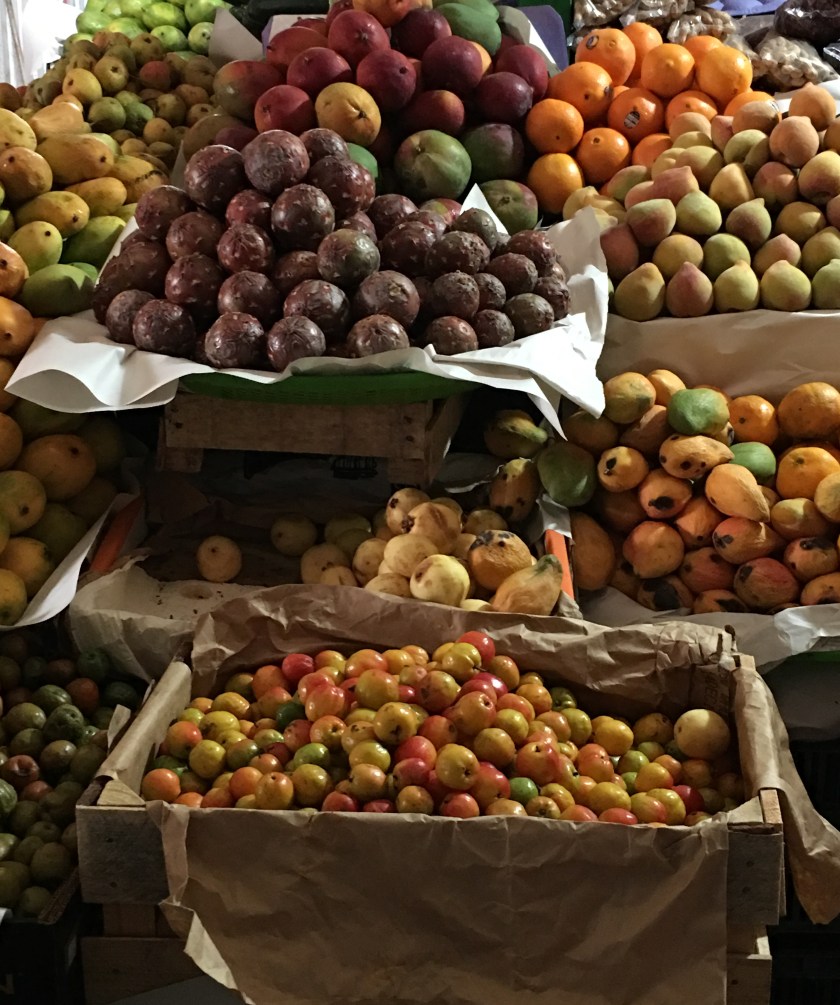
We were able to enjoy amazing fruit every day.
The city of Oaxaca has several tianguis that are open each day. Mercado Sanchez Pasqua, located very close to our house, was our go-to source for fruits and vegetables, as well as freshly made tamales. Just about every day, we stopped by on our way home to purchase delicious, just-picked avocados, mangos, and bananas.
Oaxaca’s original and best known market, Mercado Juarez, is housed in a huge, warehouse-like building. The energy and chaotic mix of sounds, colors, smells, textures, and shapes is an experience not to be missed. Among the multitude of stalls selling merchandise, one can find fruits, vegetables, herbs, flowers, mezcal, sauces, beef, chicken, and seafood. Other stalls tempt buyers with displays of brightly colored clothing, crafts, woven bags, shoes, and blankets.
In addition to the markets in the city center, the Valley of Oaxaca is famous for the tianguis that each of the surrounding villages set up one day a week (each village has its designated day). These local markets not only sell the usual food, flowers, and clothing, but they also feature items that their particular village is known for, such as weavings, cheese, or wooden furniture.
Don’t forget to pick up your Chapulines (fried grasshoppers). And, yes, I tried them.
As unique and exciting as these markets are, there is some worry that they might eventually become a victim of our global society. Oaxaca now has two Walmarts and several large grocery/department stores called Chedraui (all, mercifully, outside the city center). Amazon deliveries are also available. While I understand the ease and time-savings of going to a single location for all ones needs, I fear this convenience will someday lead to the demise of the traditional street markets. A ritual that has been around for thousands of years could be made irrelevant in a few years by big box stores and the internet. That would be an unimaginatively sad and irretrievable loss.
I recently posted about spending a gorgeous day with a dear friend in one of San Diego’s most beautiful and popular destinations, Balboa Park. Since there are so many beautiful doors, arches, and entrances in the Park, I thought it would be a fitting submission for Norm 2.0 Thursday Doors link up.
I thought this gem in the middle of our city deserved a few more posts and pictures.
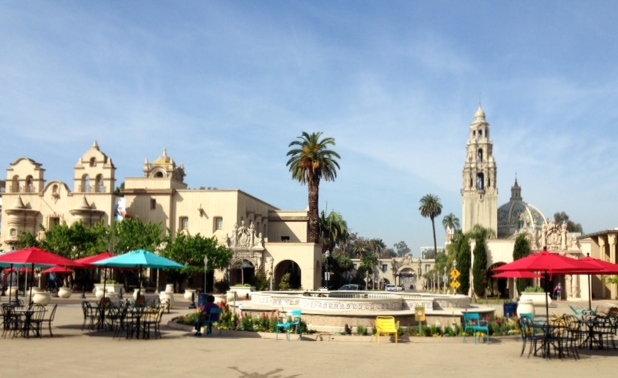
Balboa Park covers over 1,200 acres and is situated just minutes from downtown San Diego. It is home to 15 major museums, renowned performing arts venues, beautiful gardens, and the world famous San Diego Zoo. It is the nation’s largest urban cultural park and one of the oldest in the United States dedicated to public recreational use.
The California Tower was designed in the Spanish Colonial Revival Style
A closer look at the ornate facade of the California Tower
From the top of the Tower looking towards San Diego’s downtown
When the park (then named City Park) began in 1868 as land set aside by San Diego civic leaders, it was just a scrub-filled mesa without formal landscaping or development. That would change after the turn of the century when a master plan for improvements was formally introduced. San Diego was set to play host to the 1915 Panama-California Exposition and the city leaders wanted to put their best face forward as they welcomed visitors from around the world. San Diego would be the smallest city to ever hold a World’s Fair; its population at the time was less than 40,000.
The Exposition’s lead designer, Bertram Goodhue, wanted a regionally appropriate aesthetic for the architecture. To accomplish this, he and his design team combined the styles of highly ornamented Spanish Baroque with Spanish Colonial architecture to create the Spanish Colonial Revival Style used for the Exposition’s buildings. After attending the Exposition, President Theodore Roosevelt put his stamp of approval on the architectural style and recommended that the “buildings of rare phenomenal taste and beauty” be left as permanent additions.
Colorful wooden door off the The House of Hospitality courtyard
Colorful wooden door off the The House of Hospitality courtyard
Arches over the doors along the Promenade (these lead to the Museum of Photographic Arts)
One of the several live theater venues in the Park
Entrance doors leading into the Botanical Building
Unfortunately, most of the expo buildings were only supposed to remain standing through 1916, and were not constructed with long-lasting materials. When the expo ended, several discussions were held to determine what to do with the buildings. Even the lead architect, Goodhue, recommended demolishing the buildings, saying “They are now crumbling, disintegrating and altogether unlovely structures, structures that lack any of the venerability of age and present only its pathos, and the space they occupy could readily be made into one of the most beautiful public gardens in the New World.”
Happily, cooler heads prevailed. A city-appointed committee hired an architect to review the buildings, and he determined that they could be restored by a slight margin over the costs to demolish the buildings. The necessary funds and materials for restoration were donated by San Diegans and the labor was financed by the federal government.
Little me sitting on one of Santa’s reindeer, which is part of Balboa Park’s annual holiday display
Big me now (they wouldn’t let me sit on the reindeer this time)
My next Thursday Doors post will cover another area of the Park, which was constructed for the 1935 California Pacific International Exposition.
As I was growing up, family vacations usually involved long road trips in our Ford (always a Ford) station wagon, pitching tents, and sitting around camp fires. Even if Disney Cruises existed back in the 50s and 60s, I doubt if our sole-breadwinner father supporting a family of five, could have afforded such an extravagance. So, just about every summer, we went camping.
Looking back, I can’t imagine having any richer memories then the ones I have exploring the wonders of our national parks with my family. Over the years, the parks we visited included Yosemite, Sequoia, Kings Canyon, Crater Lake, Grand Canyon, Bryce, and Zion. We hiked, fished, rode horses, traded stories around camp fires, and learned about the importance of preserving our natural heritage.
On a recent trip to Northern California to visit family, my husband and I decided to take a “slight” detour through Yosemite National Park. It had been over 30 years since my last visit, and my husband had never been there before. Although we only had about a half a day, it was enough time to take in a few of the “must-see” sights and perhaps plan for a longer stay sometime in the future.
As we drove to Glacier Point – which offers commanding views of Yosemite Valley, Half Dome, and the High Sierra – something about the wall along the road looked very familiar. Deep within my memory was an image of a picture my father had taken many years ago of me looking out over the valley. In hopes of recreating the shot, I positioned myself in what I thought was a similar pose and had my husband take my picture.
Although it turned out that we weren’t in quite the same spot as before (Half Dome was much further in the distance in the old photo), I am pretty pleased with the result.
A little later in the day, while hiking around the valley floor, I took a picture of Half Dome from across a meadow. Home from our trip, I was looking through my old family photo album for the picture of me sitting on the wall and found another picture of my father’s that was quite similar to the one I had taken.
I am so grateful that my parents introduced me to the joys of camping and to appreciate the miracles of nature. I cherish the memories I have of those childhood vacations and the times we spent together as a family.















 Retirementally Challenged